You spend a third of your life in your bedroom, but most people never think about what’s in the air they breathe there. A typical closed bedroom with two occupants can see CO₂ levels rise from a baseline of 400 parts per million (ppm) to 2,000–3,000 ppm overnight. That’s enough to trigger next-day drowsiness, headaches, and a measurable dip in cognitive performance, according to research from the Technical University of Denmark.
Meanwhile, modern, airtight homes trap moisture and chemicals. The average adult emits 200–500 ml of moisture overnight through breathing and perspiration, pushing relative humidity up by 10–20% in a poorly ventilated room. Combined with off-gassing from mattresses, furniture, and paint, your bedroom may harbour the worst air quality in your entire home—worse than the kitchen or bathroom. Yet sleep hygiene advice rarely mentions ventilation, humidity, or CO₂.
The Air You Breathe All Night
Indoor air is typically 2–5 times more polluted than outdoor air, according to the U.S. EPA. Bedrooms are where people spend the longest continuous stretch of time—6 to 9 hours a night—so the cumulative exposure matters. But most bedrooms fall far below the recommended ventilation rate of 0.35 air changes per hour (ASHRAE standard 62.2). Many achieve less than 0.1–0.2.
In a closed room, CO₂ builds up quickly. With two people sleeping for eight hours, levels can spike to 2,000–3,000 ppm—well above the 1,000 ppm threshold where cognitive performance starts to decline. That’s why you might wake up groggy even after a full night’s sleep.
Volatile organic compounds (VOCs) add to the problem. Mattresses often contain flame retardants and formaldehyde, while particleboard furniture off-gasses formaldehyde for years. Paint, cleaning products, and even scented candles contribute. Formaldehyde levels indoors can be 2–5 times higher than outdoors. In a bedroom, you’re inhaling these chemicals continuously for hours.
Humidity: The Hidden Mould Factory
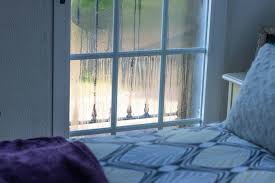
Your body is a moisture machine. A sleeping adult releases 200–500 ml of water per night through respiration and perspiration. In a poorly ventilated room, that moisture raises relative humidity by 10–20% overnight.
When humidity stays above 60–70% for sustained periods, mould and dust mites thrive. Dust mites, which feed on dead skin cells, multiply rapidly at 70–80% relative humidity. Their faeces are a major allergen, triggering asthma and allergic rhinitis.
The World Health Organization’s 2009 guidelines on dampness and mould concluded there is sufficient evidence linking exposure to respiratory symptoms in otherwise healthy people. Mould exposure can exacerbate asthma and increase respiratory infections.
The Temperature and Light Trap
Your bedroom might also be sabotaging your sleep through temperature and light. The ideal sleep temperature is 18–22°C (65–72°F). Overheating disrupts REM sleep and increases wakefulness. If your bedroom is stuffy and warm, you’re more likely to toss and turn.
Light pollution is another culprit. Even tiny amounts of light—from LED standby lights, streetlights, or a phone charger—suppress melatonin production, delaying sleep onset and reducing sleep quality. A completely dark room is not a luxury; it’s a biological requirement.
Noise, too, fragments sleep architecture even if you don’t fully wake up. Intermittent traffic or neighbour sounds can shift you out of deep sleep stages without you realising it.
Beyond Air: Dust Mites, Allergens, and EMFs
Your mattress is a dust mite metropolis. A typical mattress can harbour millions of dust mites, along with their faeces, which are a potent allergen. Pillows and bedding accumulate the same. Pet dander, if you sleep with a dog or cat, adds to the allergen load.
Electromagnetic fields (EMFs) from devices near the bed—phones, chargers, smart alarms—have been studied for effects on sleep, but the evidence is weak and not consensus-backed. Still, keeping devices away from your head is a simple precaution that also reduces light and noise distractions.
Carbon monoxide is a less common but more serious risk if your bedroom is adjacent to a garage or contains a gas heater. Installing a CO detector is a cheap, smart safety measure.
Why Bedrooms Are So Neglected
Part of the problem is cultural. People rarely open bedroom windows at night due to security, noise, cold, or simple habit. In many urban areas, windows are hard to open or unsafe to leave ajar.
Modern home design has made things worse. Homes are built increasingly airtight for energy efficiency—good for heating bills, bad for ventilation. Mechanical ventilation systems (like heat recovery ventilators) are not universal, especially in older or retrofitted homes.
The COVID-19 pandemic raised awareness of indoor air quality, but attention focused on shared spaces like offices and schools. Bedrooms, where people spend the most time, were largely ignored.
The sleep industry hasn’t helped. Marketing centres on mattresses, pillows, and lighting—not on air quality. “Sleep hygiene” advice rarely mentions ventilation or humidity.
What You Can Do About It
You don’t need a renovation to improve your bedroom air. Start with these steps:
- Open a window for at least 10–15 minutes each morning to flush out CO₂ and VOCs. If security or noise is a concern, consider a trickle vent or a window lock that allows a small opening.
- Use an extractor fan or dehumidifier if humidity regularly exceeds 60%. A dehumidifier can pull excess moisture from the air, making it harder for mould and dust mites to survive.
- Wash bedding weekly in hot water (60°C or above) to kill dust mites. Use allergen-proof covers on mattresses and pillows.
- Keep the room cool at night—aim for 18–22°C. Use blackout curtains to block light, and cover LED standby lights.
- Move electronics away from the bed. Charge your phone across the room or in another room entirely.
- Consider a CO₂ monitor to see how high levels actually get in your bedroom. If they consistently exceed 1,000 ppm, you know ventilation is inadequate.
- If you’re renovating, look into mechanical ventilation with heat recovery (HRV/ERV). Passive House standards require this; older homes can be retrofitted with simpler solutions.
The Bottom Line
Your bedroom is a micro-environment where you spend a third of your life. It’s also, ironically, the room most likely to have poor air quality, high humidity, and sleep-disrupting conditions. The good news is that most fixes are simple and inexpensive. A few small changes—opening a window, washing bedding, controlling humidity—can transform your bedroom from the unhealthiest room in your home into a true sanctuary.
Conclusion
Your bedroom should be the healthiest room in your home, not the worst. The science is clear: CO₂ buildup, VOCs, humidity, and light all undermine sleep and health. But you don’t need a major overhaul—just a few intentional habits can make a measurable difference. Start tonight with an open window and a cool, dark room. Your brain and body will thank you.
Summary
- Bedroom CO₂ levels can reach 2,000–3,000 ppm overnight, causing drowsiness and cognitive impairment.
- Indoor air is 2–5× more polluted than outdoor air; bedrooms often have high VOC levels from furniture and mattresses.
- A sleeping adult emits 200–500 ml of moisture per night, driving humidity up and promoting mould and dust mites.
- Ideal sleep temperature is 18–22°C; light pollution suppresses melatonin and disrupts sleep.
- Simple fixes: open windows, use dehumidifiers, wash bedding in hot water, keep the room cool and dark.
FAQ
Q: How can I tell if my bedroom has poor air quality?
A: Signs include waking up with headaches, stuffiness, or grogginess. A CO₂ monitor can show if levels exceed 1,000 ppm. Persistent mould or musty smells indicate humidity problems.
Q: Is it safe to sleep with a window open at night?
A: Generally yes, but it depends on outdoor air quality, noise, security, and climate. If you can’t open a window, use trickle vents or a mechanical ventilation system.
Q: What’s the best humidity level for a bedroom?
A: Aim for 30–50% relative humidity. Above 60% promotes mould and dust mites; below 30% can cause dry eyes and throat irritation.
Q: Do air purifiers help?
A: Air purifiers with HEPA filters can reduce allergens like dust mites and pet dander, but they don’t address CO₂ or humidity. Ventilation and moisture control are more fundamental.
Q: How often should I wash my bedding to reduce dust mites?
A: Wash sheets and pillowcases weekly in hot water (60°C or higher). Use allergen-proof covers for mattresses and pillows to create a barrier.