In the cold, dark waters of the Atlantic, hundreds of German U-boats met their end during World War II. Yet for decades, the fate of dozens remained a mystery boats that simply vanished, their crews never heard from again. Families waited in anguish, navies puzzled over enemy reports, and historians searched archives for answers. Only with the advent of modern underwater technology have many of these lost submarines been found, each discovery rewriting the stories of those who served beneath the waves.
This is the tale of the missing U-boats: how they disappeared, what happened to them, and why some still remain unaccounted for.
The Vanishing Act: When U-Boats Went Missing
During World War II, Germany commissioned roughly 1,170 U-boats. Of those, about 785 were lost sunk, scuttled, or destroyed. But not every loss was immediately understood. Around 50 to 60 boats were officially listed as “overdue, presumed lost,” meaning they failed to report within a set window and no one knew why. In the vastness of the ocean, a submarine could disappear without a trace, leaving only questions.
One such case was U-47, commanded by the celebrated Günther Prien, who had sunk the British battleship Royal Oak in Scapa Flow. In March 1941, U-47 vanished during a patrol in the North Atlantic. No distress signal, no wreckage, no survivors. The British later claimed depth charges sank it, but the exact location and cause remained unclear for years. It wasn’t until 2002 that a wreck discovered by a research vessel was tentatively identified as U-47, though the identification is still debated.
Similarly, U-122 disappeared in June 1940, and U-196 vanished in the Indian Ocean in 1942. These boats simply stopped communicating. In wartime, such losses were common, but the uncertainty was agonizing. For the families of the 40 to 60 men on board each boat, there was no grave to visit, no closure. German authorities would eventually declare the crews dead, but the precise fate of many men remained unknown for decades.
Why Did U-Boats Disappear?
The causes of U-boat losses were numerous. Depth charges from escort ships were the most common, especially before 1943. Aircraft attacks became increasingly deadly after mid-1943, when Allied planes equipped with radar could locate surfaced submarines even at night. Mines claimed many boats in coastal waters and the Bay of Biscay, where U-boats transited to and from their bases. Mechanical failures, battery explosions, and accidental flooding also took their toll. In some cases, crews scuttled their own boats to avoid capture.
But why did some losses go unexplained? Often, a submarine sank in deep water, beyond the reach of wartime sonar. No survivors meant no testimony. Even when Allied records, including Ultra decrypts, later revealed likely causes, some cases remained ambiguous. The ocean kept its secrets.
The Hunt for Wrecks: Modern Discoveries
The end of the war brought a massive cleanup operation. Over 200 U-boats were scuttled by their crews under Operation Regenbogen to prevent capture. The Allies raised many of these for scrapping or sank them in Operation Deadlight, which disposed of 116 captured U-boats in late 1945. But some wrecks were left to rust on the seabed, forgotten.
It took decades for technology to catch up with history. Underwater archaeologists began using side-scan sonar, remotely operated vehicles (ROVs), and historical records to locate the missing boats. In 1991, off the coast of New Jersey, divers found the wreck of U-869, a boat that had been presumed lost with all hands in 1945. The discovery, chronicled in the book Shadow Divers, revealed that the U-boat had been sunk by depth charges from an American destroyer escort—a fate that had been recorded, but the wreck site was never confirmed.
In 2014, U-576 was found off Cape Hatteras, North Carolina. It had been sunk in 1942 during a convoy battle, but its exact location was unknown. The wreck lay in 240 feet of water, remarkably intact. Similarly, U-166, which had been reported lost in the Gulf of Mexico, was discovered in 2001 during an oil pipeline survey, lying just a few miles from where it had attacked a passenger ship.
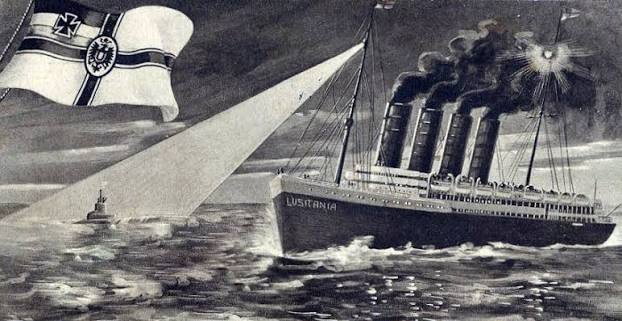
Each discovery adds a piece to the puzzle. For example, U-20, the submarine that sank the Lusitania in 1915, was found off Denmark in 1984. Its wreck helped historians understand the final moments of a boat that had been a symbol of German naval power in World War I.
The Still-Unaccounted-For
Despite these finds, as of recent estimates, roughly 30 to 40 World War II U-boats remain officially unlocated. The number shrinks as new wrecks are identified, but some will likely never be found. In the North Sea and the Mediterranean, dozens of World War I U-boats also remain missing. The deep ocean, especially the Atlantic, is a vast and unforgiving place. Some wrecks lie in waters too deep for exploration, or have been buried by sediment over the decades.
The uncertainty has fueled legends. The most persistent myth is that Hitler escaped to Argentina aboard a U-boat, often linked to U-977 and U-530, which surrendered in Argentina in 1945. Historians have debunked these claims, but they persist in popular culture. Another case, U-234, was carrying uranium oxide and advanced technology when it surrendered in 1945, sparking rumors of a secret Nazi mission. The reality, while less sensational, is still remarkable: U-234’s cargo was a precursor to the Cold War’s nuclear race.
The Human Cost
Behind every missing U-boat was a crew of men, many of them young. For their families, the word “missing” meant years of uncertainty. Some families never learned what happened. Even today, when a wreck is found, it often becomes a war grave, protected by law. Divers and archaeologists treat these sites with respect, knowing that they are the tombs of hundreds of sailors.
In 2022, a sonar survey off the coast of Belgium identified the wreck of U-103, a World War I U-boat that had been missing for over a century. The discovery brought closure to a historical mystery, but it also served as a reminder of the enduring human cost of the submarine war.
The Legacy of the Lost
The missing U-boats are more than just historical puzzles. They are a testament to the brutal realities of naval warfare and the limits of human knowledge. The Battle of the Atlantic was a turning point in World War II, and the U-boat fleet’s defeat by mid-1943 marked a strategic shift. The lost submarines symbolize that defeat, but they also represent the lives of the men who served and died beneath the waves.
As technology improves, more wrecks will likely be found. Each discovery adds to our understanding of the past, but it also reminds us that some questions may never be answered. The ocean is vast, and its secrets are not easily surrendered.
The lost U-boats are a haunting reminder of the Second World War’s maritime battles. Of the hundreds that vanished, many have been found, but dozens remain hidden beneath the waves. Their stories are not just about warfare; they are about the men who served, the families who waited, and the enduring mystery of the deep. As underwater archaeology advances, some mysteries may finally be solved, but the memory of the missing will persist—a silent tribute to those who never came home.
Summary
- During WWII, around 50-60 U-boats were listed as ‘overdue, presumed lost,’ with no confirmed cause of destruction at the time.
- Causes of loss included depth charges, aircraft attacks, mines, mechanical failures, and scuttling, but some losses remained unexplained due to deep water or lack of survivors.
- Modern sonar and ROVs have located many wrecks, such as U-869 (found in 1991), U-576 (2014), and U-166 (2001).
- Roughly 30-40 WWII U-boats remain unlocated, along with dozens from WWI.
- Myths, like Hitler’s escape to Argentina, persist despite historical debunking, but the human cost of missing U-boats remains a somber legacy.
FAQ
Q: How many U-boats are still missing?
A: As of recent estimates, roughly 30-40 WWII U-boats remain officially unlocated, though the number shrinks as new wrecks are identified. Dozens of WWI U-boats are also still missing.
Q: What happened to U-869?
A: U-869 was presumed lost in 1945, but its wreck was found off New Jersey in 1991. It was later determined to have been sunk by depth charges from an American destroyer escort.
Q: Why did U-boats go missing without a trace?
A: Many sank in deep water, beyond the reach of wartime sonar. With no survivors or wreckage, their fate remained unknown until modern technology could locate the wrecks.
Q: Did Hitler escape via U-boat?
A: No. Claims that Hitler escaped to Argentina aboard U-977 or U-530 have been widely debunked by historians. Both boats surrendered in Argentina in 1945, but there is no evidence Hitler was aboard.
Q: Are U-boat wrecks protected?
A: Yes, many are considered war graves and are protected by international law. Divers and archaeologists treat them with respect, and disturbing them is often illegal.