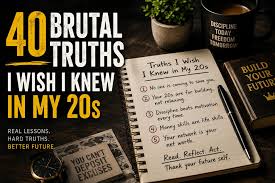
Your twenties are a decade of contradictions: you’re old enough to make life-altering decisions, yet your brain’s prefrontal cortex—the part that weighs long-term consequences—isn’t fully developed until around age 25. That mismatch explains a lot of the chaos. But the real issue isn’t just biology; it’s the gap between what we expect and what actually happens.
This isn’t a lecture from someone who has it all figured out. It’s a reflection on the most common regrets and breakthroughs people report when they look back at their twenties. If you’re in that decade now, consider this a map of the potholes ahead. If you’re past it, you might recognize a few of your own.
The Compound Effect of Small Choices
The most powerful force in your twenties isn’t talent or luck—it’s compound interest, and not just in money. Every habit, relationship, and skill you build now accumulates. A $100 monthly investment starting at age 25 can grow to over $200,000 by retirement, but start at 35 and you’d need nearly double the monthly amount to catch up. The same logic applies to friendships: the people you call at 2 a.m. in your twenties often become your lifelong support network.
But compound interest works both ways. Skipping sleep, avoiding hard conversations, or drifting through jobs without learning—these also compound, quietly shaping your thirties into a steeper climb. The key is to start small but start now, whether that’s an emergency fund, a weekly call with a friend, or fifteen minutes of learning a new skill.
The Myth of the Dream Job
Many people enter their twenties believing they’ll find a role that perfectly blends passion and paycheck. The reality is more nuanced: your first job is a stepping stone, not a verdict. The average person changes careers 3–7 times in a lifetime, and most of those shifts begin in this decade. What feels like a dead-end position often teaches you what you don’t want—which is just as valuable as a clear calling.
Instead of chasing a title, focus on building transferable skills and a network. Say yes to projects that stretch you, even if they’re outside your job description. The colleague who remembers you as the one who stayed late to fix a problem is worth more than a perfect resume.
Relationships Are the Real Infrastructure
Erik Erikson called the twenties the ‘Intimacy vs. Isolation’ stage—the central task is forming deep connections. That’s not just romantic; it’s about the friends who become family and the mentors who open doors. A 2019 study found that close friendships in your twenties are a stronger predictor of well-being in midlife than career success.
But relationships in this decade are often treated as disposable. People move for jobs, friendships fade after a breakup, and the lure of ‘networking’ turns every interaction into a transaction. The counterintuitive advice: invest in people without an agenda. The friend who listens to you vent at 1 a.m. is practicing the same skill you’ll need when you’re the one offering support.
Burnout Is a Feature, Not a Bug
The hustle culture of the twenties—working late, always saying yes, measuring your worth in output—is a fast track to burnout. A 2020 survey found that 76% of employees in their twenties reported experiencing burnout, often because they didn’t set boundaries early. The problem isn’t hard work; it’s the absence of rest and the belief that rest is a reward you haven’t earned yet.
Boundaries aren’t walls; they’re gates. You can be ambitious and still leave the office at a reasonable hour, skip the networking event when you’re exhausted, and protect your weekends. Your future self will thank you—not for the extra hours you put in, but for the energy you conserved.
Comparison Steals More Than Joy
Social media has made the twenties feel like a public scoreboard. Everyone else seems to be getting promoted, engaged, or traveling—except you. The research backs this up: a 2018 study found that frequent social media use in young adults correlates with higher levels of depression and anxiety, largely due to upward social comparison.
What the highlight reel doesn’t show is the student debt, the toxic relationship, or the job they were fired from. The most freeing realization is that nobody is keeping score except you. Define your own timeline—it’s the only one you can actually control.
The ‘Quarter-Life Crisis’ Is Real
The term was coined in the late 1990s, and it’s now a recognized phenomenon: a period of anxiety and doubt that typically hits between ages 25 and 30. It often stems from the gap between the life you imagined and the one you’re living. The danger is treating this crisis as a signal to blow everything up—quit your job, move cities, end a relationship—instead of a signal to recalibrate.
A crisis is a form of information. It tells you what you’ve been ignoring. Instead of panicking, ask what’s genuinely missing: more autonomy, deeper connection, a sense of purpose? Then make small, intentional changes rather than dramatic ones.
What the Experts Get Wrong
Most advice for your twenties falls into two traps: it’s either too generic (‘follow your passion’) or too specific (‘max out your 401(k) by age 25’). Both ignore the systemic barriers many face—student debt, stagnant wages, housing costs that eat half a paycheck. Telling someone to ‘just start investing’ when they can’t afford rent is not just unhelpful; it’s insulting.
The honest truth is that no one knows what they’re doing. The successful people who write memoirs are survivors of survivorship bias—you don’t hear from the ones who followed the same advice and didn’t end up where they hoped. So take advice as a menu, not a mandate. Your twenties are a time for trial and error, and the errors are often the best teachers.
If I could go back, I’d tell my 20-year-old self three things: start small but start now, invest in people who see you clearly, and give yourself permission to be a work in progress. The decade is less about getting it right and more about learning what ‘right’ means for you. You’ll make mistakes—that’s the point.
Summary
- Compound interest applies to more than money: habits, relationships, and skills all build over time, so start small and early.
- Your first job is not your destiny: focus on skills and network, not a perfect title.
- Invest in relationships without a agenda: close friendships in your twenties predict well-being in midlife.
- Burnout is common but preventable: set boundaries and prioritize rest to sustain ambition.
- Comparison is a trap: social media highlights reels are not real life; define your own timeline.
FAQ
Q: Is it normal to feel lost in your twenties?
A: Absolutely. The concept of ’emerging adulthood’ (ages 18–29) is defined by exploration, instability, and feeling in-between. That uncertainty is a feature, not a bug—it’s how you discover what you want.
Q: How do I deal with the pressure to have a ‘dream job’?
A: Reframe it: your first job is a stepping stone, not a verdict. Focus on what you learn and who you meet. Many people change careers 3–7 times in their lifetime, and most of those shifts start in the twenties.
Q: What’s the biggest financial mistake people make in their twenties?
A: Lifestyle inflation—spending more as soon as you earn more. Instead, automate a small amount into savings or investments even if it’s $50 a month. The habit matters more than the amount.
Q: How can I avoid burnout without sacrificing ambition?
A: Set boundaries early: define your work hours, say no to non-essential tasks, and prioritize sleep. Rest isn’t a reward; it’s the fuel that makes ambition sustainable.
Q: Should I worry about the ‘quarter-life crisis’?
A: It’s a normal phase of doubt around ages 25–30. Treat it as information, not a command to blow up your life. Ask what’s missing and make small, intentional changes instead of dramatic ones.