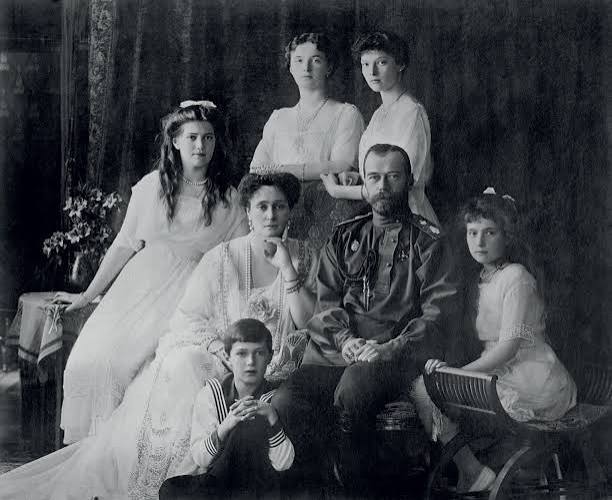
On the night of July 17, 1918, Tsar Nicholas II of Russia, his wife Alexandra, and their five children were led into a basement room in Yekaterinburg and shot dead by Bolshevik executioners. The murder ended three centuries of Romanov rule, but the dynasty’s collapse began long before. Nicholas’s reign, from 1894 to 1917, was a masterclass in incompetence: he lost a war to Japan, sparked a revolution, mishandled a world war, and managed to alienate virtually every segment of Russian society.
Historians broadly agree that Nicholas was temperamentally unsuited to rule. He was weak, indecisive, and stubbornly convinced of his divine right to absolute power. His personal virtues—devotion to his family, deep religiosity, and a gentle disposition—became political vices. This is the story of how one man’s inadequacy brought down an empire.
The Reluctant Autocrat
Nicholas Alexandrovich Romanov was born on May 18, 1868, into the most powerful family in Russia. His father, Alexander III, was a reactionary who reversed many of his grandfather’s liberal reforms and pursued aggressive Russification. Nicholas was educated by Konstantin Pobedonostsev, a reactionary official who instilled in him a deep suspicion of democracy and parliaments. When his father died suddenly in 1894, the 26-year-old Nicholas was thrust onto the throne. He famously declared: “I shall maintain the principle of autocracy just as firmly and unflinchingly as my late unforgettable father.”
But Nicholas was no Alexander III. He lacked his father’s iron will and political acumen. He was a man who preferred family life and military parades to the grind of governance. His cousin, Kaiser Wilhelm II of Germany, once called him “a mere boy.” The Russian elite quickly realized that the new tsar was weak and indecisive.
A Coronation Marred by Blood
Nicholas’s reign got off to a disastrous start. In May 1896, during his coronation celebrations in Moscow, a stampede at the Khodynka Field—where free beer and gifts were being distributed—killed nearly 1,400 people. That evening, Nicholas attended a ball at the French embassy, dancing until dawn. Many Russians saw this as callous indifference. The incident set the tone for a reign marked by a tragic disconnect between the tsar and his people.
The Russo-Japanese War and Bloody Sunday
In 1904, Nicholas led Russia into a war with Japan over rival ambitions in Manchuria and Korea. It was a catastrophic decision. The Russian army and navy were poorly prepared, and the war ended in a humiliating defeat, culminating in the destruction of the Baltic Fleet at the Battle of Tsushima in 1905. The war exposed Russia’s military weakness and fueled domestic unrest.
On January 22, 1905, a peaceful procession of workers and their families approached the Winter Palace to petition the tsar for better working conditions and political reform. Troops fired on the crowd, killing hundreds. “Bloody Sunday,” as it became known, shattered the myth of the “Little Father” who cared for his people. It triggered the 1905 Revolution, a wave of strikes, mutinies, and uprisings that shook the empire.
Nicholas was forced to make concessions. In October 1905, he issued the October Manifesto, granting civil liberties and creating the State Duma, a parliament. But he never intended to share power. He soon curtailed the Duma’s authority and dismissed it when it became too independent. The brief experiment in constitutionalism was effectively over.
The Influence of Rasputin
The tsar’s greatest personal vulnerability was his family. His wife, Alexandra, was German-born, shy, and deeply unpopular. She exerted enormous influence over Nicholas, often pushing him toward more reactionary policies. Their son and heir, Alexei, suffered from hemophilia, a genetic disorder that made even a minor bruise life-threatening. In desperation, the imperial couple turned to a self-proclaimed holy man, Grigori Rasputin, whose strange methods seemed to ease the boy’s suffering.
Rasputin’s influence grew to scandalous proportions. During World War I, with Nicholas away at the front, Alexandra and Rasputin effectively ran the government. They dismissed competent ministers and appointed incompetents based on Rasputin’s whims. The elite were horrified; rumors of treason—that the German-born tsarina and Rasputin were plotting to surrender Russia—swept the capital. Rasputin was murdered by a group of nobles in December 1916, but the damage was done. The monarchy’s credibility was destroyed.
World War I: The Final Blunder
Russia entered World War I in August 1914 with patriotic fervor, but the army was disastrously unprepared. Some soldiers went to the front without rifles, and logistics were catastrophic. By 1915, Russia had suffered millions of casualties. In a moment of hubris, Nicholas decided to take personal command of the army, a move that tied him directly to every military failure. He removed the competent Grand Duke Nicholas from command and installed himself—a man with no military experience—at the helm.
The decision was fatal. Nicholas spent most of his time at the front, leaving the government in the hands of the tsarina and Rasputin. On the home front, food shortages, inflation, and a collapsing railway system created mass suffering. The capital, Petrograd, was seething with discontent.
Abdication and Execution
In March 1917, strikes and riots broke out in Petrograd. Soldiers refused to fire on the crowds. The Duma, which Nicholas had tried to dissolve, refused to obey. With no one left to support him, Nicholas abdicated on March 15, 1917. It was the end of 300 years of Romanov rule.
He and his family were placed under house arrest, eventually moved to Yekaterinburg in the Urals. In July 1918, as anti-Bolshevik forces approached the city, the family was executed in a basement room of the Ipatiev House. Nicholas was 50 years old.
The Verdict of History
Historians broadly agree that Nicholas II was an incompetent ruler. He believed in the divine right of kings and resisted meaningful reform. He made a series of catastrophic strategic decisions: the Russo-Japanese War, taking command of the army in WWI, and ignoring the growing discontent of his people. His reign saw Russia lose a war, experience a failed revolution, enter a world war it could not sustain, and collapse into revolution and civil war.
Some historians, like Robert K. Massie, portray Nicholas as a tragic figure, a devoted family man trapped by fate. It’s true that he inherited an impossible system and faced challenges that would have tested even the most capable ruler. But his personal virtues—kindness, gentleness, and religiosity—became political vices. He was a man who would rather spend time with his children than govern an empire. In the end, his inadequacy proved fatal not only for himself and his family but for millions of Russians who suffered through war, revolution, and civil war.
Nicholas II was not a monster; he was a deeply flawed man who happened to sit on the most powerful throne in the world. His reign is a cautionary tale about the dangers of autocracy and the costs of incompetence. The last tsar of Russia failed not because he was evil, but because he was weak. And in the turbulent world of early 20th-century Russia, weakness was a fatal flaw.
Summary
- Nicholas II became tsar in 1894, inheriting a rigid autocracy and a deeply troubled empire.
- His reign was marked by a series of disasters: the Khodynka stampede, the Russo-Japanese War, Bloody Sunday, and the 1905 Revolution.
- The influence of his wife Alexandra and the mystic Rasputin further undermined his rule.
- His decision to take personal command of the army in WWI tied him to every military defeat.
- He abdicated in March 1917 and was executed with his family in July 1918.
- Historians broadly agree that Nicholas was a weak, indecisive ruler whose personal virtues became political vices.
FAQ
Q: Why is Nicholas II considered an incompetent tsar?
A: Historians broadly agree that Nicholas was weak, indecisive, and temperamentally unsuited for autocracy. He resisted meaningful reform, made catastrophic strategic decisions (such as the Russo-Japanese War and taking command of the army in WWI), and allowed his wife and Rasputin to exert undue influence over the government.
Q: What was the Khodynka Tragedy?
A: It was a stampede that occurred during Nicholas’s coronation celebrations in Moscow in 1896, killing about 1,400 people. Nicholas attended a ball that evening, which damaged his reputation as a caring ruler.
Q: How did Rasputin influence the Russian monarchy?
A: Rasputin, a self-proclaimed holy man, gained influence over the imperial family because he seemed able to ease the hemophilia symptoms of the heir, Alexei. During WWI, he and Empress Alexandra effectively ran the government, appointing incompetent ministers and scandalizing the elite.
Q: What was Bloody Sunday?
A: On January 22, 1905, troops fired on a peaceful procession of workers outside the Winter Palace, killing hundreds. This event triggered the 1905 Revolution and shattered the myth of the tsar as a benevolent father to his people.
Q: When and how did Nicholas II die?
A: Nicholas II and his family were executed by Bolsheviks on July 17, 1918, in a basement room of the Ipatiev House in Yekaterinburg. They were shot by a firing squad, ending the Romanov dynasty.