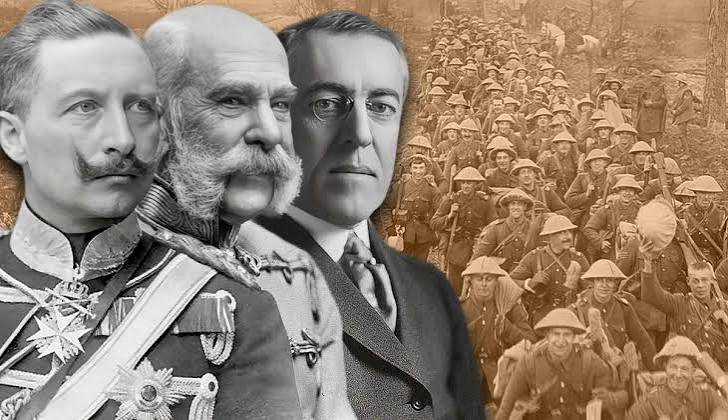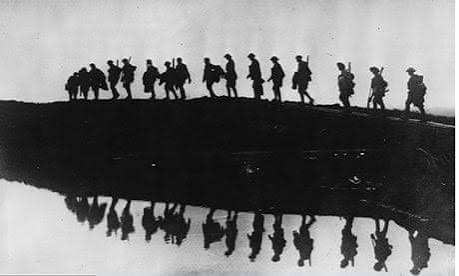
At 11 a.m. on November 11, 1918, the guns fell silent along the Western Front. In the preceding four years, over 30 nations had mobilized some 70 million troops. By the time the Armistice was signed, an estimated 9 to 11 million soldiers and 7 to 8 million civilians were dead. The scale of slaughter was unprecedented, and its effects did not end with the ceasefire.
Today, the legacy of World War I is not merely a matter of history. The borders of the Middle East, the structure of international diplomacy, the very language we use to describe trauma—all trace directly to the decisions made between 1914 and 1918. To understand the present, we must first reckon with the war that reshaped the world.
The Treaty That Built the Bomb
When the Allies gathered at Versailles in 1919, they were determined to punish Germany. The resulting treaty assigned sole war guilt to Germany (Article 231), imposed heavy reparations, stripped territory, and limited the German army to 100,000 troops. The treaty’s architects hoped to ensure lasting peace; instead, they created the conditions for resentment that would explode again in 1939.
Historians debate the precise degree of causation, but the connection is clear: the treaty’s harsh terms fueled German grievance. Adolf Hitler and the Nazi Party weaponized the “stab-in-the-back” myth—the false claim that civilians and socialists had betrayed the army—to undermine the Weimar Republic. The reparations wrecked the German economy, contributing to hyperinflation in 1923 and deepening the misery of the Great Depression. When Hitler rose to power in 1933, he promised to overturn Versailles. The world would pay the price.
Carving Up the Middle East
While the Treaty of Versailles mapped Europe, a separate set of agreements redrew the Middle East. In 1916, British and French diplomats signed the Sykes-Picot Agreement, planning to divide the Ottoman Empire’s territories after the war. The subsequent Mandate system created the modern states of Iraq, Syria, Lebanon, Jordan, and Palestine. These borders, drawn with little regard for local ethnic and religious divisions, have proved remarkably durable—and remarkably volatile.
The sectarian tensions that simmer in Syria and Iraq today, the Israeli-Palestinian conflict, and the persistent instability of the region all have roots in the post-war settlements. The people of the region were promised self-determination but instead were placed under European rule. Resentment simmered, fueling anti-colonial movements. Egypt’s 1919 revolution and Gandhi’s post-war activism in India were direct consequences of the war’s broken promises.
The New Face of War
World War I was the first large-scale conflict to feature tanks, aircraft, submarines, and chemical weapons. Chlorine, phosgene, and mustard gas turned the trenches into a nightmare of poison and burning lungs. The machine gun, perfected in colonial wars, now mowed down entire generations. At Verdun and the Somme, millions of shells churned the earth into a lunar landscape. The casualty figures are almost incomprehensible: France alone counted over 2 million wounded.
The war also changed how we think about the human cost of combat. The term “shell shock” entered the medical lexicon as soldiers returned with what we now call PTSD. The “Lost Generation”—a phrase popularized by Gertrude Stein and Ernest Hemingway—described the psychological and cultural devastation of the survivors. The war poets, Wilfred Owen and Siegfried Sassoon, captured the horror in verse, stripping away any romantic illusion about glory. Their anti-heroic tone has shaped how we perceive war ever since.
The Fall of Empires
By 1918, the war had toppled four empires: the German, Austro-Hungarian, Ottoman, and Russian. The Russian Revolution of 1917, born from war-related strain, created the Soviet Union—a state that would define global politics for the next seven decades. The collapse of the Habsburg and Ottoman empires redrew the map of Eastern Europe and the Middle East, creating new nations from the wreckage.
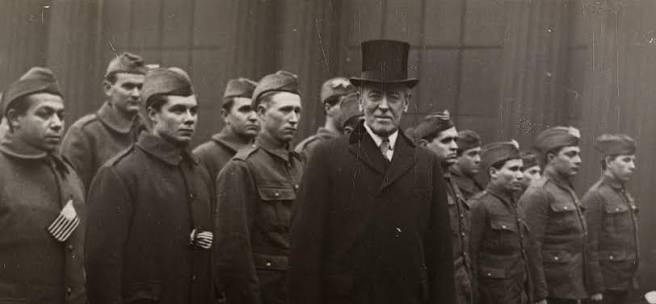
The war also reshaped the balance of global power. European economies were devastated, while the United States emerged as a creditor nation and a rising military force. The US entry into the war in 1917 was framed as a crusade for democracy, and it marked the beginning of America’s ascent to global dominance. Yet, after the war, the US retreated into isolation, refusing to join the League of Nations—a decision that undermined the new world body from the start.
The Unfinished Peace
The League of Nations, conceived as the first global intergovernmental organization for peace, was a direct product of the war. It failed to prevent World War II, but it laid the groundwork for the United Nations. Its creation was a revolutionary idea: that nations could collectively manage conflict. Its failure was a lesson in the limits of idealism.
On the home front, the war had unleashed social change. Women entered factories and munitions plants in unprecedented numbers, accelerating the push for suffrage. Britain granted partial suffrage in 1918, the US in 1920. But the gains were uneven; after the war, many women were pushed back into domesticity, and the true revolution in gender roles would come later.
The Long Shadow
Today, the war’s legacy is invoked in debates about nationalism, border conflicts, and the ethics of military intervention. The chemical weapons ban, enshrined in international law, owes its existence to the horrors of gas warfare. The Middle East’s ongoing instability, the rise of populist nationalism in Europe, and the very structure of the United Nations all bear the imprint of 1914–1918.
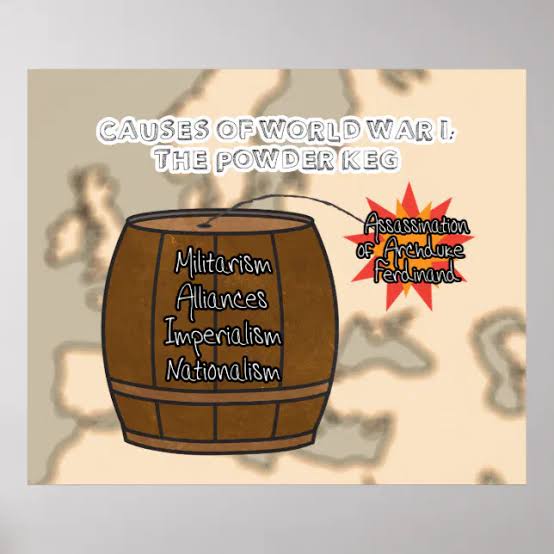
The war was not “pointless” nor was it wholly “just.” It was a catastrophe caused by a complex web of alliances, militarism, nationalism, and miscalculation—a failure of leadership that cost millions of lives. The lessons of that failure remain urgent. As the last veterans have died, we are left with the monuments and the memory. The task is to remember not just the sacrifice, but the decisions that made it necessary.
The guns of 1918 have long been silent, but their echo persists. The borders drawn in the sand, the institutions built to prevent another war, and the psychological scars of a generation all continue to shape our world. Understanding the legacy of WWI is not merely an exercise in nostalgia; it is a way of recognizing the fragility of peace and the cost of complacency. The past is never fully past—it lives on in the present, demanding we learn its lessons.
Summary
- World War I involved 30+ nations, mobilized ~70 million troops, and caused 9–11 million military deaths.
- The Treaty of Versailles assigned sole war guilt to Germany, contributing to WWII.
- Sykes-Picot and the Mandate system created modern Middle Eastern states with enduring conflicts.
- The war introduced new technologies (tanks, chemical weapons, aircraft) and psychological trauma (PTSD).
- It led to the collapse of four empires and the rise of the US as a global power.
FAQ
Q: How did WWI contribute to WWII?
A: The Treaty of Versailles imposed harsh reparations and guilt on Germany, fueling resentment that Nazi propaganda exploited. The economic devastation and political instability created conditions for Hitler’s rise.
Q: What was the Sykes-Picot Agreement?
A: A 1916 secret agreement between Britain and France to divide Ottoman territories, which laid the foundation for modern Middle Eastern states and their ongoing conflicts.
Q: How did WWI affect women’s rights?
A: Women entered the workforce in large numbers during the war, which accelerated suffrage movements. Britain granted partial suffrage in 1918 and the US in 1920, though gains were uneven and contested.
Q: What is the ‘stab-in-the-back’ myth?
A: The false German belief that civilians and socialists betrayed the army, leading to defeat. It undermined the Weimar Republic and fueled far-right nationalism.
Q: Why is the League of Nations important?
A: It was the first global intergovernmental organization for peace, created after WWI. Though it failed to prevent WWII, it served as a blueprint for the United Nations.