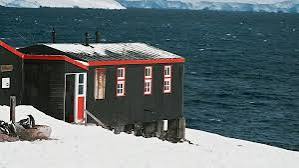
Imagine your daily commute involves dodging gentoo penguins, your office is a historic hut from the 1940s, and your mailbag is delivered by ship across the Drake Passage. That’s the reality for the four-person team that runs Port Lockroy, the world’s most remote post office, on Goudier Island, Antarctica.
Port Lockroy isn’t just any post office. It’s a living museum, a functioning postal service, and a wildlife sanctuary rolled into one. Every austral summer, from November to March, a small crew lives in wooden huts originally built for a secret wartime mission, processing up to 100,000 postcards a year for visitors from around the globe. This is their story, and the story of a place that defies ordinary logic.
A Post Office Born from a Secret Wartime Mission
Port Lockroy’s origins are far from postal. In 1944, as World War II raged, the British launched Operation Tabarin, a clandestine mission to establish a permanent presence in Antarctica. The goals were twofold: assert British sovereignty against Argentine and Chilean claims, and gather meteorological intelligence critical for Allied shipping in the South Atlantic. The base on Goudier Island, dubbed ‘Base A,’ was one of the first built.
After the war, the base transitioned to scientific research, studying the ionosphere, weather, and local biology. But by 1962, newer, more modern research stations made the cramped, isolated huts obsolete, and Port Lockroy was abandoned.
For three decades, the buildings sat silent, battered by Antarctic winds and slowly buried in snow. Then, in the 1990s, the British Antarctic Survey and the UK Antarctic Heritage Trust (UKAHT) launched a restoration project. They painstakingly restored the huts to their 1960s condition, turning the site into a living museum. And to fund the upkeep, they added a post office in 1996.
The idea was simple: sell postcards and stamps to the growing number of Antarctic tourists, and use the revenue for conservation. What they didn’t anticipate was that the post office would become a global sensation, sending hundreds of thousands of postcards to every corner of the planet.
The Job: Not Your Typical 9-to-5
Every year, UKAHT selects a team of four or five people from hundreds of applicants. Roles include base leader, postmaster, shop manager, and general assistants. They’re chosen not just for skills, but for temperament they need to be adaptable, physically fit, and comfortable with extreme isolation.
Once selected, the team lives exactly as the 1940s expeditioners did. They sleep in cramped bunks in the historic huts, which have no running water, no flushing toilets, and only minimal heating. There’s no shower; staff use wet wipes or sponge baths. Laundry is done by hand. Cooking happens on a small stove, often with canned and dried goods.
The ‘ice toilet’ is a bucket system that requires daily disposal. And the smell? The island is home to several thousand pairs of breeding gentoo penguins, whose guano creates a pervasive, pungent aroma. Plus, with 24-hour daylight in summer, there’s no natural darkness to signal bedtime.
But the rewards are immense. Staff share the island with penguins that nest right up against the hut walls, and with skuas and seals. The landscape is starkly beautiful, with icebergs drifting by and the Antarctic Peninsula rising in the distance. For many, it truly is the best job in the world — even if the reality is far from glamorous.
A Postal Service Like No Other
Port Lockroy is one of only four British Antarctic Territory post offices, the others located at Rothera, Halley, and King Edward Point in South Georgia. Its primary function is serving the tourists who visit by ship — some 70,000 to 80,000 people in a typical summer, making it one of the most visited sites in Antarctica.
Visitors can buy postcards and stamps, get them franked with the special ‘Port Lockroy’ postmark, and mail them to friends and family. Each year, the team processes between 70,000 and 100,000 postcards, sent to over 100 countries. The postmark makes each card a collector’s item, and many people specifically seek out this unique memento.
But don’t expect prompt delivery. At the end of the season, the mail is transported back to the UK and posted from there, so a postcard can take weeks or even months to arrive. For some, the wait is part of the charm.
Life in a Penguin Colony
The island of Goudier is ice-free in summer, but temperatures hover around freezing. The penguins are the true residents; the human staff are merely visitors. The gentoo penguin colony numbers several thousand pairs, and they use the island for nesting, raising chicks, and molting.
The penguins are fearless and curious, often wandering right up to the hut doors. They’re also loud, with constant braying and squabbling. For the staff, the noise becomes a backdrop to daily life — a soundtrack that’s both charming and relentless.
Despite the idyllic portrayals, the environment is harsh. Winds can be fierce, and the cold seeps into the unheated parts of the huts. Staff must constantly monitor the historic structures to ensure they’re preserved for future generations.
Balancing Tourism and Conservation
Port Lockroy is a Historic Site and Monument (HSM 61) under the Antarctic Treaty System, which governs all activity on the continent. The Treaty, signed in 1959, designates Antarctica for peaceful, scientific use, and imposes strict environmental regulations.
At Port Lockroy, this means visitor numbers are capped, and ships must follow rigorous biosecurity protocols to prevent introducing non-native species. No waste is left behind; everything is shipped out. The UKAHT uses revenue from the post office and shop to fund conservation projects across the British Antarctic Territory.
But the site’s popularity raises questions. Is tourism itself a threat to the very place it celebrates? Some critics argue that the constant stream of visitors wears on the fragile environment, even with careful management. The UKAHT counters that the post office’s educational value and financial support for conservation outweigh the impacts, and that the site would otherwise be left to decay.
The debate is part of a larger conversation about balancing human access with preservation in Antarctica. Port Lockroy serves as a living experiment in how to do it right — or at least, how to try.
A Symbol of History and Politics
Beyond its postal and ecological roles, Port Lockroy is a symbol of British territorial claims in Antarctica. The Treaty freezes sovereignty claims, but the base’s presence reinforces the UK’s historical and ongoing interest in the region. For visitors, the site offers a tangible connection to the heroic age of Antarctic exploration and the Cold War-era politics that shaped the continent.
Walking through the huts, with their vintage tins, radio equipment, and bunks, is like stepping back in time. It’s a reminder that Antarctica’s history is not just about science and adventure, but also about national pride and strategic interests.
The Application Process: How to Get the Job
If you’re dreaming of spending a summer in Antarctica, here’s what it takes: UKAHT typically opens applications in the spring for the following season. Candidates undergo a rigorous selection process, including interviews and background checks. Previous experience in remote environments, mechanical skills, and a sense of humor are all assets.
Once chosen, staff undergo training in the UK, including conservation techniques and emergency procedures. They’re then flown to the Antarctic Peninsula, often via South America, and taken to the island by ship.
The job is unpaid — or rather, volunteers cover their own travel and expenses, though accommodation and food are provided. In exchange, they get an unforgettable experience and the chance to be part of a unique global community.
Port Lockroy is more than just a post office; it’s a living testament to human curiosity, resilience, and the enduring appeal of the world’s most extreme places. For the lucky few who spend a season there, it’s a chance to live history, to protect a fragile ecosystem, and to send a little piece of Antarctica to every corner of the globe. As the ice melts and the world changes, this remote outpost remains a constant — a reminder of what we can achieve when we work together, even in the most unlikely of settings.
Summary
- Location: Port Lockroy, on Goudier Island, Antarctica, is a historic site and the world’s most remote post office, operating only during the austral summer.
- History: Originally built in 1944 for a secret wartime mission (Operation Tabarin), the base was abandoned in 1962 and restored as a museum and post office in 1996.
- Operations: A team of 4-5 volunteers lives in the historic huts, processing 70,000-100,000 postcards annually for visitors from over 100 countries.
- Life: Staff face isolation, cramped quarters, no running water, and the constant noise and smell of a penguin colony, but also enjoy stunning scenery and a unique sense of purpose.
- Conservation: The post office is a Historic Site and Monument, balancing tourism with strict environmental protections under the Antarctic Treaty System.
FAQ
Q: How do I send a postcard from Port Lockroy?
A: You can visit during the austral summer (November-March) and buy postcards and stamps on site. The team will frank them with the special Port Lockroy postmark, and they’ll be mailed from the UK after the season ends, so delivery can take weeks or months.
Q: Is it really the world’s most remote post office?
A: It’s widely described as such, though the title is contested. It’s certainly one of the most isolated, accessible only by ship and staffed only during the summer months.
Q: How many people work there?
A: Typically 4-5 staff members, including a base leader, postmaster, shop manager, and general assistants. They are all volunteers.
Q: What’s the living situation like?
A: Staff live in the historic huts with no running water, no flushing toilets, and minimal heating. They use an ‘ice toilet’ (bucket system), wash with wet wipes, and cook on a small stove.
Q: Can I get a job there?
A: Yes, UKAHT recruits volunteers each year. You need to be physically fit, adaptable, and comfortable with isolation. Check the UKAHT website for application details.