Tag: travel food

  • Street Food vs. Michelin Stars: Which One Really Tastes Like Home?

    Michelin-star dining vs local street food: Which is better - CNBC TV18

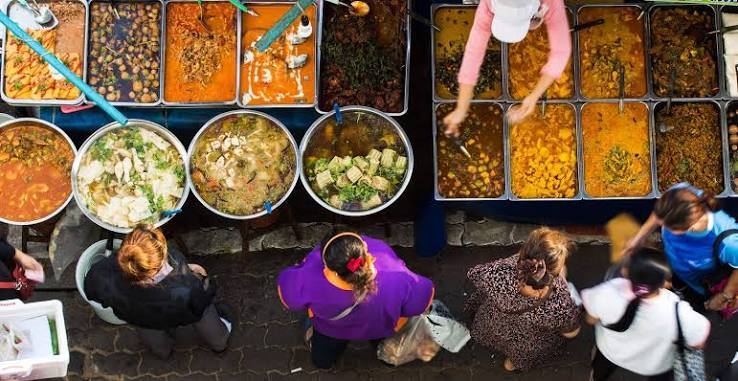
    Ask a traveler in Bangkok where to find the city’s soul, and they’ll likely point to a steaming noodle stall on Yaowarat Road. Ask a food critic the same question, and they might name a hushed dining room where each plate arrives like a tiny work of art. Two very different answers, two very different price tags. But which one actually delivers the ‘true local experience’?

    The answer isn’t as obvious as you’d think. It’s not just about authenticity or cost—it’s about what we mean by ‘local’ in the first place. And that’s a concept with more layers than a good lasagna.

    Defining the Battlefield

    Before we pit a $2 taco against a $200 degustation menu, let’s get the terms straight.

    Street food is ready-to-eat fare sold by vendors in public spaces—markets, parks, sidewalks. It’s cheap, made to order, and eaten without ceremony (or sometimes, without a chair). It’s the food of daily life, with roots in ancient Rome’s thermopolia and medieval Asia’s bustling bazaars.

    Michelin stars are the gold standard of fine dining, awarded by a French tire company’s guide that started in 1900 to sell tires. Today, a star (or two or three) is a global badge of culinary excellence, based on criteria like ingredient quality, technique mastery, and consistency. A starred meal typically costs $100 to $500 per person—or more.

    So on the surface, these are opposites: one is humble and everyday, the other exclusive and aspirational. But the line between them isn’t always so clear.

    The Street Food Advantage: Where Locals Actually Eat

    The strongest argument for street food as the true local experience is simple: it’s where locals actually go, day in and day out.

    In Mexico City, office workers queue at taco stands for lunch. In Singapore, hawker centers are the default family dinner spot. In Mumbai, the vada pav is the city’s working-class staple, not a tourist novelty. Street food reflects real eating habits—fast, affordable, and consistent. It’s the food of the people, and it’s deeply tied to local culture.

    That’s not romanticization; it’s economics. The UN Food and Agriculture Organization estimates street food vendors support the livelihoods of 2.5 billion people daily. This is the food that fuels cities.

    Street food also carries cultural DNA. Recipes are often family secrets, passed down through generations. A vendor in Istanbul grilling fish on a boat isn’t just selling a sandwich—they’re continuing a tradition that’s older than the republic.

    And when tourists seek out these stalls, they’re not just tasting food; they’re participating in a daily ritual that millions of locals share.

    The Michelin Pitch: Local Ingredients, Global Standards

    Michelin defenders argue that a starred restaurant can be just as ‘local’—just in a different register.

    Take El Califa de León, a taqueria in Mexico City that earned a star in 2024. The menu is the same tacos al pastor that locals have eaten for decades, but the execution is elevated to a level that meets global fine-dining standards. The chef’s personality, the quality of the ingredients, the consistency—all are judged by international critics.

    Similarly, Singapore’s hawker stalls like Hawker Chan and Hill Street Tai Hwa Pork Noodle show that street food itself can earn Michelin’s approval. Hawker Chan became the world’s first Michelin-starred street food vendor in 2016, serving soy sauce chicken rice for about $2. (It lost the star in 2021, but the point stands.)

    These examples blur the street-food-versus-fine-dining line. They suggest that ‘local’ doesn’t have to mean ‘rough around the edges.’ A chef can use local ingredients, honor local traditions, and still achieve the precision that Michelin rewards.

    The Authenticity Trap: Who Decides What’s Real?

    Here’s where things get tricky.

    Food sociologists like Krishnendu Ray argue that ‘authenticity’ is a social construct—often defined by outsiders, not by the people who actually live the culture. Tourists romanticize street food as ‘authentic’ because it feels exotic and unpolished. But locals might see it as simply ‘lunch,’ not a cultural treasure. Conversely, a Michelin-starred restaurant might be seen by locals as a special-occasion splurge, not a reflection of how they eat every day.

    Consider this: In Bangkok, locals eat street food daily, but they also visit upscale restaurants for celebrations. Both are part of the city’s food ecosystem. One isn’t more ‘real’ than the other—they serve different purposes.

    The same goes for Michelin’s expansion into Asia and Latin America. Critics say the guide imposes French fine-dining standards on cultures where food is communal and casual. Proponents argue it elevates local chefs and brings global attention to overlooked cuisines. Both are true, to some extent.

    The Tourism Factor: What Travelers Actually Want

    When you’re visiting a new city, your choice between a street stall and a starred restaurant often comes down to what you’re seeking.

    If you want to see how locals live, street food is the obvious pick. Markets like Bangkok’s Yaowarat Road or Mexico City’s Mercado de San Juan are cited as the #1 culinary attraction in their cities—not because they’re fancy, but because they’re alive. You’ll hear the sizzle of woks, watch vendors work their craft, and eat shoulder-to-shoulder with people who’ve been doing this for years.

    If you want to understand a region’s culinary potential—its best ingredients, its most skilled chefs—a Michelin-starred meal offers insight that street food can’t. These restaurants often push boundaries, experimenting with techniques and presentations that redefine a cuisine.

    The Michelin Guide’s reach has grown to over 40 countries and 3,000 starred restaurants, and studies show that stars can boost a city’s culinary tourism by 15-30%. But street food markets remain the top draw in many places, suggesting travelers vote with their stomachs for the everyday experience.

    The Cost Question: Who Gets to Participate?

    There’s an uncomfortable economic angle to this debate.

    Street food is accessible. A meal costs $2 to $15, which means anyone—locals and tourists alike—can participate. That’s a powerful form of cultural exchange.

    Michelin dining is exclusive. At $100 to $500 per person, it’s out of reach for most people, both locals and visitors. This creates a tension: if the ‘true local experience’ is only affordable to a wealthy few, can it really be called local?

    On the other hand, street food vendors often struggle with low margins and precarious working conditions. A Michelin star can transform a chef’s career, but it doesn’t solve the systemic issues facing street food economies.

    The Verdict: It Depends on What You’re Hungry For

    So which is the true local experience?

    The honest answer is: both, and neither.

    Street food is the closest you can get to everyday life—the food that fuels cities and carries centuries of tradition. If you want to taste what locals actually eat, this is your answer.

    But Michelin-starred restaurants can also be local, in a different sense. They take local ingredients and techniques and push them to new heights, often under the guidance of a chef whose creativity is rooted in their homeland.

    The trick is to avoid the authenticity trap. Don’t assume that ‘local’ means ‘unrefined,’ or that ‘fine dining’ means ‘inauthentic.’ Instead, ask yourself: what kind of experience do I want?

    If you’re in Singapore, try the chili crab at a hawker center—and also see if you can get a reservation at a modern Peranakan restaurant that reimagines grandma’s recipes. Both are Singaporean. Both are local. They just speak different dialects of the same cuisine.

    In the end, the ‘true’ local experience isn’t a single thing. It’s the whole spectrum—from a $2 taco to a $200 tasting menu—that tells the story of a place. The real adventure is tasting your way through both ends.

    So next time you travel, skip the debate. Eat the street food. Splurge on the starred meal if you can. Your palate—and your understanding of the place—will be richer for it.

    The ‘true local experience’ is a spectrum, not a single point. Street food offers the pulse of daily life, while Michelin dining showcases the peak of culinary craft. Both are valid, both are local, and the best travelers sample both. The next time someone asks which is better, tell them: it’s not either/or—it’s both/and.

    Summary

    • Street food is where locals eat daily, reflecting real eating habits and cultural traditions.
    • Michelin-starred restaurants, like El Califa de León, can also be local, elevating traditional dishes to global standards.
    • Authenticity is a social construct; what’s ‘authentic’ depends on who’s asking.
    • Cost and accessibility matter: street food is inclusive, while Michelin dining is exclusive.
    • The best approach is to experience both ends of the spectrum for a fuller understanding of a place’s food culture.

    FAQ

    Q: Is street food always cheaper than Michelin-starred food?
    A: Yes, typically. Street food meals average $2-$15, while Michelin-starred meals range from $100-$500+ per person. But exceptions exist—some street stalls, like Hawker Chan in Singapore, earned a Michelin star while keeping prices low.

    Q: Can street food earn a Michelin star?
    A: Yes. Hawker Chan (Singapore) was the first in 2016, followed by Hill Street Tai Hwa Pork Noodle (Singapore) and El Califa de León (Mexico City) in 2024. These are rare but possible.

    Q: Does Michelin’s guide impose French standards on other cultures?
    A: Critics say yes, arguing the guide prioritizes French fine-dining norms over local traditions. Proponents counter that it has elevated local chefs and cuisines, bringing global recognition.

    Q: Why do tourists often prefer street food for a ‘local experience’?
    A: Street food is where locals actually eat daily, making it feel more authentic and accessible. It’s also cheaper and often more Instagrammable, which appeals to travelers.

    Q: Can a Michelin-starred restaurant be considered ‘local’?
    A: Absolutely. If it uses local ingredients, honors regional techniques, and reflects the chef’s cultural background, it can be as local as a street stall—just in a different format.
  • Street Food Around the World: 20 Iconic Dishes You Must Try

    Street Food Around the World: 20 Iconic Dishes You Must Try

    Every day, an estimated 2.5 billion people eat street food. From the bustling night markets of Bangkok to the food carts of New York City, street food is more than just a quick bite—it’s a window into a culture’s soul. It’s affordable, accessible, and often made with recipes passed down through generations. In this article, we’ll take you on a culinary journey across the globe, exploring 20 iconic street foods that you absolutely must try. Whether you’re a seasoned traveler or an armchair foodie, these dishes represent the heart and hustle of their cities.

    Asia: The Street Food Epicenter

    Asia is often considered the street food capital of the world, with vibrant markets and hawker stalls serving up an incredible variety of flavors. Here are some of the most iconic dishes from the region.

    Banh Mi (Vietnam)

    A perfect fusion of French colonialism and Vietnamese ingredients, banh mi is a baguette sandwich filled with pâté, pickled vegetables, cilantro, and your choice of meat. The crispy bread, savory fillings, and tangy pickles create a symphony of textures and tastes. You’ll find it everywhere in Vietnam, from street corners to dedicated shops.

    Takoyaki (Japan)

    Originating in Osaka, takoyaki are spherical snacks made of a wheat-flour batter filled with octopus, pickled ginger, and green onion. They’re cooked in special molded pans, brushed with takoyaki sauce, and topped with bonito flakes and mayonnaise. These piping hot balls are a beloved street food, especially at festivals.

    Pad Thai (Thailand)

    Perhaps Thailand’s most famous export, pad Thai is a stir-fried rice noodle dish with tamarind, fish sauce, shrimp or tofu, eggs, and peanuts. It’s a balance of sweet, sour, and salty flavors, often served with lime and chili flakes. Street vendors in Bangkok whip it up in minutes over high flames, making it a must-try.

    Momo (Nepal/Tibet/India)

    These steamed dumplings are a staple in the Himalayan regions. Filled with minced meat or vegetables and served with a spicy chutney, momos are a comforting snack that’s both simple and satisfying. They’re often enjoyed with a side of clear soup.

    Satay (Indonesia/Malaysia)

    Satay consists of skewered, grilled meat—usually chicken, beef, or lamb—served with a rich peanut sauce. The meat is marinated in spices like turmeric and lemongrass, giving it a distinctive flavor. It’s a popular street food in Southeast Asia, often sold by vendors grilling over charcoal.

    Xiaolongbao (China)

    These soup dumplings from Shanghai are a marvel of culinary engineering. The filling includes pork and a gelatinized broth that melts when steamed, creating a burst of soup in every bite. They’re typically served in bamboo steamers and eaten with black vinegar and ginger.

    Khao Man Gai (Thailand)

    This Thai version of Hainanese chicken rice is a simple yet flavorful dish: poached chicken served on fragrant rice cooked in chicken broth, with a side of ginger sauce. It’s a beloved street food in Bangkok, often sold at dedicated stalls that have perfected their recipe over decades.

    Middle East: A Melting Pot of Flavors

    The Middle East offers a rich tapestry of street foods, influenced by ancient trade routes and diverse cultures.

    Falafel (Egypt/Levant)

    Falafel are deep-fried balls or patties made from ground chickpeas or fava beans, mixed with herbs and spices. They’re often served in pita bread with salad, tahini, and pickles. Crispy on the outside, fluffy on the inside, falafel is a vegetarian favorite that’s both filling and delicious.

    Shawarma (Turkey/Levant)

    Shawarma is a popular Middle Eastern dish where marinated meat (chicken, lamb, or beef) is stacked on a vertical rotisserie and slowly roasted. It’s shaved off and wrapped in pita or flatbread with garlic sauce, pickles, and sometimes fries. The combination of juicy meat and tangy sauces makes it irresistible.

    Africa: Bold and Spicy

    African street food is known for its bold spices and hearty ingredients.

    Bunny Chow (South Africa)

    Originating in Durban, bunny chow is a hollowed-out loaf of bread filled with curry. It’s a portable meal that’s both filling and flavorful. The curry can be made with chicken, beef, or vegetables, and is often served with a side of sambal (a spicy condiment).

    Suya (Nigeria)

    Suya is a spicy grilled meat skewer, typically beef, coated in a peanut-based spice mix. The meat is grilled over open flames and served with sliced onions and tomatoes. It’s a popular street food in Nigeria, known for its fiery kick and smoky flavor.

    Europe: Classic Comforts

    Europe’s street food scene is a mix of traditional snacks and modern innovations.

    Crepes (France)

    Crepes are thin pancakes made from wheat flour, eggs, and milk. They can be filled with sweet ingredients like Nutella, strawberries, and sugar, or savory options like ham, cheese, and eggs. You’ll find crepe stands all over France, especially in Paris, where they’re a beloved treat.

    Churros (Spain)

    Churros are fried dough pastries coated in cinnamon sugar, often served with a thick hot chocolate for dipping. They’re a popular breakfast or late-night snack in Spain, and you’ll see them at fairs and street stalls across the country.

    Poutine (Canada)

    Though not European, poutine is a Canadian classic that deserves a spot on this list. It consists of French fries topped with cheese curds and smothered in gravy. It’s a hearty, indulgent dish that originated in Quebec and has become a national icon.

    North America: Bold and Diverse

    North American street food is as diverse as its population, with influences from all over the world.

    Tacos al Pastor (Mexico)

    Tacos al pastor are a Mexican favorite, featuring thinly sliced pork marinated in achiote and spices, then roasted on a vertical spit. The meat is served on small corn tortillas with pineapple, onion, and cilantro. The combination of sweet and savory flavors is a true delight.

    Hot Dog (USA)

    The hot dog is an American classic, a grilled or steamed sausage served in a bun with a variety of condiments like mustard, ketchup, onions, and relish. It’s a staple at baseball games, street carts, and backyard barbecues across the country.

    South America: Flavorful and Filling

    South American street food is known for its hearty portions and vibrant flavors.

    Arepas (Colombia/Venezuela)

    Arepas are cornmeal cakes that are grilled, baked, or fried. They can be split and filled with cheese, meat, beans, or avocado. They’re a versatile and satisfying street food that’s a staple in both Colombia and Venezuela.

    Empanadas (Argentina/Chile)

    Empanadas are pastries filled with meat, cheese, or vegetables, then baked or fried. They’re a popular snack throughout Latin America, with each country having its own variation. In Argentina, they’re often filled with beef, onions, and spices, while Chilean versions might include seafood.

    Caribbean: Island Spice

    The Caribbean offers a unique blend of African, European, and indigenous influences.

    Jerk Chicken (Jamaica)

    Jerk chicken is a Jamaican specialty, where chicken is marinated in a spicy mixture of scotch bonnet peppers, allspice, thyme, and other spices, then grilled over pimento wood. The result is a smoky, fiery, and incredibly flavorful dish. It’s often served with rice and peas or festival (a type of fried dough).

    Oceania: Down Under Delights

    Oceania’s street food scene is a mix of British influences and local ingredients.

    Meat Pie (Australia/New Zealand)

    The meat pie is a beloved snack in Australia and New Zealand. It’s a flaky pastry filled with minced meat and gravy, often eaten on the go. It’s a comforting, savory treat that’s perfect for a quick lunch or a snack at a sporting event.

    Conclusion

    Street food is more than just food—it’s a cultural experience that connects us to the people, history, and soul of a place. From the bustling streets of Bangkok to the quiet corners of Paris, these 20 iconic dishes represent the best of what the world has to offer. So next time you travel, skip the fancy restaurants and head to the street stalls. You’ll not only taste incredible food but also support local economies and immerse yourself in the local culture.

    Summary

    • Street food is a global phenomenon, with 2.5 billion people eating it daily.
    • It provides affordable, accessible nutrition and supports millions of entrepreneurs.
    • Iconic dishes like banh mi, tacos al pastor, and jerk chicken offer unique cultural insights.
    • Street food is a major draw for food tourism, with tours in cities like Bangkok and Mexico City.
    • Trying street food is a way to connect with local culture and history.

    FAQ

    Q: Is street food safe to eat?
    A: Generally, yes, if you choose vendors with high turnover and food cooked to order. Look for stalls that are busy with locals, as that’s a good sign of freshness.

    Q: What are some common street food ingredients?
    A: Ingredients vary by region, but common ones include rice, noodles, bread, meats, vegetables, and spices. Many dishes are fried or grilled, making them flavorful and portable.

    Q: Can street food be healthy?
    A: Some street foods can be healthy, like fresh fruit, grilled meats, or vegetable-based dishes. However, many are fried or high in sodium, so it’s best to enjoy them in moderation.

    Q: How can I find the best street food?
    A: Ask locals, look for long lines, and explore markets. Often, the best street food is found where locals eat, not in tourist-heavy areas.

    Q: Are there any famous street food markets?
    A: Yes, some famous ones include the night markets in Bangkok, the hawker centers in Singapore, and the street food stalls in Mexico City’s Mercado de San Juan.