In the high valleys of the Caucasus Mountains, two fermented milk drinks evolved in isolation for centuries, each carrying the cultural DNA of its people. Kefir, with its grainy, effervescent tang, was a guarded treasure among the Karachay and Balkar herders. Matsoni, a thicker, yogurt-like staple, anchored Armenian and Georgian kitchens and even their feasts.
Today, these ferments are more than nostalgic foods. They are living evidence of how traditional knowledge can shape microbial communities and potentially human health. As commercial versions flood supermarket shelves, the original, grain-based and culture-rich forms still hold secrets that modern science is only beginning to unpack.
A Tale of Two Ferments
Kefir and matsoni emerged from the same basic need: preserving milk in a warm climate without refrigeration. But their paths diverged in culture, taste, and microbial complexity.
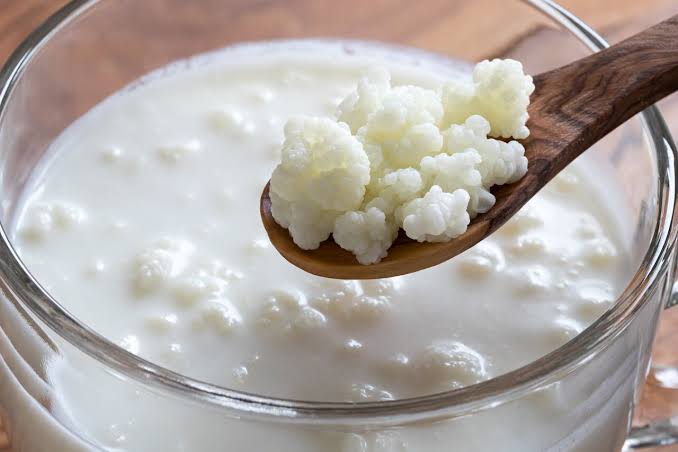
Kefir is a symbiotic community of roughly 30 to 50 strains of bacteria and yeasts, held together in gelatinous ‘grains’ by a polysaccharide called kefiran. It ferments at room temperature, producing a slight fizz and a tart, yeast-like flavor. The grains were passed down through generations, often considered a family heirloom — and in local lore, a gift from Allah.
Matsoni, by contrast, relies on a simpler culture of Lactobacillus delbrueckii subsp. lactis and Streptococcus thermophilus. It ferments at a warmer 40–45°C, yielding a thick, spoonable texture akin to yogurt but with its own sharp, clean acidity. In Armenia, written records mention it over 4,000 years ago. In Georgia, it anchors the supra feast, served alongside mchadi cornbread or stirred into soups like kharcho.
The differences run deeper than taste. Kefir’s multi-species ecosystem makes it a moving target for science — each grain houses a unique microbial fingerprint. Matsoni’s defined culture is closer to yogurt, but its specific strains give it distinct probiotic properties.
Microbial Riches and Health Claims
Both drinks have drawn attention for their potential health benefits, and recent peer-reviewed studies offer cautious support.
Kefir has been shown in journals like Nutrients and Frontiers in Microbiology to exhibit probiotic, antimicrobial, and anti-inflammatory activity. Some studies suggest it may help lower cholesterol. Notably, many lactose-intolerant individuals can consume kefir without discomfort, thanks to microbial lactase that breaks down lactose during fermentation.
Matsoni research, published in International Journal of Food Microbiology, points to improved gut health markers and antioxidant effects. Traditionally, it was used as a folk remedy for stomach ailments — a practice now echoed by laboratory findings.
But the evidence is not a blank check. Most studies are small or conducted in animal models, and commercial products often contain only a few defined strains, lacking the complexity of the traditional versions.
The Geography of Taste
The Caucasus is a biodiversity hotspot for ferments — ayran, tan, suluguni cheese, and countless vegetable pickles all thrive there. This variety stems from the region’s fractured geography: isolated valleys created distinct microclimates and communities, each developing its own fermentation practices.
Pastoralist traditions shaped these foods. Herders moved sheep and goats between seasonal pastures, and fermented dairy provided a portable, shelf-stable source of nutrition. In populations where lactase persistence was less common, fermentation made milk digestible for adults — a critical adaptation.
From Family Secret to Soviet Standard
For centuries, kefir was virtually unknown outside the Caucasus. The grains were closely guarded within clans, and their propagation methods were kept secret. That changed in 1908, when a Moscow dairy manufacturer named Blandov sent his employee Irina Sakharova to obtain kefir grains. Legend has it that she succeeded after a kidnapped prince and a daring escape — a story that may be more romance than fact, but it marks the moment kefir entered the broader Russian and eventually global market.
Under the Soviet Union, both kefir and matsoni were industrialized. Freeze-dried starter cultures replaced household grains and back-slopping methods. This standardization ensured wide distribution but diluted the microbial diversity that made traditional versions unique.
Today, you can buy ‘kefir’ in any grocery store, but it often contains only a handful of strains — a far cry from the complex grain-based brew. Similarly, commercial matsoni may not capture the full character of the Armenian or Georgian original.
The Longevity Myth and Modern Science
The Caucasus has long been romanticized as a land of centenarians. The ‘Abkhazian long-livers’ were a staple of Soviet-era propaganda, and fermented dairy was often cited as the cause. Modern gerontology has largely debunked the extreme longevity claims — birth records were often unreliable — but the interest sparked by these myths drove early scientific inquiry.
In the late 19th century, Nobel laureate Ilya Mechnikov popularized the idea that lactic acid bacteria promote longevity, focusing on Bulgarian yogurt but inspiring wider research into Caucasian ferments. That legacy persists in today’s probiotic research, even as the myths themselves have faded.
Keeping Tradition Alive
In Georgia and Armenia, matsoni remains a daily staple. In diaspora communities, brands like ‘Matsoni’ appear in Russian grocery stores across the U.S. and Europe. And a growing movement of home fermenters is rediscovering grain-based kefir, swapping cultures online and passing them down in a modern echo of the old clan traditions.
The forgotten ferments of the Caucasus are not forgotten — they are just waiting to be re-learned. Their value lies not only in their potential health effects but in what they represent: a living link to pastoralist pasts, and a reminder that some of the best food science was done without a laboratory.
Kefir and matsoni are more than drinks — they are microbial archives of a region’s history, geography, and ingenuity. As science continues to explore their complex ecosystems, these ferments offer a bridge between traditional knowledge and modern health. Whether you sip a glass of grain-fermented kefir or spoon up thick matsoni with cornbread, you’re tasting centuries of adaptation.
Summary
- Kefir originated in the North Caucasus, with a complex symbiotic culture of 30–50+ strains, while matsoni comes from Armenia and Georgia, using a simpler yogurt-like culture.
- Both have documented probiotic, antimicrobial, and anti-inflammatory potential, though commercial versions often lack the microbial richness of traditional forms.
- Their development was driven by pastoralist needs and geographic isolation, and they were later industrialized under the Soviet Union, diluting their diversity.
- The Caucasus longevity myth, though largely debunked, helped spark scientific interest in fermented dairy.
- Traditional kefir grains and matsoni cultures are still preserved by home fermenters and diaspora communities.
FAQ
Q: What’s the difference between kefir and matsoni?
A: Kefir is a fermented milk drink made with kefir grains that contain a complex mix of bacteria and yeasts, resulting in a fizzy, tart beverage. Matsoni is a thicker, yogurt-like product fermented with a simpler culture of Lactobacillus and Streptococcus at higher temperatures.
Q: Can lactose-intolerant people drink kefir or matsoni?
A: Many lactose-intolerant individuals tolerate kefir well because the microbes produce lactase that breaks down lactose. Matsoni also contains active cultures that may help, but individual tolerance varies.
Q: Are commercial kefir and matsoni as healthy as traditional versions?
A: Commercial products often use only a few defined strains, so they lack the microbial diversity of traditional kefir grains or back-slopped matsoni. However, they still offer some probiotic benefits.
Q: How did kefir spread from the Caucasus?
A: Kefir remained largely isolated until 1908, when a Moscow dairy sent Irina Sakharova to obtain grains. A popular legend involves a kidnapped prince, but the result was that kefir grains were brought to Russia and later industrialized.
Q: Is the Caucasus longevity claim about fermented dairy true?
A: The extreme longevity claims are largely discredited, but the scientific interest they generated led to valuable research on fermented dairy and health.