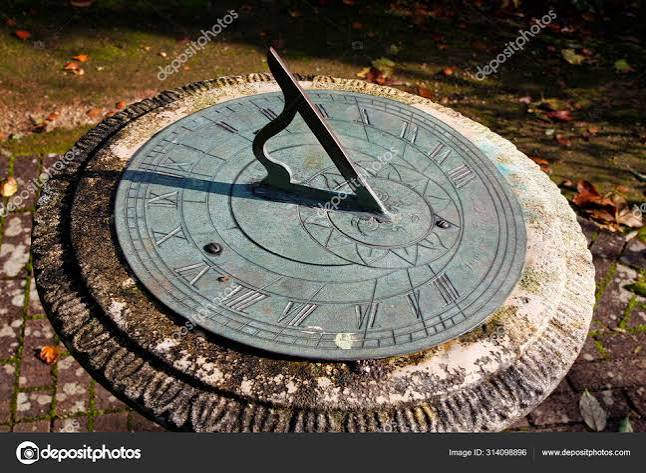
Before smartphones and atomic clocks, people told time by looking at a stick’s shadow. Sundials, the oldest known timekeeping devices, weren’t just simple garden ornaments—they were precise astronomical instruments that solved complex geometry with nothing but sunlight and shadow. More surprisingly, these ancient tools directly influenced the invention of the mechanical clock and even revealed the irregularities in Earth’s motion that led to our current system of standardized time.
In this article, we’ll explore how sundials work, trace their fascinating history across civilizations, and uncover the surprising ways they shaped the clocks we use today. You’ll never look at a sundial the same way again.
What Exactly Is a Sundial?
A sundial tells time by tracking the position of the Sun’s shadow. The key part is the gnomon—the raised piece that casts the shadow. You might think the gnomon just points straight up, but for accurate timekeeping, it must be tilted. It has to align with Earth’s rotational axis, meaning it points true north (in the Northern Hemisphere) at an angle equal to your latitude. For example, if you’re in New York (latitude 40.7° N), the gnomon should lean at 40.7° from horizontal.
This alignment is crucial because it makes the shadow move at a constant rate across the dial. The dial face has hour lines, but they aren’t evenly spaced like on a clock. Instead, they fan out according to trigonometry. The only exception is the equatorial sundial, where the dial is parallel to the equator, making hour lines evenly spaced 15° apart.
There are several types: horizontal (the common garden variety), vertical (mounted on walls), polar (parallel to Earth’s axis), and even analemmatic sundials where you stand on a date marker and become the gnomon yourself.
The Ancient Origins: From Shadow Sticks to Public Monuments
Sundials have been around for millennia. The earliest known shadow clocks come from ancient Egypt around 1500 BCE. These simple L-shaped devices had a vertical bar on a horizontal base, dividing daylight into fixed parts—but not equal hours. The Egyptians divided the day into 12 parts, but the length of those parts varied with the seasons.
The Babylonians and Greeks later developed more sophisticated hemispherical dials, shaped like a bowl. One famous early dial was attributed to Berossus, a Babylonian priest-astronomer who lived in the 3rd century BCE.
When sundials reached Rome, they became public fixtures. The first sundial in Rome, installed in 263 BCE, was actually looted from Sicily—and it was built for a different latitude. For decades, it told the wrong time to the entire city before being corrected. This mishap highlighted a key problem: sundials are latitude-specific.
Meanwhile, in China, sundials developed independently. The Chinese used gnomons for astronomical observations, tracking solstices and other celestial events, alongside their water clocks.
The Islamic Golden Age: Mastering the Math
Between the 9th and 14th centuries, Islamic scholars made major advances in trigonometry, which allowed them to calculate hour lines for any latitude with precision. They used sundials not just for daily timekeeping but also to determine prayer times. These contributions were crucial in passing knowledge to Europe, where Renaissance astronomers refined the designs further.
The Problem Sundials Exposed: Unequal Hours
Here’s where it gets interesting. Sundials revealed that the length of daylight hours changes with the seasons. Ancient civilizations divided daylight into 12 hours, so summer hours were longer than winter hours. These are called temporal hours. But as societies became more organized—especially monasteries needing fixed prayer times—the need for equal hours grew.
This demand directly drove the invention of mechanical clocks in the 14th century. But once clocks appeared, a new puzzle emerged: they didn’t agree with sundials.
The Equation of Time: Why the Sun Lies
If you compare a sundial to a well-regulated mechanical clock, you’ll notice they can differ by as much as 16 minutes. This discrepancy is called the equation of time, and it has two causes.
First, Earth’s orbit isn’t a perfect circle but an ellipse. According to Kepler’s second law, Earth moves faster when it’s closest to the Sun (in January) and slower when it’s farthest (in July). This makes the solar day slightly longer or shorter than 24 hours.
Second, Earth’s axis is tilted at 23.5°. This tilt causes the Sun’s apparent motion across the sky to vary in speed throughout the year.
Together, these effects produce a figure-eight pattern if you plot the Sun’s position at the same clock time each day. This curve is called the analemma. You’ve probably seen it on globes or maps—it’s that small, elongated loop often printed in the Pacific Ocean.
Sundials measure apparent solar time—what the Sun actually says. Clocks measure mean solar time—an average of the Sun’s motion, smoothed out over a year. The equation of time corrects between the two.
From Sun to Pendulum to Quartz
The history of timekeeping is a direct line from sundials to atomic clocks. Sundials were the first tools to quantify time based on celestial motion. They forced ancient astronomers to think about latitude, angles, and spherical geometry. When mechanical clocks appeared, they were initially set by sundials—people would adjust their clocks to match the sundial at noon, not understanding the equation of time until the 17th century.
The pendulum clock, invented by Christiaan Huygens in 1656, was the first accurate enough to reveal the equation of time in a practical sense. Later, quartz clocks in the 20th century and atomic clocks in the 1940s pushed accuracy to fractions of a second, but they all rely on the same fundamental astronomical constants that sundials encode.
Sundials as Analog Computers
A well-constructed sundial is essentially an analog computer that solves spherical trigonometry in real time, using only geometry. It doesn’t need batteries or software—just sunlight and precise alignment. This makes it a fantastic educational tool for teaching astronomy, geometry, and Earth’s motion.
Today, sundials are making a comeback in modern architecture. Some buildings install functional sundials that account for longitude, daylight saving time, and the equation of time. Others use decorative ones that ignore these corrections—which is why they often show the wrong time. The design challenge is real, and it’s a testament to the complexity that ancient timekeepers solved with just a stick and some markings.
Cultural Significance: More Than Timekeeping
Sundials were never just tools. In ancient Rome, they were public displays of power and learning. In medieval monasteries, they regulated the hours of prayer. Renaissance aristocrats commissioned elaborate dials as status symbols.
Many sundials bear philosophical mottoes. One famous Latin inscription reads, “Horas non numero nisi serenas” — “I count only the shining hours.” This reflects a stoic attitude toward time, focusing on the pleasant moments rather than the dark ones.
The Philosophical Twist: Apparent vs. Mean Time
At its heart, the sundial story is about two kinds of time. Apparent time is what you see—the Sun’s position in the sky. Mean time is an abstraction, a human invention that averages out the Sun’s irregularities to create uniform 24-hour days. Our entire modern civilization runs on mean time, but it’s a fiction. The Sun doesn’t actually follow a perfect schedule.
This distinction matters. It shows that timekeeping isn’t just about observation—it’s about creating a standardized system that everyone can agree on. Sundials remind us that time, as we experience it, is both natural and constructed.
Sundials might seem like quaint relics, but they’re actually the foundation of modern timekeeping. They taught humanity about latitude, geometry, and the irregularity of Earth’s motion. The equation of time, discovered by comparing sundials to clocks, is still fundamental to astronomy and satellite navigation. So next time you glance at a sundial, remember: it’s not just a garden ornament—it’s a window into the history of time itself.
Summary
- Sundials work by using a gnomon aligned with Earth’s rotational axis, casting a shadow that moves at a constant rate.
- They were invented independently in Egypt, Babylon, Greece, Rome, China, and refined during the Islamic Golden Age.
- The need for equal hours, exposed by sundials’ seasonal variations, drove the invention of mechanical clocks.
- The equation of time—the difference between solar time and clock time—was discovered by comparing sundials to early clocks.
- Modern timekeeping, from pendulum to atomic clocks, builds on the celestial mechanics that sundials encode.
FAQ
Q: How accurate can a sundial be?
A: A well-made sundial can be accurate to within one minute of local apparent solar time, but this differs from standard clock time due to the equation of time, which can cause variations of up to ±16 minutes.
Q: Why do sundials show different times than clocks?
A: Sundials measure apparent solar time based on the Sun’s actual position, while clocks measure mean solar time—an average that smooths out irregularities in Earth’s orbit and axial tilt. The difference is called the equation of time.
Q: What is a gnomon?
A: The gnomon is the part of a sundial that casts the shadow. For accurate timekeeping, it must be aligned with Earth’s rotational axis, meaning it points true north (in the Northern Hemisphere) at an angle equal to the observer’s latitude.
Q: Can sundials work at any latitude?
A: No, a sundial is designed for a specific latitude. The gnomon’s angle must match the latitude to produce correct hour lines. A sundial moved to another latitude will give inaccurate readings.
Q: Are sundials still used today?
A: Yes, some are functional in modern architecture, and they’re popular educational tools. Many are decorative, but a few are designed to account for longitude, daylight saving time, and the equation of time to show accurate clock time.