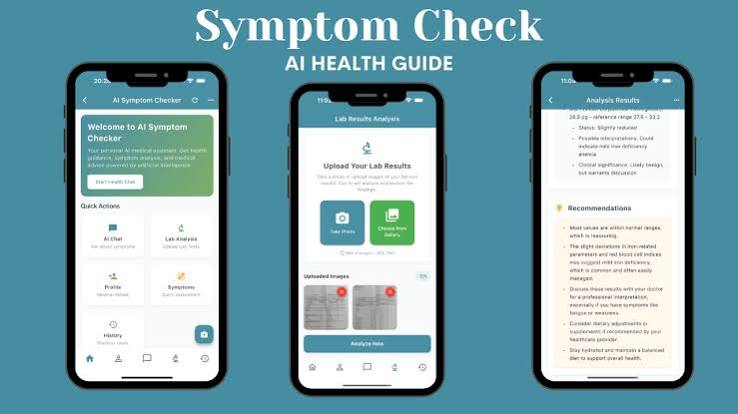
I had a strange rash on my forearm, and my first instinct was to Google it. Ten minutes later, I was convinced I had a rare tropical disease, despite never leaving my city. Sound familiar? This is the classic ‘Dr. Google’ trap: a symptom search that spirals into cyberchondria, fueled by worst-case-scenario results and conflicting advice from random forums.
But last week, I tried something different. Instead of typing symptoms into a search bar, I opened an AI chatbot and described my rash in plain English. Four seconds later, it gave me a list of likely causes, asked a clarifying question, and suggested I see a dermatologist if it didn’t improve in a week. No panic, no doom-scrolling, just a clear, synthesized answer. This is the promise of AI symptom checkers: speed, context, and calm. But can they really replace the diagnostic power of a human doctor? Let’s dig into what these tools can and can’t do.
The Problem with Dr. Google
For years, the go-to method for self-diagnosis has been search engines. Google processes over 1 billion health-related queries daily. But searching for symptoms is like opening a firehose of information: you get pages of WebMD, Mayo Clinic articles, Reddit threads, and content farms, all with varying degrees of credibility. You have to click through, compare sources, and filter out the noise. A 2020 study found that 35% of US adults have used the internet to self-diagnose, and a significant portion of them end up with ‘cyberchondria’ — anxiety triggered by the alarming, worst-case-scenario results that search engines often surface. A headache becomes a brain tumor; a cough becomes lung cancer. This is not just an inconvenience; it can lead to unnecessary stress and even delayed care when people either overreact or dismiss real symptoms.
The AI Alternative: Conversational Symptom Checkers
AI-powered symptom checkers — like ChatGPT, Google’s Gemini, and specialized tools such as Ada Health, K Health, and Buoy — offer a different approach. Instead of returning a list of links, they engage in a conversation. You describe your symptoms in your own words, and the AI asks clarifying questions, just like a doctor would. It synthesizes your answers and provides a list of possible conditions, ranked by likelihood, in seconds. The 4-second diagnosis I experienced is not unusual; LLMs can process and analyze text at lightning speed.
The key advantage is the conversational back-and-forth. A search engine doesn’t know you; it just matches keywords. An AI can ask, ‘Does the pain worsen when you eat?’ or ‘Have you noticed any other symptoms like fever?’ This mimics a clinician’s history-taking, providing a more personalized and nuanced response.
How Accurate Are These Tools?
Accuracy is the elephant in the room. Studies show that AI symptom checkers get the correct diagnosis in the top-3 list roughly 50-70% of the time, depending on the tool and the case. A 2023 study in JAMA Internal Medicine found that ChatGPT performed comparably to physicians in some diagnostic scenarios but had significant gaps. For common, straightforward conditions, AI can be remarkably accurate. For rare or complex diseases, it often misses the mark.
It’s also important to understand what these tools are actually doing. They are not ‘diagnosing’ in the clinical sense. They are pattern-matching your symptoms against vast datasets of medical information to generate a list of differential possibilities. A doctor’s diagnosis involves clinical judgment, physical examination, and often lab tests. An AI cannot touch you, cannot run tests, and cannot read your body language. It operates purely on the information you provide, which may be incomplete or inaccurate.
The Regulatory Gray Zone
Most consumer AI symptom checkers are not FDA-approved as medical devices. They are marketed as ‘informational tools’ or ‘wellness aids,’ not diagnostic instruments. This means they don’t have to meet the same rigorous standards as medical devices. The disclaimer on these apps often reads: ‘This tool is for informational purposes only and is not a substitute for professional medical advice.’ That’s a critical caveat.
This regulatory gray zone raises ethical and legal questions. Who is liable if an AI gives a wrong answer that leads to harm? Can you sue a chatbot? These are open questions that regulators are still grappling with. In the meantime, it’s up to the user to use these tools responsibly.
Could AI Cure Cyberchondria?
One of the most intriguing possibilities is that AI could actually reduce health anxiety. Instead of being bombarded with worst-case scenarios, you get a calm, synthesized answer that puts your symptoms in perspective. AI can say, ‘This is most likely a minor skin irritation, but if it spreads or doesn’t improve in a week, consult a doctor.’ This kind of contextual framing can be incredibly reassuring.
However, the opposite is also possible. If an AI suggests a serious condition without proper framing — for example, listing ‘brain tumor’ as a possibility for a headache — it could amplify anxiety. The way the AI communicates risk is crucial. Some tools do this well, others not so much.
Equity and Access: A Double-Edged Sword
AI symptom checkers could be a boon for underserved populations who lack easy access to doctors. They are available 24/7, cost little or nothing, and can be used from a smartphone. They could help people in rural areas or developing countries get preliminary guidance without traveling long distances.
But there are barriers. These tools require digital literacy, internet access, and often English proficiency, although multilingual support is growing. They also rely on the user being able to describe their symptoms accurately. If you’re not tech-savvy or if you’re in a panic, you might not use the tool effectively.
The Enthusiast’s View: Empowering Patients
Proponents argue that AI symptom checkers are a revolutionary triage tool. They give patients immediate, personalized information, reducing unnecessary doctor visits and providing clarity. For minor issues, an AI can reassure you that it’s nothing serious. For more concerning symptoms, it can prompt you to seek care sooner. This can save time, money, and even lives.
The Skeptic’s View: Dangerous Over-Trust
Medical professionals warn against over-reliance on these tools. They lack context (your medical history, physical exam findings, and lab results). They can miss rare or complex conditions, and they might encourage delayed care if they incorrectly reassure you. The ‘black box’ problem is also a concern: users don’t know why the AI gave a particular answer, so they can’t assess its reliability.
My Take: Use It as a First Step, Not a Last Word
So, should you stop Googling your symptoms? Yes, perhaps. But should you replace your doctor with an AI? Absolutely not. These tools are best used as a starting point — a way to get quick, synthesized information and decide whether you need to see a professional. They are not a substitute for a doctor’s judgment.
My 4-second experience was genuinely helpful. It gave me peace of mind and a clear action plan. But I knew its limitations. It wasn’t diagnosing me; it was offering possibilities based on a pattern. For anything serious, persistent, or concerning, I’d still go to a doctor. The key is to use AI as an informed companion, not an oracle.
The next time you have a weird symptom, resist the urge to Google. Instead, try an AI symptom checker. You’ll get a faster, more contextualized answer, and you might just avoid the dreaded cyberchondria spiral. But remember: these tools are a starting point, not a final diagnosis. Use them to gather information, but always let a real doctor make the call.
Summary
- AI symptom checkers can synthesize your symptoms into a list of possible causes in seconds, unlike traditional search engines that return a jumble of links.
- Studies show AI tools are correct in the top-3 diagnoses 50-70% of the time, but they are not FDA-approved and lack clinical judgment.
- These tools are best used for triage, not as a replacement for professional medical advice.
- They may reduce cyberchondria by providing calm, contextual answers, but they can also amplify anxiety if they suggest serious conditions without proper framing.
- Access and digital literacy are barriers, but AI tools could help underserved populations if made more accessible.
FAQ
Q: Are AI symptom checkers accurate?
A: Studies show they get the correct diagnosis in the top-3 list about 50-70% of the time, but accuracy varies by tool and condition. They are not as reliable as a doctor’s diagnosis.
Q: Can AI tools actually diagnose me?
A: No. They generate possible causes based on pattern matching, but they do not have the clinical context or ability to perform exams and tests. They are informational tools, not diagnostic instruments.
Q: Are these tools FDA-approved?
A: Most consumer AI symptom checkers are not FDA-approved as medical devices. They are marketed as ‘informational’ or ‘wellness’ tools.
Q: Is it safe to use AI instead of seeing a doctor?
A: It is not safe to rely solely on AI for serious or persistent symptoms. Use it as a triage tool to decide if you need to see a doctor, but always seek professional care for concerning issues.
Q: Can AI reduce health anxiety?
A: Possibly, by providing calm, synthesized answers instead of alarming search results. However, it can also amplify anxiety if it suggests serious conditions without proper framing. Use it with caution.