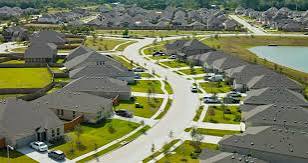
Imagine you’ve just bought a home in a sunny state, eager to install solar panels and replace your thirsty lawn with a drought-tolerant garden. But then the homeowners association (HOA) steps in: no panels on the front roof, and the lawn must stay green and grassy. For millions of Americans, this isn’t hypothetical—it’s a daily reality. HOAs govern roughly 75 million people across more than 365,000 communities, and their rules often clash with sustainability goals. But a growing movement of state laws and forward-thinking communities is flipping the script, turning HOAs from obstacles into allies in the fight against climate change and water scarcity.
The HOA Landscape: A Double-Edged Sword
Homeowners associations were born in the mid-20th century as a way to maintain property values through uniform aesthetics. Today, they wield significant power through Covenants, Conditions & Restrictions (CC&Rs) and architectural review committees (ARCs). These rules can dictate everything from paint colors to lawn height. While they aim to keep neighborhoods tidy, they often do so at the expense of ecological and energy innovation. In Sun Belt states like Florida, Texas, and California—where solar potential is high and water is scarce—HOA restrictions can be particularly problematic.
The Barriers: Solar and Landscaping Restrictions
Solar Panels: Aesthetic vs. Energy
A 2021 study by Lawrence Berkeley National Laboratory found that HOAs are a significant barrier to solar installations. Common restrictions include banning panels on front-facing roofs, requiring color-matching, or imposing lengthy review processes. Even though all 50 states have some form of solar access law, many allow ‘reasonable’ restrictions that effectively block installations. For example, an HOA might demand panels be invisible from the street, which is impossible for most rooftops. This red tape discourages homeowners from going solar, slowing the transition to clean energy.
Landscaping: The Green Lawn Mandate
Traditional HOA rules often require turf lawns and prohibit native plantings, xeriscaping, or edible gardens. A 2020 survey by the National Association of Realtors found that over 50% of HOAs restrict such sustainable landscaping. In drought-prone states, this is a direct obstacle to water conservation. California and Nevada have had to pass laws to override HOA turf mandates, but many communities still enforce water-guzzling lawns.
The Bridge: How HOAs Can Become Sustainability Champions
State Preemption Laws: The Legal Lever
The most powerful tool for change is state legislation. Over the past decade, a wave of ‘solar rights’ and ‘landscaping freedom’ laws has limited HOA authority. For instance, California’s AB 970 (2021) prohibits HOAs from banning drought-tolerant landscaping, and Nevada’s AB 61 (2021) stops them from fining homeowners who remove grass. Florida’s SB 82 (2023) protects ‘Florida-friendly’ landscaping. These laws don’t eliminate HOAs; they redefine their role, ensuring they can’t block sustainability but can still maintain community standards.
Model HOA Practices: Leading by Example
Some HOAs are voluntarily embracing sustainability. They’re updating CC&Rs to allow native gardens, installing community solar arrays, and creating shared pollinator habitats. For example, a community in Arizona might replace common-area turf with desert-adapted plants, reducing water use and setting a positive example for residents. By focusing on outcomes—like water savings or energy resilience—rather than strict aesthetics, HOAs can enhance property values and community well-being.
The Role of Homeowners: Advocacy and Education
Homeowners can drive change by engaging with their HOA boards. Many boards are volunteer-run and lack technical expertise, so presenting clear data on water savings, energy costs, and property value impacts can be persuasive. Homeowners can also run for board positions to influence policy from within. Education is key: showing that native landscaping can be beautiful and low-maintenance, and that solar panels can be aesthetically integrated, helps shift perceptions.
The Future: A New Vision for HOAs
As climate pressures intensify, HOAs have a choice: remain barriers or become bridges. The most forward-thinking associations are rewriting their rules to encourage solar-ready roofs, rainwater harvesting, and edible gardens. They’re partnering with local utilities and environmental groups to offer incentives for sustainable upgrades. This shift not only helps the planet but also makes communities more resilient and attractive to eco-conscious buyers.
Conclusion
HOAs are not inherently anti-sustainability; they’re products of a bygone era. With legal reforms, model practices, and homeowner advocacy, they can evolve into powerful allies. The path forward is clear: update the rules, educate the boards, and empower residents. In doing so, HOAs can help build neighborhoods that are not just beautiful, but also sustainable and future-ready.
Summary
- HOAs govern ~75 million Americans and often restrict solar panels and sustainable landscaping.
- State laws like California’s AB 970 and Nevada’s AB 61 are overriding HOA barriers.
- Forward-thinking HOAs are updating rules to allow native gardens and community solar.
- Homeowners can advocate for change by engaging with boards and running for positions.
- The future of HOAs lies in becoming sustainability champions, not obstacles.
FAQ
Q: Can my HOA ban solar panels?
A: In most states, no—all 50 states have solar access laws, but some allow ‘reasonable’ restrictions that can still block installations. Check your state’s specific law.
Q: What can I do if my HOA requires a turf lawn?
A: If you live in a state with preemption laws (like California, Nevada, or Florida), your HOA cannot ban drought-tolerant landscaping. Otherwise, you can propose a rule change or seek a variance.
Q: Do sustainable landscaping practices lower property values?
A: Research is mixed, but many studies show that well-maintained native landscaping can increase property values, especially in water-scarce regions.
Q: How can I convince my HOA board to allow native plants?
A: Present data on water savings, maintenance costs, and property value impacts. Offer to help design a pilot project in common areas.
Q: Are there any federal laws protecting solar rights?
A: No, solar access laws are state-level. However, federal policies like tax credits encourage solar adoption, but HOA rules are governed by state law.