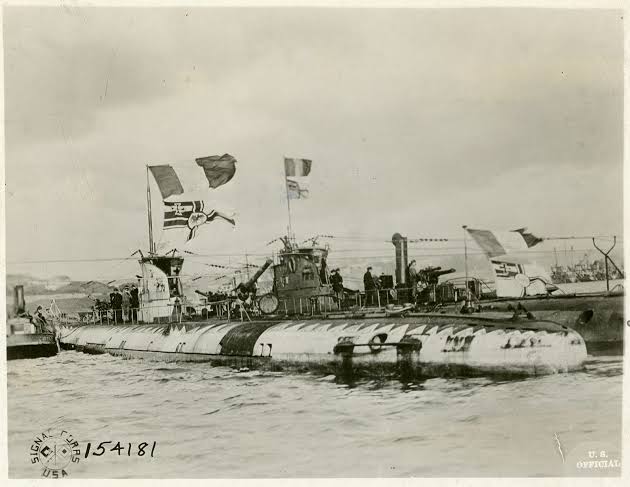
On March 24, 1916, the French cross-Channel ferry SS Sussex was steaming from Folkestone to Dieppe with roughly 380 passengers and crew aboard. About 15 miles off the French coast, a German U-boat fired a single torpedo without warning. The bow blew off, and the ship began to sink rapidly. Within minutes, the lives of dozens of civilians hung in the balance—and the course of World War I was about to shift.
The attack killed between 50 and 80 people, and while no Americans died, several were injured. That fact set off a diplomatic firestorm. The Sussex sinking became the second major U-boat crisis for the United States, following the Lusitania disaster just ten months earlier. But this time, President Woodrow Wilson drew a harder line, issuing an ultimatum that forced Germany to back down—temporarily. The result was the Sussex Pledge, a promise that changed U-boat tactics for nearly a year and revealed the fragile balance between military necessity and international pressure.
The Sinking of the Sussex
The SS Sussex was a 1,530-ton steam ferry operated by the London, Brighton and South Coast Railway, a workhorse of cross-Channel travel. On that March day, it carried a mix of military personnel and civilians, including women and children. The German submarine SM U-29, commanded by Kapitänleutnant Herbert Pustkuchen, stalked the ferry and launched a single torpedo. The explosion tore off the bow, yet the aft section stayed afloat long enough for French and British vessels to rescue survivors and tow the wreck to Boulogne.
Casualty figures vary by source—between 50 and 80 dead or missing. Among the passengers were several Americans, and although none were killed, the injuries they suffered would have outsized political consequences.
The Strategic Backdrop: Unrestricted Submarine Warfare
Germany had declared the waters around the British Isles a war zone in February 1915, ordering U-boats to sink enemy merchant ships without warning. This was a direct response to the British naval blockade that was strangling German imports. Submarines were fragile, slow, and vulnerable when surfaced; stopping to inspect a merchant ship exposed them to attack from Q-ships—armed decoy vessels. Unrestricted warfare wasn’t just a policy choice; it was a tactical necessity for the U-boat arm.
The Lusitania sinking in May 1915, which killed 1,198 people including 128 Americans, had already created a major crisis. Germany, fearing U.S. entry into the war, issued the Arabic Pledge in September 1915, promising not to sink passenger liners without warning and to ensure the safety of non-combatants. The Sussex attack, coming just six months later, broke that promise.
Wilson’s Ultimatum and the Sussex Pledge
President Wilson responded with a high-stakes gamble. In April 1916, he threatened to sever diplomatic relations with Germany unless it abandoned unrestricted submarine warfare against passenger and merchant ships. The ultimatum was a test of his policy of “strict accountability,” and it risked war if Germany refused. Domestic pressure from pacifists and pro-German immigrant communities made the gamble even riskier.
Germany, not yet ready for a war with the United States, capitulated. On May 4, 1916, it issued the Sussex Pledge: U-boats would no longer sink merchant ships without warning, would follow prize rules (visit and search), and would ensure the safety of passengers and crew.
The pledge was a diplomatic victory for Wilson, but it was temporary. Germany’s naval command, led by Admiral Henning von Holtzendorff, viewed it as a tactical concession, not a moral one. They argued that unrestricted warfare was the only way to break Britain and that U.S. entry into the war was inevitable anyway. That view would prevail within eight months.
The German Perspective: Denial and Justification
Germany initially denied the attack, then claimed it was a mistake—that the submarine had mistaken the ferry for a minelayer. They also argued that the Sussex was a legitimate target because it carried troops. Eventually, Germany offered an indemnity, but the damage was done.
The incident highlighted a key tactical reality: controlling U-boats from shore was difficult. Pustkuchen may have acted against standing orders, or the orders themselves were ambiguous. Either way, the attack showed how easily a single commander could trigger an international crisis.
The Short Life of the Pledge
The Sussex Pledge held for roughly eight months. On February 1, 1917, Germany rescinded it, resuming unrestricted submarine warfare. That decision directly led to the U.S. declaration of war in April 1917. In hindsight, the pledge was a delaying tactic, not a genuine change of heart.
The Humanitarian Toll and Shifting Public Opinion
The Sussex carried civilians, and the attack violated the then-existing rules of naval warfare, such as the 1909 London Declaration. It was part of a broader pattern of civilian casualties at sea that shaped public opinion in neutral countries, especially the United States. The sinking of the Sussex—coming after the Lusitania—convinced many Americans that Germany was willing to kill innocents to win the war. That perception, more than any single event, prepared the U.S. public for eventual entry into the conflict.
The Sussex incident was a pivotal moment in World War I, not because of the death toll, but because it forced Germany to make a public promise that it couldn’t keep. The Sussex Pledge delayed U.S. entry into the war, but it also revealed the fundamental tension in submarine warfare: a weapon that relies on stealth and surprise cannot easily follow rules designed for surface ships. When Germany broke the pledge in 1917, the U.S. had a clear casus belli. The sinking of a small ferry had, in the end, helped bring the world’s most powerful neutral nation into the war.
Summary
- On March 24, 1916, the French ferry SS Sussex was torpedoed without warning by German submarine U-29, killing 50-80 people, including some Americans injured.
- The attack violated Germany’s earlier Arabic Pledge and prompted President Woodrow Wilson to issue an ultimatum.
- On May 4, 1916, Germany issued the Sussex Pledge, promising to stop sinking merchant ships without warning and to follow prize rules.
- The pledge was a tactical concession, not a moral change, and Germany rescinded it on February 1, 1917, leading to U.S. entry into the war.
- The incident highlighted the tactical impossibility of submarines following prize rules and shaped American public opinion against Germany.
FAQ
Q: How many Americans were killed in the Sussex sinking?
A: No Americans were killed, but several were injured. This fact was politically significant because it allowed Wilson to issue an ultimatum without inflaming public opinion further.
Q: What was the Sussex Pledge?
A: The Sussex Pledge was a promise by Germany, made on May 4, 1916, to stop sinking merchant ships without warning, to follow prize rules (visit and search), and to ensure the safety of passengers and crew. It was a response to a U.S. ultimatum after the Sussex sinking.
Q: Why did Germany break the Sussex Pledge?
A: Germany’s naval command believed unrestricted submarine warfare was the only way to break the British blockade and win the war. They saw U.S. entry into the war as inevitable, so they rescinded the pledge on February 1, 1917.
Q: How did the Sussex incident differ from the Lusitania sinking?
A: The Lusitania (May 1915) killed 1,198 people, including 128 Americans, and caused a major crisis. The Sussex (March 1916) killed fewer people and no Americans, but it showed Germany had not changed its tactics, leading to a stronger U.S. ultimatum and the Sussex Pledge.
Q: What was the tactical reason for unrestricted submarine warfare?
A: Submarines were fragile, slow, and vulnerable when surfaced. Stopping to inspect a merchant ship exposed them to attack from Q-ships or armed merchantmen. Unrestricted warfare allowed U-boats to attack without surfacing, which was safer and more effective.