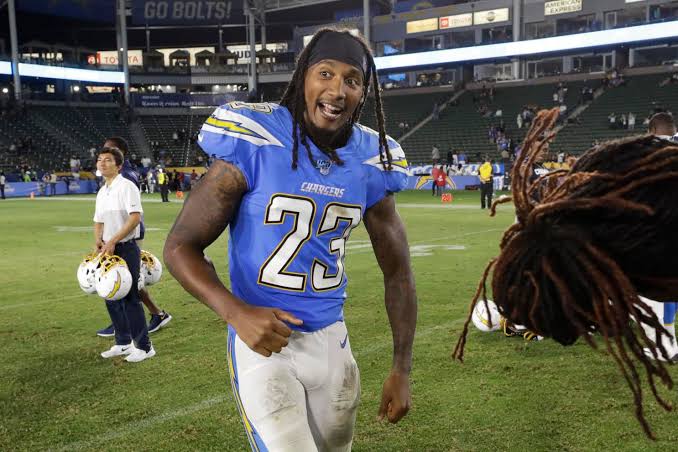
The Pittsburgh Steelers have reportedly agreed to terms with veteran safety Rayshawn Jenkins, a move that won’t move the needle on paper but could quietly solidify the back end of a defense with Super Bowl aspirations. In a league where depth is often the difference between a playoff run and an early exit, this signing speaks to a front office that understands the value of experience and versatility.
Jenkins, 32, arrives after a single season in Seattle, where he started 12 games and logged 45 tackles with an interception. But his role in Pittsburgh is unlikely to be as a starter. With All-Pro Minkah Fitzpatrick and steady DeShon Elliott entrenched as the starting safeties, Jenkins projects as a rotational piece, special teams contributor, and veteran mentor. This is a move about insurance and competition, not a changing of the guard.
The Context: A Secondary in Transition
The Steelers’ safety room underwent a quiet overhaul this offseason. Damontae Kazee departed for Atlanta in free agency, and Terrell Edmunds was released, leaving Fitzpatrick and Elliott as the only proven options. Fitzpatrick’s injury history—he missed time in both 2023 and 2024—makes depth a genuine concern, not just a luxury. The front office, led by Omar Khan, has repeatedly emphasized building “competitive depth” in the secondary, and Jenkins fits that philosophy perfectly.
Jenkins isn’t a star, but he’s a reliable veteran with 48 starts in Jacksonville and a career resurgence with the Chargers in 2021–2022, where he recorded five interceptions and over 100 tackles combined. His 2024 dip in Seattle can be partially attributed to scheme misfit—he was asked to play single-high coverage, which exposed his lack of top-end speed at this stage of his career. In Pittsburgh, he’ll likely be used closer to the line of scrimmage, where his physicality and tackling ability shine.
The Stakes: Why This Matters More Than It Seems
On the surface, this is a minor transaction—likely a one-year deal near the veteran minimum, with minimal guaranteed money. But the stakes are higher than the contract value suggests. The Steelers are in a win-now window with a defense that ranked in the top 10 in points allowed last season. A single injury to Fitzpatrick or Elliott could derail the season, and Jenkins provides a safety net with starting experience.
Moreover, this signing signals a philosophical shift. The Steelers have historically drafted and developed safeties, but they’ve also shown a willingness to bring in veterans who understand the complexities of NFL defenses. Jenkins, who has played in multiple schemes under different coordinators, offers a football IQ that can help younger players like Ryan Watts, a 2024 draft pick still finding his footing.
The Scheme Fit: A Box Safety for a Two-High Defense
Defensive coordinator Teryl Austin runs a 3-4 base with a heavy dose of two-high safety looks and quarters coverage. This aligns perfectly with Jenkins’ strengths. He’s at his best as a box safety or a “robber” in zone coverage, using his instincts to read the quarterback and his physicality to disrupt tight ends and running backs. He doesn’t have the range to be a deep centerfielder, but he doesn’t need to be with Fitzpatrick patrolling the middle of the field.
In Seattle, Jenkins was miscast as a single-high safety, which led to a career-low in tackles per game. In Pittsburgh, he’ll be asked to do what he does best: play downhill, support the run, and provide a veteran presence in the locker room. This is a low-risk, high-reward signing that could pay dividends if the Steelers face injuries or need a spark in sub-packages.
The Misconceptions: What This Signing Isn’t
It’s easy to overreact to any transaction, but this one requires context. First, Jenkins is not a starter. Fitzpatrick and Elliott are the clear starters, and Jenkins will compete for a rotational role. Second, he’s not washed up. His decline in 2024 was more about scheme than physical ability—he played 100% of snaps in the first six weeks before a minor injury. Third, this doesn’t block a draft pick. The Steelers may still target a safety in the mid-rounds for long-term development, with Jenkins serving as a bridge player.
Finally, don’t judge Jenkins by his interception numbers. He’s never been a ballhawk—his value lies in run support and tackling. He’s a physical presence who sets the tone, not a playmaker who changes games. That’s exactly what a contender needs in a depth piece.
The Bigger Picture: A Calculated Move in a Busy Offseason
The Steelers have been methodical this offseason, re-signing Elliott, adding C.J. Henderson, and now bringing in Jenkins. These moves suggest a team that believes it’s close to contention and is shoring up weaknesses rather than making splashy acquisitions. The cap space is limited—roughly $10–15 million—and the front office is being prudent with its resources.
Jenkins’ contract will likely be minimal, with incentives tied to playing time or performance. This is a classic “prove-it” deal for a veteran looking to extend his career, and a low-cost bet for a team that values depth. If Jenkins regains his 2021–2022 form, the Steelers get a steal. If he doesn’t, they cut him with little financial consequence. Either way, the risk is minimal, and the potential reward is significant.
The signing of Rayshawn Jenkins is a quiet, calculated move that reflects the Steelers’ commitment to building a resilient, versatile defense. It’s not a headline-grabbing acquisition, but it addresses a real need for depth and experience. In a season where injuries can derail a Super Bowl run, having a veteran like Jenkins as insurance is a smart play. The Steelers aren’t looking for a savior—they’re looking for stability, and Jenkins provides exactly that.
Summary
- The Steelers are signing veteran safety Rayshawn Jenkins to a likely one-year, near-minimum deal.
- Jenkins will provide depth behind starters Minkah Fitzpatrick and DeShon Elliott, plus special teams value.
- His 2024 decline in Seattle was scheme-related; he’s a better fit as a box safety in Pittsburgh’s two-high defense.
- This move doesn’t block a draft pick and is low-risk, high-reward for a team with limited cap space.
- Jenkins’ value lies in run support and tackling, not interceptions, making him a physical presence off the bench.
FAQ
Q: Will Rayshawn Jenkins start for the Steelers?
A: No, he’s expected to be a rotational depth piece behind Minkah Fitzpatrick and DeShon Elliott, with a key role on special teams.
Q: Why did Jenkins have a down year in 2024?
A: He was asked to play single-high safety in Seattle, which exposed his lack of speed at age 32. In Pittsburgh, he’ll play closer to the line, where his physicality is an asset.
Q: How does this affect the Steelers’ draft plans?
A: It shouldn’t. The Steelers may still draft a safety for long-term development, with Jenkins serving as a bridge player.
Q: What kind of contract will Jenkins get?
A: Likely a one-year deal near the veteran minimum (~$1.2–1.5 million) with minimal guarantees and possible incentives.
Q: Is Jenkins a good fit for the Steelers’ defense?
A: Yes, he’s a box safety who excels in run support and zone coverage, complementing Fitzpatrick’s range in a two-high scheme.