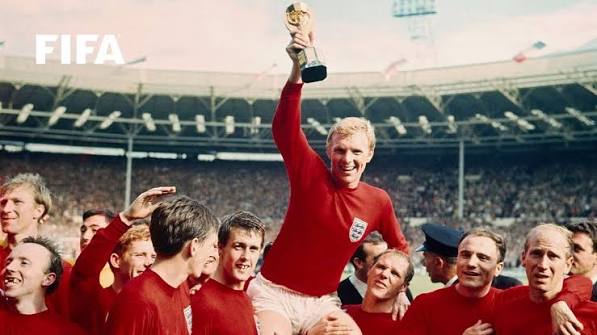
On July 30, 1966, Wembley Stadium hosted one of the most iconic moments in football history—and one of its most enduring controversies. With the score locked at 2–2 in extra time of the World Cup Final, England’s Geoff Hurst unleashed a shot that crashed off the underside of the crossbar and bounced down. The Swiss referee, Gottfried Dienst, hesitated, then looked to his Soviet linesman, Tofiq Bahramov, who signaled a goal. England went on to win 4–2, claiming their first—and only—World Cup title.
But was it really a goal? Over five decades later, the question still ignites debate. The footage is grainy, the angles are ambiguous, and the stakes were monumental. This was not just a goal; it was the defining moment of a nation’s footballing identity. The decision shaped careers, fueled conspiracy theories, and ultimately changed how the sport approaches officiating. In an era before goal-line technology and VAR, the call was made in a split second by human eyes—and it has been dissected ever since.
In this analysis, we’ll examine the evidence from all angles, the physics, the politics, and the legacy of the most debated goal in World Cup history. Was it over the line? Or was it a monumental error that handed England the trophy? The answer, as we’ll see, is more complex than a simple yes or no.
The Goal That Refuses to Die
The 1966 World Cup Final was a classic: England, the hosts, against West Germany, the reigning runners-up. The match was tense, with both sides trading goals. By the 101st minute, the score was 2–2, and the pressure was unbearable. Then Hurst received the ball on the edge of the box, turned, and fired. The ball soared toward the goal, struck the underside of the crossbar, and bounced straight down. For a split second, the world held its breath. Did it cross the line?
Referee Gottfried Dienst was unsighted—he later admitted he couldn’t tell. He looked to linesman Tofiq Bahramov, who was positioned near the goal line. Bahramov, a Soviet official from Azerbaijan, had a clear view, or so it seemed. He waved his flag toward the center circle, signaling a goal. England led 3–2. The rest is history: Hurst completed his hat-trick in the dying seconds, and England won 4–2.
But the controversy never faded. Every few years, a new study or a new piece of footage reignites the debate. In 2013, researchers from the University of Oxford and the University of Reading used 3D reconstruction to simulate the ball’s trajectory. Their conclusion: the ball crossed the line by about 6 centimeters. But this was a computer model, not a definitive answer. Critics pointed out that the simulation relied on assumptions about the ball’s deformation and the camera angles. The debate raged on.
The Evidence: What Do the Images Really Show?
Let’s look at the visual evidence. The most famous photograph shows the ball just after it hit the ground, with the white goal line visible beneath it. To the naked eye, it appears the ball is on the line, not fully over it. But the angle is from above and behind, making it impossible to judge with certainty. The ball is a sphere, and its curvature means that even if the bottom of the ball is touching the line, the point of contact might be slightly behind the line.
Another issue is the camera frame rate. The film from 1966 was shot at 24 frames per second, which means the ball’s position is captured at intervals. The exact moment the ball hits the ground is likely between frames, so we never see the precise point of impact. This is why some analysts argue that the ball could have crossed the line and bounced back out before the next frame was captured.
In 1995, a BBC program attempted to settle the debate using a computer simulation of the ball’s bounce. They concluded that the ball did not cross the line. But this was also criticized for its assumptions. The truth is, without a high-speed camera or goal-line technology, we may never know for certain.
The Physics of the Bounce
To understand the controversy, we need to look at the physics. When a ball hits the ground, it deforms slightly. The point of contact is not a single point but a small area. If the ball hits the ground just behind the line, the deformation could cause part of the ball to cross the line, even if the center of the ball does not. According to the laws of the game, the whole of the ball must cross the line for a goal to be awarded. So even if 99% of the ball is over the line, it’s not a goal.
In 1966, the ball was a Slazenger “Challenge,” made of leather panels. It was heavier and less elastic than modern balls, but it still deformed on impact. The 2013 Oxford study attempted to model this deformation, but the exact parameters are unknown. The ball’s inflation, the surface of the pitch, and the force of the shot all affect the bounce. The study’s authors admitted that their model was based on assumptions, not on the actual ball.
The Human Factor: Bahramov’s Decision
Tofiq Bahramov was a controversial figure. He was Azerbaijani, not Russian, but English media often called him “the Russian linesman.” This label fed into Cold War narratives: some claimed that Bahramov, whose country was part of the Soviet Union, might have been biased against West Germany because the USSR had lost to them in the semi-final. But this theory is speculative. Bahramov was a respected official, and there is no evidence of deliberate bias.
In fact, Bahramov’s decision was likely based on his instantaneous judgment. He was positioned near the goal line, and he had a clear view of the ball. He later said he saw the ball cross the line. But could he have been mistaken? Human eyes are not perfect, especially under pressure. The ball was moving fast, and the line was painted white on green grass. It’s possible that he saw what he expected to see, or that his view was obstructed by players.
Some have argued that Bahramov’s decision was influenced by the fact that he was a Soviet official. The USSR had been eliminated by West Germany in the semi-final, and there was a political rivalry between the Eastern and Western blocs. But this is a conspiracy theory without evidence. Bahramov was known for his integrity, and he was later honored by FIFA. In 2004, a street in Baku was named after him, and a monument was erected in his honor.
The Fourth Goal: Another Controversy
Even if the disputed goal had been disallowed, the match might not have ended 2–2. In the final minute of extra time, Hurst scored his third goal to make it 4–2. But this goal was also controversial: some claimed that the ball went out of play before the cross. The linesman, again Bahramov, signaled that the ball was in play. This goal is often overshadowed by the first controversy, but it adds another layer of uncertainty.
If the first goal had been disallowed, the score would have been 2–2, and the match would have continued. It’s possible that West Germany could have scored, or that England could have won anyway. But the fourth goal would still have been a point of contention. So even if we could definitively say that the first goal was not over the line, we can’t say that England would have lost.
The Legacy: How 1966 Changed Football
The 1966 controversy had a lasting impact on football. It highlighted the need for technology to assist referees. In the decades that followed, the debate over goal-line technology intensified, especially after similar incidents in later World Cups. Finally, in 2012, FIFA introduced goal-line technology, and in 2018, VAR was used in the World Cup. These systems are designed to eliminate exactly the kind of ambiguity that plagued 1966.
But the 1966 goal remains a cultural touchstone. It’s a reminder that football is a human game, with human errors. The controversy has become part of the folklore of the sport, a story that fans debate with passion. For England fans, it’s a moment of triumph; for German fans, it’s a moment of injustice. The truth may never be known, but that’s part of the charm.
The Verdict: Was It Over the Line?
So, was it over the line? The evidence is inconclusive. The photographs and film are ambiguous, the physics is uncertain, and the human testimony is divided. The 2013 study suggests it was over, but it’s not definitive. The 1995 study suggests it wasn’t. The truth is that we may never know for certain.
What we do know is that the goal was awarded, and England won the World Cup. The decision was made by human officials, using their best judgment. In the absence of technology, that’s all we can ask for. The controversy is a testament to the passion that football inspires, and it’s a reminder that sometimes, the most memorable moments are the ones that are debated for generations.
The 1966 World Cup Final goal remains one of the greatest mysteries in sports history. Was it over the line? The answer is lost to time, buried in the ambiguity of a black-and-white photograph and the fallibility of human perception. What is certain is that the goal changed the course of football history, giving England their only World Cup title and sparking a debate that would last for decades. In the end, the controversy is not just about a goal—it’s about the nature of sport itself, where moments of glory and injustice are often two sides of the same coin. And that’s what makes it unforgettable.
Summary
- The 1966 World Cup Final between England and West Germany ended 4–2, with Geoff Hurst scoring a hat-trick.
- The most debated goal came in extra time, when Hurst’s shot hit the crossbar and bounced down; the referee awarded a goal after consulting linesman Tofiq Bahramov.
- Evidence is inconclusive: photographs and film are ambiguous, and computer simulations have yielded conflicting results.
- Conspiracy theories about Bahramov’s bias are speculative and lack evidence.
- The controversy led to the eventual introduction of goal-line technology and VAR, but the 1966 goal remains a cultural touchstone.
FAQ
Q: Was the ball really over the line in the 1966 World Cup Final?
A: The evidence is inconclusive. Some computer simulations suggest it crossed by a small margin, while others suggest it did not. The footage is too grainy and the angles too ambiguous to be certain.
Q: Who was Tofiq Bahramov?
A: Tofiq Bahramov was an Azerbaijani football referee from the Soviet Union. He served as the linesman in the 1966 final and signaled that the ball had crossed the line. He was later honored for his career in football officiating.
Q: Did the Soviet Union have a grudge against West Germany?
A: The USSR lost to West Germany in the semi-final of the 1966 World Cup, but there is no evidence that Bahramov was biased. The theory is speculative and not supported by any facts.
Q: What would have happened if the goal had been disallowed?
A: The score would have remained 2–2, and the match would have continued. It’s impossible to know what would have happened, but England also scored a controversial fourth goal, so the outcome might have been different.
Q: How did this controversy change football?
A: The 1966 controversy highlighted the need for technology in officiating. It contributed to the development and eventual introduction of goal-line technology and VAR, which are now used in major competitions.