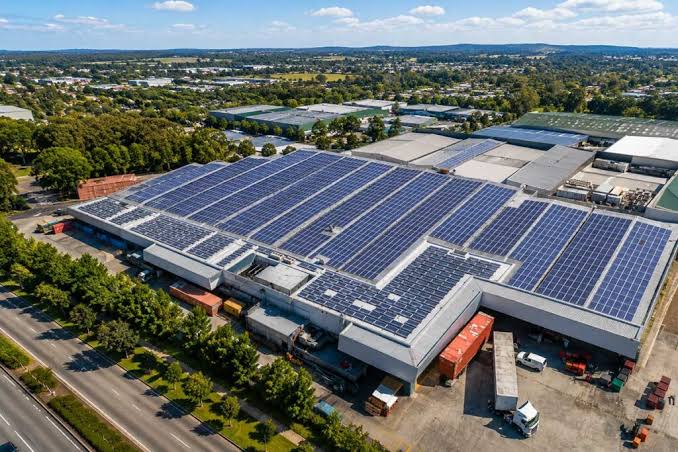
The Albanese government is widening its rooftop solar incentive scheme to include larger commercial and industrial businesses, a move that could reshape how mid-sized manufacturers and warehouses power their operations. Previously, the scheme built on Small-scale Technology Certificates (STCs) was capped at systems up to 100kW, effectively leaving bigger installations without the same upfront financial support. Now, the eligibility threshold is being raised or removed, opening the door for businesses with higher energy needs to access discounts on solar installation.
This expansion comes at a time when Australia leads the world in household solar uptake, with roughly one in three homes generating their own power. Yet commercial rooftop solar has lagged, hampered by higher upfront costs and more complex financing. The policy shift aims to close that gap, but it also raises questions about grid stability, industry capacity, and whether the incentive will reach the businesses that need it most.
How the Scheme Works
The core mechanism is the Small-scale Renewable Energy Scheme (SRES), which has long subsidised rooftop solar for homes and small businesses. Under the SRES, eligible systems generate Small-scale Technology Certificates (STCs) based on their expected electricity output over a set period. These certificates are traded or sold upfront, effectively lowering the point-of-sale cost of a solar installation.
Previously, only systems up to 100kW could participate. Larger systems fell under the Large-scale Renewable Energy Target (LRET), which lacks the same upfront discount mechanism. That meant a small factory or a large retail warehouse often needing 200kW or more had to finance the full installation cost without this subsidy, even though their potential savings were substantial.
The expansion changes this by raising or removing the capacity cap, allowing mid-to-large businesses to generate STCs and receive the corresponding discount. The exact new thresholds and any phase-in periods are expected to be detailed in the official announcement, but the direction is clear: the government wants more commercial rooftops covered.
Why the Expansion Matters
Australia’s household solar penetration is among the highest in the world, but commercial uptake has been a weak spot. A 2023 report from the Clean Energy Council found that commercial solar installations accounted for only a fraction of the total capacity added each year. The reasons are familiar: high upfront costs, complex financing, and a lack of equivalent incentives compared to residential systems.
At the same time, electricity prices for businesses have been climbing. The Australian Energy Regulator’s 2024-25 default market offer saw a typical small business facing a 7% to 9% increase in bills. For energy-intensive operations, those costs can be a major drag on competitiveness. By cutting the upfront cost, the expanded scheme could make solar viable for a wider range of businesses, from logistics centres to food processors.
This also aligns with the government’s broader climate goals. The 82% renewable electricity target by 2030 requires significant growth in distributed generation, and commercial rooftops represent a largely untapped resource. Analysts estimate that Australia’s commercial and industrial rooftops could host more than 50GW of solar capacity—enough to power millions of homes.
Industry and Business Response
Solar industry bodies have welcomed the move. The Clean Energy Council called it “a pragmatic step” that would drive growth in the commercial market, create jobs in installation and supply chains, and help businesses manage energy costs. The Smart Energy Council echoed that sentiment, noting that expanded eligibility would open a “significant pipeline” of projects.
Business groups, including the Business Council of Australia, have framed the expansion as a cost-relief measure. For mid-sized manufacturers and commercial property owners, the discount could be the difference between investing in solar now or deferring it for years. climate advocates see it as a way to decarbonise a sector that has been hard to reach.
However, not everyone is unreservedly enthusiastic. Energy market analysts point out that more behind-the-meter generation reduces demand for grid electricity, which could affect network revenues. If network costs are fixed, this could shift expenses onto consumers without solar—a cross-subsidy concern that regulators will need to watch.
Fiscal conservatives have also raised questions about cost-effectiveness. Some businesses might install solar anyway, meaning the discount could be a windfall rather than a driver of new uptake. The government will need to design the eligibility criteria carefully to target businesses that are genuinely on the fence.
Technical and Practical Challenges
Expanding the scheme is not just about writing bigger cheques. Larger installations come with technical challenges. Network operators are concerned about voltage management and export limits when many commercial sites start generating power. Smart inverters and, in some cases, battery storage may be needed to ensure grid stability.
There is also the question of installation capacity. Australia already faces a shortage of qualified electricians and engineers. A surge in commercial projects could strain the industry, leading to longer wait times and higher labour costs. The Clean Energy Council has called for more training and streamlined accreditation processes to meet demand.
Finally, there is a communication challenge. The scheme is often described loosely as a “rebate” or “subsidy,” but it is really an upfront discount based on certificate trading. Businesses need to understand the cash-flow implications: unlike a rebate paid after installation, the STC discount is applied at the point of sale, reducing the initial capital outlay. This is a crucial distinction for financial planning.
What Businesses Should Watch For
The expansion is not a blanket invitation. Eligibility will still depend on system size, energy usage, and possibly business type. Businesses should monitor the official guidelines from the Department of Climate Change, Energy, the Environment and Water (DCCEEW) to see if they qualify.
Also note that the scheme is not a subsidy for electricity bills. It reduces the capital cost of solar, not the cost of grid power. And with installation prices already falling, the discount could make payback periods significantly shorter. For a mid-sized business with a high energy load, that could mean a return on investment in four to five years rather than seven or eight.
The announcement is part of a broader push that includes the Rewiring the Nation program and the Capacity Investment Scheme. Together, these policies are designed to accelerate the transition away from fossil fuels, but the success of the expanded solar discount will depend on execution. Clear rules, adequate industry capacity, and grid integration plans will be just as important as the funding itself.
The expansion of the rooftop solar discount scheme marks a significant step toward unlocking the commercial solar market in Australia. By extending STC incentives to larger businesses, the government is addressing a long-standing gap that has kept many factories and warehouses off the solar map. But the success of the policy will hinge on careful implementation—managing grid stability, ensuring industry capacity, and targeting the discount to businesses that truly need it. For now, the message is clear: if you run a mid-sized business with a sizable roof, the economics of going solar just got a lot more attractive.
Summary
- The Albanese government is expanding the rooftop solar discount scheme to include larger commercial and industrial businesses, previously capped at 100kW.
- The scheme uses Small-scale Technology Certificates (STCs) to provide an upfront discount on installation costs, not a rebate or loan.
- Commercial solar uptake has lagged behind household adoption due to high upfront costs and complex financing; this move aims to close that gap.
- Industry and business groups welcome the expansion as a cost-relief and growth driver, but analysts raise concerns about grid stability and potential cross-subsidies.
- Businesses should watch for detailed eligibility criteria and prepare for possible installation capacity constraints.
FAQ
Q: What exactly is changing with the solar discount scheme?
A: The scheme, which previously offered STC discounts only for systems up to 100kW, is being expanded to include larger commercial and industrial installations. The exact new capacity limits and eligibility criteria will be published by the DCCEEW.
Q: Is the discount a rebate I get after installation?
A: No. The STC discount is applied at the point of sale, reducing the upfront cost of the solar system. It is not a cash rebate paid later. This means you need to factor the discount into your initial budget, but you also don’t have to wait for a payout.
Q: Will my business qualify?
A: It depends on your system size, energy usage, and possibly other factors. The government has not yet released the full details, but the expansion is aimed at mid-to-large businesses that were previously excluded due to the 100kW cap. Check the DCCEEW website for updates.
Q: How does this affect my electricity bills?
A: The discount reduces the cost of installing solar, which in turn can lower your electricity bills over time by generating your own power. However, it is not a direct subsidy on your bills. Your savings depend on your energy consumption and the size of the system.
Q: Are there any downsides to the expansion?
A: There are concerns that more commercial solar could strain the electricity grid if not managed properly, and that network costs might shift to non-solar consumers. Industry capacity is also a potential bottleneck. These are issues regulators and the government will need to address as the scheme rolls out.