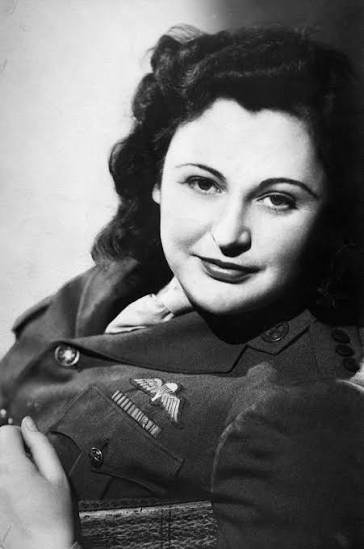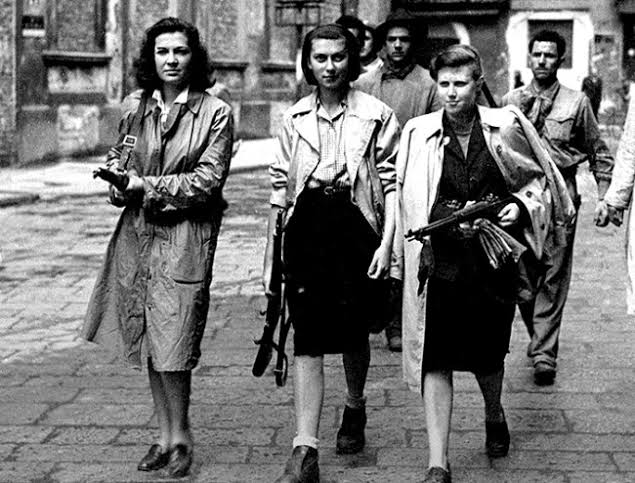
In the summer of 1940, as Britain braced for invasion, a secret organization was born with a mandate from Winston Churchill: “set Europe ablaze.” The Special Operations Executive (SOE) was tasked with sabotaging the Nazi war machine from within, and its French Section would soon dispatch an unlikely weapon women. While the military establishment balked, SOE’s F Section sent nearly forty women into occupied France, where they would serve as couriers, wireless operators, and even leaders of resistance networks. Their story is one of extraordinary courage, betrayal, and sacrifice, and their contribution was pivotal in the fight against Nazism.
The Unlikely Recruits
These were not professional spies. They were secretaries, shop assistants, and even a princess. Violette Szabo, a young widow with a young daughter, had worked as a shop assistant before the war. Noor Inayat Khan was an Indian-American musician and children’s author, descended from Tipu Sultan. Nancy Wake, an Australian journalist, had already witnessed Nazi brutality in Vienna and was determined to fight. Odette Sansom, a French-born mother of three, had initially written to the War Office offering a family photograph for a map an innocent letter that would lead her into the heart of the resistance.
They came from diverse backgrounds, but they shared a common willingness to risk everything. The SOE was desperate for agents. Men were being conscripted, and women offered a tactical advantage: they could move through checkpoints and crowded streets with less suspicion. As one SOE officer noted, a woman could cycle through the French countryside carrying a wireless set in a shopping basket, and no one would look twice.
Training: Equal Rigor, Unequal Pay
Once recruited, these women were subjected to the same grueling training as their male counterparts at Special Training Schools scattered across Scotland and England. At Wanborough Manor and Arisaig, they learned silent killing, unarmed combat, and how to handle explosives. They practiced parachute jumps, often at night, and memorized complex wireless codes. At STS 31, the Thatched Barn, they studied fieldcraft how to live rough, evade capture, and maintain cover.
The training was brutal and unrelenting. Instructors pushed them to their physical and mental limits, weeding out those who could not handle the pressure. Yet, despite this equal training, women were paid less than men and were initially barred from leadership roles. The role of organizer the leader of a resistance circuit was deemed too dangerous, too demanding for a woman. That would change as the war progressed, but the prejudice was persistent.
The Toughest Jobs in the Field
Once in France, these women took on roles that were often more dangerous than those of their male colleagues. Couriers like Andrée Borrel carried messages, weapons, and supplies across enemy territory, constantly moving and always at risk of being stopped at a checkpoint. Wireless operators like Noor Inayat Khan faced the most perilous job of all: transmitting intelligence to London while German direction-finding vans roamed the streets, capable of pinpointing their location within minutes of a transmission. To be a wireless operator was to live on borrowed time, knowing that each signal could be your last.
Some women eventually took on organizing roles. Pearl Witherington, a courier who had infiltrated France in 1943, assumed command of a maquis group after her organizer was arrested. She built a force of 1,500 men, coordinating sabotage operations that disrupted German supply lines in the lead-up to D-Day. When the British government offered her the Military Cross, she refused, pointing out that as a woman she was ineligible for the award. She later accepted the CBE, but her refusal highlighted the double standard that persisted even in the face of extraordinary service.
The Shadow of Betrayal
The SOE’s operations in France were constantly threatened by German counter-intelligence. The Sicherheitsdienst (SD) ran a ruthless campaign to infiltrate and dismantle resistance networks. The infamous Funkspiel—”radio game”—involved captured wireless operators transmitting false messages to London, tricking the SOE into sending more agents into traps.
One of the most devastating blows was the fall of the Prosper network in 1943. This extensive circuit, which coordinated sabotage and resistance across northern France, was thoroughly compromised. Mass arrests followed, sweeping up many agents, including Andrée Borrel and Noor Inayat Khan. The disaster raised questions about SOE security and whether London had ignored warnings of compromise. For the women caught in this wave, the consequences were fatal.
The Final Brutality
Of the approximately 39 women sent to France, 13 never returned. Their fates were among the most brutal of the war. In July 1944, four women—Andrée Borrel, Diana Rowden, Vera Leigh, and Sonya Olschanezky—were executed at Natzweiler-Struthof concentration camp by lethal injection. Their bodies were cremated, their remains never recovered. Violette Szabo was captured after a firefight with German troops, tortured, and sent to Ravensbrück, where she was executed in early 1945. Noor Inayat Khan was shackled in chains and sent to Dachau, where she was shot. Odette Sansom survived Ravensbrück, but only after enduring unspeakable torture that left her with permanent injuries.
These were not casualties of battle; they were deliberate executions, meted out to women who had dared to fight. The Gestapo treated female agents with particular cruelty, subjecting them to beatings, starvation, and solitary confinement. Yet, many of these women maintained their defiance to the end. Witnesses reported that Violette Szabo sang as she was led to her execution.
A Legacy Remembered
Recognition came slowly. Odette Sansom became the first woman to receive the George Cross in 1946, but it would take decades for others to gain similar honors. Noor Inayat Khan was posthumously awarded the George Cross in 1949. Violette Szabo’s story was popularized by the 1958 film Carve Her Name with Pride. In 1991, the Valençay SOE Memorial was unveiled in France, honoring the 104 SOE agents who died in service, including the 13 women.
The women of SOE were not merely participants in the war; they were pioneers who shattered the boundaries of what women were believed capable of. They proved that courage, skill, and determination were not the province of men alone. Their legacy is not just one of sacrifice, but of possibility—a reminder that even in the darkest times, ordinary people can rise to extraordinary heights.
The women of SOE were not footnotes in the history of espionage. They were central players in a desperate fight, and their contributions came at a staggering cost. Today, their stories are preserved in archives and memorials, but they deserve more than remembrance. They deserve to be recognized as models of bravery, and as proof that the fight for freedom knows no gender.
Summary
- The SOE sent approximately 39 women into occupied France as spies, of whom 13 were killed.
- Women served as couriers, wireless operators, and later as organizers, often in roles more dangerous than those of men.
- They underwent the same rigorous training as men but were paid less and initially barred from leadership roles.
- The Prosper network disaster and the Gestapo’s Funkspiel operation led to the capture and execution of several female agents.
- Recognition was slow but posthumous honors include George Crosses for Noor Inayat Khan and Violette Szabo, and the Valençay Memorial honors all fallen agents.
FAQ
Q: How many women were sent to France by the SOE?
A: Approximately 39 women were sent to occupied France as SOE agents, though some sources say 40 depending on inclusion criteria. Of these, 13 were killed in action, executed, or died in captivity.
Q: What roles did these women perform?
A: They served primarily as couriers, carrying messages and supplies, and as wireless operators, transmitting intelligence to London. A few, like Pearl Witherington, eventually led resistance networks as organizers.
Q: Were women treated equally in the SOE?
A: No. Despite undergoing the same training as men, women were paid less and were initially barred from leadership roles. They were only given roles as organizers later in the war.
Q: What was the “Funkspiel”?
A: Funkspiel, meaning “radio game,” was a German counter-intelligence operation where captured wireless operators were forced to transmit false messages to London, tricking the SOE into sending more agents into traps.
Q: How are these women remembered today?
A: They are honored at the Valençay SOE Memorial in France, and several have been posthumously awarded the George Cross. Their stories are preserved in archives at the Imperial War Museum and the Special Forces Club.