Tag: skills

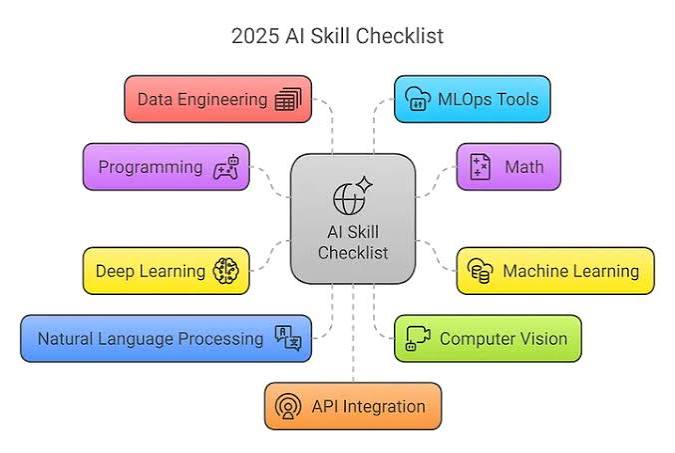
  • 5 AI Skills That Can Command $200K+ by 2026 (Without a CS Degree)

    5 AI Skills That Can Command $200K+ by 2026 (Without a CS Degree)

    The promise of a $200,000 salary in AI without a computer science degree sounds like clickbait. But compensation data from 2025 suggests it’s a real possibility for a specific set of skills and with the right context.

    This isn’t about entry-level prompt engineering. The $200K figure reflects total compensation (base salary, bonus, equity) for senior roles at major tech companies or well-funded startups, typically in high-cost areas like San Francisco or New York. The same job in Austin or remote might pay $140K–$170K.

    More importantly, the roles that pay this well aren’t the ones that dominated headlines in 2023. The market has matured. Here’s what actually pays in 2026, and why a CS degree isn’t the gatekeeper it once was.

    The Reality Behind the $200K Figure

    First, some perspective. According to Levels.fyi’s 2025 data, the median total compensation for AI Engineers at top-tier companies is roughly $180K–$250K. For AI Product Managers, it’s around $170K–$220K. MLOps engineers see medians of $160K–$210K.

    These are not starting salaries. They reflect years of experience, proven impact, and often a portfolio that demonstrates real-world results. The “no CS degree” outliers exist—a 10-year product manager who upskilled, a self-taught developer with standout open-source work—but they’re not the norm.

    The honest picture: $200K+ is the ceiling for mid-career professionals, not the entry point for newcomers. That said, the ceiling is real, and the path doesn’t require a four-year CS degree.

    Skill 1: LLM Orchestration (The Evolution of Prompt Engineering)

    Pure “prompt engineering” as a standalone job largely faded by 2025. What replaced it is LLM orchestration—designing systems that chain multiple models, use retrieval-augmented generation (RAG), and integrate with external tools.

    This skill involves more than writing clever prompts. It’s about knowing how to structure a RAG pipeline, when to fine-tune versus prompt, and how to evaluate output quality. Companies pay for people who can build AI systems that reliably solve business problems.

    Why it pays: Every company wants to deploy LLMs, but few know how to do it beyond a demo. The people who can bridge that gap—without necessarily writing complex code from scratch—are in demand.

    No CS degree? Many practitioners come from backgrounds in technical writing, data analysis, or even marketing, having learned through bootcamps and hands-on projects.

    Skill 2: AI Product Management

    AI Product Managers define what AI products should do, prioritize features, and translate business needs into technical requirements. They’re the bridge between stakeholders and engineers.

    This role doesn’t require coding. It requires technical literacy—understanding model capabilities, data requirements, and limitations—combined with sharp product instincts.

    Why it pays: AI products fail more often from poor product-market fit than technical issues. Companies need people who can ask, “What problem are we solving, and is AI the right tool?”

    No CS degree? Product managers often come from business, design, or domain-specific backgrounds (healthcare, finance). Adding AI literacy to that mix is highly valuable.

    Skill 3: MLOps & AI Deployment

    Most AI models fail in deployment, not development. MLOps—managing the lifecycle of models in production—covers monitoring, retraining, CI/CD for machine learning, and cost optimization.

    This is a more technical skill, but it’s less about theoretical CS and more about systems thinking. It involves setting up pipelines, managing cloud infrastructure, and ensuring models perform reliably over time.

    Why it pays: The demand is high because the supply is low. Many data scientists can build models but have no idea how to keep them running in a production environment. MLOps engineers close that gap.

    No CS degree? A background in IT, DevOps, or systems administration—often gained through certifications and experience—can be a starting point. The key is learning cloud platforms like AWS or Azure and understanding ML workflows.

    Skill 4: Data Engineering for AI

    AI models are only as good as the data they’re trained on. Data engineering for AI focuses on building and maintaining the pipelines, vector databases, and data quality systems that feed models.

    This skill is often overlooked but critical. It involves cleaning data, setting up feature stores, and managing the infrastructure for RAG systems.

    Why it pays: As companies scale their AI efforts, data becomes the bottleneck. Those who can organize and prepare data for AI are indispensable.

    No CS degree? Data engineering often attracts people from IT, business analytics, or even accounting who’ve developed SQL and Python skills through practical experience.

    Skill 5: AI Ethics, Governance & Compliance

    This is the fastest-growing area, driven by regulatory pressure. The EU AI Act is phasing in through 2026–2027, and US states like Colorado and California are passing AI disclosure and bias-audit laws.

    AI governance professionals ensure systems comply with regulations, audit for bias, and manage risk. This role is legal and policy-heavy, not code-heavy.

    Why it pays: Non-compliance can cost millions in fines. Companies need people who understand both the regulations and the technology well enough to implement compliance frameworks.

    No CS degree? This is the most accessible path for non-technical professionals. Lawyers, policy analysts, and risk managers who upskill in AI fundamentals are in high demand.

    What This Means for You

    If you’re eyeing a $200K+ salary in 2026, the path isn’t about chasing the trendiest title. It’s about picking a skill area that aligns with your background and investing in the practical, applied knowledge that companies actually pay for.

    The degree requirement has weakened—especially for applied roles. But experience and demonstrated skill still matter. A portfolio of successful projects, whether in product management or MLOps, speaks louder than a diploma.

    Start where you are. If you’re in business, explore AI product management. If you’re in IT, look at data engineering or MLOps. If you’re in law or risk, governance is your entry point.

    The market is still growing, but it’s also maturing. The gold-rush days of 2023 are over; the era of real, sustainable value has begun.

    The $200K+ AI salary is attainable without a CS degree, but it’s not a promise—it’s a target. Focus on skills that solve business problems, build a track record, and understand that compensation reflects impact, not just knowledge. The five skills above represent the most viable routes, each with a different on-ramp. Whether you’re just starting or pivoting mid-career, the key is to commit to one path and go deep. The demand is real, and the door is open wider than ever before.

    Summary

    • The $200K figure reflects senior-level total compensation at major tech companies in high-cost areas, not entry-level pay.
    • LLM Orchestration has replaced standalone prompt engineering; it involves building RAG systems and chaining models.
    • AI Product Management pays well for those who combine business acumen with AI technical literacy.
    • MLOps & Deployment is in high demand because most models fail in production, not development.
    • Data Engineering for AI is critical for feeding models with quality data and often overlooked.
    • AI Ethics & Governance is growing rapidly due to regulatory pressures like the EU AI Act.
    • Experience and a portfolio matter more than a degree in most of these roles.

    FAQ

    Q: Is it really possible to earn $200K+ without a CS degree in AI?
    A: Yes, but it’s more realistic for mid-career professionals with 3–5+ years of experience in a related field who have upskilled. The median total compensation for AI Engineers at top companies is $180K–$250K, but entry-level roles typically start much lower.

    Q: What happened to prompt engineering? Does it still pay $300K?
    A: No. In 2023, prompt engineering was hyped as a $300K role, but by 2025 that standalone title largely disappeared. It evolved into broader roles like LLM orchestration or applied AI engineering, with more realistic salary ranges.

    Q: Which of these five skills is the easiest to learn without a technical background?
    A: AI Ethics, Governance & Compliance is the most accessible for non-technical professionals, especially those with legal or policy experience. AI Product Management is also viable for business-minded individuals. MLOps and data engineering require more technical aptitude.

    Q: Do I need to know how to code for any of these roles?
    A: Not necessarily. AI Product Management and AI Governance require technical literacy but not deep coding skills. MLOps and data engineering do require programming skills like Python, SQL, and familiarity with cloud platforms. LLM orchestration may involve some scripting but often uses visual tools.

    Q: Will these skills still be in demand by 2030?
    A: Yes, the AI talent shortage is projected to continue through 2030 according to McKinsey. However, the specific skills may evolve, so staying updated with industry trends is crucial.
  • AI Layoffs: Turning Disruption into a Career Pivot

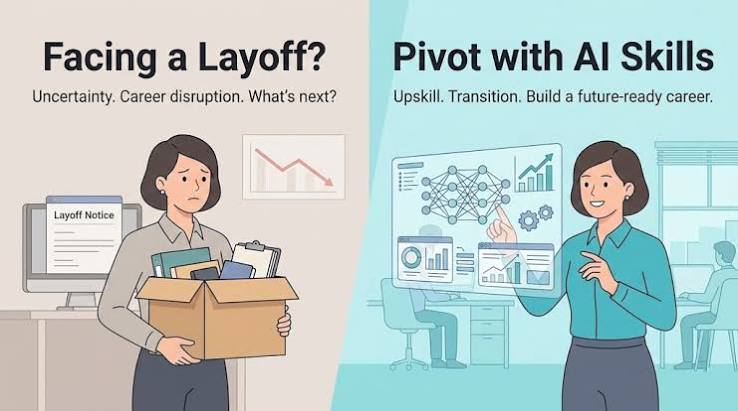
    AI Layoffs: Turning Disruption into a Career Pivot

    In 2024, IBM announced a hiring freeze on back-office roles it expects AI to replace about 7,800 positions. Google restructured its ad sales unit, cutting thousands of jobs, citing AI-enabled efficiency. These are not isolated events. Over 250,000 tech workers lost their jobs in 2023, and the pace continued into 2024–2025. While many layoffs stem from pandemic overhiring and economic pressure, AI is now a stated factor in a significant subset.

    If you’re a tech worker or in a role that involves routine cognitive tasks, this feels unsettling. But history offers a different lens: past tech shifts from mainframes to PCs, from the internet to cloud computing caused short-term pain but ultimately created more jobs than they eliminated. The key is that the new jobs required different skills. This article cuts through the noise to give you a clear, practical roadmap for navigating AI-related layoffs: understanding what’s happening, which skills employers actually want, and how to pivot your career with confidence.

    Why This Wave Feels Different

    The release of ChatGPT in November 2022 marked an inflection point. For the first time, generative AI made automation of knowledge work commercially viable at scale. Tools like Microsoft Copilot, Google Gemini, and Anthropic’s Claude can draft emails, write code, analyze data, and even create art. This is not just about replacing manual labor; it’s about automating cognitive tasks.

    But economists distinguish between automation (replacing tasks) and augmentation (helping humans do tasks better). Current layoffs skew toward automation of routine cognitive work—like basic customer support, data entry, and junior coding. However, augmentation is also creating new roles that never existed before.

    The Numbers: What the Data Shows

    Layoffs.fyi tracks tech layoffs and shows over 250,000 workers laid off in 2023, with a slower but steady pace in 2024–2025. Goldman Sachs estimated in 2023 that AI could automate 300 million full-time jobs globally, but economists emphasize that this means task displacement, not whole-job elimination. In practice, most jobs consist of a bundle of tasks, and AI might automate some while leaving others—especially those requiring human judgment—untouched.

    Tech unemployment remains low, around 2–3%, but the perception of instability is high. Layoffs are concentrated in tech hubs like the Bay Area, Seattle, and NYC, but remote work spreads both the impact and the opportunity.

    The Skills Employers Are Actually Hiring For

    Let’s get practical. What do employers want right now? The research points to four key areas:

    1. AI Literacy

    This is the baseline. You don’t need to be a machine learning engineer, but you must understand how AI models work, how to prompt them effectively, and when to use them. Prompt engineering—crafting inputs to get useful outputs—is a skill in demand across roles. For example, a marketing manager who can use Midjourney to create visuals or ChatGPT to draft campaign copy is more valuable than one who can’t.

    2. AI-Adjacent Technical Skills

    If you’re in a technical role, Python, data analysis, machine learning fundamentals, and MLOps (managing ML models in production) are gold. But you don’t need a PhD. A software engineer can upskill into ML engineering or AI product management with focused courses and projects.

    3. Human-Centric Skills

    Critical thinking, emotional intelligence, complex problem-solving, adaptability, and cross-functional communication are consistently cited as the hardest to automate. These are the skills that AI can’t replicate—yet. For example, a customer service representative who can handle an irate customer with empathy and creative problem-solving is not easily replaced by a chatbot.

    4. Domain Expertise + AI

    The fastest-growing job postings combine AI skills with a specific industry. Healthcare AI, legal AI, marketing analytics—these hybrid roles are booming. For instance, a nurse who understands AI diagnostic tools is more valuable than a generic AI engineer. The pattern is clear: AI is a multiplier, but you need the domain to multiply.

    Career Pivot Trends: Where People Are Going

    Let’s look at real-world pivot patterns:

    From Technical to AI-Specific: Software engineers are moving into ML engineering, AI product management, and AI infrastructure. They’re not starting from zero; they’re building on existing coding skills.

    From Routine to Strategic: People in repetitive roles—data entry, basic customer support, junior design—are pivoting into roles that require judgment, client relationship management, or oversight of AI systems. A data entry clerk might become an AI trainer who labels data for model training, or an AI implementation consultant who helps businesses integrate tools.

    Growth of AI-Adjacent Roles: New categories are emerging: AI trainers, prompt engineers, AI content reviewers, AI safety analysts, and AI implementation consultants. These roles often don’t require deep technical expertise but do require understanding of AI and strong communication.

    Historical Precedent: The Long View

    The shift from mainframes to PCs in the 1980s displaced many clerical jobs but eventually created an entire industry of software developers, IT support, and computer trainers. The internet boom of the 1990s eliminated some middlemen but created e-commerce, digital marketing, and web development. Each time, there was a lag between job destruction and creation, and the new jobs required different skills.

    Some economists invoke the Jevons paradox: AI will increase demand for human labor in adjacent areas. For example, if AI makes it cheaper to build software, more software will be built, requiring more product managers, QA testers, and UX designers. But this is contested—and the transition period can be brutal for those caught in the middle.

    Practical Steps to Pivot Your Career

    Here’s a concrete plan to future-proof your career:

    1. Assess your current role: List the tasks you do daily. Which are routine and repetitive? Which require judgment, creativity, or human interaction? The first category is at risk; the second is your safety net.
    2. Learn AI basics: Take a free course on prompt engineering or AI literacy. Understand how models work, their limitations, and their ethical implications. This is table stakes now.
    3. Build a portfolio: Apply AI to your current domain. If you’re in marketing, create a project using AI to analyze customer data. If you’re in HR, use AI to screen resumes ethically. Show, don’t tell.
    4. Network strategically: Connect with people in AI-adjacent roles. Join communities, attend webinars, and inform your network about your pivot. Opportunities often come through people.
    5. Consider certification: While not essential, certifications in data science, AI ethics, or project management can signal commitment.

    The Role of Employers and Policy

    Layoffs are not purely a personal problem. Employers have a responsibility to reskill and redeploy workers. IBM’s hiring freeze is a case in point—they also invested in training employees for AI-related roles. Governments can support with unemployment benefits, reskilling programs, and portable benefits.

    But in the end, individual adaptability is key. The research is clear: those who learn to work with AI, rather than against it, will thrive.

    AI-related layoffs are real, but they are not the end of work. They are a signal that the skill mix is changing. The workers who will succeed are those who embrace AI literacy, double down on human-centric skills, and combine their domain expertise with new tools. Start today: assess your tasks, learn the basics, and build a portfolio. The future is not about being replaced; it’s about becoming indispensable in a new way.

    Summary

    • AI-related layoffs are happening, but they often reflect task automation, not whole-job elimination.
    • Employers are hiring for AI literacy, human-centric skills, and domain expertise + AI.
    • Career pivots are moving from technical to AI-specific, and routine to strategic roles.
    • Historical tech shifts show net job creation over time, but with a lag and new skill requirements.
    • Practical steps: assess your tasks, learn AI basics, build a portfolio, and network strategically.

    FAQ

    Q: Will AI really replace my job?
    A: AI is more likely to replace certain tasks within your job, not the entire job. For example, a data entry clerk might lose the typing part but gain a role overseeing AI accuracy. Focus on tasks that require judgment, empathy, and creativity—those are hardest to automate.

    Q: What skills should I learn to stay relevant?
    A: Start with AI literacy—understand how models work and how to prompt them. Then, add human-centric skills like critical thinking and communication. Finally, combine AI with your domain expertise; for instance, a marketer who can use AI analytics is highly valued.

    Q: Are there new jobs being created because of AI?
    A: Yes, roles like AI trainers, prompt engineers, AI content reviewers, and AI safety analysts are emerging. These often don’t require deep technical backgrounds but do require understanding of AI and strong communication.

    Q: If I’m in a repetitive role, is it too late to pivot?
    A: Not at all. Many people in routine roles are pivoting into AI-adjacent positions. Start by learning AI basics and look for opportunities to apply them in your current job. Build a small project to demonstrate your skills.

    Q: How long will the transition take?
    A: Historically, job creation lagged behind displacement by a few years. In the meantime, focus on upskilling and networking. The key is to stay adaptable and keep learning.

  • 5 Freelance Skills That Will Always Be in Demand (And What That Really Means)

    5 Freelance Skills That Will Always Be in Demand (And What That Really Means)

    Every freelancer wants a skill that guarantees steady work. But the truth is, no skill is truly permanent. Technology shifts, economies wobble, and industries get disrupted. Yet some capabilities endure because they’re tied to fundamental business needs: selling, building, understanding data, communicating, and protecting assets.

    Platforms like Upwork, Fiverr, and LinkedIn consistently show the same five skill categories in high demand: software development, digital marketing, data analysis, content creation, and cybersecurity. But “always in demand” doesn’t mean static. The core skill stays, while the tools and methods evolve. Copywriting survived radio, TV, and the web; now it’s adapting to AI. Programming has been freelance work since the 1970s; today it includes no-code and AI pair-programmers. The skills persist because they solve problems that never go away.

    The Five Skills That Keep Freelancers Busy

    These five areas aren’t just trends. They’re the backbone of modern business, and they show up year after year in freelance platform data and industry reports.

    1. Software and Web Development

    Every company needs to build and maintain a digital presence. From full-stack developers to mobile app builders, the demand for coding skills remains high. In 2024, Upwork’s fastest-growing categories included AI and machine learning, but the foundational skill—writing code—has been a freelance staple since the mainframe era. The tools change (React, Python, no-code platforms), but the ability to translate logic into functioning software is timeless.

    2. Digital Marketing and SEO

    Businesses have always needed to attract customers. Today that means search engine optimization, content strategy, paid ads, and analytics. The channels shift—from print to radio to Google to TikTok—but the underlying skill of connecting a product with a buyer remains. A freelancer who understands how to drive traffic and convert it into sales will always find work.

    3. Data Analysis and Data Science

    Data is everywhere, but it’s useless without interpretation. Companies need people who can wrangle numbers, spot patterns, and tell stories with data. Python, SQL, and machine learning basics are the current tools, but the core skill—turning raw information into actionable insight—has been valuable since the first ledger was kept. As more business decisions become data-driven, this skill only grows in importance.

    4. Content Creation and Copywriting

    Words persuade. Whether it’s a long-form article, a UX microcopy, or a video script, human communication is at the heart of commerce. Copywriting has been in demand since the 1800s, and it’s not going anywhere. AI can draft, but it can’t fully replace the strategic thinking, emotional intelligence, and ethical judgment that a skilled writer brings. The medium changes, but the need for compelling, clear, and persuasive content is constant.

    5. Cybersecurity and Privacy Consulting

    Remote work and stricter regulations have made security a top priority. Companies need to protect their data, their customers’ information, and their reputations. This is a relatively newer addition to the list, but it’s rooted in a timeless need: safety. As long as there are assets to protect, there will be a demand for experts who can defend them.

    Why These Skills Persist

    The common thread is that these skills address fundamental business needs. Every company must sell (marketing), build (development), understand (analytics), communicate (content), and protect (security). These aren’t optional extras; they’re survival functions. That’s why they’ve lasted through economic cycles and technological shifts.

    Historical precedents back this up. Copywriting has been around since print ads. Programming became a freelance gig in the 1970s. Marketing has existed since trade began. The tools and channels evolve, but the core capabilities don’t.

    The AI Factor: Reshaping, Not Eliminating

    AI is the latest disruptor, and it’s changing how these skills are practiced—but not erasing them. Copywriters use AI for first drafts, then apply their editorial judgment. Developers use AI pair-programmers, but they still handle architecture and debugging. Data analysts use AutoML, but they still frame the problem and communicate the findings. The entry-level tasks may shrink, but the higher-level thinking becomes more valuable.

    The Real Meaning of “Always in Demand”

    Here’s the nuance: no skill is truly permanent. Even copywriting could be radically disrupted by AI. But “always in demand” is a useful shorthand for skills that are deeply tied to human needs. They’ll persist, but they’ll evolve.

    What really matters is how you position yourself. A generalist copywriter is easily replaceable; a copywriter who specializes in healthcare compliance is not. A developer who knows legacy systems like COBOL has job security because few learn it. The demand is always there, but the competition varies by level.

    Clients don’t hire you for your skill; they hire you for the outcome. They want to increase sales, fix a website, or make sense of their data. Your skill is just a proxy for trust, speed, and reliability. Those traits are the true “always in demand” qualities.

    Pitfalls to Avoid

    • Don’t confuse the tool with the skill. React is a tool; front-end development is the skill. Tools die, but skills adapt.
    • Don’t assume “in demand” means “high paying.” Basic content writing is in demand but oversupplied. Demand doesn’t guarantee scarcity.
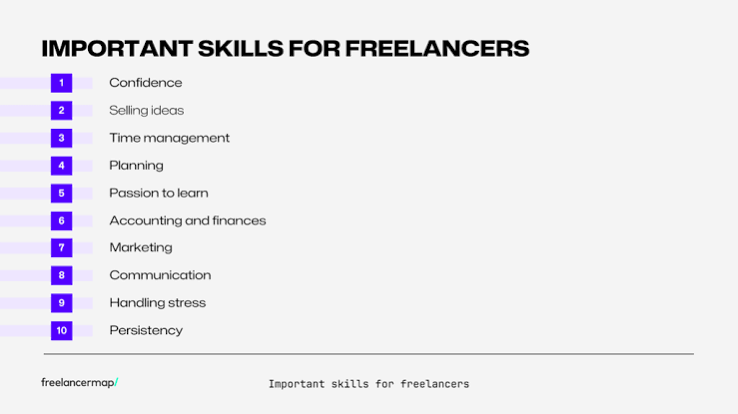
    • Don’t ignore soft skills. Communication, time management, and client handling are often the real reasons freelancers succeed.
    • Don’t treat “always” literally. It’s a rhetorical flourish, not a guarantee. The future is uncertain, but these five areas are about as stable as it gets.

    The five skills—development, marketing, data, content, and security—aren’t magic bullets. They’re anchors in a shifting sea. By focusing on the underlying capabilities and adapting to new tools, you can build a freelance career that lasts. The demand will always be there for people who can solve problems, communicate clearly, and deliver results.

    Summary

    • Software development, digital marketing, data analysis, content creation, and cybersecurity are consistently high-demand freelance skills.
    • These skills persist because they address fundamental business needs: selling, building, understanding, communicating, and protecting.
    • AI is reshaping these skills, not eliminating them. Human judgment and strategy remain invaluable.
    • “Always in demand” doesn’t mean static; tools and methods evolve.
    • Positioning yourself as a specialist is key to standing out in a crowded market.

    FAQ

    Q: Are these skills really “always” in demand?
    A: No skill is truly permanent, but these five are tied to enduring human and business needs. They’ve survived decades of technological change and will likely continue to evolve rather than disappear.

    Q: How does AI affect these freelance skills?
    A: AI automates entry-level tasks but increases the value of human oversight, strategy, and ethical judgment. Copywriters use AI for drafts, developers use AI for coding assistance, but the core skill—problem-solving and communication—remains human.

    Q: Do I need to master every tool in these categories?
    A: No. Focus on the underlying skill and learn the tools that are most in demand for your niche. The tool will change, but the skill will transfer.

    Q: What’s the best way to make these skills “always in demand” for me personally?
    A: Specialize. A generalist is replaceable; an expert in a specific niche (e.g., healthcare copywriting, legacy systems) is not. Also, develop soft skills like communication and reliability—they’re the true differentiators.

    Q: Are these skills recession-proof?
    A: They’re more resilient than low-skill gigs, but no job is completely recession-proof. During downturns, clients may cut marketing or security budgets first. However, the need for efficiency and risk management often keeps these roles active.