Tag: skill development

  • The Unpopular Lifehack: Quit Your Hobbies to Focus on One Skill

    The Unpopular Lifehack: Quit Your Hobbies to Focus on One Skill

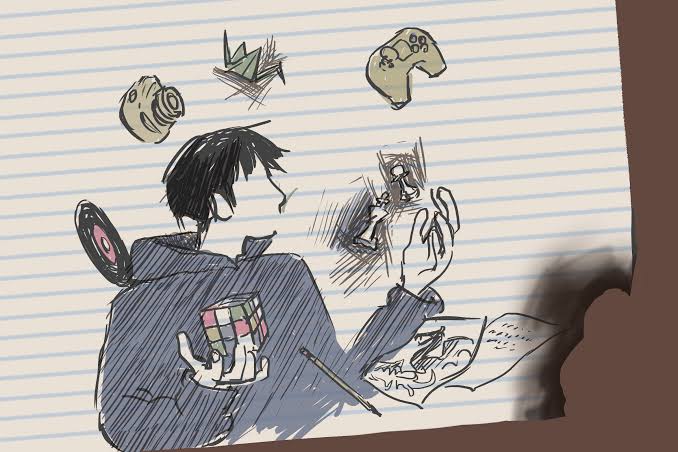
    Imagine clearing your schedule of everything except one thing: the skill you want to master. No guitar in the corner, no weekend hiking trips, no casual sketching. Just relentless, focused practice on a single craft. This is the lifehack that sounds like a punishment, yet it’s gaining traction among productivity optimizers and career climbers. But is it wise?

    The advice to quit hobbies flies in the face of the popular ‘have more hobbies’ mantra for mental health and the celebration of polymaths like Leonardo da Vinci. It’s a strategic sacrifice that asks you to surrender parts of your identity. Before you toss your paintbrushes or delete your chess app, let’s examine the evidence for and against this radical focus.

    The Case for Quitting: Mastery Demands Sacrifice

    Anders Ericsson’s research on deliberate practice, popularized by Malcolm Gladwell’s ‘10,000-hour rule,’ reveals a uncomfortable truth: top performers in any field accumulate thousands of hours of focused, effortful practice. That’s time not spent on other pursuits. If you’re aiming for elite status as a programmer, surgeon, or violinist, every hour on a hobby is an hour stolen from your primary craft. In competitive arenas, marginal gains compound—an hour a day adds up to 365 hours a year.

    Beyond time, there’s the issue of cognitive load. Juggling multiple hobbies fragments your attention and drains working memory. Quitting frees mental bandwidth, allowing you to immerse yourself more deeply. Identity consolidation also plays a role: telling yourself ‘I am a writer’ is more motivating and clearer to employers than ‘I dabble in writing, photography, and salsa dancing.’

    But the advice isn’t all-or-nothing. Many proponents suggest a ‘T-shaped’ compromise: keep one complementary hobby, like a physical activity for a desk job, to maintain balance without diluting focus.

    The Case Against: Range and Adaptability

    David Epstein’s book Range (2019) argues that in complex, unpredictable fields, generalists outshine specialists. His evidence is compelling: Nobel laureates are far more likely to have artistic hobbies than typical scientists, and Roger Federer’s diverse early sports background may have contributed to his tennis genius. In a world where problems are increasingly interdisciplinary, a broad knowledge base can be a secret weapon.

    Scott Adams, creator of Dilbert, takes a middle path with ‘skill stacking’: instead of being top 1% in one skill, aim to be top 25% in two or three. This combination is often rarer and more valuable than singular excellence. A programmer who can also write clearly and understand business is a unicorn.

    Moreover, the modern economy is shifting. Automation and AI are threatening narrow, repetitive skills, while adaptable generalists are better positioned to pivot. The ‘Renaissance ideal’—embodied by da Vinci, Franklin, and Jefferson—still captivates us for good reason.

    The Psychology of Hobbies: Sunk Costs and Identity

    Why is this advice so unpopular? Because hobbies are tangled up with our sense of self. You’re not just a person who runs; you’re a runner. Quitting feels like a small death. Behavioral economists point to the sunk cost fallacy: we cling to hobbies because of the money and time we’ve invested, not because they still bring joy. The advice to quit forces us to confront this irrational attachment.

    But there’s a darker side to the ‘quit your hobbies’ movement. It arrives wrapped in hustle culture, where every moment must be optimized for productivity. In this frame, hobbies like binge-watching or gaming are seen as wasteful. Yet the research on deliberate practice shows even elite performers only sustain about four hours of deep work per day. That leaves plenty of room for restorative leisure—if it’s truly restorative and not just passive consumption.

    Making the Call: A Practical Framework

    If you’re considering this lifehack, start by auditing your hobbies. Ask yourself: Does this hobby support my primary skill or my well-being in a meaningful way? Or is it a mindless time-filler? Try a 30-day experiment: drop one non-essential hobby and channel that time into your main skill. Track your progress and your mood. You might find that the extra focus boosts your growth, or you might discover that the hobby was a vital pressure valve.

    A more nuanced approach is to distinguish between consumptive hobbies (scrolling, streaming) and productive ones (playing an instrument, woodworking). The former are easy to quit without loss; the latter may be worth keeping, even if they slow your mastery, because they enrich your life and might even feed your primary skill in unexpected ways.

    The Verdict: Balance, Not Extremes

    The research doesn’t support a blanket ‘quit all hobbies’ mandate. It supports the value of deep, deliberate practice—and it also supports the value of range. The wisest path is probably a hybrid: go deep on one primary skill, but allow yourself one or two hobbies that genuinely recharge you or broaden your perspective. That might be the most unpopular lifehack of all: moderation.

    Quitting your hobbies to focus on one skill is a powerful idea, but it’s not a one-size-fits-all solution. The evidence suggests that deep focus is essential for mastery, yet range is invaluable for adaptation. Before you make a dramatic cut, consider your field, your goals, and your mental health. Maybe the real hack is to quit the hobbies that drain you, keep the ones that sustain you, and pour your freed-up energy into the skill that will define your future.

    Summary

    • The 10,000-hour rule is really about deliberate practice, not just any practice, and it requires time that hobbies consume.
    • David Epstein’s research shows that generalists often outperform specialists in complex fields, citing Nobel laureates’ artistic hobbies and Federer’s varied sports background.
    • Scott Adams suggests ‘skill stacking’—being top 25% in two or three skills—as a more realistic and valuable alternative to singular excellence.
    • Hobbies are tied to identity, making quitting emotionally difficult, but the sunk cost fallacy can keep us stuck in unfulfilling activities.
    • A balanced approach: quit consumptive hobbies, keep productive ones, and focus your best hours on deliberate practice.

    FAQ

    Q: Does the 10,000-hour rule mean I need to quit all hobbies to master a skill?nA: No. Ericsson’s research emphasizes deliberate practice—focused, feedback-driven effort—not just accumulated hours. Quitting hobbies can free up time, but the quality of practice matters more than the sheer quantity of hours.

    Q: Aren’t generalists more successful in the modern economy?nA: David Epstein’s Range argues that in unpredictable fields, generalists have an edge. However, in stable, specialized roles, deep expertise can command higher pay. It depends on your industry and goals.

    Q: How do I know which hobbies to quit?nA: Evaluate whether a hobby is ‘consumptive’ (passive, like scrolling) or ‘productive’ (active, like playing an instrument). Also consider if it supports your mental health or primary skill. A 30-day trial can help you assess the impact.

    Q: What if I enjoy my hobbies and don’t want to quit?nA: You don’t have to. The advice is a strategic option, not a mandate. You can still achieve mastery with a few hobbies, especially if they’re complementary or provide necessary rest.

    Q: Is the ‘one skill’ approach better for career success?nA: It can be, in competitive fields with clear skill ceilings. But Scott Adams’ ‘skill stacking’ suggests that combining skills can be even rarer and more valuable. Consider what sets you apart.
  • 7 Science-Backed Shortcuts to Learn Any New Skill in 30 Days

    7 Science-Backed Shortcuts to Learn Any New Skill in 30 Days

    We’ve all been there: staring at a guitar, a blank page, or a language app, dreaming of being fluent in a month. The idea of mastering a new skill in 30 days sounds like a fantasy, but it’s actually a realistic goal—if you know the right shortcuts. Research from cognitive science, habit formation, and expert performance reveals that the key isn’t raw hours, but smart, strategic practice. In this guide, we’ll break down seven evidence-based shortcuts that can take you from novice to noticeable progress in just one month, without burning out.

    1. Define Your ‘Minimum Viable Skill’

    Before you dive in, ask yourself: What does ‘good enough’ look like? This is the core of the ‘minimum viable skill’ concept popularized by Tim Ferriss. Instead of vaguely wanting to ‘learn Spanish’ or ‘play guitar,’ define a specific, achievable goal. For example, ‘I want to hold a 5-minute conversation in Spanish about travel’ or ‘I want to play three chords smoothly and switch between them.’ This clarity prevents you from getting lost in the vast sea of information and focuses your practice on what matters most.

    Why it works: The Pareto Principle (80/20 rule) suggests that 80% of results come from 20% of effort. By identifying the vital 20% of sub-skills that will get you to your goal, you avoid wasting time on less important aspects. This is the difference between aimless practice and deliberate practice.

    2. Deconstruct the Skill into Sub-Skills

    Once you have a clear goal, break it down into its component parts. If you want to cook a gourmet meal, the sub-skills might be knife skills, sauce-making, and timing. If you’re learning to code, it might be variables, loops, and functions. Write these down and rank them by importance and difficulty.

    Why it works: This approach, championed by Josh Kaufman in ‘The First 20 Hours,’ helps you create a roadmap. It also makes the skill less intimidating. Instead of ‘learn to code,’ you’re tackling ‘write a loop in Python.’ Each sub-skill is a small, manageable chunk that you can practice in focused sessions.

    3. Use the 80/20 Rule to Prioritize Practice

    Now that you have your sub-skills, apply the 80/20 rule again. Which 20% of these sub-skills will give you 80% of the results? For example, in language learning, the most common 1,000 words cover about 80% of everyday conversation. In photography, understanding exposure (aperture, shutter speed, ISO) is more critical than mastering every menu setting. Focus your practice time on these high-impact areas first.

    Why it works: This is a form of strategic laziness—being efficient with your effort. It ensures that your 30 days are spent on the things that actually move the needle, rather than getting bogged down in details that can wait.

    4. Practice in Short, Focused Bursts (Deliberate Practice)

    Anders Ericsson’s research on expert performers shows that the key to improvement is not just practice, but deliberate practice: focused, goal-oriented, and with immediate feedback. This means setting specific objectives for each session (e.g., ‘I will play this scale at 80 BPM without mistakes’) and actively working on weaknesses, rather than mindlessly repeating what you already know.

    Why it works: Deliberate practice is mentally taxing, so it’s best done in short, intense bursts. The Pomodoro Technique (25 minutes of focus, 5-minute break) is a great framework. This approach prevents the ‘fluency illusion’—where you think you’re improving because you’re familiar with the material, but you can’t actually perform it.

    5. Leverage Spaced Repetition and Retrieval Practice

    Cognitive science has consistently shown that spaced repetition—reviewing material at increasing intervals—dramatically improves retention compared to cramming. Tools like Anki or Quizlet are built on this principle. Similarly, retrieval practice (testing yourself) is far more effective than re-reading or highlighting.

    Why it works: When you force your brain to recall information, you strengthen the neural pathways. Spacing out your reviews ensures that the information moves from short-term to long-term memory. For motor skills, this means practicing a technique, then taking a break, then coming back to it—your brain consolidates the learning during the rest.

    6. Use the Feynman Technique to Identify Gaps

    Named after physicist Richard Feynman, this technique is simple: explain the concept you’re learning in plain, simple language, as if teaching a child. If you stumble or find yourself using jargon, that’s a gap in your understanding. Go back to the material, fill the gap, and simplify again.

    Why it works: This forces you to actively engage with the material and exposes what you don’t know. It’s a powerful feedback loop that accelerates learning. You can do this alone or with a friend—just explain what you’ve learned and see if they understand.

    7. Prioritize Sleep and Rest Days

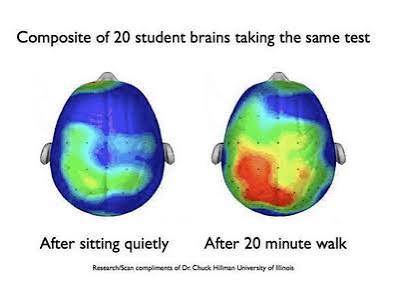
    It might seem counterintuitive, but one of the best shortcuts to learning is to stop practicing. Research shows that memory consolidation and motor skill improvement happen during sleep. A 30-day plan that sacrifices sleep for practice is counterproductive. Similarly, taking rest days allows your brain and body to recover, preventing burnout and injury.

    Why it works: Your brain processes and strengthens new connections while you sleep. This is especially important for motor skills, like playing an instrument or a sport. So, aim for 7-9 hours of sleep per night and schedule at least one rest day per week. This isn’t laziness—it’s part of the learning process.

    Putting It All Together: A 30-Day Framework

    Here’s a simple way to structure your 30 days:

    • Week 1: Deconstruct the skill, define your minimum viable skill, and identify the vital 20%. Spend this week in the ‘cognitive stage’—understanding what to do, watching tutorials, and getting a feel for the skill.
    • Week 2: Start deliberate practice on the top sub-skills. Use the Pomodoro Technique and focus on quality over quantity. Begin using spaced repetition for any factual knowledge.
    • Week 3: Increase intensity and start mixing sub-skills (interleaving). Use the Feynman Technique to check your understanding. This is the ‘associative stage’—refining your technique.
    • Week 4: Simulate real-world use. If you’re learning a language, have a conversation. If you’re learning to code, build a small project. This is where you move toward the ‘autonomous stage.’

    Remember, the goal isn’t perfection—it’s noticeable progress. By the end of 30 days, you’ll have built a foundation that you can continue to grow.

    Learning a new skill in 30 days isn’t about magic—it’s about being strategic. By defining a clear goal, deconstructing the skill, focusing on the vital few, and using evidence-based techniques like deliberate practice and spaced repetition, you can make rapid progress. The key is to work smarter, not harder, and to remember that rest and sleep are just as important as practice. So pick a skill, apply these shortcuts, and see what you can achieve in a month.

    Summary

    • Define a ‘minimum viable skill’ to focus your efforts and avoid overwhelm.
    • Deconstruct the skill into sub-skills and prioritize using the 80/20 rule.
    • Use deliberate practice in short, focused bursts with clear goals and feedback.
    • Leverage spaced repetition and retrieval practice to boost retention.
    • Apply the Feynman Technique to expose gaps in your understanding.
    • Prioritize sleep and rest days—they’re essential for memory consolidation and motor learning.

    FAQ

    Q: Can I really learn any skill in 30 days?
    A: You can learn the fundamentals and reach a beginner-intermediate level in many skills, but complex professional-level skills (like surgery or concert-level piano) require much more time. The 30-day goal is to build a solid foundation and see measurable progress.

    Q: How many hours per day should I practice?
    A: Quality over quantity. 1-2 hours of deliberate practice per day is more effective than 4 hours of mindless repetition. Use techniques like the Pomodoro method to stay focused.

    Q: What if I miss a day?
    A: Don’t panic. Consistency is important, but one missed day won’t derail your progress. Just get back on track the next day. The key is to maintain the habit over the long term.

    Q: Do I need expensive tools or courses?
    A: No. Many skills can be learned with free resources like YouTube tutorials, open-source software, or library books. The most important investment is your time and focus.

    Q: How do I stay motivated for 30 days?
    A: Tap into intrinsic motivation by choosing a skill you’re genuinely interested in. Set small, achievable goals and track your progress. Also, consider finding a learning partner or community for accountability.