Tag: Singapore

  • Four Asian Economies Are Building the AI Age’s Infrastructure

    Four Asian Economies Are Building the AI Age’s Infrastructure

    When people talk about the AI race, they usually picture American and Chinese tech giants competing to build the biggest models. But the physical backbone of AI the chips, memory, materials, and governance frameworks largely comes from four smaller Asian economies: Taiwan, South Korea, Japan, and Singapore. These nations don’t lead in flashy foundation models, yet they’ve carved out indispensable roles in the AI value chain.

    Taiwan fabricates 90% of the world’s most advanced AI chips. South Korean firms control 70% of the global memory chip market. Japan supplies half of the semiconductor materials. Singapore ranks second globally in AI readiness. Each is leveraging its unique strengths to secure a place in the AI-driven future, navigating geopolitical pressures and demographic challenges along the way.

    The AI Value Chain: Where Each Economy Fits

    AI doesn’t exist in a vacuum. It relies on a complex supply chain that spans design, fabrication, memory, materials, and deployment. These four economies have each staked out a critical position:

    • Taiwan sits at the design and fabrication stage. TSMC, the world’s largest contract chipmaker, produces the advanced accelerators that power AI models from NVIDIA, AMD, and Apple. Its “pure-play” foundry model—focusing solely on manufacturing—has made it indispensable.
    • South Korea dominates memory and packaging. Samsung and SK Hynix produce High Bandwidth Memory (HBM), which is essential for training large AI models. As one industry analyst put it, HBM is the “bottleneck within the bottleneck.”
    • Japan excels in materials and equipment. Companies like Tokyo Electron and Nikon make the lithography tools and chemicals—photoresists, silicon wafers—that are required for chip production. Japan holds about half the global market for these critical inputs.
    • Singapore plays the orchestration and governance role. It’s a regional data center hub, a talent magnet, and a leader in AI ethics frameworks. Its National AI Strategy 2.0, launched in 2023, positions the city-state as a trusted neutral player for Southeast Asia.

    This division isn’t accidental. It reflects decades of industrial policy, strategic pivots, and, in some cases, loss and recovery.

    Japan: From Chip Dominance to Materials Leadership

    Japan was once the undisputed leader in semiconductors, controlling over 50% of the global market in the 1980s. Then came the US-Japan trade war, the rise of South Korean and Taiwanese competitors, and a series of management missteps. By the 1990s, Japan’s chip industry had collapsed.

    What remained was the upstream expertise. Japanese companies kept their dominance in the materials and equipment needed to make chips. That legacy now gives Japan leverage in an AI-driven world.

    But Japan isn’t resting on its laurels. The government’s AI Strategy 2024 includes a $1.2 billion investment in a domestic AI computing facility, planned for 2025. It’s also partnering with the US on semiconductor R&D, aiming to reclaim some manufacturing ground.

    Japan’s second priority is applying AI to its shrinking workforce. With one of the world’s oldest populations, automation isn’t optional—it’s a survival strategy. The country is deploying AI in manufacturing and robotics, turning its demographic crisis into a testing ground for human-centric AI.

    South Korea: The Memory Powerhouse

    South Korea’s path to AI relevance runs through memory chips. Samsung and SK Hynix together control about 70% of the global HBM market. These chips—stacked layers of memory that allow AI processors to access data quickly—have become as critical as the processors themselves.

    The country is doubling down. In 2024, South Korea announced over $1.2 billion in funding for AI chip development, plus plans for domestic AI computing centers. It’s also the first nation to adopt a “Digital Bill of Rights” (2023), a legal framework that aims to balance innovation with citizen protections.

    Unlike Taiwan, South Korea has a meaningful domestic market. It’s pushing AI adoption at home to address its own demographic decline, even as it exports the memory chips that power AI everywhere.

    Taiwan: The Indispensable Fabricator

    Taiwan’s role in AI is the most visible. TSMC manufactures the advanced chips that train and run large language models. When the US restricted exports of advanced AI chips to China, TSMC became a geopolitical flashpoint.

    Taiwan’s strategy is simple: be irreplaceable. The government’s AI Action Plan (2024) doubles down on advanced packaging, specifically TSMC’s CoWoS (Chip-on-Wafer-on-Substrate) technology, which is crucial for AI accelerators. The planned Taiwania supercomputer series further cements Taiwan’s role as a computing hub.

    There’s a vulnerability, though. Taiwan’s domestic AI market is small, making it almost entirely dependent on exports. Any disruption—geopolitical or otherwise—could hit hard. But for now, the world needs Taiwan more than Taiwan needs any single customer.

    Singapore: The Trusted Orchestrator

    Singapore is the outlier. It doesn’t make chips or memory. Instead, it’s building a regional AI ecosystem. The National AI Strategy 2.0 (2023) and a $743 million investment in the 2024 budget are aimed at making Singapore the go-to hub for AI talent, data, and governance in Southeast Asia.

    The strategy hinges on trust. Singapore has developed the AI Verify framework, a world-first governance testing toolkit, and has led the ASEAN AI Guide. It’s positioning itself as Switzerland in the AI world—neutral, reliable, and rules-based.

    That’s a smart play for a country of 5.9 million people. Singapore can’t compete with China’s scale or America’s tech giants. But it can serve as a gateway for the 680 million people in Southeast Asia, offering data center capacity, legal clarity, and a skilled workforce.

    The Geopolitical Tightrope

    All four economies are caught between the US and China. Washington’s export controls on advanced AI chips have reshaped supply chains, forcing these nations to navigate between American pressure and Chinese market access.

    Each is handling it differently. Japan and South Korea are deepening tech ties with the US, even as they maintain economic links with China. Taiwan is bracing for potential conflict. Singapore is trying to stay neutral, positioning itself as a hub for anyone who wants to do business in Asia without taking sides.

    The result is a delicate balancing act, but so far, it’s working. The four economies have managed to turn their geographic and political constraints into strategic advantages.

    The Second-Mover Strategy

    What unites these four economies is that none is trying to build the next ChatGPT. They’re not leading in foundation models—that’s a contest between the US and China. Instead, they’re providing the infrastructure: the chips, memory, materials, and governance that make AI possible.

    This is often called the “picks and shovels” approach, but it’s more deliberate than that. Each economy has identified a bottleneck in the AI value chain and made itself indispensable. That’s a more defensible position than being the first to market with a flashy model.

    As the AI industry matures, the bottleneck will shift. Maybe packaging becomes more critical than fabrication. Maybe memory becomes commoditized. These economies know this, and they’re all investing in R&D to stay ahead of the curve.

    For now, though, the world’s AI ambitions rest on these four small but mighty economies.

    The AI age won’t be built solely by tech giants in California or Beijing. It will be built on the chips from Taiwan, the memory from South Korea, the materials from Japan, and the governance frameworks from Singapore. These four economies have turned their limitations—small markets, aging populations, geopolitical exposure—into strengths by occupying indispensable niches. As AI continues to evolve, their bets on hardware, materials, and trust may prove to be the most durable positions of all.

    Summary

    • Taiwan fabricates 90% of the world’s most advanced AI chips, making it indispensable.
    • South Korea controls ~70% of the global HBM memory market, critical for AI training.
    • Japan supplies ~50% of semiconductor materials and is investing in domestic AI compute.
    • Singapore ranks #2 globally in AI readiness and is building a regional AI governance hub.
    • None of the four leads in foundation models; instead, they focus on infrastructure and niche dominance.
    FAQ

  • Dubai vs. Singapore: Which Modern Marvel Is More Luxurious?

    Dubai vs Singapore: Luxury Put Into Perspective

    Dubai and Singapore are the two most dazzling city-states in the world, each a testament to human ambition. But they define luxury in starkly different ways. Dubai flaunts it with the world’s tallest tower, a seven-star hotel, and gold-plated everything. Singapore whispers it through impeccable service, a rooftop infinity pool that seems to touch the sky, and a Changi Airport that feels like a rainforest. Which one truly offers the more luxurious experience? The answer depends on what you value most: spectacle or subtlety.

    Two Paths to Opulence

    Dubai and Singapore are often mentioned in the same breath as modern marvels, but their luxury DNA is entirely different. Dubai’s rise was fueled by oil money and a deliberate strategy to become a “city of superlatives.” Singapore, a resource-poor island that gained independence in 1965, built its wealth through financial might and meticulous urban planning. The result is a fascinating contrast: one city shouts, the other seduces.

    The Skyline Test

    Dubai’s Burj Khalifa pierces the sky at 828 meters, holding the title of the world’s tallest building. It’s not just tall—it’s a statement. The Burj Al Arab, a self-designated “7-star” hotel, sits on its own artificial island, its sail-shaped silhouette a symbol of excess. In Singapore, the Marina Bay Sands is equally iconic but in a different way. Its three towers support a 57-story rooftop infinity pool, the largest of its kind in the world. When you swim in it, the city skyline stretches before you, but the experience feels more like a private reward than a public spectacle.

    Shopping: Mega-Mall vs. Orchard Road

    Dubai Mall is a retail empire with 1,200+ outlets, including every luxury brand you can name. It’s not just a mall; it’s an entertainment complex with an aquarium and an ice rink. Singapore’s Orchard Road is a four-kilometer stretch of flagship stores—Hermès, Louis Vuitton, Chanel—each designed as a temple to its brand. The difference: Dubai’s luxury shopping is about scale and selection; Singapore’s is about curation and ambiance.

    The Price of Luxury

    Luxury real estate tells a stark story. In Dubai’s prime areas like Palm Jumeirah or Emirates Hills, average prices range from $800 to $1,500 per square foot, with ultra-prime penthouses occasionally exceeding $10,000. In Singapore’s prime districts (9, 10, and 11), you’ll pay $2,500 to $4,000+ per square foot, and super-penthouses have sold for more than $6,000. The gap reflects different land policies: Dubai has room to build artificial islands, while Singapore’s limited land forces vertical and expensive solutions.

    Taxes add another layer. Dubai has no personal income tax, a 5% VAT, and a 9% corporate tax on profits above about $102,000. Singapore has a progressive income tax topping out at 24% and a 9% GST. For a high earner, Dubai’s tax advantage is huge—it’s why the city became a magnet for wealthy Russians and crypto entrepreneurs after the pandemic. But Singapore offers something money can’t easily buy: stability and world-class public services.

    Dining and Culture

    Singapore is a food paradise, with one of the highest densities of Michelin stars per capita in Asia. It even has the world’s first Michelin-starred street food stall, Hawker Chan. Dubai’s dining scene is lavish and international, but it lacks that kind of culinary pedigree. In terms of cultural offerings, Dubai’s Museum of the Future is a jaw-dropping architectural marvel, but Singapore’s Gardens by the Bay—with its Supertree Grove and climate-controlled conservatories—integrates nature and technology in a way that feels both futuristic and serene.

    Who Wins the Luxury Crown?

    There’s no single answer. Dubai offers luxury as a performance: private islands, gold-dispensing ATMs, and supercar parades. Singapore offers luxury as a quality of life: safety, efficiency, and green spaces. If you want to be seen, Dubai is your stage. If you want to live well without ostentation, Singapore is your sanctuary. In the end, the more luxurious city is the one that matches your definition of the word.

    Dubai and Singapore are both modern marvels, but their luxury is measured on different scales. Dubai is the extrovert, building the tallest, biggest, and most extravagant. Singapore is the introvert, perfecting the art of discreet, quality-driven living. Whether you prefer a gold-plated skyline or a seamless, green metropolis, both cities offer a lifestyle that most of the world can only dream of. The real luxury is having the choice.

    Summary

    • Dubai emphasizes scale and visibility: Burj Khalifa, Burj Al Arab, and mega-malls.
    • Singapore focuses on discretion and quality: Marina Bay Sands’ infinity pool, Orchard Road’s curated shopping, and world-class dining.
    • Real estate is pricier in Singapore (prime areas $2,500–4,000+/sq ft) than in Dubai ($800–1,500+/sq ft).
    • Taxes favor Dubai (no income tax), but Singapore offers stability and top-tier public services.
    • The verdict depends on your definition of luxury: spectacle vs. refinement.

    FAQ

    Q: Which city is more expensive for luxury real estate?
    A: Singapore. Prime districts average $2,500–4,000+ per square foot, while Dubai’s prime areas range from $800–1,500+ per square foot.

    Q: Does Dubai really have a 7-star hotel?
    A: No official 7-star rating exists; the Burj Al Arab self-designates that title.

    Q: Which city has better tax advantages for wealthy individuals?
    A: Dubai, with no personal income tax, compared to Singapore’s top marginal rate of 24%.

    Q: What is the main cultural difference in luxury?
    A: Dubai’s luxury is conspicuous and performance-oriented; Singapore’s is understated and quality-driven.

    Q: Which city attracts more tourists?
    A: Dubai, with 17.15 million international visitors in 2023, compared to Singapore’s 13.6 million.

  • Massive Attack Says Members Detained, Questioned After Singapore Concert

    Massive Attack Says Members Detained, Questioned After Singapore Concert

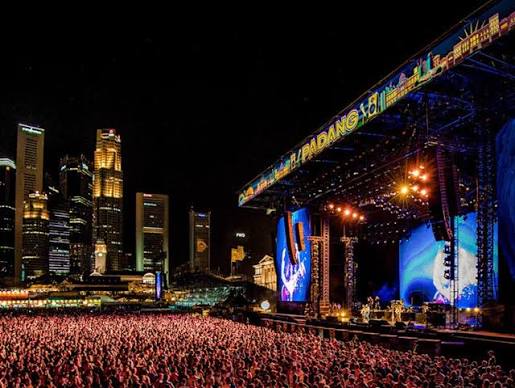
    British electronic group Massive Attack has issued a new statement detailing a tense post-concert encounter with Singaporean authorities, saying band members were detained, isolated, and had their passports temporarily confiscated. The statement, posted on the band’s official Instagram account, sheds light on the aftermath of their recent performance in the city-state, raising questions about the limits of artistic expression in Singapore’s tightly regulated environment.

    The band, known for its politically charged music and visuals, did not specify what triggered the police action, but the incident has sparked debate among fans and observers about the balance between free speech and local laws. Singapore has strict regulations governing public performances, and authorities have broad powers to investigate potential breaches of public order.

    The Band’s Account

    In a statement released on Instagram, Massive Attack said that following their concert in Singapore, band members were “detained by the police, isolated and separately questioned.” The statement also mentioned that some members’ hotel rooms were searched and their passports were temporarily confiscated as part of the process. The band framed the experience as heavy-handed and intimidating, using language that suggests a punitive or coercive atmosphere.

    Robert “3D” Del Naja and Grant “Daddy G” Marshall, the core members of the group, have a long history of political activism, and their live shows often include provocative imagery and commentary. However, the statement did not elaborate on what specific aspects of the performance or behavior may have drawn the attention of authorities.

    Context: Singapore’s Regulatory Environment

    Singapore is known for its strict laws regarding public assembly, political speech, and content that could cause “ill-will” or “hostility” between groups. The Info-communications Media Development Authority (IMDA) regulates content, and the police have broad powers under the Public Order Act and other legislation to investigate potential breaches. Performances that touch on sensitive topics, such as religion, race, or foreign relations, can come under scrutiny.

    This is not the first time an international artist has faced issues in Singapore. In the past, performers have been fined or censored for violating content guidelines. However, the detention and questioning of band members after a show is relatively rare, making this incident notable.

    The Aftermath: What Triggered This?

    The exact cause of the police action remains unclear. The band’s statement does not specify whether the issue was related to on-stage content, audience behavior, or a security concern. Some speculate that the band’s history of political statements, including pro-Palestinian and anti-war messages, may have played a role. Others suggest it could be linked to a specific complaint or a routine investigation.

    Without official confirmation from Singaporean authorities, the full picture is incomplete. The police have not publicly commented on the incident, and it is unknown whether any charges will be filed.

    Reactions and Implications

    The incident has drawn mixed reactions. Some fans and free-speech advocates view it as an overreach by an authoritarian state, while others see it as the band knowingly pushing boundaries and facing consequences. The episode could have a chilling effect on other international artists considering performing in Singapore, potentially making them think twice about making political statements on stage.

    Legal experts note that “detained” does not necessarily mean “arrested” in Singapore. Police can hold individuals for questioning without formal arrest, and passport confiscation is a specific legal action that can be taken during investigations. The distinction is important, as it affects the legal implications for the band members.

    Looking Ahead

    As of now, Massive Attack has not indicated whether they will take further action or if they have been cleared of any wrongdoing. The band’s statement serves as a warning to other artists about the potential consequences of political expression in Singapore. It also highlights the ongoing tension between artistic freedom and national laws, a debate that is likely to continue as the global music industry navigates diverse regulatory landscapes.

    Massive Attack’s statement offers a rare glimpse into the post-concert reality for artists performing in Singapore, where strict laws and broad police powers can lead to unexpected consequences. While the full details of what prompted the detention remain unclear, the incident underscores the challenges of balancing artistic expression with local regulations. As the band and authorities remain silent on the specifics, the music community watches closely to see what this means for future performances in the city-state.

    Summary

    • Massive Attack says band members were detained, isolated, and questioned by police after their Singapore concert.
    • Hotel room searches and temporary passport confiscation were part of the process, according to the band’s statement.
    • The exact trigger for the police action is unknown, but Singapore has strict laws on public performances and political content.
    • The incident has sparked debate about free speech and could have a chilling effect on other artists.
    • Legal experts note that “detained” does not necessarily mean “arrested” in Singapore.

    FAQ

    Q: Were Massive Attack members arrested?
    A: The band says they were “detained,” which in Singapore can mean held for questioning without formal arrest. The distinction is important, as it affects legal implications.

    Q: What triggered the police action?
    A: The band’s statement does not specify, and authorities have not commented. It could be related to on-stage content, a complaint, or a security assessment.

    Q: Has Massive Attack faced similar issues before?
    A: The band has a history of political activism, but this specific incident in Singapore appears to be unprecedented.

    Q: What are Singapore’s laws on concert content?
    A: Singapore has strict regulations under the IMDA and the Public Order Act, prohibiting content that could cause ill-will or hostility between groups.

    Q: Could this affect other artists performing in Singapore?
    A: Yes, the incident may deter artists from making political statements, fearing similar consequences.

  • Massive Attack Duo Permanently Banned From Singapore Over Palestinian Flag Display

    Massive Attack Duo Permanently Banned From Singapore Over Palestinian Flag Display

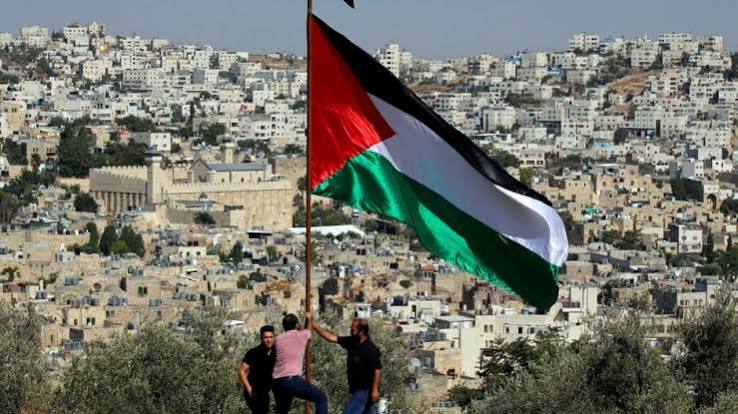
    Singapore has permanently barred both members of the British trip-hop group Massive Attack from re-entering the country after they displayed a Palestinian flag during a concert. The ban, announced in a joint statement by the Singapore Police Force and the Infocomm Media Development Authority (IMDA), underscores the city-state’s strict stance on foreign political symbols in public spaces.

    The decision follows an investigation into Robert “3D” Del Naja and Grant “Daddy G” Marshall, who unfurled the flag on stage during a performance in Singapore. Authorities cited concerns over public order and security, emphasizing that such displays could inflame communal tensions in the multi-ethnic, multi-religious society.

    The ban is permanent, effectively preventing the duo from performing in Singapore again. It highlights the ongoing tension between artistic expression and Singapore’s legal framework, which prioritizes social harmony and foreign interference prevention.

    The Incident and the Ban

    During a concert in Singapore, Massive Attack’s Robert Del Naja and Grant Marshall displayed a Palestinian flag on stage. The act, captured on video and widely shared, prompted an investigation by Singapore authorities. In a joint statement, the Singapore Police Force and IMDA announced that both members are permanently barred from re-entering the country.

    The statement explained that the duo’s actions were investigated for “their actions of displaying the flag,” which authorities deemed a breach of Singapore’s laws on public order and foreign interference. The flag, a potent symbol in the Israeli-Palestinian conflict, was considered a foreign political symbol that could disrupt social harmony.

    Singapore’s Legal and Regulatory Context

    Singapore has a robust legal framework governing public assemblies and foreign political activities. The Public Order Act and the Foreign Interference (Countermeasures) Act (FICA), enacted in 2021, are central to this framework. FICA targets foreign actors who engage in political activities that could undermine Singapore’s sovereignty or social harmony.

    The IMDA, which regulates media content, can impose penalties on performers or broadcasters for content deemed objectionable. Singapore has previously banned or fined artists for political content, reflecting its cautious approach to external conflicts.

    In the context of the Israel-Hamas war, which began in October 2023, Singapore has urged restraint and maintained a neutral public stance, emphasizing social cohesion at home. The government discourages public displays of foreign political symbols to avoid importing external disputes into local society.

    Perspectives on the Ban

    Singapore Government’s View: The ban is framed as a necessary measure to preserve public order and racial/religious harmony. Authorities stress that all performers must respect local laws, and foreign political symbols have no place in entertainment venues.

    Artistic Freedom Advocates: Critics argue that banning artists for a symbolic gesture is disproportionate and that Singapore’s restrictions on expression are overly broad. Massive Attack’s history of political activism suggests the flag display was intentional, consistent with their body of work.

    International Reaction: The story may draw attention from international media and human rights organizations, potentially framing Singapore as repressive. However, some commentators may note that Singapore’s approach aligns with its legal framework and cultural norms.

    Local Public Opinion: Views in Singapore may be divided. Some may support the government’s stance on maintaining harmony, while others may see the ban as excessive, particularly if they sympathize with the Palestinian cause or value artistic expression.

    Legal Analysis: Experts may debate whether the ban is legally sound, whether due process was followed, and whether a permanent ban fits the alleged offense.

    Clarifying Common Misunderstandings

    It’s important to note that the duo was not arrested or charged with a criminal offense; the ban is an administrative action under immigration powers, barring re-entry. The ban applies to both members personally, not necessarily to the band as a whole, though practically, Massive Attack cannot perform in Singapore without them. The ban does not affect their ability to perform elsewhere.

    The reason for the ban is not about supporting Palestine per se, but about displaying a foreign political symbol in a public performance, which Singapore considers a breach of its laws on public order and foreign interference. This is not simply a “free speech” issue; it’s about Singapore’s specific legal and social context.

    The permanent ban on Massive Attack’s members reflects Singapore’s firm commitment to maintaining social harmony and preventing foreign political interference. While the decision has sparked debate over artistic freedom, it aligns with the city-state’s legal framework and cultural priorities. As international attention focuses on this case, it serves as a reminder of the delicate balance between expression and regulation in a globalized world.

    Summary

    • Massive Attack’s Robert Del Naja and Grant Marshall are permanently banned from re-entering Singapore after displaying a Palestinian flag during a concert.
    • The ban was announced by the Singapore Police Force and IMDA, citing concerns over public order and security.
    • Singapore’s strict laws on foreign political symbols and interference, including FICA, underpin the decision.
    • The ban is administrative, not criminal, and applies to the individuals, not the band as a whole.
    • The case highlights tensions between artistic expression and Singapore’s emphasis on social cohesion.

    FAQ

    Q: Were the Massive Attack members arrested?
    A: No, they were not arrested or charged with a criminal offense. The ban is an administrative action barring them from re-entering Singapore.

    Q: Does the ban apply to the entire band?
    A: The ban applies to both members personally. Since Massive Attack cannot perform without them, the band effectively cannot play in Singapore.

    Q: Why was the flag display considered a violation?
    A: Singapore considers foreign political symbols in public performances a threat to public order and social harmony, especially given its multi-ethnic, multi-religious society.

    Q: Is this a free speech issue?
    A: While critics may frame it as such, Singapore’s laws prioritize social cohesion and foreign interference prevention, which the government argues justifies the ban.

    Q: Can the duo appeal the ban?
    A: The statement did not mention an appeal process. Typically, such immigration bans are discretionary and may not be subject to appeal.