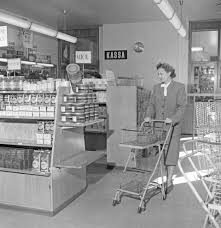
Tag: shopping cart

  • The Shopping Cart Was a Hard Sell: Sylvan Goldman’s 1937 Revolution

    The Shopping Cart Was a Hard Sell: Sylvan Goldman’s 1937 Revolution

    In 1937, a supermarket owner in Oklahoma City watched a customer struggle with a heavy hand basket, set down a few items, and walk out with less than she might have bought. That moment and a folding chair in his office led Sylvan Goldman to build a device that would reshape retail forever. But when he first rolled out his invention, shoppers refused to touch it. Men thought it looked effeminate. Women said it reminded them of baby strollers. Older customers found it plain intimidating.

    Goldman didn’t give up. He hired actors to push the carts around his stores, modeling the behavior until shoppers followed. Within a few years, the shopping cart became as standard as the cash register. This is the story of how a busted chair and a wire basket turned into a multi-billion-dollar retail infrastructure—and why the cart’s biggest battle wasn’t mechanical, but cultural.

    The Problem with Self-Service

    Before supermarkets, grocery shopping was a conversation. You handed a list to a clerk behind a counter, and they fetched items from shelves you couldn’t touch. Then came self-service—Piggly Wiggly opened in 1916, and suddenly customers roamed aisles, picking their own goods. It was liberating, but it created a bottleneck: how much could you carry in a hand basket?

    Not much. The typical purchase topped out at a few dollars’ worth of goods—maybe five or six items. Sylvan Goldman, who owned the Humpty Dumpty chain in Oklahoma and Texas, saw this as a sales killer. Every customer who left early because their arms were full was money walking out the door. If he could let people carry more, they’d buy more. Simple math.

    Goldman later said the idea came to him while watching a customer struggle, then noticing a folding chair in his office. Why not put a basket on wheels? He sketched a design: a metal frame with two wire baskets—one above, one below—that could collapse for storage. In 1937, he filed a patent for a “Folding Basket Carriage for Self-Service Stores.” The U.S. Patent Office granted it in April 1940 as Patent No. 2,196,914.

    The Flop That Almost Was

    Goldman installed his new carts in his Humpty Dumpty stores and waited for customers to embrace them. They didn’t. The carts sat unused near the entrance. Men refused to push what looked like a baby carriage. Women—many of whom had pushed strollers all day—didn’t want to push another one at the grocery store. Elderly shoppers found the contraption unwieldy and embarrassing.

    The invention was a technical success and a social failure. Goldman could have shelved it. Instead, he tried a trick that would later be called social proof marketing. He hired men and women—often actors—to stroll through his stores pushing the carts, filling them with groceries, and chatting about how convenient they were. Shoppers watched, saw that it was normal, and slowly started grabbing carts themselves.

    It worked. Within a few years, shopping carts were ubiquitous in American supermarkets. Goldman’s company, Folding Carrier Corporation (later Unarco), manufactured them, and he licensed the patent widely, collecting royalties that made him a wealthy man.

    The Cart as Sales Machine

    The shopping cart wasn’t just a convenience. It was a deliberate sales-engineering tool. Once customers could push a cart, they weren’t limited by arm strength—they were limited by store size and their own willpower. Supermarkets responded by expanding aisles and stocking more impulse items. The cart effectively removed a physical ceiling on purchases, and retailers reaped the rewards.

    Goldman’s insight was purely commercial: if customers can carry more, they will buy more. The cart was a direct sales multiplier. It changed consumer psychology—a bigger cart invites more stuff. That’s why modern stores still use oversized carts, even for small trips. The design has barely changed in 80 years, a testament to its fundamental utility.

    Overcoming the Gender Barrier

    Why did shoppers reject the cart initially? The reasons were cultural, not practical. For men, pushing a wheeled contraption felt like a blow to their masculinity—it was women’s work, tied to child-rearing. For women, it felt like they were back at home with a stroller, not shopping as independent consumers. Goldman’s actor gambit sidestepped these anxieties by making the cart look fashionable and normal.

    This episode reveals a broader truth about innovation: new technologies often fail not because they don’t work, but because they clash with social norms. The shopping cart’s victory wasn’t just about engineering—it was about social engineering. Goldman understood that to change behavior, you sometimes have to show people what the new behavior looks like.

    The Cart’s Legacy and Evolution

    Goldman’s patent covered the folding/nesting mechanism, not the idea of a wheeled basket. Earlier, simpler carts existed in the 1930s, but Goldman’s design was the first practical, storable version. He defended his patent aggressively, suing competitors, which shaped how the industry licensed cart technology.

    After selling his supermarket chain to what became Safeway, Goldman kept the cart manufacturing business. He lived to see the cart evolve: child seats arrived in 1947, plastic versions followed, and in his later years, he helped pioneer motorized scooters for disabled shoppers. Today, we have self-driving carts from Amazon and Caper AI, but the core concept—a basket on wheels—remains untouched.

    The cart also created new jobs and problems: cart retrievers, coin locks, electronic wheels to prevent theft. Suburbanization made the cart essential—without a car to haul groceries, the cart would’ve been pointless. It’s a story about infrastructure as much as invention.

    Why This Story Matters

    The shopping cart is so mundane that we rarely think about it. But it’s a perfect case study in how innovation spreads. It wasn’t the first wheeled basket, and Goldman wasn’t a lone genius in a vacuum. He was a retailer who understood a simple economic truth and had the persistence to overcome cultural resistance. He didn’t just invent a product—he invented a way to make people use it.

    Goldman died in 1984, but his cart rolls on in every supermarket, big-box store, and warehouse club. Next time you grab one, remember: it took actors, a folding chair, and a man who refused to take no for an answer to get you pushing that cart.

    Sylvan Goldman’s shopping cart wasn’t an overnight success. It was a flop that required clever marketing to overcome gendered and generational resistance. But once it caught on, it transformed retail by removing the physical limits on what shoppers could buy. The cart’s design has barely changed in eight decades—a sign that some inventions are so right that they don’t need reinvention. Goldman’s story reminds us that the hardest part of innovation isn’t always the idea; it’s convincing people to change their habits.

    Summary

    • Sylvan Goldman invented the folding shopping cart in 1937 after watching a customer struggle with a hand basket; he combined a wire basket with a folding chair’s frame.
    • Initial reception was poor—men found it effeminate, women saw it as a baby stroller—so Goldman hired actors to push carts, modeling the behavior until shoppers adopted it.
    • The cart was a sales-engineering tool: bigger carts led to bigger purchases, and supermarkets expanded to accommodate them.
    • Goldman’s patent covered the folding mechanism, not the wheeled basket, and he enforced it aggressively, licensing it widely.
    • The cart’s basic design has remained unchanged for over 80 years, evolving only with additions like child seats and plastic materials.

    FAQ

    Q: Was Sylvan Goldman the first to invent a shopping cart?
    A: Not exactly. There were earlier, cruder wheeled baskets in the 1930s, but Goldman’s design was the first practical, folding version that could be nested for storage. His patent specifically covered the folding mechanism, which made it commercially viable.

    Q: Why did people initially reject the shopping cart?
    A: Men thought pushing a cart looked effeminate, women felt it resembled a baby stroller, and older customers found it intimidating. The resistance was cultural, not practical—Goldman overcame it by hiring actors to use the carts in his stores.

    Q: How did Goldman make money from the cart?
    A: He licensed his patent to other manufacturers and retailers, collecting royalties. He also ran his own cart manufacturing company, Folding Carrier Corporation, later known as Unarco.

    Q: What happened to Sylvan Goldman’s supermarket chain?
    A: He sold his Humpty Dumpty chain to a company that eventually became part of Safeway, but he kept the rights to the cart manufacturing business, which remained profitable.

    Q: How has the shopping cart evolved since 1937?
    A: Child seats were added in 1947, plastic versions appeared later, and motorized scooters for disabled shoppers were pioneered with Goldman’s involvement. Today, companies like Amazon are testing self-driving carts, but the fundamental design remains unchanged.

  • The Basket on Wheels: How Sylvan Goldman’s Shopping Cart Revolutionized Retail

    How a Basket on Wheels Revolutionized Grocery Shopping - Priceonomics

    In June 1937, shoppers at a Humpty Dumpty supermarket in Oklahoma City encountered a strange new contraption: a metal frame with wire baskets mounted on wheels. Most were skeptical. Men thought it looked unmanly; women found it hard to steer. But Sylvan Goldman, the store owner, had a hunch that this odd device would change retail forever.

    Goldman wasn’t trying to be convenient—he was trying to sell more groceries. Before his invention, customers were limited by what they could carry in a hand basket. Once that basket was full, they stopped buying. Goldman realized that if he could make it easier to carry more, people would buy more. His solution was simple, yet it solved a problem that had plagued self-service stores since their inception.

    The shopping cart didn’t just boost sales; it paved the way for supermarkets, big-box stores, and the modern consumer economy. Today, billions of shoppers use carts annually, and the design remains largely unchanged. This is the story of how a folding chair inspired a retail revolution.

    The Problem: Self-Service’s Hidden Bottleneck

    In the early 20th century, grocery shopping was a clerk-mediated affair. You handed a list to a clerk who fetched items from behind the counter. Then, in 1916, Clarence Saunders opened Piggly Wiggly, the first self-service grocery store. Customers could now walk the aisles, pick their own items, and interact with products directly. This was a hit—sales soared because shoppers bought more when they could browse.

    But there was a catch: shoppers could only carry what fit in a hand-held basket, typically 10 to 12 items. Once the basket was full, they headed to the checkout, often leaving with less than they could afford. For store owners, this was a revenue ceiling. They had opened their stores to encourage more purchases, but the physical limitation of carrying capacity capped sales per visit.

    Goldman, who owned the Humpty Dumpty chain with his brother Alfred, saw this problem firsthand. Watching customers struggle with overflowing baskets, he realized that the store’s growth depended on solving this bottleneck. He later recalled, “I thought, if I could find a way to carry more groceries, the customer would buy more.”

    The Eureka Moment: A Folding Chair on Wheels

    Goldman wasn’t an engineer; he was a businessman. But he had an eye for practical innovation. One evening in 1936, he was sitting in his office, staring at a folding chair. The chair’s X-shaped folding mechanism sparked an idea: what if he attached wheels to a frame that could hold baskets? He sketched a design and took it to a local mechanic, Fred Young, who helped build a prototype.

    The original cart was a simple metal frame with two wire baskets—one on top for lighter items, one below for heavier goods. The frame borrowed the folding mechanism from a chair, allowing the cart to collapse for storage. Goldman filed a patent on March 28, 1937, and introduced the cart in June of that year at his store on North Hudson Avenue.

    Early reactions were not encouraging. Men refused to push them, saying they looked like baby carriages. Women complained they were difficult to steer. Goldman didn’t give up. He hired male and female models to push carts through his stores, demonstrating their ease of use. He also stationed greeters at the entrance to hand out carts to customers—a tactic that later became standard retail practice. Within a few months, the carts were a hit, and average purchase sizes jumped by 40 to 50 percent.

    The Cart That Built Supermarkets

    By 1940, Goldman’s carts were in use in over 100 stores across the country. The cart did more than increase sales; it changed the physical layout of stores. Aisles had to be widened to accommodate carts, and shelving was adjusted to make items easy to reach. The cart also encouraged impulse buying—when you can carry more, you’re more likely to toss in that extra snack or magazine.

    The economic impact was staggering. Retailers found that cart users bought not only more items but also more expensive ones, like family-size packages. This shift enabled the rise of supermarkets, which depend on high-volume, cart-based shopping. Without the cart, the big-box stores that dominate today’s retail landscape—Walmart, Target, Costco—would be unthinkable.

    Goldman continued to innovate. In 1946, he introduced a nestable folding cart that could be stacked compactly, and in 1947, he added a child seat. These features became standard, and the basic design has remained largely unchanged for over 75 years.

    The Cultural Ripple Effect

    The shopping cart’s influence extends far beyond the grocery aisle. It reshaped gender roles: by making it easier to carry large loads, it encouraged the weekly shopping trip, which in turn tied women more closely to domestic responsibilities. The cart also became a symbol of consumer abundance, appearing in art—like Andy Warhol’s prints—and in film, such as the iconic cart-pushing scene in The Blues Brothers.

    But the cart also has a darker side. In recent decades, it has become a symbol of homelessness, with carts used as mobile storage for personal belongings. This has led to anti-theft measures, like wheel-locking systems, and social stigma. The cart’s very ubiquity makes it a canvas for both consumer aspiration and social inequality.

    The Evolution: From Wire to Smart Carts

    The shopping cart has evolved from Goldman’s original wire design to today’s plastic models, with a host of improvements: child seats, cup holders, and even anti-theft wheels that lock if the cart is taken beyond a certain boundary. The 21st century has brought smart carts, like Amazon’s Dash Cart and Caper AI’s autonomous carts, which use sensors and screens to streamline checkout. These innovations promise to further transform the shopping experience, but they all trace their lineage back to Goldman’s simple invention.

    Goldman, who later became a successful real estate developer in Oklahoma City, was inducted into the Oklahoma Hall of Fame in 1967. He died in 1984, but his legacy rolls on. Today, an estimated 25,000 shopping carts are manufactured daily worldwide, and billions of shoppers use them every year. All because a grocer looked at a folding chair and saw a way to sell more groceries.

    The shopping cart is more than a retail convenience; it’s a testament to human ingenuity. Sylvan Goldman didn’t just invent a product—he solved a fundamental economic problem, and in doing so, he reshaped the way we shop. The next time you grab a cart at the store, remember: you’re pushing a piece of history that changed the world.

    Summary

    • Sylvan Goldman invented the shopping cart in 1937 to solve the problem of limited carrying capacity in self-service stores.
    • The cart increased average purchase size by 40-50% in early trials, boosting retail sales.
    • Goldman’s design borrowed from folding chair technology and was initially met with skepticism, but he overcame it with demonstrations and greeters.
    • The cart enabled the rise of supermarkets and big-box stores, becoming a staple of modern retail.
    • The cart’s design has evolved with plastic, child seats, and smart technology, but Goldman’s basic principle remains.

    FAQ

    Q: Who invented the shopping cart?
    A: Sylvan Goldman, owner of the Humpty Dumpty supermarket chain, invented the shopping cart in 1937. He filed a patent on March 28, 1937, and introduced the cart in June of that year in Oklahoma City.

    Q: What problem did the shopping cart solve?
    A: Before the cart, shoppers could only carry what fit in a hand-held basket, typically 10-12 items. This limited how much they could buy, capping store sales. The cart allowed shoppers to carry more, increasing sales by 40-50%.

    Q: How did Goldman convince people to use the carts?
    A: Goldman hired male and female models to push carts through his stores, demonstrating their ease of use. He also stationed greeters at the door to hand out carts to customers, a practice that became a standard retail tactic.

    Q: When did the folding cart with a child seat appear?
    A: In 1946, Goldman introduced a nestable folding cart, and in 1947, he added a child seat. These features became standard and are still common today.

    Q: How has the shopping cart evolved?
    A: Carts have evolved from wire to plastic, with improvements like anti-theft wheels and smart carts (e.g., Amazon’s Dash Cart). Despite these changes, the basic design remains similar to Goldman’s original.