Tag: shipping

  • The Box That Changed the World: How Containerization Shrank the Globe

    The Box That Changed the World: How Containerization Shrank the Globe

    On April 26, 1956, a retired WWII tanker named the Ideal X departed Newark, New Jersey, bound for Houston, Texas. Its deck was stacked with 58 steel boxes, each the size of a truck trailer. That unremarkable voyage, carrying no headline-grabbing cargo, marked the birth of modern container shipping and quietly set in motion a revolution that would redraw the map of global commerce.

    Before the container, shipping was a slow, laborious, and costly affair. Goods were handled piece by piece as break-bulk cargo barrels, crates, sacks, and bales hoisted by cranes and carried by longshoremen. A ship might spend weeks in port, and losses from theft and damage were so common that insurance premiums added significant costs. The container changed all that by turning a complex logistical puzzle into a simple matter of moving sealed boxes from truck to ship to train without ever opening them. What followed was a cascade of economic and geopolitical transformations, from the rise of East Asian export powerhouses to the decline of traditional port cities.

    The Trucker Who Saw Ships as Highways

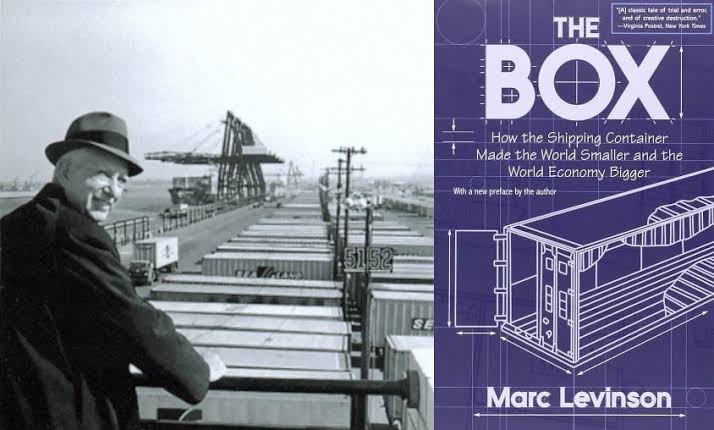
    Malcom McLean was not a shipping magnate. He was a trucking entrepreneur from North Carolina who had built a successful business hauling freight up and down the East Coast. What he saw when he looked at a cargo ship was not a vessel but a bottleneck—a place where his trailers had to be unloaded, their contents manhandled into the hold, and then reloaded on the other side. His insight was deceptively simple: why not load the entire trailer onto the ship, box and all?

    In 1956, McLean bought a steamship company and converted tankers to carry containers. The first voyage of the Ideal X carried 58 containers from Newark to Houston, a trip that took just a few days. The immediate savings were staggering: loading costs dropped from $5.86 per ton to $0.16 per ton—a 97 percent reduction. But the true significance was not just the cost; it was the speed. A ship that once spent days or weeks in port could now be unloaded and reloaded in hours.

    Standardization: The Quiet Revolution

    The container itself was not a technological marvel. It was, as economists later noted, a systems innovation. The real breakthrough came when the industry agreed on standard sizes. In 1968, the International Organization for Standardization (ISO) set the dimensions—20 feet and 40 feet in length, 8 feet wide, and 8 feet 6 inches high. The 20-foot unit became the global benchmark, the twenty-foot equivalent unit, or TEU, which today measures the capacity of ships and ports.

    Standardization meant that a container loaded in a factory in Ohio could move by truck to a port, be lifted onto a ship, and then transferred to a railcar in Rotterdam without ever being opened. This intermodal magic slashed handling time, reduced theft because boxes were sealed and traced, and cut insurance costs. The box was a closed system: once sealed, the cargo was untouched until destination.

    The Vietnam War as Accelerant

    Containerization might have remained a niche innovation for years if not for an unlikely catalyst: the Vietnam War. In the late 1960s, the US military needed to move massive volumes of supplies to Southeast Asia. Sea-Land, McLean’s company, won major military contracts and demonstrated the system’s efficiency at scale. The US government subsidized container port development in Vietnam, proving that the box could function in the most challenging environments—and that it could move enormous quantities of goods quickly and reliably.

    The Asian Miracle on the Water

    Perhaps the most profound impact of containerization was on global manufacturing geography. Before containers, factories had to be located near ports or rail hubs to minimize the cost of moving raw materials and finished goods. The container untethered production from geography. Suddenly, it became feasible to manufacture components in one country, assemble them in another, and sell them in a third, all with minimal handling costs.

    This was a necessary precondition for the export-led growth of Japan, the Asian Tigers, and eventually China. Without cheap, reliable ocean transport, these nations could not have industrialized for export. The numbers tell the story: In 1990, Chinese ports handled about 1.5 million TEUs. By 2020, that figure exceeded 250 million. Today, seven of the world’s ten busiest container ports are in China. The box made globalization possible.

    The Human Cost: Labor’s Resistance

    But the revolution was not without victims. Containerization displaced hundreds of thousands of longshoremen, whose jobs were physically demanding, often dangerous, and deeply rooted in port communities. Unions, particularly the International Longshoremen’s Association in the US, fought the change with strikes and slowdowns. The 1971 West Coast dock strike was a pivotal moment, leading to “Mechanization and Modernization” agreements that traded job security for automation—a template for labor negotiations in the decades ahead.

    Ports that resisted containerization, like London and Liverpool, saw their fortunes decline. Those that embraced it, like Rotterdam, Singapore, and Felixstowe, boomed. The container did not just change how goods moved; it remade the map of world commerce, elevating some cities and leaving others behind.

    The Box Today

    Today, roughly 90 percent of world trade by volume travels by sea, and the vast majority of non-bulk goods move in containers. Global container traffic exceeds 800 million TEUs annually. The box is so ubiquitous that its presence is almost invisible—a backdrop to the goods that fill our stores and homes. Yet its impact is written in the fabric of the global economy, in the ports that never sleep, the ships that carry tens of thousands of boxes, and the supply chains that deliver a product from a factory in Shenzhen to a doorstep in Ohio within weeks.

    The container was not a hero in the story of globalization; it was more like a hidden engine. It did not make headlines, but it made the modern world possible. From the first 58 boxes on the Ideal X to the millions that cross the oceans every day, the standardized steel box has quietly become one of the most transformative inventions of the twentieth century—a testament to how a simple idea, applied with rigor, can reshape the world.

    Summary

    • The first container voyage on the Ideal X in 1956 cut loading costs from $5.86 per ton to $0.16 per ton, a 97 percent reduction.
    • Standardization by the ISO in 1968 created the 20-foot equivalent unit (TEU), enabling seamless intermodal transport across trucks, ships, and trains.
    • Containerization reduced port time from weeks to hours and dramatically cut theft and damage, lowering insurance costs.
    • The Vietnam War accelerated adoption as the US military used containers for large-scale supply movements, proving the system at scale.
    • Containerization enabled the Asian export-led growth model, with Chinese ports growing from 1.5 million TEUs in 1990 to over 250 million by 2020, and seven of the world’s ten busiest container ports now in China.
    • Labor unions resisted, but ports that embraced containers (Rotterdam, Singapore) thrived, while those that resisted (London, Liverpool) declined.

    FAQ

    Q: Who invented the shipping container?
    A: Malcom McLean, a North Carolina trucking magnate, is credited as the father of containerization. In 1956, he purchased a steamship company and converted WWII tankers to carry containers, launching the first container voyage on the Ideal X.

    Q: What does TEU stand for and why is it important?
    A: TEU stands for Twenty-foot Equivalent Unit, a standard measure based on a 20-foot container. It was established by the ISO in 1968 and is used globally to express a port’s or ship’s cargo capacity.

    Q: How did containerization reduce shipping costs so dramatically?
    A: Before containers, goods were handled piece by piece as break-bulk cargo, which was slow and labor-intensive. Containers allowed goods to be sealed in boxes and transferred between truck, ship, and rail without unpacking, reducing loading costs from $5.86 per ton to $0.16 per ton—a 97 percent drop.

    Q: What role did the Vietnam War play in the spread of containers?
    A: The US military needed to move massive supplies to Southeast Asia in the late 1960s. Sea-Land won military contracts, and the US government subsidized container port development in Vietnam, demonstrating the system’s efficiency at scale and accelerating its adoption.

    Q: How did containerization affect labor and ports?
    A: Containerization displaced many longshoremen, leading to strikes and negotiations that traded job security for automation—a pattern repeated worldwide. Ports that embraced containerization, like Rotterdam and Singapore, thrived, while those that resisted, like London and Liverpool, declined.
  • The Gulf’s Hormuz Workaround Now Runs Through a War Zone

    The Gulf’s Hormuz Workaround Now Runs Through a War Zone

    For decades, Saudi Arabia and the UAE have built pipelines to bypass the Strait of Hormuz, the world’s most critical oil chokepoint. These routes were their insurance policy against Iranian threats to close the strait. But that insurance is now failing: the Houthi attacks on Red Sea shipping have turned the very exit points of these pipelines into a new front line. The result is a widening maritime crisis that threatens to ensnare Gulf oil exports in a conflict they never signed up for.

    The Chokepoint Insurance That Isn’t

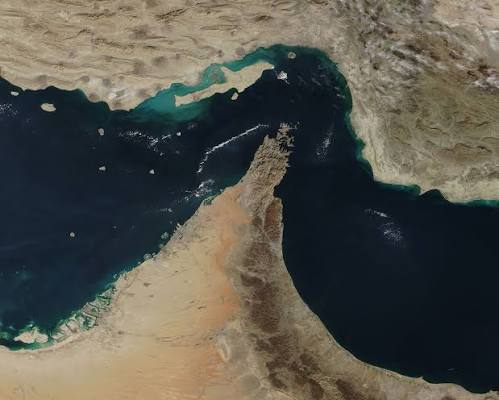
    The Strait of Hormuz is a narrow waterway through which roughly 20 million barrels of oil pass daily—about 20% of global consumption. For decades, Iran has threatened to close it, and Gulf states have responded with a classic hedge: build pipelines that bypass the strait entirely. Saudi Arabia’s East-West Pipeline, or Petroline, can move up to 5 million barrels per day to the Red Sea port of Yanbu. The UAE’s Habshan–Fujairah pipeline, which came online in 2012, carries up to 1.8 million barrels per day to the Gulf of Oman, outside Hormuz. These pipelines were designed as insurance policies, not full replacements, but they provided a critical buffer.

    That buffer now has a hole in it. The Red Sea route—through the Bab el-Mandeb Strait and Suez Canal—is the natural westward outlet for the Saudi and UAE bypass volumes. But since late 2023, Houthi forces in Yemen have launched drone and missile attacks on commercial shipping in the Red Sea, forcing major carriers to reroute around the Cape of Good Hope, adding 10 to 14 days to voyages and spiking insurance premiums. The Houthis have targeted vessels linked to Israel, the U.S., and the U.K., and have expanded their attacks to include U.S. Navy assets. The U.S.-led Operation Prosperity Guardian and subsequent strikes have not restored safe transit.

    The New Houthi Front: A Second Chokepoint Under Fire

    The Houthi attacks have effectively created a second chokepoint crisis. While Hormuz is the eastern gate, Bab el-Mandeb is the western gate, and both are now under threat. Iran, which has supplied the Houthis with advanced anti-ship missiles, cruise missiles, and uncrewed surface vessels, appears to be pursuing a strategy of asymmetric escalation. Rather than closing Hormuz outright—which would invite overwhelming retaliation and alienate China—Iran is weaponizing chokepoints incrementally. It harasses shipping in the Gulf, seizes tankers, and arms proxies to attack Red Sea traffic. This means Gulf states face a nightmare scenario: their Hormuz bypass pipelines now lead directly into a war zone.

    For Saudi Arabia and the UAE, this is a strategic bind. They have sought de-escalation with Iran—Saudi Arabia and Iran restored diplomatic relations in March 2023, brokered by China—while also cooperating with U.S. security frameworks. But the Houthi attacks threaten their Red Sea ports, including Yanbu and Jeddah, and the UAE’s westward exports via the Red Sea are also affected. Their oil exports are becoming collateral damage in a conflict they did not initiate. The pipelines that were supposed to be their insurance are now a liability.

    The Widening Shipping Risk

    The impact on global shipping is already severe. Major lines like Maersk, Hapag-Lloyd, MSC, and CMA CGM have diverted via the Cape of Good Hope, adding significant time and cost. War-risk insurance premiums for Red Sea transits have risen from about 0.1% of hull value to as high as 1.0% in some cases. But the risk is not just to oil tankers. Container ships, bulk carriers, and other vessels are also being targeted. The Houthis have stated they will continue attacks until a ceasefire in Gaza, and they have threatened to target vessels heading to Israeli ports, as well as U.S. and U.K. vessels in retaliation for strikes.

    This is not just a regional problem. The Red Sea route handles about 12% of global trade, including not just oil but also consumer goods, food, and manufactured products. The rerouting is causing delays and cost increases that ripple through global supply chains. And if the Houthi attacks expand to include the Gulf of Oman or the Arabian Sea, the UAE’s Fujairah port—the very outlet of its bypass pipeline—could come under threat. That would close the loop on the Gulf’s workaround strategy.

    The Iran Factor: A Deliberate Strategy

    Iran’s role is central. It has been engaged in a shadow war with Israel and the U.S., including direct missile and drone exchanges in April 2024 and again in 2025. It has used its naval forces and the Islamic Revolutionary Guard Corps to seize commercial tankers in the Gulf and Strait of Hormuz, such as the Advantage Sweet in April 2023 and the St Nikolas in January 2024. By arming the Houthis with advanced weapons and targeting intelligence, Iran can threaten both entrances to the Arabian Peninsula’s maritime lifelines simultaneously. This is a deliberate strategy of asymmetric escalation, designed to raise the cost of any conflict without triggering a full-scale war.

    For the Gulf states, the challenge is to protect their exports without being drawn into a wider conflict. They are walking a tightrope, trying to maintain diplomatic ties with Iran while also relying on U.S. security guarantees. But the Houthi attacks show that the threat is not just from state actors; non-state proxies can also disrupt global trade. The Gulf’s workaround was designed for a world where the only chokepoint was Hormuz. Now, the Red Sea is equally dangerous, and the insurance policy is no longer sufficient.

    The Gulf states’ pipelines were a smart hedge against a single chokepoint, but they now face a two-front maritime threat. The Houthi attacks on Red Sea shipping have turned the exit points of those pipelines into a war zone, and Iran’s support for the Houthis means the risk is likely to persist. The result is a widening shipping crisis that threatens not just Gulf oil exports but global trade. The insurance policy has failed, and the Gulf states—and the world—must now find a new way to navigate these dangerous waters.

    Summary

    • The Strait of Hormuz handles ~20 million barrels of oil per day, and Gulf states built bypass pipelines (Saudi’s Petroline, UAE’s ADCOP) to reduce reliance on it.
    • These bypass routes exit into the Red Sea and Gulf of Oman, but the Red Sea is now under attack by Houthi forces, making the workaround hazardous.
    • Iran is arming the Houthis with advanced weapons, creating a two-front threat: Hormuz in the east and Bab el-Mandeb in the west.
    • Shipping lines are rerouting around the Cape of Good Hope, adding 10-14 days and spiking insurance premiums.
    • The Gulf states are caught in a bind, trying to de-escalate with Iran while relying on U.S. security, but their oil exports are becoming collateral damage.

    FAQ

    Q: What is the Strait of Hormuz, and why is it important?
    A: The Strait of Hormuz is a narrow waterway between the Persian Gulf and the Gulf of Oman, through which about 20 million barrels of oil pass daily—roughly 20% of global consumption. It is the world’s most critical oil chokepoint.

    Q: How do Saudi Arabia and the UAE bypass Hormuz?
    A: Saudi Arabia uses the East-West Pipeline (Petroline) to move up to 5 million barrels per day to the Red Sea port of Yanbu. The UAE uses the Habshan–Fujairah pipeline (ADCOP) to move up to 1.8 million barrels per day to the Gulf of Oman port of Fujairah.

    Q: Why are Houthi attacks a threat to these bypass routes?
    A: The bypass routes exit into the Red Sea and the Gulf of Oman. The Houthis have been attacking shipping in the Red Sea since late 2023, making it hazardous for tankers to transit through the Bab el-Mandeb Strait, which is the only way to reach Western markets from Yanbu.

    Q: What is Iran’s role in the Houthi attacks?
    A: Iran has supplied the Houthis with advanced anti-ship ballistic missiles, cruise missiles, and uncrewed surface vessels, as well as targeting intelligence. This allows Iran to threaten both Hormuz and Bab el-Mandeb simultaneously, without closing Hormuz outright.

    Q: What are the broader impacts of the shipping disruptions?
    A: Major shipping lines have diverted around the Cape of Good Hope, adding 10-14 days to voyages and raising costs. Insurance premiums for Red Sea transits have spiked, and the disruptions affect not just oil but also container ships and other cargo, impacting global supply chains.