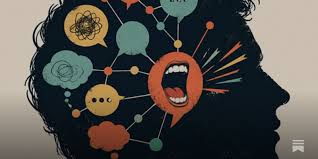
You’re not crazy if you talk to yourself. In fact, you’re engaging in a normal, often beneficial cognitive process that scientists have studied for decades. From helping children learn to guiding athletes to victory, self-talk is a powerful tool. But when does this internal dialogue cross the line into a clinical concern? Let’s explore the science behind self-talk, its benefits, and the warning signs to watch for.
What Is Self-Talk?
Self-talk is the dialogue you have with yourself, whether it’s out loud, whispered, or purely in your head. It’s a common phenomenon; studies estimate that people spend 25% to 50% of their waking hours engaged in some form of internal dialogue. This chatter can be instructional (“Turn left at the next street”), motivational (“You’ve got this!”), or evaluative (“That was a stupid mistake”).
Self-talk emerges early in life. Around age 2–3, children start talking to themselves out loud, a behavior psychologists call “private speech.” This is completely normal and serves a crucial developmental purpose. By age 5–7, most children internalize this speech, turning it into the silent inner voice we experience as adults. This transition is tied to language development and executive function—the mental skills that help us plan, focus, and multitask.
The Brain’s Inner Voice
When you talk to yourself, your brain lights up in specific ways. Neuroimaging studies using fMRI show that inner speech activates the left inferior frontal gyrus (known as Broca’s area) and the left superior temporal gyrus (Wernicke’s area)—the same regions responsible for producing and understanding external speech. Even silent self-talk produces subtle activation in the motor cortex, the part of the brain that controls movement. This suggests that “talking to yourself” is neurologically similar to actually speaking, just without the vocalization.
This neural overlap explains why self-talk can be so effective. By engaging the same brain circuits used for real speech, self-talk harnesses the power of language to organize thoughts, regulate emotions, and guide behavior.
The Benefits of Self-Talk
Performance Enhancement
Research by psychologist Antonis Hatzigeorgiadis and colleagues at the University of Thessaly has shown that instructional self-talk—phrases like “focus,” “step,” or “breathe”—can significantly improve performance in tasks requiring fine motor skills, concentration, and sports performance. For example, tennis players who use instructional self-talk to remind themselves to watch the ball or bend their knees tend to hit more accurate shots. Similarly, students who tell themselves to “pay attention” during a difficult lecture often retain more information.
Motivation and Emotional Regulation
Self-talk also has motivational power. Interestingly, studies suggest that using second-person self-talk (“You can do this”) is more effective than first-person (“I can do this”) for regulating emotions and motivating behavior under stress. Why? Because talking to yourself as “you” creates psychological distance, allowing you to view the situation more objectively, as if advising a friend. This distancing effect can reduce anxiety and boost confidence, making it a valuable tool in high-pressure situations like job interviews or public speaking.
Cognitive Development
Lev Vygotsky, a Russian psychologist, proposed in the 1930s that private speech is a critical developmental tool. Children use it to guide their actions and solve problems, like when a toddler says “put the block here” while building a tower. Vygotsky argued that this external speech eventually becomes internalized as inner speech, which we use for self-regulation and planning. His theory has been widely supported by modern research, and contemporary cognitive science treats self-talk as a key component of self-control and problem-solving.
When Self-Talk Becomes a Problem
Despite its benefits, self-talk can sometimes signal or contribute to mental health issues. It’s important to note that talking to yourself out loud is not inherently pathological. The vast majority of self-talk is healthy and normal. However, there are two main scenarios where self-talk becomes a concern.
Negative Rumination
Maladaptive rumination is repetitive, negative, self-critical self-talk, such as “I’m worthless,” “I always fail,” or “Nobody likes me.” This type of self-talk is a hallmark of depression and anxiety disorders. It can trap you in a cycle of negativity, reinforcing low self-esteem and hopelessness. Cognitive-behavioral therapy (CBT) often targets this kind of self-talk by helping individuals identify and challenge these automatic negative thoughts, replacing them with more balanced, realistic ones.
Auditory Hallucinations vs. Self-Talk
A key distinction is between self-talk and auditory hallucinations. Hallucinations involve hearing voices that seem external and are not your own. They are associated with conditions like schizophrenia, bipolar disorder with psychotic features, and severe depression. In contrast, self-talk is your own voice, whether internal or external, and you know it’s you. If you hear voices that feel alien or out of your control, it’s important to seek professional help.
The Fine Line Between Healthy and Unhealthy
So, how do you know if your self-talk is a problem? Here are some red flags:
- Frequency and intensity: If self-talk becomes intrusive, constant, or hard to control, it may be a sign of anxiety or obsessive thinking.
- Content: If your self-talk is predominantly negative, self-critical, or worrisome, it could be contributing to depression or anxiety.
- Functional impairment: If self-talk interferes with your daily functioning—for example, you can’t concentrate or complete tasks because of excessive internal dialogue—it’s worth addressing.
- Dissociation from reality: If you start believing your self-talk is an external voice or that others can hear your thoughts, this could indicate a more serious condition.
In these cases, consulting a mental health professional can help you develop strategies to manage your self-talk and improve your well-being.
Conclusion
Talking to yourself is a natural and beneficial part of being human. It helps you learn, perform, and regulate your emotions. By understanding the science behind self-talk, you can harness its power to improve your life. But it’s also crucial to recognize when self-talk becomes negative or pathological, and to seek help when needed. So next time you catch yourself muttering under your breath, remember: you’re in good company.
Self-talk is a powerful cognitive tool that serves us from childhood through adulthood. Whether you’re rehearsing a presentation, giving yourself a pep talk, or working through a problem, your inner voice is there to help. But keep an ear out for the warning signs—persistent negativity, loss of control, or a shift in reality—because those indicate it’s time to seek support. Talk to yourself, but make sure it’s a conversation that empowers you.
Summary
- Self-talk is a normal and common behavior, with people spending 25-50% of waking hours in internal dialogue.
- It begins in childhood as external private speech and becomes internalized by age 5-7.
- The same brain areas used for external speech are active during inner speech, making self-talk a powerful cognitive tool.
- Instructional self-talk improves focus and performance; second-person self-talk enhances motivation and emotional regulation.
- Self-talk becomes a concern when it’s persistently negative (rumination) or when it manifests as auditory hallucinations, indicating a need for professional help.
FAQ
Q: Is talking to yourself a sign of mental illness?
A: No, not by itself. Talking to yourself is a normal and common behavior. It only becomes a concern when it’s accompanied by other symptoms, like persistent negativity or auditory hallucinations.
Q: What’s the difference between self-talk and auditory hallucinations?
A: Self-talk is your own voice, and you know it’s you. Auditory hallucinations involve hearing voices that seem external and not your own, and they’re associated with conditions like schizophrenia. If you experience hallucinations, seek professional help.
Q: How can I use self-talk to improve my performance?
A: Use instructional self-talk (e.g., “focus,” “breathe”) during tasks requiring concentration. For motivation under stress, try second-person self-talk (“You can do this”) to create psychological distance.
Q: When should I be concerned about my self-talk?
A: Be concerned if your self-talk is predominantly negative, intrusive, or hard to control, or if it interferes with daily functioning. These signs may indicate depression, anxiety, or another condition that could benefit from professional support.
Q: Can children’s self-talk be encouraged?
A: Yes. Vygotsky’s research shows that private speech helps children solve problems and regulate behavior. Encouraging self-talk in educational settings can support learning and development.