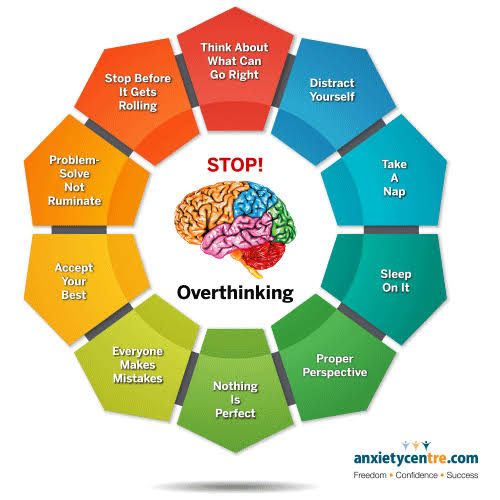
Overthinking feels like a treadmill for the mind: you’re running hard, but you’re not getting anywhere. Whether you’re replaying an awkward conversation, worrying about a decision, or spiraling into worst-case scenarios, the mental loop can be exhausting. It’s not just an annoyance—research shows that up to 73% of adults aged 25–35 report overthinking regularly, and chronic rumination is linked to anxiety, depression, and poor sleep.
The good news? You can interrupt the loop. These seven techniques are drawn from established psychological therapies like Acceptance and Commitment Therapy (ACT), cognitive-behavioral therapy (CBT), and mindfulness. They’re not magic cures—they’re interruption tools that give your brain a moment of relief, which is often enough to break the cycle. Here’s what actually works, according to research and clinical practice.
1. The 5-4-3-2-1 Grounding Technique
When your thoughts are spinning, your brain is stuck in the default mode network (DMN)—the network active when your mind wanders. Grounding techniques pull your attention back to the present moment by engaging your senses. The 5-4-3-2-1 method is a classic: name 5 things you can see, 4 you can touch, 3 you can hear, 2 you can smell, and 1 you can taste. This forces your brain to process sensory input, which reduces DMN activity and helps you step out of the thought loop.
Try it next time you’re lying in bed at 2 a.m. replaying a mistake. You might not fall asleep instantly, but you’ll stop the spiral.
2. Thought Labeling
Thought labeling comes from ACT. The idea is to change your relationship with your thoughts by naming them for what they are: mental events, not facts. When you catch yourself overthinking, say (silently or aloud): “I am having the thought that I’m going to fail.” This simple act of labeling engages the prefrontal cortex, which helps regulate the amygdala—the brain’s fear center. It creates distance between you and the thought, making it less overwhelming.
Research shows that labeling emotions reduces their intensity. The same applies to thoughts: when you name the pattern (“Here’s that worry about the meeting again”), you’re less likely to get swept away by it.
3. Scheduled Worry Time
Paradoxically, trying to suppress thoughts often makes them stronger—a phenomenon called ironic process theory. Instead of fighting your worries, schedule a specific time to think about them. For example, set aside 15 minutes each evening to worry. When a worry pops up during the day, write it down and tell yourself, “I’ll deal with this at 6 p.m.” This technique, used in CBT, gives your brain permission to let go of the thought until the designated time.
A study published in the Journal of Anxiety Disorders found that scheduled worry time reduced anxiety and depressive symptoms in participants. It works because it transforms vague, intrusive worry into a bounded activity.
4. The STOP Technique
STOP stands for Stop, Take a breath, Observe, Proceed. It’s a mindfulness-based interruption tool. When you notice you’re overthinking, say “Stop” to yourself (or visualize a stop sign). Then take a deep breath. Observe your thoughts and emotions without judgment—just notice them. Finally, proceed with one small action, even if it’s just standing up or drinking water.
This technique is effective because it breaks the automatic loop. The deep breath activates the parasympathetic nervous system, which calms your body’s stress response. The observation step creates distance, and the “proceed” step shifts your focus to the present.
5. Distract Your Cognitive Resources
Overthinking requires working memory. If you occupy your brain with a demanding cognitive task, there’s less room for rumination. Try counting backward from 100 by 7s, solving a puzzle, or memorizing a list. This isn’t avoidance—it’s a deliberate interruption that gives you a break from the loop.
Research on attention-shifting shows that activities requiring focused attention reduce DMN activity. The key is to choose something challenging enough to hold your attention but not so frustrating that it adds stress.
6. Write It Down
Externalizing your thoughts on paper can help you see them more objectively. When you’re stuck in a loop, open a notebook and write down everything that’s running through your mind—without editing. This process, sometimes called “brain dumping,” helps you identify recurring themes and often reveals that your worries are less concrete than they feel.
A study from the University of Chicago found that students who wrote about their worries before an exam performed better. Writing helps you process emotions and creates a sense of closure, making it easier to move on.
7. The “Friend” Reframe
Ask yourself: “What would I tell my best friend if they were having this same thought?” This reframe is a classic CBT technique. It challenges the harsh, self-critical tone of overthinking by forcing you to apply the same compassion you’d offer someone else.
For example, if you’re thinking, “I’m going to mess up this presentation,” you’d probably tell a friend, “You’ve prepared well, and even if it’s not perfect, you’ll handle it.” This shift in perspective can reduce the intensity of the thought and help you think more realistically.
These seven tricks aren’t a one-size-fits-all cure. Overthinking is a habit, and habits take time to change. But each technique offers a practical way to interrupt the loop—whether it’s grounding your senses, labeling your thoughts, or giving yourself permission to worry later. The goal isn’t to never overthink again; it’s to catch yourself sooner and step off the treadmill. And if rumination feels chronic or overwhelming, consider talking to a professional. These tools work best when paired with deeper support.
Summary
- Overthinking is not deep thinking—it’s repetitive, passive, and often unproductive.
- Grounding techniques like 5-4-3-2-1 pull you out of the default mode network.
- Thought labeling creates distance from your thoughts and reduces their power.
- Scheduled worry time lets you postpone worry, avoiding the trap of suppression.
- Cognitive distraction (puzzles, counting) gives your brain a break from the loop.
- Writing down thoughts helps you externalize and process them.
- Asking “What would I tell a friend?” adds self-compassion and perspective.
- These are interruption tools, not cures—long-term change requires practice and sometimes therapy.
FAQ
Q: Can these tricks really stop overthinking instantly?nA: Not always, and not permanently. They’re designed to interrupt the loop quickly, but the effect is temporary. For lasting change, you need to practice these techniques regularly and address underlying triggers.
Q: Is it bad to try to suppress thoughts?nA: Yes, research shows that thought suppression often backfires—it makes the thoughts more frequent. Techniques like scheduled worry time work better because they give your brain permission to worry at a specific time.
Q: What if none of these tricks work for me?nA: Different techniques work for different people. If one doesn’t work, try another. If overthinking is severely impacting your life, consider talking to a therapist who can help you develop a personalized approach.
Q: Are these tricks based on science?nA: Yes, most are drawn from evidence-based therapies like CBT, ACT, and mindfulness. However, the “instant” framing is a simplification—they’re best understood as interruption tools.
Q: Is all overthinking bad?nA: No. Constructive reflection and planning are healthy. The problem is when thinking becomes repetitive and uncontrollable—that’s rumination. The goal is to shift from rumination to productive problem-solving.