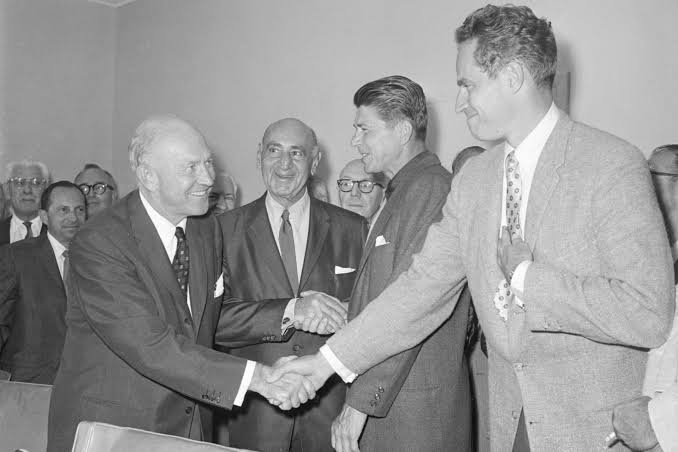
In January 1960, Hollywood’s biggest stars traded their tuxedos for picket signs. Charlton Heston marched outside studio gates, John Wayne voiced his support, and Ronald Reagan then president of the Screen Actors Guild was on the front lines of a labor dispute that would define how actors get paid for decades.
The strike was about something most people had never heard of: residual payments for movies shown on television. At the time, films made before 1948 were being sold to TV networks for millions, and actors received nothing. That fight, which lasted 11 weeks, didn’t just settle a contract — it built the financial foundation for every actor working today, from streaming stars to background extras.
The 1960 Strike: A Quick Overview
From January 19 to April 6, 1960, roughly 14,000 to 17,000 members of the Screen Actors Guild (SAG) shut down most film and television production in Hollywood. The strike was called against the Association of Motion Picture and Television Producers (AMPTP) and the major studios. The core demand: a share of the revenue from films licensed to television.
At the time, studios were making a fortune by selling their film libraries to TV networks. But actors saw none of it. The average working actor in 1960 earned about $2,000 to $5,000 a year — barely a living wage. Residuals weren’t a luxury; they were survival.
The strike ended on April 6 with a settlement that created a residual system: studios would pay about 6% of gross TV revenue from post-1948 films into a union-controlled fund. It also secured modest increases in pension and health contributions. But there was no general wage increase, and many rank-and-file members felt the deal sold them short.
Why This Strike Was Different
The 1960 strike was one of the first major labor actions to address new technology directly. Television had been around for a decade, but the old studio system was still adjusting to its impact. The 1948 Paramount Decree had already forced studios to sell off their theaters, breaking their vertical monopoly. TV was now the new frontier, and the fight over residuals was about who would control the revenue from this new distribution channel.
It was also a remarkably civil strike. There was no violence, no mass scabbing, and public sympathy largely sided with the actors. The stars themselves made the difference. When John Wayne — a conservative who rarely backed labor actions — publicly supported the strike, it sent a message that this was an industry-wide issue, not a fringe movement.
The Man in the Middle: Ronald Reagan
Ronald Reagan’s role as SAG president during the strike is often cited as a turning point in his political evolution. At the time, Reagan was still a New Deal Democrat, but the strike pushed him toward a more conservative view of labor relations. He framed the strike as “responsible unionism” — a business negotiation, not a radical rebellion.
Reagan’s approach was pragmatic: he kept the strike focused on residuals, avoided violence, and settled for what was achievable. But that pragmatism angered some hardliners in the union who wanted strike benefits and a longer fight. Reagan later said the strike taught him that unions could be “a force for good” when they operated within the system — a view that would shape his political philosophy for years to come.
The Settlement: What Actors Actually Won
The residual formula was complex. It applied only to films made after 1948, and it funneled money into a union fund that would then be distributed to actors. For stars, this could mean significant income. For extras and day players, the share was negligible.
That disparity created lasting tension. Many actors felt the leadership had sold out the rank-and-file. The lack of a wage increase was a particular sore point, especially for those who had sacrificed weeks of work on the picket line.
But the residual framework was a historic achievement. It established the principle that actors should be compensated when their work is reused. That principle now extends to streaming, cable, and every new distribution channel that has emerged since.
The Shadows of the Blacklist and the Rise of Independent Production
The strike happened during a period when labor activism was still tainted by the Hollywood blacklist. Many actors were cautious about being seen as “troublemakers.” The strike’s civility was partly a strategy to avoid that stigma.
It also accelerated a trend toward independent production. If residuals were now contractual, the old studio model — where actors were salaried employees — made even less financial sense. Independent producers, who had less overhead, could navigate the new rules more easily. The strike therefore contributed to the decline of the studio system and the rise of the modern talent-driven industry.
The Legacy: From 1960 to the Streaming Wars
The 1960 strike is often overshadowed by the 2007–08 Writers Guild strike and the 2023 WGA/SAG-AFTRA strikes, but it was the first to establish a residual framework for new technology. When actors went on strike in 2023 over streaming residuals, they were building on the same principle that Reagan and his colleagues fought for in 1960.
The strike also demonstrated the power of celebrity in labor activism. When stars like Charlton Heston and John Wayne hit the picket lines, they brought public attention and legitimacy to the cause. That strategy has been used by every major Hollywood strike since.
The 1960 actors’ strike may not have been the longest or most dramatic labor battle in Hollywood history, but its impact is still felt today. It taught actors that they could leverage their collective power to secure a share of new revenue streams — a lesson that has been passed down through generations. And it showed that even the biggest stars are, at their core, workers who need a fair deal. The next time you stream a classic film, remember that the actor on screen might be earning a residual check because of a strike that happened over sixty years ago.
Summary
- The 1960 SAG strike ran from January 19 to April 6, involving about 14,000–17,000 actors.
- The central issue was residual payments for movies shown on TV, which actors received none of.
- Ronald Reagan led SAG during the strike, and the settlement established a 6% residual fund for post-1948 films.
- The strike was notable for its civility and the public support of stars like Charlton Heston and John Wayne.
- It set the precedent for how Hollywood unions handle new technology, from TV to streaming.
FAQ
Q: What was the 1960 actors’ strike about?
A: The strike was primarily about residual payments for theatrical films shown on television. Actors wanted a share of the revenue studios were making by licensing movies to TV networks, which had become a major new income stream.
Q: How long did the strike last?
A: The strike lasted from January 19 to April 6, 1960, approximately 11 weeks (or 78 days).
Q: Who led the Screen Actors Guild during the strike?
A: Ronald Reagan was president of SAG at the time, with Jack Dales as executive secretary. Reagan played a central role in the negotiations.
Q: Did the strike succeed?
A: Yes, in establishing residuals. The settlement created a fund that received about 6% of gross TV revenue from post-1948 films. But there was no general wage increase, and extras and day players gained little.
Q: Why is the 1960 strike still relevant today?
A: It established the principle of residuals for reused work, which is the foundation for how actors are compensated for TV reruns, streaming, and other new distribution channels. Modern strikes, like the 2023 SAG-AFTRA strike, build on that same principle.