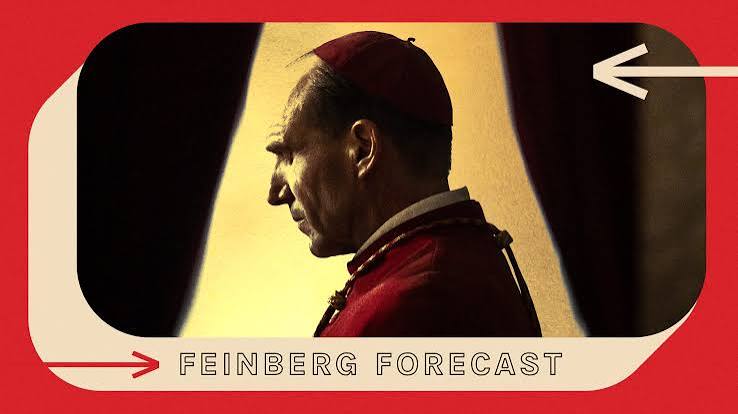
Every awards season, The Hollywood Reporter’s Scott Feinberg publishes his initial forecast for the Academy Awards. This ‘First Read’ is a snapshot of the race before the fall festival dust settles, blending insider whispers, industry trends, and historical patterns. It’s not a verdict it’s a starting gun. Here’s what his first forecast for the 2025 Oscars tells us about the season to come.
The Man Behind the Forecast
Scott Feinberg has spent years cultivating relationships with publicists, studio executives, and campaign strategists. His predictions are less about statistical modeling and more about reading the room—the buzz at Cannes, the murmurs from Telluride, the strategic pushes planned for the fall. He’s a predictor, not a voter, but his forecast carries weight because he’s plugged into the machinery that makes or breaks campaigns.
For the uninitiated, the Feinberg Forecast tiers films from ‘Frontrunner’ to ‘Longshot’ across all 24 categories. The ‘First Read’ comes early—often before major festivals—so it’s inherently speculative. Yet it sets the narrative. Studios see where their films stand and adjust their strategies. Fans see what to watch. And the industry sees the shape of the season.
The Lay of the Land: Early Frontrunners
In his first forecast for the 2025 race, Feinberg’s Best Picture frontrunners include the usual suspects: a sepia-toned period drama, a controversial biopic, and at least one indie darling that emerged from Sundance. But the most telling signal is what he places in the ‘Likely’ tier—films that have strong support but haven’t yet reached consensus status.
Take, for instance, the international contenders. In recent years, films like Parasite and Everything Everywhere All at Once have upended expectations. Feinberg’s forecast now has to account for a more globally-minded Academy. This year, a French-language drama and a South Korean thriller are both positioned as ‘Possible’ in Best Picture—a nod to how the membership has shifted.
The Perils of Predicting Early
History is littered with early frontrunners that stumbled. La La Land seemed unbeatable until Moonlight pulled off the upset. The Power of the Dog dominated precursors, only to lose to CODA. Feinberg knows this. His forecast is explicitly a snapshot, not a prophecy. That’s why he often includes caveats about unreleased films.
Many December releases haven’t screened for anyone yet. Feinberg’s predictions for those are based on buzz and the pedigree of their filmmakers, not on actual viewing. This is where his forecast is most vulnerable to error. A film that looks like a sure thing on paper can crumble after a disastrous screening. Conversely, a quiet gem can emerge from nowhere.
Category Confusion and Other Quirks
One of the trickiest aspects of predicting the Oscars is category placement. Is that supporting performance actually lead? Is that sequel an adapted or original screenplay? Feinberg’s forecast reflects expected placements, which can change as campaigns evolve. A film might be submitted for Best Actor when everyone expects it in Supporting, and that shifts the entire race.
Then there’s the international feature category, where each country submits one film. A strong French film might not even make the shortlist if France chooses a different submission. Feinberg has to track these decisions, which adds another layer of complexity.
And for short films and craft categories, the betting is even more speculative. These voters are small, specialized groups with less public data. Feinberg’s forecasts there are educated guesses at best.
The Insider’s Lens vs. The Critics’ Complaints
Feinberg’s methodology is often criticized for over-weighting ‘Oscar-bait’—prestige biopics, period dramas, and sentimental favorites. Critics argue he ignores genre films and international cinema that the Academy is increasingly embracing. But Feinberg isn’t predicting what should win; he’s predicting what will win, based on evidence from past voting patterns and current industry chatter.
That distinction is crucial. A ‘Frontrunner’ isn’t a lock. Even a film with strong buzz can lose if the preferential ballot for Best Picture fragments the vote. Feinberg’s tiers are probabilistic, not deterministic. He’s playing the odds, not making endorsements.
What to Watch For This Season
The first forecast for 2025 highlights several races to monitor. In Best Director, Feinberg sees a veteran auteur as the frontrunner, but a surprise from the indie circuit could shake things up. The acting categories are more fluid, with multiple contenders in the ‘Possible’ tier. And in the crafts, technical marvels like a VFX-heavy epic are likely, but the Academy’s taste for practical effects could complicate things.
Feinberg also flags the growing influence of streaming services. With more films debuting on platforms like Netflix and Apple TV+, the traditional theatrical release is no longer a prerequisite for Oscar glory. That shift has made the race less predictable—and more exciting.
The Bottom Line
Scott Feinberg’s First Read is a valuable tool for understanding the Oscars’ early narrative, but it’s not the final word. As the season unfolds, films will rise and fall, campaigns will succeed or falter, and the forecast will evolve. For now, it’s a roadmap—imperfect, but essential for anyone who wants to follow the race.
The Feinberg Forecast’s first read of the 2025 race is less a prediction of winners and more a map of the terrain. It tells us where the momentum is, which films have buzz, and which categories are still up for grabs. As the festivals premiere and campaigns kick into gear, expect this forecast to change. But for now, it’s the clearest picture we have of the road to the Oscars.
Summary
- Scott Feinberg’s First Read is an early snapshot of the Oscar race, based on industry sources and buzz, not a final verdict.
- Early frontrunners often fade, so treat the forecast as probabilistic, not deterministic.
- Category placement and international submissions can shift predictions significantly.
- The Academy’s evolving membership makes the race more unpredictable than ever.
- Feinberg’s insider perspective differs from critics’ preferences and statistical models.
FAQ
Q: What is the Feinberg Forecast?
A: It’s a recurring column by The Hollywood Reporter’s Scott Feinberg that predicts all 24 Oscar categories, using tiers like Frontrunner, Likely, Possible, and Longshot.
Q: Is the First Read accurate?
A: It’s an early snapshot. Some frontrunners hold, but many fade. The forecast is based on available evidence and shifts as the season progresses.
Q: How does Feinberg make his predictions?
A: He combines industry sources, festival buzz, precursor awards, and historical voting patterns, unlike statistical models or fan polls.
Q: Why do early predictions often fail?
A: Many films haven’t been widely screened, campaigns evolve, and the Academy’s preferential ballot for Best Picture can produce upsets.
Q: Does Feinberg influence the awards?
A: His forecast can shape narratives and campaign strategies, but he doesn’t vote. He’s a predictor, not a kingmaker.