Tag: science

  • The 5-Minute Morning Routine: Science-Backed Habits to Boost Your Energy Fast

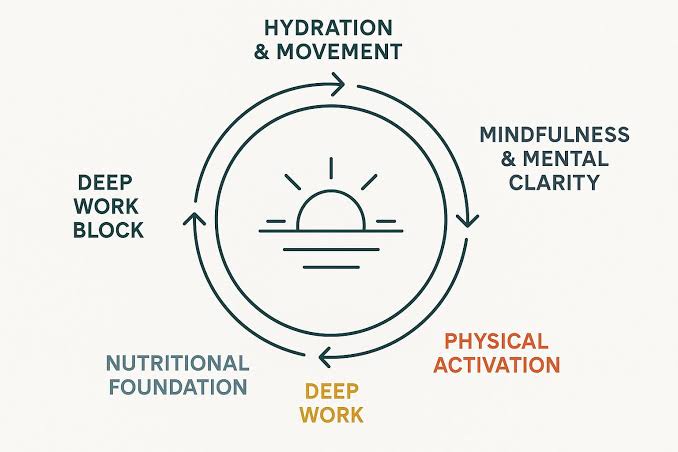
    Morning Routine for Productivity: Science-Backed 5-Phase System That Works - LifeHack

    Mornings can be brutal. The alarm blares, your body feels heavy, and the thought of tackling the day seems overwhelming. But what if a mere five minutes could set the tone for sustained energy and focus? The rise of micro-habits—small, easy actions that become automatic—has made the 5-minute morning routine a popular solution for time-poor individuals seeking a quick energy boost.

    This isn’t about adding more to your plate; it’s about strategically leveraging biology. By understanding how your body responds to light, hydration, movement, and breathing, you can design a brief ritual that works with your physiology, not against it. In this article, we’ll break down the core components of an effective 5-minute routine, backed by science, and show you how to customize it to your needs—without falling for common myths.

    Why 5 Minutes? The Power of Tiny Habits

    Behavioral psychologist BJ Fogg, creator of the ‘Tiny Habits’ method, argues that the smaller the behavior, the more likely it is to stick. A 5-minute routine is a gateway habit—it’s easy to start, requires minimal willpower, and can snowball into a more comprehensive wellness practice. Consistency trumps duration: a short routine done daily outperforms a lengthy one done sporadically. This aligns with research on habit formation, which shows that repetition and ease are key to automation.

    Moreover, a 5-minute routine addresses the immediate physiological needs of your waking body. After hours of sleep, you’re dehydrated, your blood sugar is low, and your circadian rhythm is waiting for cues to shift from sleep mode to alertness. A targeted sequence can jumpstart these processes efficiently.

    The Core Components: What Actually Works

    1. Hydration: Reboot Your System

    Your body loses water overnight through breathing and sweating, leaving you mildly dehydrated. Drinking a glass of water (about 8-12 ounces) within the first few minutes of waking helps rehydrate cells, improve blood flow, and kickstart metabolism. Adding a squeeze of lemon adds vitamin C and flavor, but the ‘detox’ claims are overstated—your liver and kidneys handle detoxification naturally. Electrolyte powders can be beneficial if you sweat heavily, but plain water is sufficient for most.

    2. Light Exposure: Set Your Circadian Clock

    Natural light is the strongest cue for your suprachiasmatic nucleus—the brain’s master clock. Getting sunlight within the first hour of waking helps regulate your circadian rhythm, increasing cortisol (the ‘wake-up’ hormone) and suppressing melatonin. A 2019 study in the Journal of Clinical Endocrinology & Metabolism found that morning light exposure improves alertness and mood. Even 5-10 minutes of outdoor light (or a lightbox in darker months) can make a difference. If you’re indoors, open curtains or step outside briefly.

    3. Movement: Get Blood Flowing

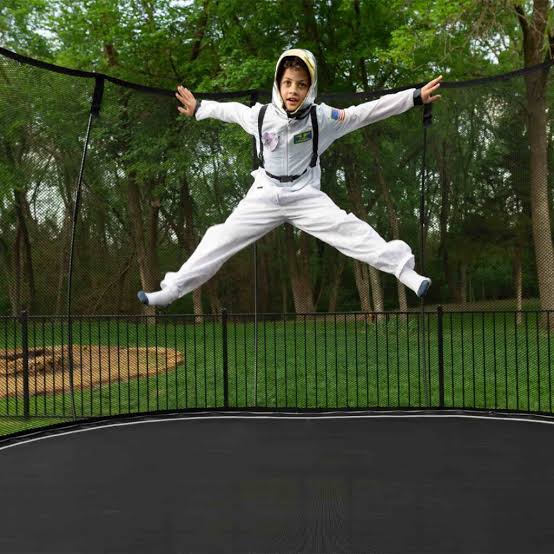
    Light stretching, yoga, or a burst of high-intensity exercise (like jumping jacks or squats) increases blood flow, delivering oxygen and nutrients to your brain and muscles. A 2019 study in the Journal of Physiology showed that brief morning exercise improves cognitive performance and metabolic health. You don’t need a full workout—just 2-3 minutes of movement can elevate your heart rate and boost energy. Even a brisk walk around the room counts.

    4. Breathing or Mindfulness: Calm the Chaos

    Deep breathing techniques, such as box breathing (inhale 4 seconds, hold 4, exhale 4, hold 4) or the 4-7-8 method, activate the parasympathetic nervous system, reducing stress and increasing alertness. A 2017 review in Frontiers in Psychology found that mindfulness practices improve attention and emotional regulation. Even 1-2 minutes of focused breathing can lower cortisol and set a calm, focused tone for the day.

    5. Cold Exposure: Optional but Potent

    A cold shower or a splash of cold water on your face can increase norepinephrine and dopamine, neurotransmitters linked to alertness and mood. Research by Dr. Rhonda Patrick and others suggests cold exposure may also improve resilience to stress. However, it’s not essential—and it’s not safe for everyone. If you have cardiovascular conditions, consult a doctor first. Start with a 30-second cold rinse at the end of your shower and gradually increase.

    Putting It Together: A Sample 5-Minute Sequence

    Here’s a practical sequence that incorporates all core elements:

    • 0:00-0:30 – Drink a glass of water (keep it by your bed).
    • 0:30-1:30 – Step outside or near a window for natural light. Do a few deep breaths.
    • 1:30-3:30 – Do 2 minutes of movement: jumping jacks, squats, or sun salutations.
    • 3:30-4:30 – Practice box breathing: 4 seconds in, 4 hold, 4 out, 4 hold.
    • 4:30-5:00 – Optional: splash cold water on your face or end your shower with a cold rinse.

    This sequence is flexible—you can swap order or omit components based on your preferences and schedule.

    Common Misconceptions: What to Avoid

    • ‘More is better’: Overcomplicating your routine defeats the purpose. Stick to 5 minutes; you can always add more later.
    • ‘Cold showers are essential’: They’re optional and can be risky for some. Listen to your body.
    • ‘Caffeine is part of the routine’: Many experts, including Dr. Andrew Huberman, recommend delaying caffeine 60-90 minutes after waking to avoid an afternoon crash. If you need coffee, wait until after your routine.
    • ‘It will fix poor sleep’: A morning routine cannot compensate for chronic sleep deprivation. Prioritize sleep hygiene first.
    • ‘Immediate energy’: Some benefits, like circadian alignment, take days to weeks. Instant energy is often just adrenaline from movement or cold water—still useful, but not a long-term fix.
    • ‘One-size-fits-all’: Your chronotype matters. Night owls may find a 5 a.m. wake-up counterproductive. Tailor your routine to your natural rhythm.

    Personalization: Adapt to Your Chronotype

    Your body’s internal clock influences when you feel most alert. If you’re a morning lark, you might naturally wake early and benefit from a vigorous routine. If you’re a night owl, forcing an early start can backfire. Instead, focus on the sequence that works for your wake time, and consider using a lightbox if you wake in darkness. Dr. Andrew Huberman suggests that light exposure is especially critical for night owls to shift their clocks earlier gradually.

    The Skeptical View: Is It All Hype?

    Some sleep researchers, like Dr. Matthew Walker, caution against over-structuring mornings. They argue that respecting natural waking patterns and sleep inertia—the grogginess you feel after waking—is more important than forcing a routine. A 5-minute routine can be beneficial, but it’s not a magic bullet. Energy management also depends on sleep quality, diet, and stress levels. Use the routine as a tool, not a cure-all.

    A 5-minute morning routine is a powerful, evidence-based way to boost energy and set a positive tone for the day. By focusing on hydration, light, movement, and breathing, you can address your body’s immediate needs without a significant time investment. Remember, consistency beats intensity—start small, personalize to your chronotype, and avoid the hype. Over time, these tiny habits can yield significant benefits for your physical and mental well-being.

    Summary

    • A 5-minute routine is effective because it’s a tiny habit that’s easy to maintain; consistency matters more than duration.
    • Key components: hydration, light exposure, movement, breathing/mindfulness, and optional cold exposure.
    • Science supports morning light for circadian rhythm, brief exercise for cognitive and metabolic benefits, and deep breathing for stress reduction.
    • Avoid common myths: cold showers aren’t essential, caffeine should be delayed, and a routine can’t fix poor sleep.
    • Personalize your routine based on your chronotype and health conditions; start small and adapt.

    FAQ

    Q: Can I do a 5-minute routine if I’m not a morning person?
    A: Yes, but tailor it to your wake time. If you’re a night owl, don’t force a 5 a.m. wake-up. Instead, do the routine when you naturally wake, and consider using a lightbox if it’s dark outside.

    Q: Is it better to do cardio or stretching in the morning?
    A: Both are beneficial. Cardio (like jumping jacks) boosts heart rate and energy quickly, while stretching improves flexibility and reduces stiffness. You can alternate days or combine both in a 2-minute block.

    Q: How long before I see benefits from a morning routine?
    A: Some effects, like increased alertness from movement or cold water, are immediate. Others, like circadian alignment, may take days to weeks. Consistency is key.

    Q: Can I drink coffee as part of my routine?
    A: Many experts recommend waiting 60-90 minutes after waking to drink caffeine to avoid an afternoon crash. If you need coffee, have it after your routine, not during.

    Q: What if I don’t have access to natural light?
    A: Use a lightbox that emits 10,000 lux for 10-20 minutes, or simply turn on bright indoor lights. Even artificial light can help, though natural light is most effective.

  • Why Ice Floats and Balls Bounce: The Surprising Physics of Everyday Objects

    Why Does Ice Float? - guernseydonkey.com

    Have you ever dropped an ice cube into a glass of water and watched it bob to the surface, or bounced a basketball and wondered why it springs back up? These everyday occurrences are so common we rarely think about them, but they are actually remarkable feats of physics. Ice floating defies our intuition—after all, solids are usually denser than liquids—and a bouncing ball seems to defy energy loss, returning most of its energy to you. In this article, we’ll explore the science behind these two phenomena, revealing the hidden rules that govern our world.

    Understanding why ice floats and balls bounce isn’t just about satisfying curiosity. It has profound implications for life on Earth, from the survival of aquatic ecosystems to the design of sports equipment and safety gear. By looking at the molecular structure of water and the physics of elastic materials, we can appreciate the elegance of nature’s design and the cleverness of human engineering. So, let’s dive in and uncover the physics that makes our everyday world work.

    The Anomalous Expansion of Water: Why Ice Floats

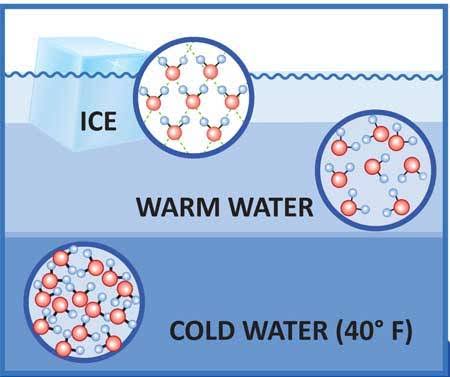
    Most substances contract when they cool, becoming denser as their molecules pack more tightly together. But water is different. It reaches its maximum density at about 4°C (39°F) and then expands as it cools further to its freezing point at 0°C (32°F). This is known as the anomalous expansion of water, and it’s the reason ice floats.

    To understand why, we need to look at the molecular level. Water molecules are made of two hydrogen atoms and one oxygen atom. The oxygen atom is more electronegative than hydrogen, so it pulls shared electrons closer, giving the oxygen a slight negative charge and the hydrogens a slight positive charge. This polarity allows water molecules to form hydrogen bonds with each other—weak attractions between the positive hydrogen of one molecule and the negative oxygen of another.

    In liquid water, these hydrogen bonds are constantly breaking and reforming, allowing molecules to slide past each other. But as water cools, the molecules slow down, and the hydrogen bonds become more stable. At 4°C, the molecules are packed as tightly as possible. Below that, the hydrogen bonds begin to arrange the molecules into a fixed, open hexagonal lattice—the crystal structure of ice. This lattice has more empty space than liquid water, making ice less dense.

    The numbers tell the story: liquid water at 4°C has a density of about 1.000 g/cm³, while ice at 0°C has a density of about 0.917 g/cm³. That’s a 9% difference. According to Archimedes’ principle, an object floats if it is less dense than the fluid it’s in. So ice floats, with about 90% of its mass below the surface and only 10% visible above.

    Why This Matters for Life on Earth

    If ice sank, lakes and oceans would freeze from the bottom up. In winter, the coldest water (near 0°C) would sink to the bottom, and the warmer water (near 4°C) would rise to the surface, where it would freeze. Over time, the entire body of water could freeze solid, killing aquatic life. But because ice floats, it forms an insulating layer on top, protecting the liquid water below. Fish and other organisms can survive the winter in the relatively warm 4°C water at the bottom.

    This phenomenon also affects global climate. Sea ice reflects sunlight back into space, helping to cool the planet. If ice sank, this albedo effect would be lost, and the climate would be very different. So the simple fact that ice floats is crucial for life as we know it.

    The Physics of Bouncing: Elasticity and Energy

    Now, let’s turn to bouncing balls. When you drop a ball, it falls due to gravity, gaining kinetic energy. When it hits the ground, that kinetic energy doesn’t just disappear—it’s transformed. The ball deforms, squishing on impact, and this deformation stores energy as elastic potential energy. Then, the ball springs back to its original shape, releasing that stored energy and converting it back into kinetic energy, which propels the ball upward.

    This process is governed by the material’s elasticity. Elastic materials can deform and return to their original shape, storing and releasing energy. Rubber is a classic example. Its long polymer chains can stretch and snap back, making it highly elastic. But no material is perfectly elastic—some energy is always lost, usually as heat, sound, or internal friction.

    The Coefficient of Restitution

    Scientists quantify a ball’s bounciness using the coefficient of restitution (COR), which is the ratio of the ball’s velocity after impact to its velocity before impact. A COR of 1.0 would mean a perfectly elastic collision with no energy lost—something that only happens in theory. Real balls have COR values between 0 and 1. For example, a basketball has a COR of about 0.8, a tennis ball about 0.75, and a superball (a highly elastic rubber ball) about 0.9. A wet clay ball, on the other hand, has a COR close to 0—it splats and doesn’t bounce at all.

    Why Some Balls Bounce Better Than Others

    The material matters. Rubber, especially vulcanized rubber (which has sulfur cross-links between polymer chains), is highly elastic. The cross-links help the material return to its original shape more efficiently. But other factors also affect bounciness:

    • Temperature: Cold balls bounce less because the polymer chains stiffen, reducing elasticity. Warm balls bounce higher. This is why tennis players keep balls warm during matches.
    • Pressure: An under-inflated basketball is less bouncy because it deforms more on impact, losing more energy to deformation. A properly inflated ball maintains its shape and bounces better.
    • Air resistance: During flight, air resistance slows the ball, but this is a small effect compared to the energy lost during impact.

    Engineering Bounciness

    Engineers use the COR to design balls for specific sports. For example, golf clubs are regulated to have a maximum COR of 0.83 to prevent balls from being hit too far. In basketball, the NBA specifies the inflation pressure and material to ensure consistent bounce. The physics of bouncing also applies to safety gear, like helmets and padding, which are designed to be inelastic—they absorb energy rather than return it, protecting your head from impact.

    The Bigger Picture: From Ice to Balls, Physics Is Everywhere

    These two phenomena—ice floating and balls bouncing—are just the tip of the iceberg (pun intended). They illustrate fundamental principles: density and buoyancy, energy conservation, and material properties. By understanding these principles, we can solve real-world problems, from designing better sports equipment to predicting climate change.

    So next time you enjoy a cold drink or play a game of basketball, take a moment to appreciate the physics at work. It’s not just science—it’s the invisible hand that shapes our everyday experiences.

    From the molecular dance of hydrogen bonds to the elastic snap of polymer chains, the physics of everyday objects is both fascinating and essential. Ice floats because water is unusual, and that anomaly supports life in lakes and oceans. Balls bounce because materials can store and release energy, and that principle powers everything from sports to safety. By understanding these simple phenomena, we gain a deeper appreciation for the world around us—and the science that makes it work.

    Summary

    • Ice floats because water expands when it freezes, making ice less dense than liquid water.
    • This is due to hydrogen bonding, which creates an open hexagonal lattice in ice.
    • If ice sank, aquatic life in temperate and polar regions would be impossible.
    • Balls bounce because of elastic deformation, where kinetic energy is stored and released.
    • The coefficient of restitution (COR) measures bounciness, with real balls losing some energy to heat, sound, and deformation.

    FAQ

    Q: Why does ice float if it’s a solid?
    A: Most solids are denser than their liquid form, but water is unusual. When water freezes, hydrogen bonds arrange molecules into a hexagonal lattice with more empty space, making ice less dense than liquid water. So ice floats.

    Q: What is the coefficient of restitution?
    A: It’s a measure of how much kinetic energy a ball retains after bouncing. It’s the ratio of the ball’s speed after impact to its speed before impact. A value of 1 means no energy lost, while 0 means no bounce at all.

    Q: Why does a cold ball bounce less?
    A: Cold temperatures make polymer chains in rubber stiffer and less elastic. This means the ball deforms less efficiently and loses more energy to internal friction, resulting in a lower bounce.

    Q: How does air pressure affect a ball’s bounce?
    A: An under-inflated ball is softer and deforms more on impact, losing more energy to deformation. A properly inflated ball maintains its shape and bounces better because more energy is returned.

    Q: Why is it important that ice floats?
    A: If ice sank, lakes and oceans would freeze from the bottom up, potentially killing aquatic life. Floating ice forms an insulating layer on top, protecting the water below and allowing organisms to survive winter.