Tag: science history

  • The Quiet Revolution of Radio Astronomy: How Jocelyn Bell Burnell’s Discovery of Pulsars Changed Our View of the Universe

    The Quiet Revolution of Radio Astronomy: How Jocelyn Bell Burnell’s Discovery of Pulsars Changed Our View of the Universe

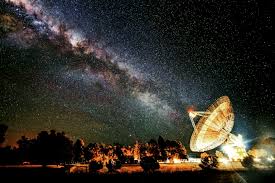
    In 1967, a 24-year-old graduate student named Jocelyn Bell Burnell noticed something odd in the data from a radio telescope she had helped build. It was a faint, repeating signal—a pulse that arrived every 1.337 seconds. At first, she and her supervisor joked it might be signals from an alien civilization, nicknaming it ‘Little Green Men 1.’ But as Bell Burnell continued her meticulous analysis, she realized the signal was natural: the rhythmic beacon of a rapidly spinning neutron star, an object that had been theorized but never observed.

    That discovery, made with a telescope that spanned 4.5 acres and used 2,048 antennas connected by 120 miles of cable, opened a new window onto the universe. It confirmed the existence of neutron stars, provided a new tool for testing Einstein’s theories, and sparked a revolution in astronomy that continues today. Yet the story of pulsars is also a story about who gets credit for scientific breakthroughs—and the quiet, often invisible labor that makes them possible.

    A Signal in the Scruff

    In the 1960s, radio astronomy was a young field. After World War II, scientists repurposed radar technology to listen to the cosmos, opening a new window on the universe. Cambridge was a leading center, and Bell Burnell was part of a team building a telescope designed to detect the shimmer of distant quasars—the newly discovered, incredibly bright objects at the edges of the universe.

    The Interplanetary Scintillation Array was massive. It covered an area the size of 57 tennis courts and was made of a forest of poles and wires. Bell Burnell helped construct it over two years, learning to solder and climb the scaffolding. Then came the painstaking work: the telescope produced 96 feet of chart paper every day, and it was Bell Burnell’s job to analyze it by eye, looking for the telltale blips of quasars.

    She was one of several women doing this kind of ‘routine’ analysis—work that was considered low-status but was essential. In August 1967, she noticed something unusual: a ‘bit of scruff’ on the paper, a signal that didn’t look like a quasar. It was a series of pulses, each 1.337 seconds apart, repeating with a regularity that was almost eerie. She brought it to her supervisor, Antony Hewish, and together they ruled out earthly interference. The signal was coming from beyond our solar system.

    The regularity was so precise that they briefly considered an artificial source—hence the nickname ‘Little Green Men.’ But when Bell Burnell found a second such signal in a different part of the sky, the alien hypothesis collapsed. No single civilization could occupy two locations and send identical signals. The pulses had to be natural.

    What Pulsars Are

    The explanation came quickly. Neutron stars, the collapsed cores of massive stars that exploded as supernovae, had been predicted in the 1930s but were considered unobservable curiosities—’theoretical toys.’ A neutron star is incredibly dense: a teaspoon of its material would weigh about a billion tons on Earth. It also spins rapidly and has a powerful magnetic field, which focuses radiation into beams that sweep across space like a lighthouse. When a beam points at Earth, we see a pulse.

    Bell Burnell had discovered the first pulsar—a rotating neutron star. The discovery turned theory into reality and gave astronomers a new way to study matter under extreme conditions. Today, we know of thousands of pulsars, and they are used as cosmic clocks, testing the predictions of general relativity with extraordinary precision. In 1974, the discovery of a binary pulsar system provided indirect evidence for gravitational waves, and in 2016, the LIGO collaboration directly detected gravitational waves from colliding black holes—research that builds on the legacy of pulsar astronomy.

    The Nobel Controversy

    In 1974, the Nobel Prize in Physics was awarded to Antony Hewish and Martin Ryle for the discovery of pulsars. Bell Burnell, who had identified the first pulsar and found three more, was excluded. The decision has been widely criticized as an example of gender bias and the erasure of graduate student contributions.

    Bell Burnell herself has been gracious about the snub. ‘I was a student,’ she has said. ‘Supervisors get the glory.’ But she has also acknowledged the systemic issues the exclusion represents. In 2018, she was awarded the Special Breakthrough Prize in Fundamental Physics, worth $3 million. She donated the entire amount to fund scholarships for women and underrepresented groups in physics, turning a moment of recognition into an opportunity to change the field.

    Her story highlights a broader pattern in science: the invisible labor of women and junior researchers who do the painstaking work of analysis and discovery but are often left off the podium. From the Harvard ‘computers’ like Henrietta Swan Leavitt, who cataloged stars, to the women of the Interplanetary Scintillation Array, this work has been essential to scientific progress, even when it went unrecognized.

    Jocelyn Bell Burnell’s discovery of pulsars was a quiet revolution. It wasn’t a dramatic moment in a laboratory, but a patient observation of ‘scruff’ on a chart. Yet that observation changed our understanding of the universe, confirmed the existence of neutron stars, and opened new avenues for testing fundamental physics. It also reminds us that scientific breakthroughs depend on the careful attention and hard work of people who may not always get the credit—and that acknowledging that labor is essential to doing science right.

    Summary

    • In 1967, Jocelyn Bell Burnell discovered the first pulsar—a rapidly spinning neutron star emitting regular radio pulses—while analyzing chart paper from a radio telescope she helped build.
    • The discovery confirmed the existence of neutron stars, which had been theorized but never observed, and opened a new field of astronomy.
    • The Nobel Prize for the discovery went to her supervisor, Antony Hewish, excluding Bell Burnell; a decision widely criticized for gender bias.
    • Bell Burnell later donated her $3 million Breakthrough Prize to support underrepresented groups in physics.
    • Pulsars are now used as cosmic clocks to test general relativity and detect gravitational waves.

    FAQ

    Q: What is a pulsar?
    A: A pulsar is a rapidly rotating, highly magnetized neutron star that emits beams of radio waves. As it spins, the beams sweep across space like a lighthouse, producing regular pulses of radiation that we can detect on Earth.

    Q: Why was the ‘Little Green Men’ nickname used?
    A: The extreme regularity of the pulses was so unusual that Bell Burnell and her supervisor briefly considered an extraterrestrial origin. When a second pulsar was found in a different part of the sky, the alien hypothesis was ruled out.

    Q: Why didn’t Jocelyn Bell Burnell receive the Nobel Prize?
    A: The 1974 Nobel Prize was awarded to her supervisor Antony Hewish and Martin Ryle. Bell Burnell was excluded, a decision widely criticized as reflecting gender bias and the erasure of graduate student work. She has downplayed the snub, but has also advocated for change.

    Q: How are pulsars used in modern astronomy?
    A: Pulsars act as extremely precise cosmic clocks. They are used to test general relativity, detect gravitational waves through pulsar timing arrays, and study the properties of matter at nuclear densities.

    Q: What is the Interplanetary Scintillation Array?
    A: It was a radio telescope at Cambridge University, built in the 1960s, consisting of 2,048 dipole antennas spread over 4.5 acres. It was used to study quasars and led to the discovery of pulsars.
  • The Accidental Discovery of Teflon: How a Failed Refrigerant Experiment Revolutionized Materials Science

    The Accidental Discovery of Teflon: How a Failed Refrigerant Experiment Revolutionized Materials Science

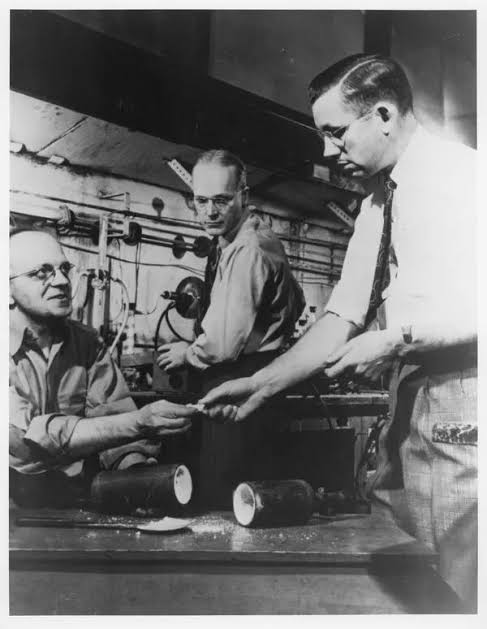
    On April 6, 1938, a 27-year-old chemist at DuPont’s Jackson Laboratory in Deepwater, New Jersey, opened a pressurized cylinder expecting to release a gas. Nothing came out. The cylinder weighed as much as it did when full, so the gas had to be inside—but it wouldn’t flow. Perplexed, Roy Plunkett and his assistant Jack Rebok sawed the cylinder open. Inside, they found a white, waxy powder coating the interior. That powder was polytetrafluoroethylene (PTFE), which would later become known as Teflon, one of the most versatile and non-stick substances ever discovered.

    This wasn’t the result of a carefully planned experiment; it was a failure. Plunkett had been trying to create a new chlorofluorocarbon refrigerant, not a miracle material. Yet his reaction to that failure—curiosity rather than frustration—turned a laboratory mishap into a world-changing discovery. The story of Teflon is a perfect example of how scientific breakthroughs often come from unexpected places, and how the ability to recognize the value of an accident can be just as important as the original goal.

    What Was the Experiment Supposed to Do?

    In the 1930s, the refrigerant industry was in a state of flux. The refrigerants used in household appliances—ammonia, sulfur dioxide, and methyl chloride—were toxic and flammable. A leak could sicken or even kill a family. DuPont was racing to develop safer alternatives, building on the work of Thomas Midgley Jr., who had created Freon (a chlorofluorocarbon) in 1928.

    Plunkett’s task was to synthesize a new CFC refrigerant. He was working with tetrafluoroethylene (TFE), a gas that under the right conditions could be polymerized into a solid. To prevent premature polymerization, he stored the TFE in pressurized cylinders kept in dry ice (solid carbon dioxide) at extremely low temperatures.

    The Day the Gas Disappeared

    On that April morning, Plunkett and Rebok opened a cylinder of TFE to add to their reaction setup. To their surprise, no gas came out. The pressure gauge showed zero, but the cylinder’s weight indicated it was still full. They checked the valve, thinking it might be clogged. It wasn’t. After weeks of troubleshooting, they finally resorted to sawing the cylinder open.

    What they found was a white, waxy powder lining the inside. The gas had spontaneously polymerized into a solid—polytetrafluoroethylene (PTFE)—without any catalyst or initiator. The molecules had linked together into long chains, forming a new material with extraordinary properties.

    Why Teflon Is So Special

    PTFE is a simple polymer: a carbon backbone with fluorine atoms attached. But that simplicity belies its remarkable characteristics. It has one of the lowest coefficients of friction of any known solid—things slide off it effortlessly. It is chemically inert, resisting nearly all acids, bases, and solvents. It can withstand temperatures from -200°C to +260°C, making it stable in extreme heat and cold. And it repels water and oils, which is why it’s hydrophobic.

    To understand why Teflon is so slippery, imagine a microscopic dance floor. The carbon-fluorine bonds are incredibly strong, and the fluorine atoms form a protective sheath around the carbon chain. This makes the surface non-reactive and gives it a low surface energy, so other molecules have a hard time grabbing on. It’s like a well-waxed floor: nothing sticks to it.

    From Laboratory Curiosity to Cold War Secret

    Plunkett recognized that he had stumbled onto something new, but he didn’t know what to do with it. DuPont filed a patent in 1939, which was granted in 1941. They trademarked the name “Teflon” in 1944. But the material might have languished as a novelty if not for World War II.

    The Manhattan Project needed to enrich uranium for the atomic bomb, a process that involved handling uranium hexafluoride (UF6)—a highly corrosive gas that ate through most materials. Scientists needed a substance that could withstand it for seals and gaskets in the gaseous diffusion equipment. Teflon was the only material that could do the job. Its chemical inertness made it perfect for this military application.

    This wartime use accelerated Teflon’s development and proved its worth in demanding conditions. It also meant that Teflon was classified as secret material during the war, hidden from public knowledge until the project declassified it.

    From Military Secret to Kitchen Staple

    After the war, DuPont began commercial production of Teflon in 1946. But finding civilian applications took time. It wasn’t until 1954 that French engineer Marc Grégoire, who had been using Teflon on fishing tackle to prevent tangles, had a eureka moment. His wife Colette suggested he try it on her frying pan. Grégoire developed a method to bond Teflon to aluminum cookware, and the “Tefal” brand was born.

    However, early Teflon cookware had a serious problem: the coating flaked off. It wasn’t until Grégoire perfected surface etching techniques that the coating adhered properly. In 1961, Teflon frying pans hit the U.S. market, and the “non-stick” revolution began.

    The Environmental and Health Legacy

    Teflon’s success came with a hidden cost. For decades, the manufacturing process used a chemical called perfluorooctanoic acid (PFOA), which is persistent in the environment and has been linked to kidney cancer, testicular cancer, and thyroid disease. DuPont phased out PFOA by 2013, but Teflon belongs to a broader class of chemicals called PFAS, often called “forever chemicals” because they don’t break down in the environment. This has led to ongoing concerns about their impact on ecosystems and human health.

    The story of Teflon is a reminder that every technological advance carries both benefits and risks. But it also highlights the power of scientific curiosity. Plunkett could have dismissed the failed cylinder as a waste of time. Instead, he investigated, and his willingness to follow the unexpected changed the world.

    Roy Plunkett’s discovery of Teflon was not a deliberate search for a non-stick substance or a corrosion-resistant material. It was a failed experiment that he chose to understand rather than discard. His story illustrates that scientific progress often depends not just on preparation and knowledge, but on the ability to recognize the potential in an accident. From refrigerants to atomic bombs to frying pans, Teflon’s journey shows how a single serendipitous moment can ripple through history in ways no one could have predicted.

    Summary

    • On April 6, 1938, Roy Plunkett discovered Teflon by accident when a cylinder of tetrafluoroethylene gas unexpectedly polymerized into a solid white powder.
    • Teflon (PTFE) has unique properties: extremely low friction, chemical inertness, heat resistance, and hydrophobicity.
    • Teflon’s first major use was in the Manhattan Project to handle corrosive uranium hexafluoride, accelerating its development.
    • It took 20 years for Teflon to become a consumer product, when Marc Grégoire applied it to cookware in 1954, leading to the Tefal brand.
    • Teflon manufacturing used PFOA, a harmful “forever chemical,” highlighting the environmental and health trade-offs of this discovery.

    FAQ

    Q: Was Teflon discovered completely by accident?
    A: Yes, the material was discovered by accident, but Roy Plunkett’s scientific training enabled him to recognize the significance of the unexpected polymerization. As Louis Pasteur said, “Chance favors the prepared mind.”

    Q: What is Teflon made of?
    A: Teflon is made of polytetrafluoroethylene (PTFE), a polymer consisting of carbon atoms bonded to fluorine atoms. This structure gives it its non-stick and heat-resistant properties.

    Q: Why was Teflon important during World War II?
    A: Teflon was critical for the Manhattan Project because it could withstand the corrosive effects of uranium hexafluoride (UF6), which was used in the process of enriching uranium for atomic bombs.

    Q: Is Teflon still used today?
    A: Yes, Teflon is used in a wide range of applications, including non-stick cookware, waterproof fabrics, electrical insulation, and industrial equipment. However, the use of PFOA in its manufacturing has been phased out due to health concerns.

    Q: What are the health concerns associated with Teflon?
    A: The main health concerns are linked to PFOA, a chemical formerly used in Teflon production. PFOA has been associated with kidney cancer, testicular cancer, and thyroid disease. Modern Teflon is produced without PFOA, but PTFE itself is generally considered safe for consumer use.