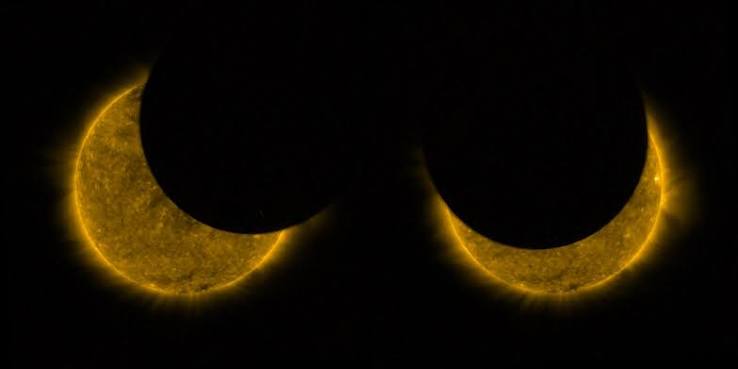
August 2026 is shaping up to be a spectacular month for skywatchers, with not one but two eclipses, the reliable Perseid meteor shower, and brilliant Venus gracing the evening sky. Whether you’re a seasoned observer or just starting to look up, NASA’s monthly skywatching guide highlights the can’t-miss events and offers practical tips for enjoying them.
This month is bookended by a total solar eclipse on August 12 and a deep partial lunar eclipse on August 28—a rare pairing that occurs when the Sun, Earth, and Moon align in what’s called an ‘eclipse season.’ Add to that the Perseid meteor shower peaking under ideal dark-sky conditions, and you have a month packed with celestial wonders.
In this guide, we’ll break down each event, explain the science behind them in simple terms, and give you practical advice on when and where to look. No jargon, no complicated math—just clear explanations to help you make the most of August’s night sky.
The Total Solar Eclipse: August 12, 2026
A total solar eclipse occurs when the Moon passes directly between the Sun and Earth, completely blocking the Sun’s light for a few minutes. This August, the path of totality—where the eclipse is total—crosses Spain, Iceland, and Greenland. Observers in these areas will experience daytime turning into twilight as the Moon covers the Sun.
For those outside the path, a partial eclipse will be visible across Europe, North Africa, and parts of North America, including eastern Canada and the northeastern United States. In these regions, the Moon will take a ‘bite’ out of the Sun, but it won’t fully cover it.
Safety first: Never look directly at the Sun without proper eye protection. Regular sunglasses are not enough. You need eclipse glasses that meet the ISO 12312-2 international safety standard, or use a pinhole projector to view the eclipse indirectly. During totality, it’s safe to look with the naked eye, but only if you’re in the path of totality and the Sun is completely covered.
The Perseid Meteor Shower: Peak August 11–13
The Perseids are one of the most reliable meteor showers of the year, active from mid-July to late August. They occur when Earth passes through the debris trail left by Comet Swift-Tuttle. As these tiny particles—often no larger than a grain of sand—hit our atmosphere at high speed, they burn up, creating bright streaks of light.
This year, the peak nights of August 11–13 coincide with a new moon on August 13, meaning the sky will be dark and moonless—perfect for meteor watching. Under clear, dark skies, you could see 50 to 100 meteors per hour.
How to watch: Find a dark location away from city lights, lie back, and look up. No equipment needed—just your eyes. Give your eyes about 20 minutes to adapt to the dark, and be patient. The shower is best after midnight, when Earth’s rotation faces into the meteor stream.
Venus at Greatest Eastern Elongation: August 17
Venus, the brightest planet, reaches its greatest eastern elongation on August 17, meaning it will be at its maximum angular distance from the Sun (about 46 degrees). This makes it exceptionally prominent in the western evening sky after sunset, outshining every star and planet.
Through a telescope, you’ll see Venus in a half-lit phase, similar to a first-quarter Moon. This is because Venus orbits the Sun inside Earth’s orbit, so we see different portions of its sunlit side as it moves around.
When to look: About 30 minutes after sunset, look west. Venus will be the brightest object in that part of the sky, setting about three hours after the Sun. It’s visible to the naked eye, but binoculars or a small telescope will enhance the view.
Saturn at Opposition: August 20
On August 20, Saturn reaches opposition, meaning it’s directly opposite the Sun in our sky. It rises at sunset, is visible all night, and sets at sunrise. This is the best time to observe Saturn because it’s at its closest approach to Earth for the year.
Even a small telescope will reveal Saturn’s magnificent rings, which are tilted favorably this year. You might also spot its largest moon, Titan, as a tiny point of light nearby.
The Partial Lunar Eclipse: August 28
A lunar eclipse occurs when Earth passes between the Sun and the Moon, casting its shadow on the Moon. On August 28, a deep partial lunar eclipse will take place, with about 93% of the Moon’s diameter entering Earth’s dark umbral shadow.
This is not a total eclipse, so the Moon won’t turn the deep red ‘blood moon’ color of totality. Instead, the shadowed part will appear dark gray or brown, while the un-eclipsed portion remains bright. It’s still a striking sight and the deepest partial lunar eclipse until 2027.
The eclipse will be visible in its entirety from the Americas, and in progress during moonrise or moonset for Europe and Africa. Check local times for when the eclipse begins and ends.
Other Notable Events
- Mercury: In early August (around August 5–10), Mercury is briefly visible low in the morning sky before sunrise. Look east about 30 minutes before sunrise.
- Jupiter and Mars: Jupiter rises in the late evening, while Mars remains a morning object, moving through the constellation Taurus.
Tips for Photographing the Sky
- Perseids: Use a wide-angle lens, set your camera on a tripod, and use a long exposure (15–30 seconds) with a high ISO. Take many shots to increase your chances of catching a meteor.
- Lunar eclipse: A telephoto lens (200mm or more) will capture the Moon’s details. Use a tripod and experiment with exposure settings.
- Solar eclipse: You must use a solar filter on your camera lens, just as you would for your eyes. Never point an unfiltered camera at the Sun.
Understanding Eclipses and Meteor Showers
Eclipses happen because of the precise alignment of the Sun, Earth, and Moon. A solar eclipse occurs when the Moon is between the Sun and Earth; a lunar eclipse when Earth is between the Sun and the Moon. These alignments happen during ‘eclipse seasons,’ which occur roughly every six months.
Meteor showers are predictable because Earth passes through the same debris streams at the same time each year. The Perseids, for example, are caused by Comet Swift-Tuttle’s debris, which has been spread along its orbit for centuries.
August 2026 offers a rare celestial doubleheader: a total solar eclipse and a deep partial lunar eclipse in the same month, plus the ever-reliable Perseid meteor shower and brilliant Venus. Whether you’re traveling to the path of totality or simply stepping outside to catch a meteor, this is a month to look up. Mark your calendars, find a dark spot, and enjoy the show—no special equipment required for most events, just your curiosity.
Summary
- Total solar eclipse on August 12, visible in totality from Spain, Iceland, and Greenland; partial in Europe, North Africa, and parts of North America.
- Perseid meteor shower peaks August 11–13, with up to 100 meteors per hour under dark, moonless skies.
- Venus at greatest eastern elongation on August 17, shining brilliantly in the western evening sky.
- Saturn at opposition on August 20, offering the best views of its rings all year.
- Deep partial lunar eclipse on August 28, with 93% of the Moon entering Earth’s shadow, visible from the Americas, Europe, and Africa.
FAQ
Q: Do I need special equipment to see the Perseid meteor shower?
A: No, the Perseids are best viewed with the naked eye. Find a dark location, lie back, and give your eyes time to adapt to the dark.
Q: Can I see the total solar eclipse from North America?
A: Only a partial eclipse will be visible from eastern Canada and the northeastern U.S. Totality is only in Spain, Iceland, and Greenland.
Q: Why won’t the August 28 lunar eclipse be a ‘blood moon’?
A: Because it’s a partial eclipse, not total. Only the part of the Moon in Earth’s umbral shadow will darken, and it won’t get the red color of a total eclipse.
Q: How can I safely view the solar eclipse?
A: Use eclipse glasses that meet the ISO 12312-2 standard, or make a pinhole projector. Never look directly at the Sun without protection.
Q: When is the best time to view Venus in August?
A: After sunset, look west. Venus will be the brightest object in that part of the sky, setting about three hours after the Sun.