In the 19th century, typhoid fever was a leading killer in crowded cities, striking down rich and poor alike with relentless fever and intestinal agony. Today, most people in developed countries have never seen a case, and the disease has faded from public memory. Yet typhoid is far from extinct: it still causes millions of infections each year in parts of Asia and Africa, and drug-resistant strains are spreading. More importantly, the fight against typhoid gave us the blueprint for modern public health from water chlorination to carrier tracing. Understanding this forgotten plague reveals how much of our daily safety rests on invisible infrastructure built to defeat it.
A Fever That Changed the World
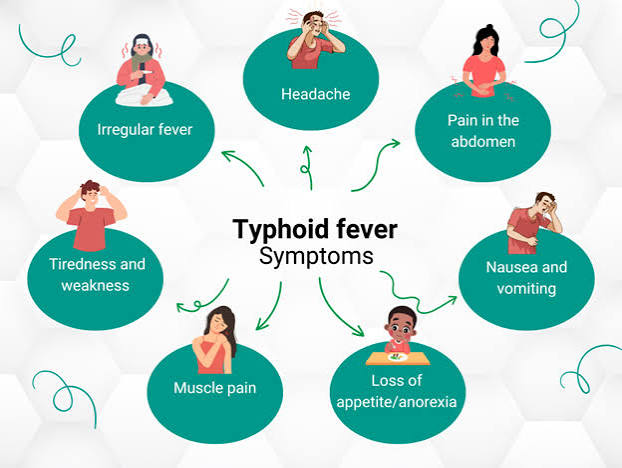
Typhoid fever is caused by the bacterium Salmonella typhi, which spreads through contaminated food and water. In the 1800s, as cities industrialized, overcrowded tenements and poor sanitation created perfect conditions for outbreaks. The disease struck with a sustained high fever, often reaching 103-104°F, accompanied by headache, abdominal pain, and sometimes a rash of rose-colored spots. Before antibiotics, 10–30% of untreated cases were fatal. It was a scourge of urban life, killing thousands each year in cities like London, New York, and Philadelphia.
Distinguishing Typhoid from Typhus
A major breakthrough came in 1829 when Parisian physician Pierre-Charles-Alexandre Louis distinguished typhoid from typhus, a similar but distinct disease spread by lice. The names themselves hint at the confusion: ‘typhoid’ means ‘typhus-like.’ This clinical distinction was critical for accurate diagnosis and later for tracking outbreaks. In 1880, Karl Joseph Eberth identified the typhoid bacillus under a microscope, and in 1884, Georg Gaffky grew it in pure culture, proving it was the culprit.
The Sanitary Awakening
The mid-19th century saw a growing realization that filth and disease were linked. Edwin Chadwick’s 1842 report on sanitation in Britain sparked a movement to improve living conditions. John Snow’s investigation of cholera in 1854 demonstrated that water could carry disease, a principle soon applied to typhoid. The old miasma theory that disease came from ‘bad air’ gave way to germ theory as scientists like Pasteur and Koch established that microorganisms cause infections.
Engineering Solutions
Once the waterborne transmission was understood, cities began investing in infrastructure to protect their water supplies. Slow sand filtration plants, first used in London in 1852, removed pathogens and dramatically reduced typhoid rates. The next breakthrough came in 1908 when Jersey City, New Jersey, became the first U.S. city to continuously chlorinate its water supply. The result was staggering: within a decade, typhoid mortality in the U.S. fell by about 80%. Separate sewer systems and wastewater treatment removed sewage from the environment, and milk pasteurization mandated in many cities by the 1920s cut off another transmission route.
The Birth of Field Epidemiology
Typhoid forced the development of field epidemiology: the practice of tracing cases back to their sources. Investigators would interview patients, map outbreaks, and test water and food samples to identify the point of contamination. This approach proved essential when the first chronic carriers were discovered. About 1–5% of infected individuals continue to shed the bacteria for years, even without symptoms. The most famous was Mary Mallon, a cook in New York, who infected at least 47 people between 1900 and 1907. Dubbed ‘Typhoid Mary,’ she was forcibly quarantined twice, sparking debates about individual rights versus public health that still resonate today.
Military Lessons
Typhoid was a major military threat. During the Spanish-American War in 1898, more soldiers died from typhoid than from combat—about 1,600 deaths out of 20,000 cases. This disaster prompted the U.S. Army to mandate typhoid vaccination in 1911, using a vaccine developed by Almroth Wright. By World War I, improved sanitation and vaccination had reduced typhoid deaths among U.S. troops to near zero. Military medicine thus became a proving ground for public health measures.
The Antibiotic Era and Its Limits
In 1948, chloramphenicol became the first effective antibiotic against typhoid, reducing mortality to under 1%. For decades, antibiotics controlled the disease in countries with access to them. However, overuse and misuse have led to the emergence of drug-resistant strains. In 2016–2018, an extensively drug-resistant (XDR) outbreak in Pakistan resisted nearly all antibiotics, including chloramphenicol, ampicillin, and fluoroquinolones. This serves as a stark reminder that typhoid is not a disease of the past—it remains a serious threat where sanitation is poor and antibiotics are unreliable.
The Modern Burden
Today, typhoid still causes an estimated 11–21 million infections and 128,000–161,000 deaths each year, mostly in South Asia, sub-Saharan Africa, and Southeast Asia. The disease is a marker of inadequate water and sanitation infrastructure. Efforts to combat it include vaccination with modern vaccines like Vi-polysaccharide and Ty21a, and newer conjugate vaccines that can be given to infants as young as six months. But the ultimate solution remains the same as it was a century ago: clean water and proper sanitation.
Why It Matters Now
Typhoid’s legacy is everywhere. The water treatment plants, sewage systems, and food safety regulations that we take for granted were built in response to typhoid and other waterborne diseases. The practice of tracking and controlling carriers started with typhoid. The importance of vaccination campaigns was proven on the battlefield. As we face new infectious disease threats, we continue to rely on these same principles. Understanding how typhoid shaped public health helps us appreciate the fragile systems that keep us safe and the need to extend them to all parts of the world.
Typhoid fever may be a forgotten plague in many countries, but its impact endures. The battle against it taught humanity how to build cities that do not sicken their inhabitants, how to trace and contain outbreaks, and how to protect populations through vaccination. As antibiotic resistance grows and the disease persists in the developing world, the lessons of typhoid remain as relevant as ever. The next time you turn on a tap, remember that the clean water flowing out is a triumph of public health—won through the struggle against a deadly fever.
Summary
- Typhoid fever, caused by Salmonella typhi, was a major killer in 19th-century cities due to poor sanitation.
- The distinction from typhus and the germ theory paved the way for understanding waterborne transmission.
- Sanitary engineering—filtration, chlorination, sewage systems, and pasteurization—dramatically reduced typhoid in developed countries.
- The ‘Typhoid Mary’ case led to the concept of chronic carriers and the practice of field epidemiology.
- Antibiotics reduced mortality, but drug-resistant strains, like the XDR outbreak in Pakistan, pose a modern threat, highlighting the need for continued vigilance and global sanitation efforts.
FAQ
Q: What is the difference between typhoid and typhus?
A: Typhoid is caused by the bacterium Salmonella typhi and spreads through contaminated food and water. Typhus is caused by Rickettsia prowazekii and is transmitted by lice. They have similar symptoms—fever, headache, and rash—but are different diseases.
Q: How is typhoid fever transmitted?
A: It spreads via the fecal-oral route, meaning through ingestion of food or water contaminated with the feces of an infected person. It can also spread through direct contact with an infected person’s stool or urine.
Q: What is a ‘chronic carrier’ of typhoid?
A: A chronic carrier is a person who continues to shed the bacteria in their stool or urine for more than a year, even after recovering from symptoms. About 1–5% of infected individuals become chronic carriers, and they can unknowingly spread the disease.
Q: Why is chlorination of water so important?
A: Chlorination kills bacteria and other pathogens in water, making it safe to drink. The first continuous chlorination of a U.S. city water supply in Jersey City in 1908 led to a dramatic drop in typhoid cases, and it remains a crucial public health measure worldwide.
Q: Is typhoid fever still a problem today?
A: Yes, typhoid affects an estimated 11–21 million people annually, causing over 100,000 deaths, mostly in South Asia and sub-Saharan Africa. The emergence of drug-resistant strains, such as the XDR outbreak in Pakistan, underscores the ongoing threat.