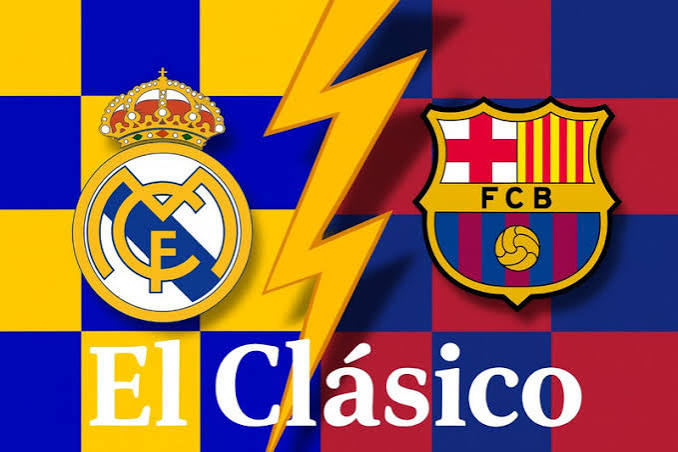
Every few months, the football world stops. Not for a World Cup final or a Champions League night, but for a league match between two clubs separated by 600 kilometers and a chasm of identity. Barcelona vs. Real Madrid—El Clásico—is more than a game; it’s a cultural referendum, a political flashpoint, and a showcase of football’s highest artistry. With hundreds of millions tuning in from Lagos to Los Angeles, this rivalry transcends sport, embedding itself in the global consciousness.
But what makes this fixture so magnetic? It’s not just the galaxy of stars—from Di Stéfano to Messi, from Cruyff to Bellingham—or the trophy cabinets that bulge with European Cups. It’s the collision of philosophies: Catalonia’s defiant ‘Més que un club’ against Madrid’s regal assertion of Spanish unity. As the 2024-25 season unfolds, with a new generation of protagonists, El Clásico remains a living, breathing drama that shapes careers and defines eras.
The Roots of a Rivalry: Politics, Identity, and Football
To understand El Clásico, you must look beyond the pitch. Barcelona is the capital of Catalonia, a region with its own language, culture, and a centuries-old yearning for autonomy. Real Madrid, the capital’s club, has historically been seen as the establishment’s team—especially during Francisco Franco’s dictatorship (1939-1975), when the regime used football as a tool for national unity. While historians debate the extent of Franco’s favoritism toward Madrid, the perception stuck: Barça became a symbol of Catalan resistance, a peaceful rebellion played out in stadiums.
This political undercurrent gives every Clásico a weight that transcends sport. When Barcelona players wear the Catalan flag on their kits, or when Camp Nou erupts in a sea of ‘senyeras’ during the national anthem, it’s a reminder that this is more than a game. For many Catalans, Barça is a proxy for their identity; for Madridistas, their club represents the idea of a unified Spain. The rivalry is a microcosm of the country’s tensions, but it’s also a unifying force—for 90 minutes, the world watches a shared passion.
The Tactical Chess Match: Tiki-Taka vs. Galácticos
On the pitch, El Clásico has often been a clash of footballing ideologies. Barcelona, nurtured by Johan Cruyff’s philosophy and La Masia’s conveyor belt of talent, became synonymous with ‘tiki-taka’—a possession-based, short-passing style that suffocates opponents. Think of Xavi and Iniesta’s metronomic midfield, or Messi’s telepathic understanding with his teammates. It’s football as art, a collective symphony.
Real Madrid, by contrast, has historically favored a more direct, explosive approach. The ‘Galácticos’ era—Zidane, Figo, Ronaldo, Beckham—was about individual brilliance, moments of magic that decide games. Madrid’s counter-attacking prowess under Carlo Ancelotti, with Vinícius Jr. and Jude Bellingham, is a modern evolution: lethal in transition, clinical in front of goal. The contrast is stark: Barça’s patient build-up vs. Madrid’s lightning strikes. Yet, both styles have evolved. Xavi’s Barça now mixes possession with verticality, while Ancelotti’s Madrid can dominate possession when needed. The tactical battle is a living laboratory, where coaches adapt and innovate.
The Icons: From Di Stéfano to Yamal
El Clásico has been defined by its icons. In the 1950s, Alfredo Di Stéfano led Madrid to five consecutive European Cups, setting a standard of dominance. Johan Cruyff, in the 1970s, brought ‘Total Football’ to Barcelona and sparked a revolution. Diego Maradona’s brief but dazzling stint at Barça added to the lore. Then came the era that redefined the rivalry: Lionel Messi vs. Cristiano Ronaldo. From 2009 to 2018, these two titans pushed each other to unprecedented heights, with Messi scoring a record 26 Clásico goals. Their duels were not just matches; they were global events, with every touch dissected.
Now, a new generation is writing its own chapters. Jude Bellingham, with his knack for late goals, has become Madrid’s Clásico hero. On the other side, Lamine Yamal, born in 2007, represents Barça’s future—a prodigy from La Masia who embodies the club’s attacking DNA. The torch has passed, but the intensity remains. Each Clásico is a chance for a new star to etch their name into history.
The Numbers Game: Trophies, Records, and Bragging Rights
As of early 2025, Real Madrid leads the all-time head-to-head with roughly 105 wins to Barcelona’s 100, with about 52 draws. Madrid also boasts a record 15 European Cups, while Barça has 5. In La Liga, Madrid leads with ~35 titles to Barça’s ~27. But Barcelona holds the edge in Copa del Rey, with a record ~31 trophies. These numbers are not just statistics; they fuel the narrative of superiority. Every Clásico is a chance to shift the balance, to claim bragging rights for the next few months.
The financial stakes are equally high. Both clubs are among the world’s richest, with revenues exceeding €800 million annually. They are global brands, with massive social media followings and merchandise sales. Their rivalry extends to the boardroom, where they’ve even collaborated—controversially—on the European Super League project, showing that off-pitch interests can align despite on-pitch animosity.
The Modern Era: A Rivalry Reborn
Post-Messi and post-Ronaldo, El Clásico has evolved. Barcelona won La Liga in 2023, while Madrid claimed the title in 2022 and 2024, along with Champions League triumphs in those years. The 2024-25 season has already delivered a thrilling 3-2 Madrid win at the Bernabéu, with Bellingham scoring a stoppage-time winner. The rivalry remains as fierce as ever, but the context has shifted. Both clubs are navigating financial constraints and rebuilding squads, yet the hunger for victory is undiminished.
Off the pitch, the political dimension persists, but it’s more nuanced. Many fans insist the rivalry is purely sporting, and the political narrative is oversimplified. Yet, when the teams meet, the symbolism is inescapable. The atmosphere at Camp Nou and the Bernabéu is electric, a cauldron of noise and color. Ultra groups, though heavily policed, add an edge. For neutrals, it’s a spectacle; for fans, it’s a matter of identity.
Why It Matters: The Global Phenomenon
El Clásico is broadcast in over 180 countries, with an estimated audience of hundreds of millions. It’s a cultural export, a brand that transcends football. The rivalry drives tourism, with fans traveling from around the world to witness the spectacle. It influences political discourse in Spain, with politicians using the match to score points. It’s a stage where heroes are made and legacies are forged.
For the players, a Clásico is the ultimate test. For the fans, it’s a rollercoaster of emotion. For the neutral, it’s a masterclass in football. El Clásico is not just a match; it’s a phenomenon that encapsulates the beauty, drama, and complexity of the beautiful game.
El Clásico is more than a football match; it’s a living history of Spain, a canvas for footballing genius, and a global spectacle that unites and divides in equal measure. As long as Barcelona and Real Madrid exist, this rivalry will endure, evolving with the times but never losing its intensity. Whether you’re a fan of tiki-taka or Galácticos, of Catalonia or Castile, El Clásico is a reminder of why we love this sport: for the passion, the drama, and the sheer unpredictability of it all.
Summary
- El Clásico is the most-watched club football match globally, with an estimated audience of hundreds of millions.
- The rivalry is rooted in political and cultural tensions between Catalonia and the Spanish state, with Barcelona symbolizing resistance and Madrid representing unity.
- Tactically, it’s a clash of styles: Barcelona’s possession-based tiki-taka vs. Real Madrid’s direct, counter-attacking approach.
- The Messi-Ronaldo era (2009-2018) defined a generation, with Messi scoring a record 26 Clásico goals.
- As of early 2025, Real Madrid leads the head-to-head with ~105 wins to Barcelona’s ~100, and both clubs remain among the world’s richest and most successful.
FAQ
Q: Why is it called ‘El Clásico’?
A: The term ‘El Clásico’ (The Classic) was popularized in the early 20th century to describe the historic rivalry between Spain’s two most successful clubs, FC Barcelona and Real Madrid. It’s now used globally to refer to any match between them.
Q: How often do Barcelona and Real Madrid play each other?
A: They meet at least twice a year in La Liga, and can face off in other competitions like the Copa del Rey, Supercopa de España, and UEFA Champions League. In some seasons, they’ve played as many as five times.
Q: Who has won more El Clásico matches?
A: As of early 2025, Real Madrid leads with roughly 105 wins to Barcelona’s 100, with about 52 draws. However, the record is constantly changing with each match.
Q: What is the political significance of El Clásico?
A: The rivalry has political undertones: Barcelona represents Catalonia’s quest for autonomy, while Real Madrid is often seen as the establishment’s club. This was especially pronounced during Franco’s dictatorship, when Barça became a symbol of resistance.
Q: Who are the all-time top scorers in El Clásico?
A: Lionel Messi holds the record with 26 goals in El Clásico, followed by Cristiano Ronaldo with 18. Alfredo Di Stéfano and Karim Benzema are also among the top scorers.