Tag: Ridley Scott

  • ‘The Dog Stars’ Review: Ridley Scott’s Quiet Apocalypse Finds Hope in the Ashes

    ‘The Dog Stars’ Review: Ridley Scott’s Quiet Apocalypse Finds Hope in the Ashes

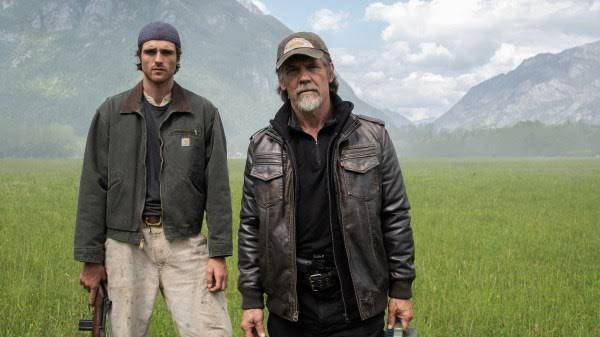
    Ridley Scott, at 94, has built a career on spectacle: alien chases, Roman colosseums, and Martian potatoes. But his latest, The Dog Stars, trades the bombast for something far more fragile. Based on Peter Heller’s 2012 novel, this post-apocalyptic drama follows Hig (Jacob Elordi), a pilot who survives a superflu that wiped out 99% of humanity, living in an airport hangar with a gun-toting survivalist named Bangley (Josh Brolin).

    What emerges is a “subdued but pleasingly soulful” dystopian Western, as the review headline puts it. Scott’s restraint is the story: instead of action set-pieces, we get long silences, a dog’s loyal gaze, and the hum of a Cessna’s engine. It’s a film that asks whether tenderness can survive when everything else has burned away.

    The 94-Year-Old Director Who Slowed Down

    Scott’s late-career output has been anything but quiet: Napoleon’s battlefield carnage, Gladiator II’s arena bloodshed. So The Dog Stars marks a deliberate pivot. The director, known for saying he prefers “fast” filmmaking, here lets scenes breathe. The pacing mirrors Hig’s daily routine: wake, check the perimeter, fly, scavenge, return.

    This is closer to Clint Eastwood’s late-period restraint than Scott’s own Blade Runner dystopia. That 1982 noir was dense with neon and rain; The Dog Stars is all dusty Colorado daylight and empty skies. The quiet is the point — a world stripped of noise, both literal and metaphorical.

    From Page to Screen: The Adaptation Challenge

    Heller’s novel is written in a fragmented, stream-of-consciousness style, with Hig’s thoughts jumping like a wounded bird. The film had to translate that interiority into visual storytelling. The solution? Let Elordi’s face do the work. His Hig is a man of few words, but his eyes carry the grief of losing everyone he loved — a wife, a father, a world.

    The novel’s lyrical nature writing — Heller was a fly fisherman and adventure writer — becomes the film’s visual poetry. Scott’s cameras linger on the Rockies, on a river, on Jasper the dog’s panting tongue. The landscape isn’t a backdrop; it’s a character. The film keeps the novel’s core: a mysterious radio transmission from a woman (Margaret Qualley) that sends Hig west, toward hope or madness.

    Elordi and Qualley: Chemistry in the Ruins

    Jacob Elordi, fresh from Saltburn and Priscilla, fits Hig’s brooding template, but he adds a vulnerability that prevents the character from becoming a cliché. His Hig is a pilot who’d rather flee than fight, a man who reads poetry aloud to his dog. The casting works because Elordi makes stillness feel active.

    Margaret Qualley, coming off the body-horror of The Substance, brings a grounded physicality to her role. Without spoiling the plot, she isn’t just the “radio voice” — she has agency, a past, and a reason to be suspicious of Hig’s kindness. Their scenes together are tense, tender, and refreshingly unforced.

    Josh Brolin, a Scott regular since American Gangster, plays Bangley as a pragmatic survivalist — not a villain, but a mirror of what Hig could become if he stopped feeling. The film’s central tension isn’t between man and nature, but between Hig’s tenderness and Bangley’s hardness. It’s a debate about what’s worth saving in a broken world.

    The Dystopian Western: A Genre With a Pulse

    “Dystopian Western” might sound like a contradiction — the West is about open horizons, dystopia about closed ones. But the genre has roots: The Book of Eli, The Road, even Mad Max: Fury Road. The Dog Stars fits by giving Hig a moral code and a frontier to cross. His Cessna replaces the horse; the empty highways replace the dusty trails.

    Yet Scott’s film avoids the grimness of The Road and the pyrotechnics of Fury Road. It’s closer to Station Eleven — an apocalypse story about art, memory, and human connection. The film’s soulful core is a Frank O’Hara poem, referenced in the title, about enjoying a Coke with someone you love. That’s the stakes: not survival, but the preservation of small joys.

    Why This Story Matters Now

    Heller wrote the novel in 2012, but the pandemic gave it new resonance. The film, made in a post-COVID world, doesn’t shy from that. Hig’s grief is our collective grief; his search for a voice on the radio mirrors our own longing for connection after isolation. Scott, a director often accused of being cold, here delivers something unexpectedly warm.

    It helps that the supporting cast — Guy Pearce, Allison Janney, Benedict Wong — adds gravitas in small but crucial roles. They appear as fragments of the old world, reminders of what was lost. Their presence elevates the film beyond a two-hander.

    A Risk That Pays Off

    At 94, Scott could have coasted on spectacle. Instead, he took a risk on a quiet, literary adaptation with a young leading man and a dog. The result is a film that feels like a late-career statement: that even in the twilight, there’s room for gentleness. The Dog Stars won’t satisfy viewers expecting Gladiator-scale action. But for those willing to sit with silence, it offers something rarer: hope.

    Ridley Scott’s The Dog Stars is a subdued, soulful entry in his filmography — a dystopian Western that trades explosions for empathy. With strong performances from Elordi and Qualley, and a script that honors Heller’s lyrical source, it’s a reminder that even the end of the world can’t kill poetry.

    Summary

    • Ridley Scott at 94 directs a restrained, character-driven post-apocalyptic drama, a departure from his usual spectacle.
    • Adaptation: Peter Heller’s fragmented novel is translated into visual storytelling via Elordi’s expressive performance and Scott’s landscape shots.
    • Cast: Jacob Elordi and Margaret Qualley bring tenderness to a grim setting; Josh Brolin anchors the survivalist counterpoint.
    • Genre: Blends dystopian and Western tropes, but with a soulful, hopeful tone reminiscent of Station Eleven.
    • Resonance: Post-pandemic audiences will find echoes of collective grief and the search for connection.

    FAQ

    Q: Is The Dog Stars based on a book?
    A: Yes, it’s adapted from Peter Heller’s 2012 novel of the same name, a New York Times bestseller.

    Q: What is the film’s tone compared to other Ridley Scott movies?
    A: It’s subdued and introspective, more like The Martian’s survival focus than Gladiator’s action, with a soulful, tender core.

    Q: Who stars in the film?
    A: Jacob Elordi plays Hig, Margaret Qualley plays the mysterious woman, and Josh Brolin plays Bangley. Supporting cast includes Guy Pearce, Allison Janney, and Benedict Wong.

    Q: What does the title mean?
    A: It references a Frank O’Hara poem about joy and companionship, and the Dog Star (Sirius) as a symbol of hope.

    Q: Is the film suitable for fans of action apocalypses?
    A: No — it’s a slow, character-driven drama. Expect emotional stakes rather than explosive set-pieces.
  • Ridley Scott’s ‘The Dog Stars’: First Reactions Are In Here’s What Critics Are Saying

    Ridley Scott’s ‘The Dog Stars’: First Reactions Are In Here’s What Critics Are Saying

    Ridley Scott has spent the last few years staging massive historical battles and intergalactic squabbles. Now, at 87, he’s swapped the arena for a Cessna. The Dog Stars, his adaptation of Peter Heller’s 2012 novel, lands in theaters on August 28, and the first reactions are just beginning to surface.

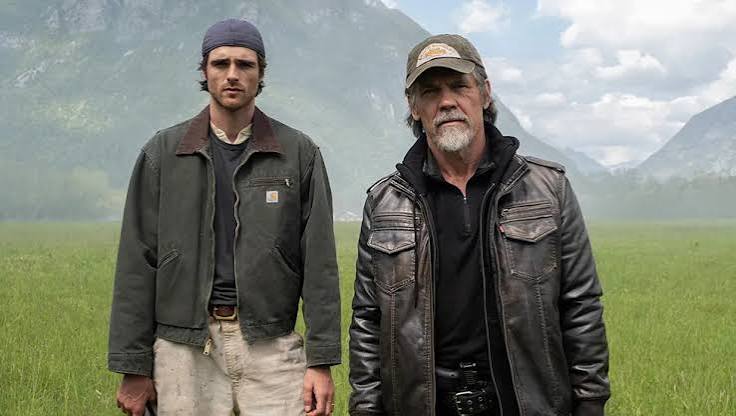
    The film stars Jacob Elordi as Hig, a pilot-poet surviving in a Colorado airport after a superflu has wiped out most of humanity. Josh Brolin plays Bangley, the gun-toting survivalist who shares his compound. When Hig picks up a mysterious radio transmission from beyond the mountains, he decides to fly toward it hoping for connection, maybe even love (Margaret Qualley).

    Early word suggests Scott has delivered something quieter than his recent epics, but no less ambitious. Here’s a breakdown of what critics are focusing on, from Elordi’s performance to the film’s fidelity to the beloved novel.

    A Return to Intimate Sci-Fi

    Ridley Scott’s last forays into science fiction were The Martian (2015) and Prometheus (2012)—both big, effects-driven productions. The Dog Stars is a different beast: a character-driven survival story set in a world that’s already ended. According to early reactions, Scott has leaned into the isolation and quiet dread of Heller’s novel, favoring close-ups of Elordi’s face against vast, empty skies over the sprawling set pieces he’s known for.

    One critic described the film as “Blade Runner’s melancholy cousin,” noting that Scott hasn’t lost his ability to make a desolate world feel breathtakingly beautiful. The aerial sequences, shot in real planes, have been singled out for their visceral immediacy a far cry from the green-screen excess of Napoleon.

    Elordi and Brolin: A Chemistry That Works

    Jacob Elordi has been on a hot streak with Priscilla and Saltburn, but this is his first true leading role in a genre blockbuster. The reactions suggest he pulls it off. Critics are calling his Hig “a revelation” and “surprisingly rugged,” noting that he brings a vulnerability that balances Brolin’s gruffness. Brolin, meanwhile, is reportedly in top form, channeling his No Country for Old Men energy into Bangley a man who’s survived by shutting off his emotions until Hig forces him to open up.

    Margaret Qualley’s role is small but impactful, with one reviewer saying she “haunts the film like a ghost” despite limited screen time. The supporting cast Alison Janney, Benedict Wong, Guy Pearce adds gravitas in what are likely flashback or survivor roles.

    The Novel’s Tough Translation

    Peter Heller’s The Dog Stars is written in a fragmented, stream-of-consciousness style that’s notoriously hard to adapt. Early reactions suggest Scott and screenwriter Mark L. Smith (The Revenant) have found a visual equivalent. The film uses Hig’s voiceover sparingly, letting images of the Colorado wilderness and the decaying airport community carry the emotional weight. One fan of the book wrote, “It’s not a direct translation, but it captures the spirit—the grief, the hope, the love of flight.”

    However, not everyone is convinced. A few critics argue the film sacrifices the novel’s poetic interiority for more conventional post-apocalyptic beats. The ending, in particular, has sparked debate—without spoilers, it’s safe to say it diverges from the book in ways that may frustrate purists.

    A Post-Pandemic Story That Hits Different

    Heller wrote the novel before COVID-19, but its themes of isolation, loss, and the search for connection have only grown more resonant. Early reactions note that The Dog Stars avoids the nihilism of The Road, offering instead a fragile hope that feels earned. One critic called it “the first post-apocalyptic film that feels like a hug.”

    That’s not to say the film shies away from darkness. The superflu is never fully explained, and the threat of other survivors—like the mysterious “gatekeepers” who guard the mountains—keeps the tension high. But the core of the movie is Hig’s relationship with his dog Jasper, a golden retriever who’s practically the co-lead. Early word is that Jasper is a scene-stealer and will likely win over even the most cynical viewers.

    Scott’s Legacy at 87

    Ridley Scott has directed nearly a film a year in his late eighties, and The Dog Stars is another addition to a staggering filmography. Some critics are framing this as a “return to form” for Scott, a reminder that he’s just as adept at intimate drama as he is at spectacle. Others argue it’s a natural evolution, a culmination of his recurring themes of survival and isolation.

    Regardless, the first reactions position The Dog Stars as a serious awards contender, especially for its performances and cinematography. The August release date might seem like a gamble, but early buzz suggests it could have legs into the fall.

    Box Office and Market Positioning

    August is traditionally a dumping ground for studio films, but The Dog Stars is getting a wide release from 20th Century Studios. Early tracking suggests a modest opening, but positive word-of-mouth could carry it. Compared to recent post-apocalyptic entries like Civil War and Leave the World Behind, The Dog Stars offers a more traditional narrative arc—one that might appeal to older audiences who’ve missed Scott’s grounded sci-fi.

    Some industry observers wonder if audiences are fatigued by pandemic stories. But The Dog Stars isn’t a parable about masks or lockdowns; it’s a story about what happens after—about rebuilding, finding purpose, and holding onto hope. That’s a message that could resonate beyond the genre’s usual fanbase.

    What the Critics Are Debating

    The biggest point of contention among early viewers is the film’s pacing. At two hours and ten minutes, it’s a slow burn, with long stretches of silence and introspection. Some love that, calling it “patient and immersive.” Others found it “dragging” and wished Scott had trimmed the runtime.

    Another debate centers on the ending. Without giving anything away, it’s a departure from the novel that has split audiences. Some praise it as a bold reinterpretation; others call it a cop-out. Either way, it’s the kind of ending that will generate discussion long after the credits roll.

    The Bottom Line So Far

    First reactions are generally positive, with most critics praising Elordi’s star-making turn, Brolin’s grizzled support, and Scott’s confident direction. The film is being described as “a thinking person’s disaster movie” and “one of Scott’s most personal works in decades.”

    If there’s a consensus, it’s that The Dog Stars is a welcome change of pace for Scott—and for audiences tired of CGI-laden spectacles. It’s a reminder that sometimes the most powerful stories are the quiet ones.

    With The Dog Stars, Ridley Scott proves that even at 87, he can still surprise us. The first reactions point to a film that’s both intimate and epic, anchored by Jacob Elordi’s breakout performance and Josh Brolin’s formidable presence. Whether you’re a fan of the novel or new to the story, this is a post-apocalyptic tale that prioritizes humanity over horror. It may not be the blockbuster of the summer, but it could be the one that stays with you.

    Summary

    • The Dog Stars is Ridley Scott’s return to intimate sci-fi, focusing on survival and hope rather than spectacle.
    • Jacob Elordi and Josh Brolin deliver strong performances, with Elordi’s Hig earning particular praise.
    • The film captures the spirit of Peter Heller’s novel, though the ending has sparked debate among critics.
    • Early reactions highlight the beautiful cinematography and the emotional bond between Hig and his dog Jasper.
    • The film is being positioned as a potential awards contender, despite its August release.

    FAQ

    Q: When does The Dog Stars come out?
    A: The film releases in theaters on August 28.

    Q: Who is in the cast?
    A: The cast includes Jacob Elordi, Josh Brolin, Margaret Qualley, Alison Janney, Benedict Wong, and Guy Pearce.

    Q: Is the movie faithful to the book?
    A: The film captures the novel’s themes and tone, but makes some changes, particularly to the ending, which has divided early viewers.

    Q: What genre is The Dog Stars?
    A: It’s a post-apocalyptic sci-fi drama, focusing on survival and human connection rather than action.

    Q: How does it compare to other Ridley Scott films?
    A: Early reactions compare it favorably to Blade Runner and The Martian, noting its intimate scale and emotional depth.