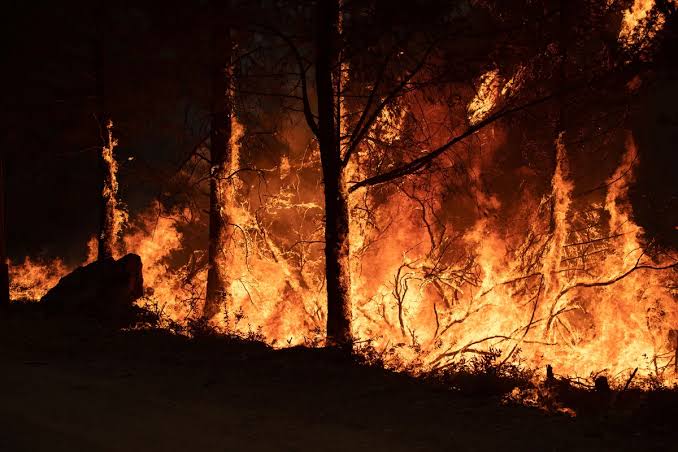
In 2022, the UK Fire and Rescue Services attended over 44,000 wildfires a 72% jump from the previous year. The largest wildfire ever recorded on English soil scorched 1,500 hectares of the North York Moors in 2023. As climate change makes British summers hotter and drier, these numbers are likely to grow. But a growing coalition of ecologists and fire experts argue that one of the most effective tools against this rising threat isn’t more fire engines or new technology it’s bringing back the natural processes that once kept these landscapes resilient.
Rewilding the large-scale restoration of ecosystems through reintroduced species and natural processes is often discussed in terms of biodiversity or carbon storage. But its role in wildfire prevention is less well-known, though the evidence is compelling. By rewetting drained peatlands, reintroducing grazing animals, and allowing vegetation to grow into a mosaic of habitats, rewilding can turn Britain’s flammable moorlands into fire-resistant landscapes. This isn’t just theory: early results from projects like Knepp Estate and Wild Ennerdale show measurable reductions in fuel loads and fire risk.
This article explores the science behind rewilding’s fire-fighting potential, the practical challenges, and why current UK policy has yet to fully embrace this nature-based solution.
Why Britain Is Burning
Wildfires have been part of the British landscape for millennia, but their frequency and intensity are now unprecedented. The 44,000 fires in 2022 came after a summer that peaked at 40.3°C—the UK’s hottest ever recorded. The 2023 North York Moors fire burned for days, sending smoke plumes visible from space.
The root causes are twofold. Climate change delivers the hot, dry conditions that turn vegetation into kindling. But centuries of land management have primed the landscape to burn. Vast areas of upland Britain are covered in continuous, dense stands of bracken, gorse, and heather—species that are highly flammable and spread fire rapidly. Many peatlands, drained for agriculture or forestry, have become dry, crumbling tinder that can smoulder underground for weeks.
This is where rewilding enters the picture. It’s not about letting nature run wild in a passive sense; it’s an active restoration of the processes that create diverse, resilient ecosystems.
The Fire-Fighting Mechanisms of Rewilding
Rewetting the Bogs
Drained peatlands are a fire hazard of the first order. When the water table drops, the exposed peat dries out and becomes combustible. Once ignited, peat fires can burn deep into the ground, difficult to extinguish and releasing huge amounts of carbon. Rewetting these bogs—by blocking drainage ditches and letting vegetation regrow—keeps the peat saturated. Wet peat simply doesn’t burn.
Projects like the Great Fen in Cambridgeshire have demonstrated the dual benefits: restored wetlands support rare wildlife and act as natural firebreaks. A wet bog is a barrier fire cannot cross.
Grazing as Fuel Management
Large herbivores—cattle, ponies, pigs, and beavers—are nature’s lawnmowers. By grazing on grasses, shrubs, and saplings, they reduce the total amount of flammable vegetation. More importantly, their movement creates a patchwork of short grass, bare ground, and scattered scrub. This mosaic breaks up the continuous fuel layer that allows fire to spread.
At Wild Ennerdale in the Lake District, cattle grazing has visibly reduced the dominance of bracken, a plant that can grow waist-high and burns like paper. The result is a more open, varied landscape that is less prone to large-scale fires.
Woodland as a Natural Firebreak
Conventional thinking might suggest that trees add fuel to a fire. But the type of woodland matters. Rewilding encourages the growth of broadleaf species like oak and birch, which are less flammable than conifers and, when mature, create a shaded, moist understory that resists ignition. Woodland also breaks up the wind, slowing fire spread.
Research from Mediterranean ecosystems—where wildfires are a regular occurrence—shows that mosaic landscapes with a mix of woodland, scrub, and grassland experience less intense fires than uniform, dense vegetation. This principle applies directly to Britain.
Beavers: The Engineers of Wetness
Beavers are perhaps the ultimate rewilding fire-fighters. Their dams create ponds, wet meadows, and raised water tables that extend far beyond the immediate dam. In dry periods, these wetlands remain green and moist, serving as natural firebreaks. While beavers are only recently returning to Britain, their impact on water retention is already measurable in pilot sites.
Evidence from the Ground
The Knepp Estate in Sussex, a pioneer of rewilding, offers a concrete example. Its scrubland and grassland, grazed by free-roaming cattle, pigs, and deer, have proven less flammable than the surrounding arable land. In the dry summer of 2022, while neighboring fields turned brown and brittle, Knepp’s varied vegetation stayed greener and more resilient.
In the Cairngorms Connect project in Scotland, a 600-square-kilometer landscape is being restored through natural regeneration and grazing. Early monitoring shows a more heterogeneous vegetation structure, which fire ecologists predict will slow any future blaze. Though UK-specific data is still limited, the mechanism is well-established: less continuous fuel, more moisture, and more barriers equal less fire spread.
The Skeptics and the Real Challenges
Not everyone is convinced. Some farmers and grouse moor managers argue that rewilding simply turns productive land into overgrown scrub that could burn. They point to the risk of dense, unmanaged woodland. This concern is not unfounded—if rewilding is done poorly, with conifers or unchecked undergrowth, it could exacerbate fire risk.
However, rewilding is not about abandoning land. It’s about actively restoring natural processes. That includes managing grazing levels, planting fire-resistant species, and creating firebreaks. The key is that these measures work with nature, not against it, and they are designed for long-term resilience.
Another challenge is cultural and economic. Rewilding often faces opposition from rural communities who rely on traditional land uses like sheep farming or grouse shooting. These tensions are real and must be addressed through inclusive planning. But the fire risk argument against rewilding is often based on a misconception—that more vegetation means more fuel. In reality, a diverse, moist, and grazed landscape is far less fire-prone than a uniform, dry moor.
Policy Gaps and Next Steps
The UK government has recognized the wildfire threat. The 2023 Wildfire Strategy for England focuses on prevention and improved response. Yet it barely mentions rewilding as a tool. Meanwhile, peatland restoration grants and the England Trees Action Plan provide funding for rewetting and tree planting, but these are not explicitly linked to wildfire risk.
Fire and Rescue Services are beginning to work with land managers on firebreak creation and controlled burns, but a national strategy that integrates rewilding into wildfire prevention remains absent. Pilot projects like Wild Ennerdale and the Great Fen could serve as templates, but they need to be scaled up and supported by clear policy.
The evidence suggests that rewilding is not a silver bullet—it cannot stop arson or careless campers. But it can reduce the severity and spread of fires once they start. By restoring wetlands, reintroducing grazers, and diversifying vegetation, Britain can build landscapes that are not only richer in wildlife but also safer for people and property.
As climate change intensifies, Britain faces a future with more wildfires. Rewilding offers a proactive, nature-based solution that addresses the root causes of fire risk: excessive fuel, drained wetlands, and monotonous vegetation. The science is clear, and early projects show promise. But to make a real difference, rewilding must be integrated into national wildfire strategy, supported by funding, and implemented in partnership with local communities. The choice is stark: continue to fight fires with ever-more resources, or restore the natural resilience that once protected these lands. Rewilding won’t prevent every fire, but it could make the difference between a manageable blaze and a catastrophe.
Summary
- Britain faces a growing wildfire threat, with 44,000 fires in 2022 and the largest-ever recorded on land in 2023.
- Rewilding reduces fire risk by rewetting peatlands, grazing to cut fuel loads, creating woodland mosaics, and using beavers to raise water tables.
- Evidence from projects like Knepp Estate and Wild Ennerdale shows reduced flammability and fire spread.
- Challenges include managing woodland regrowth and addressing rural opposition, but these are surmountable with good planning.
- UK policy currently overlooks rewilding as a wildfire prevention tool, but integrating it could yield significant benefits.
FAQ
Q: Does rewilding actually make land more fire-prone by adding trees?
A: No, if done correctly. Rewilding promotes broadleaf woodland, which is less flammable than conifers, and the mosaic of habitats it creates breaks up continuous fuel. However, poorly managed rewilding with dense conifers could increase risk, so planning and management are key.
Q: How does grazing help prevent wildfires?
A: Large herbivores like cattle and ponies eat grasses and shrubs, reducing the amount of flammable vegetation. They also create a patchy landscape with bare ground and short grass that acts as a natural firebreak.
Q: Can rewilding stop all wildfires?
A: No, it cannot prevent fires caused by arson or accidents. But it can reduce the intensity and spread of fires, making them easier to control and less damaging.
Q: Are there any downsides to rewilding for fire risk?
A: If rewilding leads to dense, unmanaged woodland or overgrown scrub, it could increase fuel load. This is why rewilding requires active management, including controlled grazing and creating firebreaks.
Q: What is the current UK policy on rewilding and wildfires?
A: The UK has peatland restoration grants and a Wildfire Strategy, but there is no national policy linking rewilding to wildfire prevention. Integrating these approaches could improve resilience.