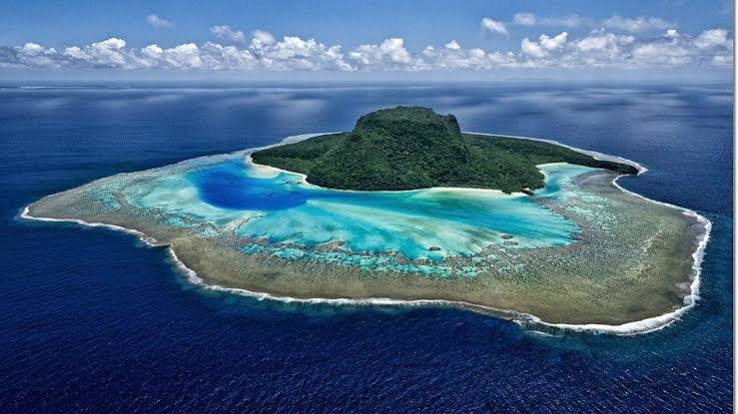
Imagine living on an island so remote that the nearest neighbor is a two-day boat ride away, and the mail arrives once a month—if you’re lucky. For the residents of Tristan da Cunha, Pitcairn, and a handful of other far-flung outposts, this isn’t a fantasy; it’s everyday life. These are places where the internet is a recent luxury, where medical emergencies require a six-day voyage, and where the population can fit into a single school gym.
But what does it truly mean to live on the edge of civilization? Isolation isn’t just about distance on a map—it’s about accessibility, self-sufficiency, and the resilience of communities that have chosen (or been forced) to call these remote rocks home. From the descendants of mutineers to research teams braving sub-Antarctic storms, these islands offer a unique lens into human adaptation and the meaning of community.
What Makes an Island Truly Isolated?
When we think of remote islands, places like Hawaii or the Maldives might come to mind. But true isolation is a combination of geographic distance and limited transport links. Hawaii, for instance, is far from any continent, yet it’s a major air hub with daily flights. In contrast, Tristan da Cunha—a British Overseas Territory in the South Atlantic—is a six-to-seven-day boat journey from Cape Town, South Africa, and has no airport at all. That’s the kind of isolation that shapes every aspect of life.
Geographers often measure isolation by distance to the nearest inhabited land, nearest continent, and nearest major hub. By these metrics, Tristan da Cunha holds the Guinness World Record for the most remote inhabited island on Earth. Its nearest neighbor, Saint Helena, is 2,400 kilometers away, and the nearest continent (Africa) is 2,800 kilometers distant. With a population of around 240, the island’s only settlement, Edinburgh of the Seven Seas, is a speck of human life in a vast ocean.
Tristan da Cunha: The Most Remote Inhabited Island
Tristan da Cunha’s story begins in 1816, when the British garrison was stationed there to prevent the French from using it as a base to rescue Napoleon from his exile on Saint Helena. When the garrison left, a few members stayed, joined by shipwrecked sailors and a handful of women from Saint Helena. Today, the island’s population is descended from a few founding families—surnames like Glass, Swain, Green, Rogers, Hagan, Lavarello, and Repetto—making it one of the most genetically studied populations in the world. This “founder effect” has led to high rates of certain hereditary conditions, including asthma.
Life on Tristan is a delicate balance of self-sufficiency and external support. The economy revolves around crayfish (rock lobster) fishing, small-scale farming, and the sale of postage stamps—a surprisingly lucrative niche for remote islands. Tourism is limited, with only a handful of cruise ships and expedition vessels stopping by each year. There’s no airport, and proposals to build one have been repeatedly rejected due to cost and environmental concerns. For medical emergencies, residents must endure a six-day boat trip to Cape Town.
Pitcairn Island: Descendants of the Bounty Mutineers
Pitcairn Island, in the South Pacific, is the only inhabited island of the Pitcairn group and is famous as the final refuge of the HMS Bounty mutineers. In 1790, the mutineers and their Tahitian companions settled here, and their descendants still live on the island today. The community was rediscovered in 1808, and in 1856, the entire population—then around 193 people—was relocated to Norfolk Island. Many returned within a few years, and today the population has dwindled to just 50 residents, down from a peak of 233 in 1937.
Adamstown, the only settlement, is accessible only by a 32-hour boat ride from Mangareva in French Polynesia. There’s no airport, and the supply ship MV Silver Supporter arrives every three months from New Zealand via Mangareva. The economy is a mix of honey production, handicrafts, postage stamps, and limited tourism from cruise ships. In 2023, Starlink satellite internet was installed, finally giving residents reliable internet access—a lifeline for education, healthcare, and connection to the outside world.
Easter Island: A Cautionary Tale of Isolation
Easter Island, or Rapa Nui, is another Pacific outlier, famous for its monumental moai statues. Settled by Polynesians around 700–1100 CE, the island experienced an ecological collapse—deforestation and a population crash—long before European contact in 1722. Today, with a population of about 7,750, it’s far more connected than Tristan or Pitcairn, with regular flights to Chile. But its history serves as a stark reminder of the fragility of isolated communities.
The Uninhabited Extremes: Bouvet and Kerguelen
Not all isolated islands are inhabited. Bouvet Island, a Norwegian dependency in the South Atlantic, is the most remote uninhabited island on Earth, lying 1,600 kilometers from Antarctica. It’s a nature reserve with no permanent residents. Similarly, the Kerguelen Islands, part of the French Southern and Antarctic Lands, are known as the “Desolation Islands.” Located about 3,300 kilometers from Madagascar, they host only a rotating staff of around 45 researchers at a scientific station.
Saint Helena: From Exile to Airport
Saint Helena, another British Overseas Territory, is famous as Napoleon’s exile site. For centuries, it was accessible only by sea, but in 2016, an airport was opened—a controversial project that faced technical challenges, including wind shear. Now, weekly flights from Johannesburg connect the island to the world, transforming its isolation. With a population of about 4,500, Saint Helena is a prime example of how infrastructure can redefine remoteness.
Svalbard: High-Latitude Isolation
Svalbard, in the Arctic Ocean, is not geographically isolated—it’s only about 600 kilometers from mainland Norway—but its extreme high latitude creates a different kind of isolation. With a population of around 2,900, it’s a hub for research and coal mining, but the harsh climate and polar night make it feel worlds apart.
The Common Threads of Isolation
What unites these islands is a shared experience of resilience and adaptation. Residents of Tristan and Pitcairn have developed tight-knit communities where everyone knows everyone, and self-sufficiency is a necessity. They’ve also faced demographic challenges: Pitcairn’s population is aging, and Tristan’s peaked at around 300 in the 1970s. Yet, despite the hardships, many residents choose to stay, drawn by a sense of belonging and a way of life that’s increasingly rare.
Modern technology is slowly bridging the gap. Starlink has reached Pitcairn, and Saint Helena has its airport. But for Tristan da Cunha, the future remains uncertain—will it embrace change, or preserve its isolation? As the world becomes more connected, these islands offer a glimpse into a different way of living, one where community and place matter more than convenience.
The world’s most isolated islands are more than just dots on a map—they are living experiments in human resilience. Whether it’s the descendants of mutineers on Pitcairn, the British garrison’s legacy on Tristan da Cunha, or the research teams braving the Kerguelen’s desolation, these communities show us that isolation can be both a challenge and a treasure. As technology and infrastructure slowly reach these far-flung outposts, the question remains: how much connection is enough, and what do we lose when we gain it?
Summary
- True isolation combines geographic distance with limited transport links; Tristan da Cunha is the most remote inhabited island, with no airport and a 6-day boat trip to South Africa.
- Pitcairn Island, home to descendants of the HMS Bounty mutineers, has a population of just 50 and relies on a supply ship that arrives every 3 months.
- Easter Island’s history of ecological collapse serves as a cautionary tale for isolated communities.
- Uninhabited islands like Bouvet and Kerguelen host only research stations, while Saint Helena’s new airport has transformed its accessibility.
- Modern technology, such as Starlink, is slowly connecting these communities, but the balance between isolation and connection remains delicate.
FAQ
Q: What is the most remote inhabited island on Earth?
A: Tristan da Cunha, a British Overseas Territory in the South Atlantic, holds the Guinness World Record. Its nearest inhabited neighbor, Saint Helena, is 2,400 kilometers away, and it has no airport.
Q: How do residents of Pitcairn Island get supplies?
A: The supply ship MV Silver Supporter arrives every three months from New Zealand via Mangareva, bringing food, fuel, and other essentials. The journey from Mangareva takes about 32 hours.
Q: Why did the population of Pitcairn decline?
A: The population peaked at 233 in 1937 but has fallen to around 50 today due to emigration, an aging demographic, and limited economic opportunities.
Q: Can tourists visit these isolated islands?
A: Yes, but it’s challenging. Tristan da Cunha and Pitcairn receive limited cruise ship visits, and visitors must obtain permission. Saint Helena has an airport with weekly flights from Johannesburg, making it more accessible.
Q: What is the founder effect, and why is it relevant to Tristan da Cunha?
A: The founder effect occurs when a small group establishes a new population, leading to reduced genetic diversity. Tristan da Cunha’s population descends from a few founding families, resulting in high rates of certain hereditary conditions like asthma.