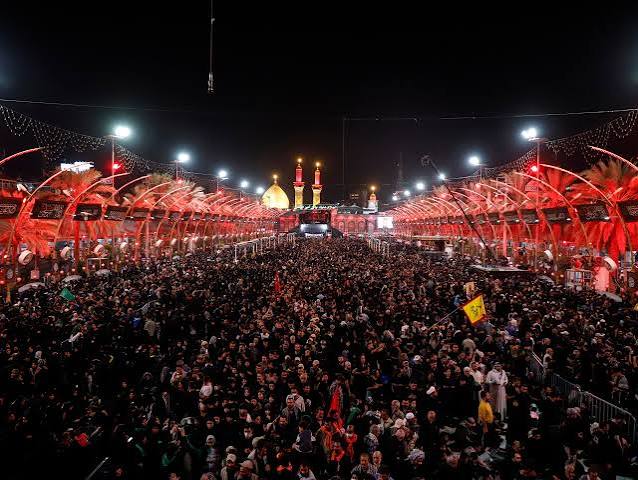
Every year, millions of Shiite Muslims converge on the Iraqi city of Karbala for Arbaeen, a pilgrimage of mourning that has become the largest annual gathering on Earth. The event, which marks the 40th day after the martyrdom of Imam Husayn, the grandson of the Prophet Muhammad, is a profound expression of faith, identity, and solidarity. But Arbaeen is more than a religious ritual—it is a testament to resilience, a geopolitical symbol, and a humanitarian marvel that defies the region’s turmoil.
For the uninitiated, the scale is staggering: over 20 million pilgrims in recent years, many walking for days on foot, sustained by volunteers offering free food, water, and shelter. To understand Arbaeen is to understand the heart of Shiite Islam and the enduring legacy of a 1,400-year-old tragedy that continues to shape the Middle East.
The Historical Roots: Karbala and the Martyrdom of Husayn
The story of Arbaeen begins in 680 CE, in the desert plains of Karbala, about 100 kilometers southwest of Baghdad. Husayn ibn Ali, the grandson of the Prophet Muhammad, refused to pledge allegiance to Yazid, the Umayyad caliph, whom he considered tyrannical and illegitimate. With a small band of family and followers, Husayn was intercepted by Yazid’s army and besieged for days without water. On the 10th of Muharram—known as Ashura—Husayn and roughly 72 male companions were massacred. The surviving women and children were taken captive and marched to Damascus.
For Shiite Muslims, this was not merely a political defeat but a cosmic struggle between justice and injustice, truth and falsehood. Husayn’s sacrifice is seen as a voluntary act to save Islam from corruption. The 40th day after a death holds special significance in Islamic tradition as a period of intense mourning. According to Shiite belief, the first Arbaeen was observed by Husayn’s sister Zaynab and his son Ali Zayn al-Abidin, who returned to the site of the massacre on their way back from captivity. This act of remembrance has been reenacted ever since.
The Modern Pilgrimage: A Walk of Faith and Endurance
Today, Arbaeen culminates at the shrine of Imam Husayn in Karbala, with pilgrims also visiting the nearby shrine of his half-brother, Abbas ibn Ali. The most iconic aspect is the walk, or mashaya, from Najaf to Karbala—a distance of 80 to 90 kilometers that takes two to three days on foot. Many pilgrims go further, walking from Basra, Baghdad, or even from Iran, covering hundreds of kilometers. The journey is arduous, but it is embraced as a spiritual purification.
Along the route, volunteers operate mawakib—service stations that offer free food, water, rest, and even medical care. This selfless charity, known as khidma, is a hallmark of Arbaeen. Pilgrims of all ages and backgrounds walk together, chanting elegies (latmiyyat) and mourning in a collective expression of grief and love. While some engage in self-flagellation, many clerics now discourage this practice, emphasizing instead the spiritual and social dimensions of the pilgrimage.
The scale is staggering. Official Iraqi figures in recent years have ranged from 15 to 25 million participants, with over 21 million reported in 2023. This makes Arbaeen the largest annual gathering in the world, surpassing the Hajj in Mecca, which draws around 2 million. The pilgrimage peaks on Arbaeen day itself, but the surrounding period sees a steady influx of pilgrims for up to two weeks beforehand.
A History of Suppression and Revival
For centuries, public mourning for Husayn was often restricted or banned under Sunni-dominated empires, from the Umayyads to the Ottomans. The pilgrimage was dangerous and sometimes impossible. Under Saddam Hussein’s Ba’athist regime, Shiite religious practices were severely curtailed, and Arbaeen was effectively suppressed. It was only after Saddam’s fall in 2003 that the pilgrimage could flourish openly.
Since then, Arbaeen has grown exponentially, despite regional instability. In 2019, an estimated 20 million people participated, and the event has continued to draw massive crowds even in the face of threats from extremist groups like ISIS, which has targeted pilgrims in the past. The revival of Arbaeen is a powerful symbol of the political and demographic ascendancy of Iraq’s Shiite majority.
The Geopolitical and Economic Dimensions
Arbaeen is not just a religious event; it is a geopolitical and economic force. Iran, a majority-Shiite state, heavily facilitates the pilgrimage, with many Iranian pilgrims crossing the border on foot. Iranian state media frames Arbaeen as a symbol of “Islamic unity” and resistance against Western imperialism and Zionism. This has made the pilgrimage a stage for regional power dynamics, with Iran projecting influence through its support of the event.
For Iraq, Arbaeen is a massive economic driver, generating revenue for transport, hospitality, and local businesses. It also demonstrates the political strength of Iraq’s Shiite community. However, the event can also exacerbate sectarian tensions. Some Sunni extremists view the pilgrimage as heretical and have attacked it, while some Shiite hardliners use it to assert dominance. Yet, many Sunni Iraqis participate in the service stations or attend as a gesture of national unity, highlighting Arbaeen’s potential to bridge divides.
The Humanitarian and Social Impact
Beyond its religious and political significance, Arbaeen is a humanitarian marvel. The volunteers who run the mawakib embody a spirit of selfless service, providing for millions of pilgrims without expectation of reward. This collective effort is often cited as a model of social solidarity, transcending sectarian and national boundaries. For many participants, the walk is a transformative experience, fostering a sense of community and shared purpose.
Arbaeen also serves as a platform for social and charitable activities, with volunteers distributing food, water, and other necessities. The event has become a symbol of resilience, showing that even in a region plagued by conflict, millions can come together in peace and devotion.
Arbaeen is far more than a religious ritual; it is a profound expression of faith, a testament to historical memory, and a living tradition that continues to shape the identity of millions. As the world’s largest annual gathering, it offers a unique window into the heart of Shiite Islam and the enduring legacy of Karbala. Whether viewed through a devotional, political, or humanitarian lens, Arbaeen stands as a powerful reminder of the human capacity for sacrifice, solidarity, and hope.
Summary
- Arbaeen marks the 40th day after the martyrdom of Imam Husayn at the Battle of Karbala in 680 CE, and is observed on the 20th of Safar in the Islamic lunar calendar.
- The pilgrimage culminates at the shrine of Imam Husayn in Karbala, Iraq, with many pilgrims walking from Najaf (80-90 km) or even from Iran, covering hundreds of kilometers.
- It is the largest annual gathering in the world, with over 20 million participants in recent years, surpassing the Hajj.
- The event was suppressed for centuries under various Sunni-dominated regimes and Saddam Hussein, but has flourished since 2003, becoming a symbol of Shiite political ascendancy.
- Arbaeen has significant geopolitical, economic, and humanitarian dimensions, including Iranian influence, economic benefits for Iraq, and the volunteer-run service stations (mawakib) that provide free food and lodging.
FAQ
Q: What is the significance of the number 40 in Arbaeen?
A: In Islamic tradition, the 40th day after a death is a period of intense mourning and remembrance. For Shiite Muslims, Arbaeen marks the 40th day after the martyrdom of Imam Husayn, and it is believed that the first Arbaeen was observed by his surviving family members, who returned to Karbala on their way back from captivity.
Q: How long does the Arbaeen pilgrimage last?
A: The pilgrimage peaks on Arbaeen day itself, but pilgrims begin arriving up to two weeks beforehand. Many undertake the walk from Najaf to Karbala, which takes 2-3 days on foot, while others walk from farther locations, extending the journey.
Q: Is Arbaeen only for Shiite Muslims?
A: While Arbaeen is primarily a Shiite observance, people from other sects and even other religions sometimes participate. Many Sunni Iraqis volunteer at the service stations or attend as a gesture of national unity, and the event is open to all.
Q: Why is Arbaeen considered the largest gathering in the world?
A: With official estimates ranging from 15 to 25 million participants in recent years, Arbaeen surpasses the Hajj, which draws around 2 million pilgrims. The sheer scale of the walk and the number of attendees make it the largest annual gathering globally.
Q: What are the mawakib?
A: Mawakib are volunteer-run service stations along the pilgrimage routes that offer free food, water, lodging, and medical care to pilgrims. They are a manifestation of selfless charity (khidma) and are a defining feature of the Arbaeen experience.