Tag: regeneration

  • The Axolotl’s Secret: How a Salamander Refuses to Grow Up and Regrows Its Limbs

    The Axolotl’s Secret: How a Salamander Refuses to Grow Up and Regrows Its Limbs

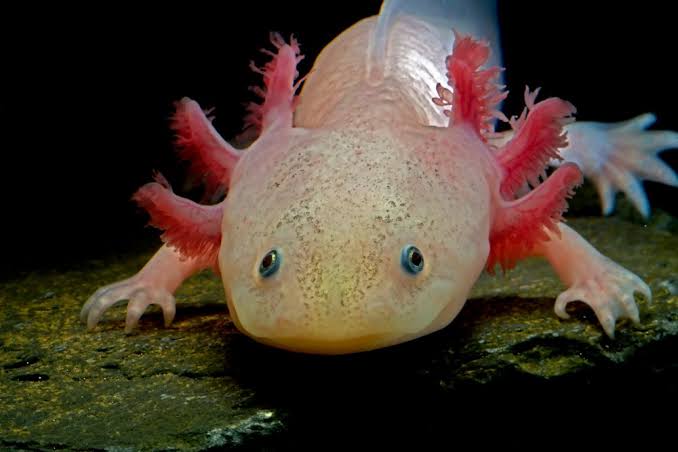
    Imagine a creature that keeps its baby features for its entire life—external gills like feathery crowns, a tadpole-like tail fin, and a permanent, slightly goofy smile. That’s the axolotl (Ambystoma mexicanum), a salamander that never really grows up. But this ‘Peter Pan of the pond’ isn’t just cute; it holds one of the most astonishing abilities in the animal kingdom: it can regenerate entire limbs, parts of its heart, and even bits of its brain, without a trace of scarring.

    Native to the ancient lake complex of Xochimilco near Mexico City, axolotls are now critically endangered in the wild, with fewer than 1,000 individuals believed to remain. Yet they thrive in laboratories worldwide, where scientists have studied them for over a century. From Aztec mythology to cutting-edge genetics, the axolotl is a creature of paradox: a living fossil of evolutionary adaptation, a medical marvel, and a cultural icon. Let’s explore what makes this salamander so special and what it might teach us about healing, aging, and even cancer.

    The Salamander That Refuses to Grow Up

    Most salamanders start life in water as larvae with gills, then undergo metamorphosis—losing their gills, developing lungs, and moving onto land. The axolotl, however, hits the pause button. It reaches sexual maturity while still in its larval form, a condition called paedomorphosis or neoteny. This means adult axolotls keep their feathery external gills, a fin-like tail, and an entirely aquatic lifestyle.

    Why would an animal do this? It’s an evolutionary trade-off. In the stable, permanent waters of ancient lakes Xochimilco and Chalco, food was abundant and there was little pressure to leave the water. Metamorphosing into a land-dwelling salamander would be risky and unnecessary. So, the axolotl’s ancestors simply stopped completing the life cycle. This isn’t unique—some related species, like the tiger salamander, can be neotenic or metamorphose depending on their environment—but the axolotl is the most extreme and consistent example.

    Interestingly, axolotls can be artificially forced to metamorphose by exposing them to thyroid hormones like thyroxine or iodine. In 1864, Auguste Duméril in Paris accidentally induced metamorphosis in some axolotls, producing land-dwelling forms. However, this process is stressful and shortens their lifespan, so it’s rarely done outside of specific experiments. In the wild, natural metamorphosis almost never occurs.

    The Regeneration Marvel

    If the axolotl’s neoteny is fascinating, its regenerative powers are nothing short of miraculous. An axolotl can regrow an entire limb after amputation—complete with bones, muscles, nerves, and skin—in about 40 to 50 days. And it can do this repeatedly, dozens of times, without any loss of function or scarring. The wound heals perfectly, and a new limb grows back as if nothing happened.

    But limbs are just the beginning. Axolotls can also regenerate their tail, spinal cord, heart tissue, gills, skin, and even parts of their brain. Scientists have implanted electrodes into axolotl brains and observed that the tissue regenerates around them, restoring function. This remarkable ability is due to special cells at the wound site that dedifferentiate—essentially reverting to a stem-cell-like state—and then re-differentiate into the needed tissues. The process is tightly regulated, and the axolotl somehow knows exactly what to regrow and when to stop.

    Another astonishing feature is their immune tolerance. Axolotls can accept tissue grafts from other axolotls without rejection, a trait that has puzzled immunologists for decades. This tolerance likely contributes to their regenerative success, as inflammation and scarring are minimized.

    A Giant Genome Holds Secrets

    The axolotl’s genome is enormous—about 32 billion base pairs, roughly 10 times the size of the human genome. This massive genome made sequencing a challenge, but in 2018, scientists published the full sequence in the journal Nature. With this genetic blueprint, researchers are now identifying the key genes responsible for regeneration. One notable finding is that the axolotl has a version of the p53 gene that may contribute to their low cancer rates. Despite their incredible cell proliferation during regeneration, axolotls rarely develop tumors, and studying this could inform cancer biology.

    The genome also reveals insights into their negligible aging. Axolotls maintain their telomere length throughout life, which is unusual—most animals’ telomeres shorten as they age. This may explain why they show no signs of biological aging, a phenomenon called negligible senescence. They seem to stay ‘young’ in many ways, both in appearance and at the cellular level.

    From Aztec God to Research Icon

    The axolotl’s name comes from Xolotl, the Aztec god of fire, lightning, and deformity. According to mythology, Xolotl transformed into a salamander to avoid being sacrificed, and the axolotl is his earthly form—a shape-shifter that never fully transforms. This cultural heritage is a reminder of the creature’s deep roots in Mexican history.

    Western science first encountered the axolotl in the early 1800s, thanks to Alexander von Humboldt. By the 1860s, they were being studied in Paris, and in 1957, the Ambystoma Genetic Stock Center was established at the University of Kentucky, which still maintains the oldest continuous research colony. Since then, axolotls have been a model organism for developmental biology, embryology, and regeneration research.

    Today, axolotls are a pop culture phenomenon—appearing in video games like Minecraft and Pokémon (think Wooper and Mudkip), and memes celebrating their perpetual smile. They’ve even graced Mexico’s 50-peso note, cementing their status as a national icon.

    The Paradox of Conservation

    Despite their abundance in laboratories, axolotls are critically endangered in the wild. The lakes they inhabited have largely disappeared: Lake Chalco was drained, and only the canals of Xochimilco remain. Urban expansion, water pollution, and the introduction of predatory fish like tilapia and carp have decimated their numbers. Recent surveys estimate fewer than 1,000 individuals remain, with some counts as low as 50–100.

    This creates a paradox: a species that thrives in captivity while vanishing in its natural habitat. Conservation efforts are underway, focusing on restoring the chinampas—traditional floating gardens that provide habitat—and involving local farmers in stewardship. Xochimilco is a UNESCO World Heritage Site, and saving the axolotl is tied to preserving these ancient agricultural practices.

    The axolotl’s story is a powerful reminder that conservation isn’t just about saving a species; it’s about preserving ecosystems and cultural heritage. And for scientists, the axolotl is a living library of regenerative secrets that could one day transform medicine.

    What Axolotls Could Teach Us

    The axolotl’s abilities have profound implications for human health. If we can unlock the mechanisms behind limb regeneration, we might develop therapies for spinal cord injuries, heart damage, or even organ repair. The axolotl’s cancer resistance could offer clues for preventing or treating cancer. Its negligible aging might inform longevity research.

    But these are long-term goals. For now, the axolotl remains a fascinating creature of wonder—a smiling salamander that never grows up and can regrow its body parts on demand. Its secret life is a testament to the power of evolution and the untapped potential hidden in nature’s oddities.

    The axolotl is more than a cute face; it’s a biological marvel that defies conventional rules. By refusing to grow up, it has unlocked a suite of abilities—regeneration, cancer resistance, and apparent agelessness—that scientists are only beginning to understand. As we continue to study this remarkable salamander, we may unlock secrets that could change the future of medicine. But we must also remember that its wild home is disappearing. The axolotl’s survival, both in nature and in our labs, is intertwined with our own curiosity and responsibility.

    Summary

    • Axolotls are neotenic salamanders that retain juvenile features into adulthood, never naturally undergoing metamorphosis.
    • They can regenerate entire limbs, tail, spinal cord, heart tissue, and parts of the brain without scarring.
    • Their genome is 10 times larger than humans, and sequencing in 2018 revealed genes linked to regeneration and low cancer rates.
    • Axolotls show negligible aging and are resistant to cancer, offering insights into regenerative medicine and aging.
    • Critically endangered in the wild (fewer than 1,000 individuals), but common in labs; conservation efforts focus on habitat restoration in Xochimilco.

    FAQ

    Q: Can axolotls regrow their limbs more than once?
    A: Yes, axolotls can regenerate the same limb repeatedly, dozens of times, without any loss of function or scarring.

    Q: Why don’t axolotls grow up like other salamanders?
    A: Axolotls have evolved to retain their larval features into adulthood due to a stable aquatic environment with abundant food, making metamorphosis unnecessary. This is called neoteny or paedomorphosis.

    Q: Are axolotls endangered?
    A: Yes, axolotls are critically endangered in the wild, with fewer than 1,000 individuals estimated in Xochimilco, Mexico City. However, they are common in captivity and laboratories worldwide.

    Q: Can axolotl regeneration help humans?
    A: Scientists hope that understanding axolotl regeneration could lead to breakthroughs in human medicine, such as limb regrowth, spinal cord repair, and cardiac regeneration, though these are still long-term goals.

    Q: What does the name ‘axolotl’ mean?
    A: The name comes from the Aztec god Xolotl, who transformed into a salamander. ‘Axolotl’ is often translated as ‘water monster’ or ‘water dog’ in Nahuatl.
  • The Immortal Jellyfish: How Turritopsis dohrnii Resets Its Life Cycle and What That Means for Biology

    The Immortal Jellyfish: How Turritopsis dohrnii Resets Its Life Cycle and What That Means for Biology

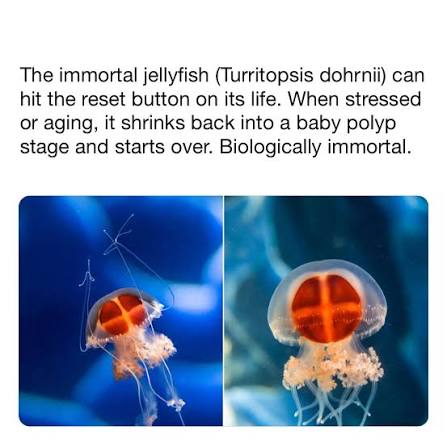
    In the late 1980s, a German marine biology student named Christian Sommer was watching a batch of jellyfish in his lab. Most of them were doing what jellyfish do: swimming, eating, and eventually dying after reproducing. But one species, barely the size of a pinky nail, did something no one expected. Instead of dying, it shrank back into its juvenile polyp stage, essentially reversing its development. That species, now known as Turritopsis dohrnii, has been dubbed the ‘immortal jellyfish’—and its trick has fascinated biologists ever since.

    This tiny creature, about 4.5 millimeters across, can cheat death in a way that no other multi-celled animal can. It doesn’t just slow aging; it turns back the clock entirely. When stressed, it transforms its mature cells into a younger state, rebuilding its body from scratch. This ability, called transdifferentiation, has profound implications for our understanding of aging, stem cells, and even regenerative medicine.

    In this article, we’ll explore how the immortal jellyfish pulls off this remarkable feat, why it matters beyond the realm of jellyfish, and what scientists hope to learn from it.

    A Life Cycle That Goes in Reverse

    Most jellyfish follow a predictable script. A fertilized egg becomes a planula larva, which settles on the seafloor and grows into a polyp—a sessile, tube-like creature that buds off tiny medusae. These medusae grow into the familiar bell-shaped jellyfish that swim freely, reproduce, and then die within weeks or months.

    Turritopsis dohrnii follows this script—until it doesn’t. When the medusa faces stress, whether it’s starvation, physical injury, or a sudden change in water temperature or salinity, it doesn’t just die. Instead, it sinks to the bottom, its tentacles and bell begin to degrade, and its cells reorganize into a cyst-like blob. Within days, that blob develops into a new polyp, which can then bud off fresh medusae. This isn’t a one-time trick; the jellyfish can cycle through this process repeatedly, effectively resetting its biological clock indefinitely.

    This reversal is not the same as simply living a long time. Some animals, like certain tortoises and whales, exhibit ‘negligible senescence’—they age so slowly that they seem to defy time. But T. dohrnii goes further: it actively reverses its development, turning an adult body back into a juvenile one. It’s as if a butterfly could transform back into a caterpillar and then into a butterfly again, over and over.

    The Cellular Magic: Transdifferentiation

    How does a jellyfish accomplish this feat? The key is a process called transdifferentiation, where a mature, specialized cell transforms directly into a different cell type without going through a stem-cell intermediate.

    In most animals, once a cell becomes a muscle cell or a nerve cell, it stays that way. But in T. dohrnii, cells from the bell, tentacles, and other tissues ‘forget’ their identity and revert to a more flexible state. They then reorganize into the different cell types needed for a polyp.

    This is a stark contrast to how our own bodies repair damage. When we get a cut, our skin cells divide to fill the gap, but they don’t turn into liver cells or brain cells. The jellyfish’s ability to reprogram its cells is a form of cellular plasticity that goes far beyond what we see in humans.

    Transdifferentiation isn’t unique to the immortal jellyfish—salamanders can regenerate limbs, and planarian flatworms can regrow their entire bodies from small fragments. But those animals still age. T. dohrnii is the only known metazoan that can reverse its developmental trajectory entirely.

    The Genetic Blueprint: What the Genome Reveals

    In 2022, a Chinese research team sequenced the genome of T. dohrnii and published their findings in the Proceedings of the National Academy of Sciences. The results offered a molecular glimpse into the jellyfish’s superpower.

    The genome shows expansions in genes related to DNA repair, telomere maintenance, and cell-cycle regulation. Telomeres are the protective caps at the ends of chromosomes; in most animals, they shorten with each cell division, acting as a biological clock. In T. dohrnii, however, telomere length is maintained during reversal, suggesting that the jellyfish has evolved mechanisms to protect its genetic material from the wear and tear of aging.

    The study also highlighted the role of the PI3K/Akt signaling pathway and FoxO transcription factors—molecules that are implicated in longevity and stress resistance across many species, including humans. These pathways help cells respond to stress and may be crucial for triggering the reversal process.

    Why Does It Matter for Human Biology?

    You might be wondering: if a jellyfish can live forever, what does that mean for us? The honest answer is that we can’t simply copy its tricks to make humans immortal. We’re vastly more complex, and our cells are far more specialized. But studying the jellyfish can still teach us valuable lessons about aging and regeneration.

    One area of interest is regenerative medicine. If we can understand how T. dohrnii‘s cells reprogram themselves, we might learn how to coax human cells into repairing damaged tissues without introducing artificial stem cells. For example, instead of growing new heart cells in a lab and transplanting them, we might one day be able to trigger the heart’s own cells to transform and repair the damage.

    Another area is aging research. By studying how the jellyfish avoids senescence, scientists hope to identify molecular pathways that could be targeted to slow aging in humans. The PI3K/Akt and FoxO pathways are already known to influence lifespan in other organisms, and the jellyfish’s genome provides a natural experiment in how those pathways can be finely tuned.

    It’s important to be clear: the immortal jellyfish is not truly immortal. It can still die from predation, disease, or catastrophic environmental changes. Its ‘immortality’ is really an ability to avoid aging and reset its life cycle when conditions are unfavorable. That’s a remarkable adaptation, but it’s not invincibility.

    An Invasive Hitchhiker

    The immortal jellyfish has a second claim to fame: it’s a global traveler. Originally described from the Mediterranean Sea, it has since been found in waters around Japan, Panama, Florida, Spain, and the Atlantic coast of Panama. It’s considered a cosmopolitan species, and it likely spreads by hitchhiking in ship ballast water—the water that ships take on board to maintain stability and then release at their next port.

    This raises ecological concerns. Because T. dohrnii can reset its life cycle, it might be able to survive harsh conditions that would kill other jellyfish, potentially allowing it to establish populations in new environments. While it’s not currently considered a major invasive threat, its resilience makes it a species worth watching.

    The Bigger Picture: What ‘Immortality’ Means in Nature

    The immortal jellyfish challenges our assumptions about aging and death. It shows that for at least one animal, the normal trajectory of life—from birth to maturity to death—is not inevitable. Instead, it’s a flexible process that can be reversed when the environment demands it.

    This has broader implications for evolutionary biology. The ability to revert to a polyp stage is likely an adaptation to unpredictable environments. When conditions are favorable, the jellyfish reproduces sexually, creating genetic diversity. When conditions turn sour, it can revert to its polyp stage, effectively hitting the pause button until things improve. This strategy trades reproductive output for persistence, allowing the jellyfish to wait out bad times.

    Understanding how T. dohrnii manages this balancing act could help scientists think about how organisms adapt to changing environments, including the challenges posed by climate change.

    What’s Next for Research?

    Scientists are still unraveling the jellyfish’s secrets. The 2022 genome sequencing was a major step, but many questions remain. For instance, what exactly triggers the reversal process at the molecular level? How do cells coordinate the complex reorganization required to build a new polyp? And can we apply these insights to human health?

    As research progresses, the immortal jellyfish will likely continue to inspire breakthroughs in regenerative medicine and aging research. It’s a tiny creature with a big lesson: life’s rules are more flexible than we once thought.

    The immortal jellyfish is a reminder that nature often defies our expectations. A creature smaller than a pinky nail has mastered a trick that has eluded every other multi-celled animal: the ability to reset its life cycle and avoid aging. While it won’t grant us immortality, its biology offers a window into the processes of cellular reprogramming and stress resistance that could one day transform medicine. So the next time you hear about a jellyfish that can live forever, remember that the real story is even more fascinating—it’s about the remarkable plasticity of life itself.

    Summary

    • Turritopsis dohrnii, the immortal jellyfish, can revert from its adult medusa stage back to its juvenile polyp stage when stressed.
    • This reversal is made possible by transdifferentiation, where mature cells transform directly into different cell types without a stem-cell intermediate.
    • The jellyfish’s genome shows expansions in genes related to DNA repair, telomere maintenance, and cell-cycle regulation, offering clues to its longevity.
    • While not truly immortal, it avoids senescence and can reset its life cycle indefinitely, but it can still die from predation or disease.
    • Studying this jellyfish may inform regenerative medicine and aging research, particularly through the PI3K/Akt and FoxO pathways.

    FAQ

    Q: Is the immortal jellyfish truly immortal?
    A: No, it can still die from predation, disease, or environmental catastrophes. Its ‘immortality’ refers to its ability to avoid aging and revert to a juvenile stage, effectively resetting its life cycle.

    Q: How does the immortal jellyfish reverse its development?
    A: Through a process called transdifferentiation, where mature cells from the medusa’s body transform directly into different cell types, allowing it to reorganize into a polyp.

    Q: What triggers the reversal?
    A: Stressful conditions such as starvation, physical injury, temperature shock, or changes in salinity can induce the medusa to revert to the polyp stage.

    Q: Can humans benefit from the jellyfish’s ability?
    A: While we can’t become immortal, studying the jellyfish’s cellular reprogramming may inform regenerative medicine, helping us develop ways to repair damaged tissues without artificial stem cells.

    Q: Where can the immortal jellyfish be found?
    A: It lives in temperate and tropical waters worldwide, including the Mediterranean Sea, Japan, Panama, Florida, and Spain, often spreading via ship ballast water.