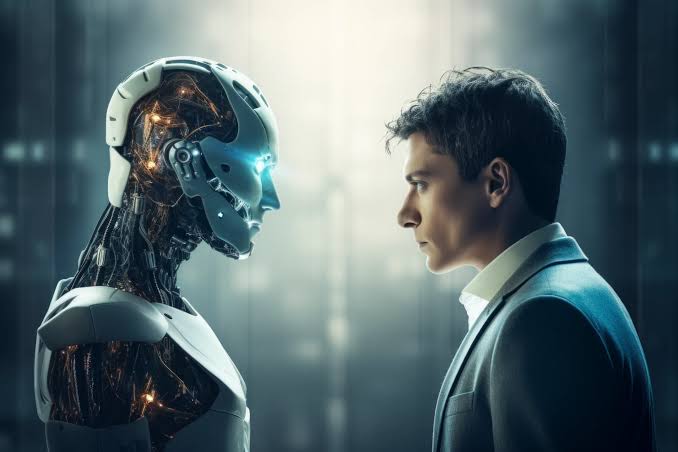
It’s tempting to think that with AI, you can just type a prompt and get a finished app. But the reality is more nuanced: AI tools are excellent at producing prototypes, drafts, and approximations—but they don’t deliver working products. The gap between a demo and a shippable product is where the real engineering work happens, and that’s still your job.
This isn’t a pessimistic view; it’s a clarifying one. Understanding what AI can and cannot do helps you use it effectively, avoid costly mistakes, and focus your energy where it matters most. In this article, we’ll explore why AI output is a starting point, not an endpoint, and what that means for developers, managers, and learners.
The Prototype Isn’t the Product
When you ask an AI to generate code, you get a prototype—a plausible-looking piece of code that might work in a simple scenario. But a product is more than that. It’s reliable, secure, scalable, maintainable, and documented. AI models are trained to produce output that looks competent, but they can’t run, test, or reason about their own output in a production environment. They lack the ability to understand the full context of your system, your users, or your business requirements.
Consider a simple example: you ask an AI to write a function that calculates the total price of items in a shopping cart. The AI might produce a straightforward loop that sums up the prices. It compiles, and it passes a basic test. But what happens when a user applies a discount code? Or when a product is out of stock? Or when the cart contains a mix of currencies? The AI didn’t anticipate these edge cases because it doesn’t know your business rules. That’s where you come in.
The Demo Effect: Why AI Output Looks So Good
AI models are trained on vast amounts of code and text, so they’re great at pattern matching. They’ve seen thousands of similar functions, so they can generate something that looks like a competent solution. This is called the “demo effect”: the output is designed to be plausible, not verified. It’s like a magician’s trick—it looks impressive, but it’s not real magic.
This effect can fool stakeholders. A manager sees a demo of an AI-generated feature and thinks it’s almost done. But the demo is just a thin slice of functionality, often with hardcoded data and no error handling. The real work—integrating with existing systems, handling edge cases, testing for security, and deploying to production—is invisible and still ahead.
The Real Work: Integration, Testing, and Maintenance
The gap between a prototype and a product is where the value of a skilled engineer lies. It’s not just about writing code; it’s about understanding requirements, designing for scale, ensuring security, and maintaining the system over time. AI can help with the initial scaffolding, but it can’t make the countless decisions that go into a production-ready system.
For example, an AI might generate a REST API endpoint that works in isolation. But to make it a product, you need to add authentication, rate limiting, input validation, logging, and monitoring. You need to write tests that cover not just the happy path but also failure modes. You need to consider how it will perform under load and how it will be deployed. These are not tasks that an AI can do for you—they require judgment and experience.
The Skeptic’s View: AI as a Liability
Some developers are more skeptical of AI-generated code. They point out that AI can introduce security vulnerabilities, licensing issues, and technical debt. Because AI models are trained on public code, they may reproduce patterns that are insecure or outdated. And because AI output is often uncommented and unstructured, it can be hard to maintain.
There’s also a risk of over-reliance. Junior developers who lean too heavily on AI may not develop the debugging and system design skills they need. They might not understand why a piece of code works, only that it does—until it breaks in production. This is a real concern for the industry’s future.
The Optimist’s View: A Shrinking Gap
On the other hand, AI tools are improving rapidly. The gap between prototype and product is shrinking. Some argue that the human role is shifting from writing code to specifying intent and reviewing output. That’s still a job, but it’s a different one. In the future, AI might handle more of the pipeline, but for now, it’s a powerful assistant, not a replacement.
What This Means for You
Whether you’re a developer, a manager, or a learner, the key takeaway is this: use AI as a tool, not a crutch. Let it help you explore ideas, generate boilerplate, and speed up your workflow. But don’t expect it to do your job for you. The responsibility for the final product—its quality, security, and reliability—rests with you.
For developers, this means honing your skills in testing, debugging, and system design. For managers, it means setting realistic expectations and budgeting for the productionization work that AI can’t do. For learners, it means using AI to accelerate your learning, but not at the expense of understanding the fundamentals.
AI is a powerful tool, but it doesn’t generate working products—it generates prototypes. The gap between a demo and a shippable product is where the real engineering work happens, and that’s still your job. Embrace AI as an accelerator, but remember that the responsibility for quality, security, and reliability lies with you. The future belongs to those who can use AI effectively while maintaining the judgment and skills that machines can’t replicate.
Summary
- AI tools produce prototypes, not finished products; the human must handle integration, testing, and deployment.
- The “demo effect” makes AI output look competent, but it lacks verification and context.
- The real value of an engineer is in judgment, not just writing code.
- Over-reliance on AI can lead to security issues, technical debt, and skill erosion.
- Use AI as an accelerator, but keep your skills sharp and your expectations realistic.
FAQ
Q: Can AI generate a working product if I give it enough detail?
A: Even with detailed prompts, AI output is still a prototype. It may work in isolation, but it won’t account for all edge cases, integration issues, or production requirements. You’ll need to test, debug, and harden it.
Q: Is it true that AI will replace programmers?
A: No. AI can automate parts of coding, but software engineering involves much more—understanding requirements, designing systems, testing, and maintaining. These tasks require human judgment and are unlikely to be fully automated soon.
Q: How can I avoid “AI slop” in my codebase?
A: Review AI-generated code carefully, enforce coding standards, and require tests. Treat AI output as a draft that needs the same scrutiny as code written by a junior developer.
Q: What skills should I focus on if I use AI tools?
A: Focus on debugging, system design, and critical evaluation. These skills will help you turn prototypes into products and catch issues that AI misses.
Q: Should I use AI for learning to code?
A: Yes, but don’t rely on it exclusively. Use AI to get unstuck, but make sure you understand the underlying concepts. Otherwise, you’ll struggle when the AI isn’t there to help.