Tag: problem solving

  • The Secret Life of Slime Molds: How Brainless Organisms Solve Complex Puzzles


    Imagine a creature with no brain, no nervous system, and no central command yet it can solve mazes, design efficient networks, and even remember where it has been. This isn’t science fiction; it’s the everyday reality of slime molds. These single-celled organisms, which can grow to cover several square feet, are rewriting our understanding of intelligence and problem-solving.

    For over a billion years, slime molds have thrived in damp forests and decaying logs, moving at a leisurely pace of about one centimeter per hour. Despite their simplicity, they exhibit behaviors that seem to require cognition: they can find the shortest path through a maze, optimize networks like a city’s rail system, and make cost-benefit decisions. How do they do it? The answer lies in their remarkable biology and the emergent properties of their distributed, pulsating bodies.

    What Exactly Is a Slime Mold?

    Before we dive into their amazing feats, let’s clarify what slime molds are. They’re not fungi, plants, or animals—they belong to a group called Amoebozoa, making them distant cousins of amoebae. There are roughly 900 to 1,000 known species, but they all share a common lifestyle: they start as individual cells, then come together to form a larger structure that moves and feeds.

    The most famous slime mold is Physarum polycephalum, which translates to “the many-headed slime.” It’s a bright yellow, web-like organism that can grow to cover several square feet. In its plasmodial form, it’s a single giant cell containing millions of nuclei, all moving together through a process called cytoplasmic streaming. This streaming is like a constant internal flow of cytoplasm that allows the organism to ooze forward, branching out to explore its environment.

    Solving Mazes Without a Brain

    One of the first experiments that stunned scientists was the maze-solving feat of Physarum. In 2000, researchers placed a slime mold at one entrance of a maze and a piece of oat (its favorite food) at the other. The slime mold extended its tubules into the maze, exploring dead ends and retracting branches. Eventually, it connected the two food sources by the shortest path, effectively solving the maze.

    How does a blob without neurons accomplish this? The key is a process of parallel exploration and pruning. The slime mold spreads out in all directions simultaneously, creating a network of tubes. The tubes that don’t lead to food shrink and disappear, while those that connect to food thicken and persist. This trial-and-error process, driven by chemical and physical signals, allows the organism to find the optimal route without any central planning.

    Mimicking the Tokyo Subway System

    If a maze weren’t impressive enough, in 2010, researchers took it a step further. They placed oat flakes on a wet surface in positions corresponding to the stations of the Tokyo rail system, with the slime mold at the center. Over time, the slime mold grew a network that closely mimicked the real Tokyo subway—efficient, redundant, and fault-tolerant. It even created connections that mirrored express lines and detours.

    This experiment, published in Nature by Atsushi Tero and colleagues, showed that slime molds can optimize networks in ways that engineers strive to achieve. The network they produce balances efficiency (short paths) with redundancy (alternative routes in case of damage). This is a principle called trade-off optimization, and it’s the same logic behind the design of robust transportation and communication networks.

    Memory Without a Brain

    Slime molds also exhibit a form of memory, despite having no brain. They leave behind a trail of extracellular slime as they move. When a slime mold encounters its own slime trail, it moves faster, as if recognizing familiar territory. But when it encounters another individual’s slime, it avoids it—perhaps to steer clear of competition.

    This is known as externalized spatial memory. By leaving chemical cues in their environment, slime molds can remember where they’ve been without storing that information in neurons. This is similar to how ants use pheromone trails, but slime molds do it on their own, using their own slime as a memory aid.

    Learning and Habituation

    Even more astonishing is that slime molds can learn. In experiments led by Audrey Dussutour in 2016, Physarum was exposed to repellents like caffeine or quinine. At first, the slime mold avoided these substances. But after repeated exposure, it stopped reacting—it had habituated to the repellent. Habituation is a basic form of learning where an organism learns to ignore a stimulus that is no longer threatening. This was previously thought to require a nervous system, but slime molds prove otherwise.

    This finding suggests that learning and memory are not exclusive to animals with brains. Instead, they can emerge from simpler biological processes. The slime mold’s ability to habituate is a form of cellular memory, possibly involving changes in its internal chemistry or gene expression.

    Decision-Making and Risk Assessment

    Slime molds also make decisions that involve weighing costs and benefits. In one experiment, researchers placed food on either side of a barrier shaped like a U. The slime mold initially explored both routes, then pruned its network to use the shorter path. This demonstrates that it can compare two options and choose the more efficient one.

    Even more impressive, slime molds can assess risk. When given the choice between a low-quality food in a safe, dark area and a high-quality food in a bright, dangerous area (light is harmful to them), they will sometimes brave the light if the reward is great enough. This cost-benefit analysis is a complex behavior that requires integrating multiple signals and making a trade-off.

    Distributed Computation and Coordination

    How does a single-celled organism coordinate such complex behaviors? The answer lies in distributed computation. Slime molds use oscillating chemical signals, such as cyclic AMP (cAMP), to communicate across their body. These chemical waves create a pacemaker effect, allowing different parts of the organism to “agree” on a decision.

    Think of it like a crowd at a concert: no single person directs the wave, but the wave emerges from the coordinated actions of many individuals. Similarly, slime molds achieve complex outcomes through simple rules repeated across millions of nuclei.

    Implications for Engineering and AI

    The slime mold’s abilities have inspired engineers and computer scientists. Its network optimization strategies are being applied to design more efficient telecommunications and transportation networks. Its decision-making algorithms are used in robotics to help machines navigate uncertain environments.

    Moreover, slime molds challenge our definition of intelligence. If a brainless organism can learn, remember, and solve problems, then intelligence is not a binary trait but a spectrum. This has profound implications for how we understand cognition and artificial intelligence. As we build increasingly complex AI systems, we may look to slime molds for inspiration—to create machines that can adapt and optimize without central control.

    Slime molds may be brainless, but they are far from mindless. Their ability to solve puzzles, remember, learn, and make decisions forces us to reconsider what intelligence truly means. They remind us that complex problem-solving doesn’t require a brain—it can emerge from the simple interactions of many parts. So the next time you see a yellow blob oozing through a forest floor, remember: it might just be pondering life’s greatest puzzle.

    Summary

    • Slime molds are single-celled organisms that can solve mazes and find optimal paths without a brain.
    • They can mimic complex networks like the Tokyo subway system, showing trade-off optimization.
    • They have externalized memory, using their own slime trails to remember and navigate familiar territory.
    • They exhibit habituation learning, ignoring repeated harmless stimuli, a form of learning previously thought to require a nervous system.
    • Slime molds perform cost-benefit decisions, weighing risks and rewards.
    • Their behaviors emerge from distributed computation, using chemical signals to coordinate across their body.
    • Understanding slime molds could inspire new engineering and AI approaches based on decentralized intelligence.

    FAQ

    Q: What exactly is a slime mold?
    A: Slime molds are single-celled organisms that belong to the Amoebozoa group. They are not fungi, plants, or animals. The most studied species, Physarum polycephalum, forms a yellow, web-like structure called a plasmodium that can grow to be several feet across.

    Q: How can a slime mold solve a maze without a brain?
    A: Slime molds solve mazes through a process of parallel exploration and pruning. They extend branches in all directions simultaneously, and branches that don’t find food shrink away, while those that find food thicken. This trial-and-error method finds the shortest path without central planning.

    Q: Can slime molds really learn?
    A: Yes. In 2016, researchers showed that slime molds can habituate to repellents—they stop responding to a harmless substance after repeated exposure. This is a form of learning that doesn’t require a nervous system, suggesting that learning can be a more basic biological process.

    Q: How do slime molds make decisions?
    A: Slime molds use oscillating chemical signals, like cAMP, to coordinate across their body. This distributed computation allows them to compare options and make trade-offs, such as choosing between safety and better food.

    Q: What can humans learn from slime molds?
    A: Slime molds inspire engineers to design better networks and robots to navigate more efficiently. They also challenge our understanding of intelligence, suggesting that complex problem-solving can emerge from simple decentralized systems.
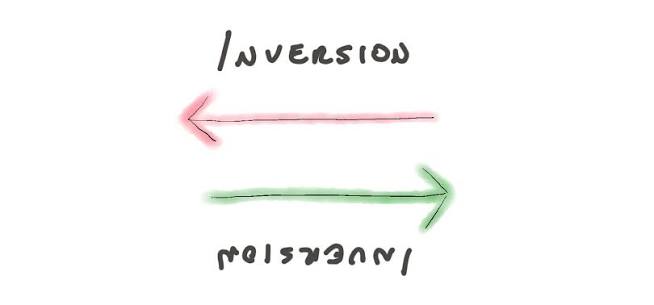
  • Invert, Always Invert: The Ancient Mental Model That Solves Problems by Thinking Backwards

    Invert, Always Invert: The Ancient Mental Model That Solves Problems by Thinking Backwards

    When faced with a tough problem, most of us ask, “How can I make this work?” But a quieter, more powerful approach asks the opposite: “What would make this fail?” This is inversion — a mental model that flips the question to reveal hidden obstacles and smarter solutions.

    Practiced by Stoic philosophers, championed by investor Charlie Munger, and validated by cognitive science, inversion is a simple yet profound tool. It helps you avoid disaster before it strikes, make better decisions, and break free from mental ruts. Let’s explore how thinking backwards can move you forward.

    The Ancient Roots of Inversion

    Inversion isn’t new. The Stoics, who flourished in ancient Greece and Rome, built a whole philosophy around it. Seneca and Epictetus practiced premeditatio malorum — the premeditation of evils. They would imagine losing their wealth, status, or even loved ones, not to wallow in despair, but to build gratitude and resilience. By mentally rehearsing worst-case scenarios, they softened the blow of real misfortunes and sharpened their appreciation for what they had.

    Centuries later, the German mathematician Carl Gustav Jacob Jacobi (1804–1851) gave the technique its famous slogan. He advised his students to solve difficult problems by “man muss immer umkehren” — one must always invert. For Jacobi, this meant working backward from the desired conclusion to the given conditions, a method that often cracked proofs that seemed impenetrable from the front.

    The phrase “Invert, always invert” later became a cornerstone of Charlie Munger’s investment philosophy. The vice chairman of Berkshire Hathaway used it to avoid stupidity rather than seek brilliance. He knew that a few big mistakes could sink a portfolio, so he spent more time figuring out how to lose money than how to make it.

    Why Inversion Works: The Science Behind the Trick

    Inversion isn’t just a clever parlor game — it taps into fundamental quirks of the human brain.

    First, there’s functional fixedness. We tend to see objects and problems only in their conventional use. A brick is for building, a deadline is for meeting. Inversion breaks that mental lockstep by forcing you to consider the opposite: What if we used the brick as a paperweight? What if we deliberately missed the deadline? Suddenly, new possibilities appear.

    Second, loss aversion — the famous finding by psychologists Daniel Kahneman and Amos Tversky — shows that losses hurt about twice as much as equivalent gains please us. This asymmetry means we’re often more motivated to avoid pain than to seek pleasure. Inversion leverages this by turning “How do I succeed?” into “How do I avoid failing?” The latter question feels more urgent, and so it gets our full attention.

    Third, there’s the negativity bias. Our brains are wired to spot threats faster than opportunities — a survival trait from our hunter-gatherer days. Inversion works with this bias instead of fighting it. When you ask “What could go wrong?”, your brain lights up with answers.

    Finally, there’s the pre-mortem, a formalized version of inversion developed by cognitive psychologist Gary Klein. In a post-mortem, you analyze failure after it happens. In a pre-mortem, you imagine the project has already failed — and then work backward to find the causes. Klein’s research shows this technique dramatically improves risk identification because it overrides the optimism bias that makes us blind to potential problems.

    How to Apply Inversion in Five Steps

    Inversion is simple to practice. Here’s a framework you can use today:

    1. State your goal. Be specific. “Launch a successful product” is a start, but “Launch a mobile app that gets 10,000 downloads in the first month” is better.
    2. Invert the goal. Ask: “What would guarantee this fails?” or “What would make this an absolute disaster?”
    3. Brainstorm failure causes. Write down everything that could go wrong — poor pricing, ignoring customer feedback, bad timing, a buggy interface, weak marketing. Don’t censor yourself.
    4. Reverse the causes into actions. For each cause, flip it into a positive step. “Poor pricing” becomes “Test pricing with early users.” “Ignoring feedback” becomes “Build a feedback loop from day one.”
    5. Use the inverted list as a checklist. Review it before making key decisions to avoid known pitfalls.

    This five-step method turns a vague worry into a concrete action plan.

    Inversion in the Real World: From Amazon to the Military

    Inversion isn’t just for philosophers and mathematicians. It’s a workhorse in business, strategy, and innovation.

    Amazon reportedly uses a pre-mortem culture. Jeff Bezos would ask teams to imagine a product launch had failed — then work backward to figure out why. This practice helps the company catch problems before they cost millions.

    The military and cybersecurity worlds use Red Team exercises: deliberately attacking your own plan to find weaknesses. It’s inversion in action — instead of asking “How do we win?”, you ask “How could we lose?” and then shore up those vulnerabilities.

    Even SWOT analysis — that staple of business planning — leans on inversion. The “T” for threats is essentially a structured way to ask “What could go wrong?”

    In personal life, inversion can be just as powerful. Want to improve your health? Ask: “What would make me unhealthy?” Then avoid those things. Want to build a stronger relationship? Ask: “What would destroy it?” Then don’t do those things. The negative path is often clearer than the positive one.

    The Risks of Inversion: When Backward Thinking Backfires

    Inversion is a tool, not a cure-all. Done poorly, it can spiral into chronic pessimism or catastrophizing. If you spend too much time imagining worst-case scenarios, you might become paralyzed with fear, unable to take reasonable risks.

    The Stoics themselves were careful to balance negative visualization with gratitude. They imagined loss not to dread it, but to appreciate what they had. The goal was equanimity, not anxiety.

    Inversion also has limits in creative contexts. Sometimes you need to think forward, to imagine a bold new possibility without immediately asking “What could go wrong?” If you invert every idea, you might never launch anything. The key is to use inversion for risk management and problem-solving, but not as the only lens through which you view the world.

    Invert as a Habit

    Charlie Munger didn’t just use inversion occasionally — he made it a habit, a reflex. He famously said, “It is remarkable how much long-term advantage people like us have gotten by trying to be consistently not stupid, instead of trying to be very intelligent.”

    That’s the heart of inversion: it’s a humility hack. It acknowledges that the path to success is often paved with avoiding failure. By asking “What would make this fail?” you sidestep the arrogance of assuming you already know what will work.

    So the next time you’re stuck on a problem, try flipping it. Instead of “How can I make this succeed?”, ask “What would make this fail?” You might be surprised at how quickly the answer appears — and how much better your decisions become.

    Inversion is a deceptively simple mental model with deep roots and wide applications. Whether you’re an investor, a project manager, or just someone trying to make better life choices, asking “What could go wrong?” can be more illuminating than “What could go right?” By flipping the question, you tap into your brain’s natural threat-detection, overcome overconfidence, and build a practical checklist for avoiding disaster. The Stoics knew it, Jacobi knew it, and Munger knows it: sometimes the best way forward is to think backward. So go ahead — invert your next problem and see what you’ve been missing.

    Summary

    • Inversion flips your question from “How do I succeed?” to “What would make this fail?” — a shift that reveals hidden obstacles and practical actions.
    • The technique has ancient roots: Stoics practiced premeditatio malorum (imagining worst-case scenarios) to build resilience and gratitude.
    • Cognitive science backs it up: loss aversion, negativity bias, and functional fixedness all make inversion a natural fit for the human brain.
    • Formalized as the “pre-mortem” by Gary Klein, it’s used by companies like Amazon and in military Red Team exercises to identify risks before they happen.
    • The five-step method — state goal, invert, brainstorm causes, reverse into actions, use as a checklist — makes it easy to apply today.

    FAQ

    Q: What is the inversion technique?
    A: Inversion is a mental model where you approach a problem by asking the opposite of what you want. Instead of “How can I make this succeed?”, you ask “What would guarantee failure?” This helps you identify obstacles and avoid them.

    Q: Who invented inversion?
    A: The technique has no single inventor. It was practiced by ancient Stoic philosophers like Seneca and Epictetus, popularized in mathematics by Carl Jacobi, and championed in modern times by investor Charlie Munger.

    Q: How is inversion different from just being pessimistic?
    A: Inversion is a structured problem-solving tool, not a mindset. It involves a specific question-and-answer process to uncover risks, then flipping those risks into positive actions. Pessimism is a general negative outlook; inversion is a targeted exercise.

    Q: Can inversion be used in everyday life?
    A: Absolutely. For any goal — health, relationships, career — you can ask “What would destroy this?” and then avoid those behaviors. It’s often easier to identify negative actions than positive ones.

    Q: Are there any downsides to inversion?
    A: If overused, inversion can lead to excessive focus on negatives and anxiety. The Stoics balanced it with gratitude. Use it for risk assessment, but don’t let it stop you from taking calculated risks.