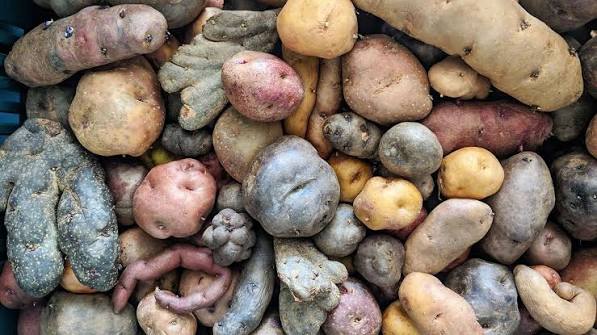
Every day, billions of people eat potatoes in some form mashed, fried, boiled, or baked. This starchy tuber is so common that it’s easy to forget its extraordinary journey: from a wild plant in the Andes to a global staple that shaped empires, fueled industrial revolutions, and even triggered a humanitarian catastrophe. The potato’s story is a testament to how a single crop can transform economies, diets, and destinies.
But the potato’s influence isn’t just historical. Today, it’s the world’s fourth-largest food crop, with over 370 million metric tons produced annually. Its adaptability and nutritional density make it a critical tool in the fight against hunger. Yet, the same vulnerabilities that led to the Irish Potato Famine still loom, reminding us that our food systems are more fragile than they appear.
The Birthplace: The Andes
Potatoes were first domesticated 7,000–10,000 years ago in the highlands of southern Peru and northwestern Bolivia, near Lake Titicaca. The Incas were master potato breeders, cultivating hundreds of varieties in every color and shape imaginable. They even invented freeze-drying a process called chuño which allowed them to store potatoes for years, sustaining armies and feeding entire cities.
This was no accident. The potato is a member of the nightshade family, alongside tomatoes and peppers, and it thrives in the harsh Andean climate where other crops fail. Its ability to grow at altitudes up to 4,000 meters made it invaluable to ancient civilizations.
The European Arrival: From Suspicion to Staple
When Spanish conquistadors brought potatoes to Europe in the 1570s, they were met with deep skepticism. Europeans believed the tuber caused leprosy, was poisonous (it’s related to deadly nightshade), or was simply unfit for Christians because it wasn’t mentioned in the Bible. For over a century, potatoes were mostly fed to livestock or grown as botanical curiosities.
The turning point came in the 18th century, thanks to two unlikely champions. Frederick the Great of Prussia distributed free seed potatoes to peasants and even threatened to cut off the noses of those who refused to plant them. Meanwhile, in France, a pharmacist named Antoine-Augustin Parmentier used more cunning tactics: he posted armed guards around potato fields during the day, making the crop seem precious, then allowed “thefts” at night. The ruse worked, and potatoes quickly spread across Europe.
Fueling the Industrial Revolution
The potato’s high yield per acre far exceeding grains like wheat provided cheap, abundant calories that fueled Europe’s population boom. This surplus labor powered the Industrial Revolution, as workers flocked to cities and factories. In Ireland, however, the reliance on potatoes became dangerously absolute. By the 1840s, a third of the Irish population depended almost exclusively on the potato for survival, cultivating just one variety: the Irish Lumper.
When a fungus-like pathogen called Phytophthora infestans struck in 1845, it devastated the crop. The Irish Potato Famine killed about 1 million people and forced another 1–2 million to emigrate. The disaster exposed the fatal flaw of monoculture a single disease could wipe out an entire nation’s food supply.
The Potato Goes Global
While Europe embraced the potato, Portuguese traders carried it to Asia in the late 16th century. In China, it became a lifeline for poor farmers in marginal highlands, and today China is the world’s largest potato producer, growing over 90 million tons annually. In India, the potato became a staple during British colonial rule, and in Africa, colonial powers introduced it, making it a key crop in countries like Kenya and Rwanda.
The potato’s adaptability made it a perfect candidate for the Green Revolution of the 20th century. Research centers like the International Potato Center (CIP) in Lima, Peru, have developed blight-resistant and drought-tolerant varieties, ensuring that this humble tuber can continue to feed a growing planet. The UN even declared 2008 the International Year of the Potato to highlight its role in food security.
Environmental and Economic Realities
Potatoes are relatively efficient: they require less water than rice and can grow in diverse climates. However, modern industrial farming often relies on heavy chemical inputs, raising sustainability concerns. Additionally, cosmetic standards lead to significant food waste—blemished or oddly shaped potatoes are often discarded before reaching consumers.
Economically, potatoes are a lifeline for smallholder farmers worldwide, providing income and food security. But their future depends on addressing these environmental and social challenges.
The potato’s journey from the Andes to every corner of the globe is a story of resilience, adaptation, and human ingenuity. It has fed civilizations, sparked revolutions, and taught us hard lessons about the dangers of overreliance. As we face climate change and a growing global population, the humble potato may once again prove to be one of our most valuable allies.
Summary
- Originated in the Andes 7,000–10,000 years ago; Incas developed hundreds of varieties and freeze-drying techniques.
- Introduced to Europe in the 1570s, initially met with suspicion and myths; promoted by figures like Frederick the Great and Parmentier.
- Fueled Europe’s population boom and the Industrial Revolution, but the Irish Potato Famine (1845–1852) showed the perils of monoculture.
- Now the world’s fourth-largest food crop, with China as the top producer; crucial for food security in Asia and Africa.
- Modern challenges include environmental sustainability, food waste, and the need for disease-resistant varieties.
FAQ
Q: Why was the potato initially rejected in Europe?
A: Europeans feared it caused leprosy, considered it un-Christian because it wasn’t in the Bible, and believed it was poisonous due to its relation to nightshade plants.
Q: What caused the Irish Potato Famine?
A: The famine was caused by late blight (Phytophthora infestans), a pathogen that destroyed the potato crop in Ireland, where the population was heavily dependent on a single variety.
Q: How many potatoes are produced globally each year?
A: Over 370 million metric tons are produced annually, making potatoes the fourth-largest food crop after rice, wheat, and corn.
Q: What is chuño?
A: Chuño is a freeze-dried potato product developed by the Incas, which allowed them to preserve potatoes for years and store them for long campaigns.
Q: Are potatoes nutritious?
A: Yes, a medium potato (about 150g) provides about 110 calories, 26g of carbohydrates, 3g of protein, and significant amounts of vitamin C, potassium, and vitamin B6.