Tag: post-war

  • The Children Who Survived: Their Lives After the Holocaust

    The Children Who Survived: Their Lives After the Holocaust

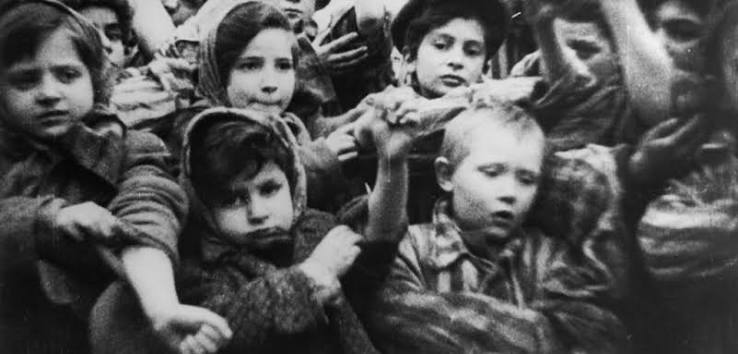
    When the Second World War ended in 1945, the Allied forces discovered a devastated Europe. Among the ruins were thousands of children who had somehow survived the Holocaust. They were a small fraction of the 1.5 to 2 million Jewish children who had been alive in 1939. Only about 100,000 to 150,000 made it through. These children emerged from hiding places, forests, and concentration camps, often alone, malnourished, and traumatized. Their journey after liberation was not a simple return to normal life it was a new struggle for survival, identity, and a place to call home.

    This article traces what happened to these children once the war was over. It looks at their initial care in displaced persons camps, the long and often painful process of reuniting with family or finding new ones, and the paths they took to new countries. It also explores the different experiences of those who went to Britain, France, Palestine, and elsewhere, and the lasting impact of those years on their lives.

    The Liberation: A Bitter Sweet Beginning

    When the camps were liberated, soldiers found children in horrifying conditions. At Auschwitz, for example, only a few hundred children were found alive, many of them twins who had been used for medical experiments. The survivors were often severely malnourished, suffering from tuberculosis and other diseases. Some had forgotten their names, their languages, and even how to play. They had spent years in conditions that stripped away their childhood.

    The first priority was medical care and food. But the psychological scars were deep. Many children had witnessed the murder of their families. They had learned to hide, to lie, to trust no one. The process of recovery would take years, and for some, it never fully happened.

    Displaced Persons Camps: A Temporary Home

    Most surviving children were initially placed in Displaced Persons (DP) camps run by the Allies. These camps were often former concentration camps or military barracks. Bergen-Belsen, Feldafing, and Zeilsheim became temporary homes for thousands of orphans. The United Nations Relief and Rehabilitation Administration (UNRRA) and later the International Refugee Organization (IRO) managed these camps, with help from Jewish organizations like the American Jewish Joint Distribution Committee (JDC).

    In these camps, the children received basic education, vocational training, and some psychological support. But life was hard. They lived in crowded barracks, faced shortages of food and clothing, and had to deal with the uncertainty of their future. The camps were meant to be temporary, but some children remained for years, waiting for emigration or for news of family.

    The Search for Family

    One of the most agonizing experiences for child survivors was the search for surviving relatives. The Central Tracing Bureau was set up to help locate family members. Lists of survivors were posted, and children were photographed and registered. Many children clung to the hope that a parent or sibling might have survived. For some, this hope was fulfilled. They were reunited with a mother, a father, or a sibling who had also survived. But for the vast majority, the search ended in despair. They were alone in the world.

    Some children were too young to remember their families. They had been hidden as infants or toddlers and had no memory of their parents. Others had been given new names and identities. The task of rebuilding a family was often impossible. Adoption was one option, but many children were reluctant to leave the hope of finding a biological relative. Others were placed in group homes or orphanages, where they lived with other child survivors.

    The Windermere Children: A British Story

    One of the most famous rehabilitation programs was the Windermere Children scheme. In August 1945, 732 child survivors, mostly from the Theresienstadt ghetto and other camps, were flown to the Lake District in England. They were housed in a former RAF camp near the town of Windermere. Here, they received intensive care: good food, warm clothing, education, and psychological support. They were taught English, woodworking, and other trades. The goal was to help them recover and prepare them for a new life in Britain.

    The children at Windermere formed a close bond, and many stayed in the UK, becoming British citizens. Their story was later told in a book and a 2020 film, The Windermere Children. For many, this program was a turning point. It gave them a chance to heal and to build a future.

    The Buchenwald Boys: A Different Path

    In April 1945, American troops liberated the Buchenwald concentration camp. Among the survivors were hundreds of boys, many of them teenagers. These boys, known as the Buchenwald Boys, were taken to France, where they were placed in homes and rehabilitation centers. One of them was Elie Wiesel, who would later become a Nobel Prize-winning author and a voice for Holocaust survivors.

    The Buchenwald Boys were given education and support, and many went on to successful lives. But they, too, faced the challenge of rebuilding their identities. Some had been in the camp for years, and the outside world was foreign to them. They had to learn to live in society again, a process that was not always easy.

    The Hidden Children: A Crisis of Identity

    Not all child survivors were in camps. Many had been hidden—in convents, with Christian families, in attics, or in the countryside. These “hidden children” often survived by passing as non-Jewish. They took on Christian names, learned Christian prayers, and sometimes were baptized. When the war ended, they faced a unique problem: they had to decide whether to return to their Jewish roots or remain in the Christian world they had come to know.

    Some hidden children chose to remain Christian, either because they had formed deep bonds with their rescuers or because their Jewish identity had become alien to them. Others struggled with guilt and confusion. They had to “relearn” their Jewish identity, sometimes for the first time. The Hidden Child Foundation, founded in 1991, has documented hundreds of these stories, showing the diversity of experiences and the long-term psychological impact.

    The Kibbutz Experience: Building a New Nation

    For many child survivors, the destination was British Mandate Palestine, soon to become Israel. Youth Aliyah, a Jewish organization, organized the transport and care of thousands of children. They were taken to agricultural settlements, or kibbutzim, where they lived communally. The idea was to rehabilitate them through work, education, and a new national identity. In the kibbutz, they learned Hebrew, worked the land, and became part of a collective.

    For some, this was a positive experience. It gave them a sense of belonging and purpose. They were part of building a new nation. But others felt pressured to abandon their European past and adopt a new identity. They were expected to be strong, to not speak about their trauma, and to focus on the future. This could be a heavy burden. Some later wrote about the tension between their past and present, and the difficulty of integrating their Holocaust experiences into their new lives.

    The United States and Other Destinations

    A smaller number of child survivors emigrated to the United States. Under the Displaced Persons Act of 1948, amended in 1950, about 1,000 to 1,500 unaccompanied child survivors were admitted. They were sponsored by Jewish agencies and often placed in foster homes or group homes. Canada, Australia, and South Africa also accepted small numbers.

    These children started new lives, but they often faced challenges. They had to learn new languages, adapt to new cultures, and cope with their past. Some succeeded remarkably, becoming doctors, lawyers, and artists. Others struggled with mental health issues, and some never spoke about their experiences until later in life.

    The Lasting Legacy

    The children who survived the Holocaust grew up, married, and had families. Many became advocates for Holocaust education, sharing their stories with the world. They founded organizations, wrote memoirs, and spoke at schools and museums. Their experiences shaped not only their own lives but also the way we understand the Holocaust.

    However, the trauma never fully disappeared. Many survivors suffered from depression, anxiety, and post-traumatic stress disorder. They often had difficulty forming close relationships, and some passed on their trauma to their children. But they also showed remarkable resilience. They rebuilt their lives, often in new countries, and contributed to society in countless ways.

    Today, as the number of survivors diminishes, their stories become even more precious. They remind us of the horrors of the Holocaust, but also of the strength of the human spirit. The children who survived were not just victims; they were survivors who built new lives. Their legacy is a testament to the power of hope and the will to live.

    The children who survived the Holocaust faced a long and difficult road after liberation. They had to heal from profound trauma, find or create new families, and build new lives in unfamiliar lands. Their experiences varied—from the rehabilitation of the Windermere Children to the identity crises of the hidden children to the communal life of the kibbutzim. Yet, despite the challenges, many went on to lead productive lives, contributing to their new communities and preserving the memory of those who perished. Their story is one of both tragedy and resilience, a reminder of the humanity that endured even in the darkest of times.

    Summary

    • Only about 100,000–150,000 of the 1.5–2 million Jewish children in Europe in 1939 survived the Holocaust.
    • Most child survivors were initially placed in DP camps, where they received basic care and education.
    • Many were reunited with family, but the majority were orphaned and had to find new homes.
    • Emigration destinations included Palestine/Israel, the UK, the US, and other countries, with programs like Youth Aliyah and the Windermere Children scheme.
    • The hidden children faced identity crises, while all survivors dealt with long-term psychological effects.

    FAQ

    Q: How many children survived the Holocaust?
    A: Estimates vary, but it is generally accepted that between 100,000 and 150,000 Jewish children survived out of the 1.5 to 2 million who were alive in 1939. This is a survival rate of less than 10 percent.

    Q: What was the Windermere Children program?
    A: The Windermere Children program was a rehabilitation scheme that brought 732 child survivors, mostly from the Theresienstadt ghetto, to the Lake District in England in August 1945. The children received education, vocational training, and psychological support to help them recover and integrate into British society.

    Q: Where did surviving children go after the war?
    A: Most child survivors were first placed in displaced persons camps in Germany, Austria, and Italy. Later, they emigrated to various countries, with the largest numbers going to British Mandate Palestine (later Israel), the United States, and the United Kingdom. Smaller numbers went to Canada, Australia, South Africa, and Latin America.

    Q: What were the “hidden children”?
    A: “Hidden children” were Jewish children who survived the Holocaust by hiding in convents, with Christian families, in attics, or in other concealed places. Often, they had to pass as non-Jewish, taking on Christian identities. After the war, they faced challenges in reconciling their Jewish heritage with their wartime experiences.

    Q: How did the children cope with the trauma of the Holocaust?
    A: Many survivors experienced long-term psychological effects, including depression, anxiety, and PTSD. However, rehabilitation programs, new families, and the support of organizations helped many to rebuild their lives. Some found solace in sharing their stories, while others remained silent for decades.

  • The Golden Age of Italian Neorealism: How Post-War Cinema Changed Filmmaking Forever

    The Golden Age of Italian Neorealism: How Post-War Cinema Changed Filmmaking Forever

    In the smoldering ruins of post-World War II Italy, a handful of filmmakers picked up cameras and turned them toward the streets, the slums, and the faces of ordinary people struggling to survive. What emerged was a movement that would not only capture a nation’s trauma but also redefine the very language of cinema. Italian Neorealism, born from desperation and moral urgency, rejected the glossy escapism of the past and embraced a raw, documentary-like authenticity that still echoes in films today.

    This was not just a new style; it was a new way of seeing. By abandoning studio sets, professional actors, and tidy plots, directors like Roberto Rossellini, Vittorio De Sica, and Luchino Visconti created a cinema that felt less like fiction and more like life itself. Their films—shot on location with natural light and non-professional performers—told stories of unemployment, poverty, and resilience that resonated far beyond Italy’s borders.

    More than seventy years later, the fingerprints of Neorealism are everywhere, from the gritty realism of modern independent cinema to the social consciousness of global auteurs. Understanding this movement is key to understanding how film evolved from an industry of illusions into a medium of profound human truth.

    The Ashes of War: A Nation in Ruins

    To understand Italian Neorealism, you have to picture Italy in 1945. The country was a patchwork of bombed-out cities, collapsed bridges, and displaced families. The Fascist regime, which had controlled the film industry for two decades, was gone. Cinecittà, the sprawling studio complex outside Rome, had been turned into a refugee camp. The infrastructure for filmmaking—soundstages, equipment, even electricity—was in shambles.

    Yet out of this devastation came an extraordinary creative surge. Filmmakers who had been silenced or compromised under Mussolini now felt a moral imperative to document what had really happened. They wanted to show the war’s toll on ordinary Italians, the resistance against occupation, and the daily grind of survival. The result was a movement that turned limitations into aesthetics: no studios meant shooting on real streets; no professional actors meant casting real people; no money for elaborate sets meant relying on natural light and the stark beauty of ruins.

    This was a radical departure from the ‘white telephone’ films of the Fascist era—lavish, escapist comedies that ignored the harsh realities of the time. Neorealism was a direct rebuke to that escapism, a cinematic reckoning with truth.

    The Pioneers and Their Masterpieces

    The movement’s unofficial starting point is Roberto Rossellini’s Rome, Open City (1945), a film that captured the chaos of the Nazi occupation with a raw urgency that stunned audiences. Rossellini shot on location, often with a handheld camera, and mixed professional actors with real resistance fighters and a priest. The film’s gritty realism and moral complexity set the template for what was to come.

    Rossellini continued with Paisan (1946), a series of six vignettes tracing the Allied advance up the Italian peninsula, and Germany Year Zero (1948), a harrowing look at a boy in bombed-out Berlin. Together, these films formed a trilogy that examined the moral wreckage of war.

    Vittorio De Sica, working with screenwriter Cesare Zavattini, brought a more intimate, humanist touch. Shoeshine (1946) told the story of two boys trying to survive on the black market, while Bicycle Thieves (1948) became the movement’s most iconic film. It follows a poor father and his young son as they search Rome for a stolen bicycle—the father’s only means of work. De Sica cast Lamberto Maggiorani, a real factory worker, in the lead role, and the film’s heartbreaking simplicity made it an international sensation. Umberto D. (1952), about an elderly pensioner and his dog, is often cited as the movement’s swan song, a poignant meditation on loneliness and dignity.

    Luchino Visconti, a Marxist aristocrat, brought a different flavor with La Terra Trema (1948), a sprawling, almost documentary-like portrait of Sicilian fishermen. Shot in the actual village of Aci Trezza with local non-actors speaking in dialect, the film was a monumental exercise in realism, though its length and austerity made it less accessible than De Sica’s work.

    Giuseppe De Santis’s Bitter Rice (1949) added a more commercial, melodramatic twist, setting a crime story among rice-field workers. It was a hit, showing that Neorealism could also entertain.

    The Theory Behind the Lens: Zavattini’s Vision

    If Rossellini and De Sica were the movement’s filmmakers, Cesare Zavattini was its philosopher. A prolific screenwriter and theorist, Zavattini argued that cinema should be an ‘act of attention’—a way of observing life without the interference of contrived plots. He famously said that a film should follow a man for ninety minutes as he goes about his day, capturing the ‘banal’ moments that reveal deeper truths.

    Zavattini’s ideas were revolutionary. He rejected the classical three-act structure, the hero’s journey, and the neat resolutions that had dominated cinema. Instead, he advocated for ‘the encounter’—placing the camera in the midst of real situations and letting them unfold naturally. This approach is evident in Bicycle Thieves, where the search for the bicycle becomes a metaphor for the precariousness of working-class life, and in Umberto D., where the old man’s daily routine is rendered with almost unbearable intimacy.

    His 1952 essay ‘A Thesis on Neo-Realism’ became a manifesto for the movement, influencing generations of filmmakers who sought to break free from studio-bound artifice.

    A New Visual Language: Style and Technique

    Neorealism’s aesthetic was born of necessity, but it became a powerful artistic choice. On-location shooting gave films a documentary authenticity, with real streets, crumbling buildings, and natural light creating a sense of immediacy. Handheld cameras and long takes allowed scenes to breathe, making viewers feel like witnesses rather than spectators.

    Non-professional actors were a key element. In Rome, Open City, the priest and resistance fighters played themselves, lending an unvarnished quality to the performances. In Bicycle Thieves, Maggiorani’s lack of training made his anguish feel painfully real. This wasn’t just a gimmick; it was a philosophical stance. Zavattini and De Sica believed that ordinary people, placed in their own environments, could convey a truth that trained actors might miss.

    The use of dubbing was another practical necessity. Because shooting on noisy streets made synchronous sound recording difficult, many films were shot silent and dubbed in post-production. This created a slight disconnect between image and sound, which some critics argue added to the films’ dreamlike, memory-like quality.

    The Movement’s Decline and Transformation

    By the early 1950s, Neorealism began to fade. Italy’s economy was recovering, and audiences were growing tired of unrelenting misery. The government, wary of the movement’s leftist leanings, imposed censorship and withdrew support. Cinecittà reopened, and a new wave of escapist comedies and melodramas—dubbed ‘pink Neorealism’—softened the movement’s edges.

    Yet Neorealism didn’t die; it evolved. Directors like Federico Fellini, who had worked on Rome, Open City, moved toward a more personal, fantastical style. Michelangelo Antonioni took the movement’s psychological introspection to new extremes. And internationally, the influence was profound. The French New Wave, British social realism, and American independent cinema all owe a debt to Neorealism’s commitment to authenticity and social engagement.

    Filmmakers like Satyajit Ray in India, Ken Loach in Britain, and the Dardenne brothers in Belgium have carried the torch, using non-professional actors and on-location shooting to tell stories of the marginalized. Even Hollywood’s ‘gritty’ reboots and the rise of streaming ‘realism’ can trace their lineage back to those post-war Italian streets.

    Why Neorealism Still Matters

    In an age of CGI spectacles and franchise blockbusters, Neorealism reminds us that cinema’s power lies not in spectacle but in empathy. It showed that a simple story, told with honesty, can move audiences more than any special effect. The movement’s legacy is a challenge to filmmakers: to look at the world around them, to listen to the voices often unheard, and to use the camera as a tool for truth.

    As we grapple with our own crises—pandemics, inequality, political division—the lessons of Neorealism feel more relevant than ever. It teaches us that art can emerge from ruin, that beauty can be found in the mundane, and that the most profound stories are often the ones we live every day.

    Italian Neorealism was a brief, blazing moment in cinema history, but its impact has been eternal. It transformed film from a medium of fantasy into a medium of conscience, proving that the camera could be a force for social change. As we watch modern films that echo its techniques and themes, we are reminded that the movement’s spirit lives on—in every director who chooses authenticity over gloss, in every story that centers the overlooked, and in every audience that yearns for truth on screen.

    Summary

    • Italian Neorealism emerged in post-WWII Italy (1943–1952) as a response to the devastation of war and the escapism of Fascist-era cinema.
    • Key films include Rome, Open City, Bicycle Thieves, and Umberto D., directed by Rossellini and De Sica, with screenwriter Cesare Zavattini as chief theorist.
    • The movement’s style featured on-location shooting, non-professional actors, natural light, and loose, episodic narratives focused on working-class struggles.
    • Neorealism declined by the early 1950s due to economic recovery, censorship, and changing audience tastes, but its influence spread globally.
    • Its legacy persists in modern cinema, inspiring filmmakers like the French New Wave, Ken Loach, and the Dardenne brothers, and reminding us of film’s power to capture human truth.

    FAQ

    Q: What defines Italian Neorealism?
    A: Italian Neorealism is defined by its commitment to realism: on-location shooting, non-professional actors, natural light, and stories about ordinary people facing everyday struggles. It emerged in post-WWII Italy as a reaction to Fascist-era escapism and aimed to document the harsh realities of the time.

    Q: Why is Bicycle Thieves considered a masterpiece?
    A: Bicycle Thieves is celebrated for its simple yet powerful story of a father and son searching for a stolen bicycle, which becomes a metaphor for poverty and dignity. Its use of a non-professional actor, real Rome locations, and a loose narrative structure exemplify Neorealism’s principles, making it an enduring symbol of the movement.

    Q: How did Neorealism influence later cinema?
    A: Neorealism influenced the French New Wave, British social realism, and American independent film. Directors like Satyajit Ray, Ken Loach, and the Dardenne brothers adopted its techniques and humanist focus, and its emphasis on authenticity continues to shape filmmaking today.

    Q: Why did Neorealism end?
    A: Neorealism declined by the early 1950s due to Italy’s economic recovery, government censorship of leftist themes, and audience fatigue with bleak stories. The reopening of Cinecittà studios and a shift toward more commercial ‘pink Neorealism’ also diluted the movement’s radical edge.

    Q: Who was Cesare Zavattini?
    A: Cesare Zavattini was a screenwriter and theorist who collaborated with Vittorio De Sica on films like Bicycle Thieves and Umberto D.. He was the movement’s chief theorist, advocating for a cinema of ‘the encounter’ that followed ordinary people in real time, rejecting contrived plots.