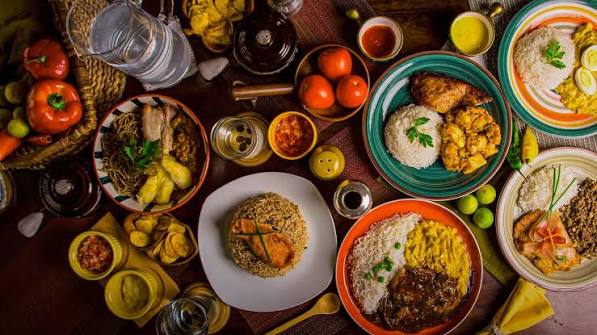
Tag: pilaf

  • A Culinary Journey Through the Silk Road: Dishes That Connected Civilizations

    A Culinary Journey Through the Silk Road: Dishes That Connected Civilizations

    When the German geographer Ferdinand von Richthofen coined the term “Silk Road” in 1877, he was describing a network of trade routes that had connected East Asia to the Mediterranean for over a millennium. But silk was just one of many treasures that traveled those dusty paths and stormy seas. Food—living, perishable, and essential—moved along the same arteries, transforming kitchens and palates from Xi’an to Rome.

    This article traces the journeys of key ingredients and dishes along the Silk Road, showing how noodles, dumplings, and spices crossed borders and became local staples. It’s a story of trade, adaptation, and the universal human desire for flavor.

    The Noodle’s Long March

    Noodles originated in China around 2000 BCE, but their spread westward was a gradual process that took centuries. By the Han Dynasty (206 BCE–220 CE), Chinese traders were already exchanging goods along nascent routes, and noodles likely traveled with them. Central Asian nomads adopted the technique, adding their own twist: lamb and hearty vegetables. The result was lagman, a noodle soup that remains a staple in Kyrgyzstan, Kazakhstan, and Xinjiang.

    In Persia, noodles evolved into a dish called reshteh, often served with herbs and meat. By the medieval period, Arab cookbooks featured noodle dishes that may have influenced Italian pasta. The exact path is debated, but the similarity between Chinese mian, Persian reshteh, and Italian tagliatelle is hard to ignore.

    Dumplings followed a parallel path. Chinese jiaozi—folded pockets of dough filled with meat or vegetables—spread west to Central Asia, becoming mantu in Uzbekistan and Afghanistan. Further south, Tibetan and Nepali momo are direct descendants, typically steamed and served with spicy chutney. The technique of wrapping filling in dough proved so versatile that nearly every culture along the route developed its own version.

    Pilaf: A Dish of Empires

    Rice itself traveled from China to India and then westward, but the method of cooking it in seasoned broth—pilaf—has Persian roots. The Persian word polow refers to a rice dish cooked with meat, vegetables, and spices. As Persian influence spread, so did pilaf. The Uzbeks made it their national dish, plov, cooked in a large kazan over an open fire, often with carrots, onions, and lamb. In India, it evolved into biryani, layered with marinated meat and fragrant basmati rice. Even Spanish paella is considered a distant descendant, brought by Arabs to Iberia.

    The Samosa’s Many Names

    The triangular filled pastry known as the samosa has a murky origin, but it likely emerged in Central Asia or Persia before spreading to India, Central Asia, and East Africa. In India, the samosa is a beloved snack, typically filled with spiced potatoes and peas. In Uzbekistan, samsa is baked in a tandoor oven, often with lamb and onions. In East Africa, sambusa is a staple during Ramadan, filled with spiced meat or lentils. The pastry’s portability and savory filling made it ideal for travelers and traders.

    Breads and Tandoor Ovens

    Flatbreads have been a staple across the Silk Road for millennia. The tandoor oven—a cylindrical clay oven—originated in Persia or India and spread with Persian and Turkic traders. It gave rise to naan in India, lavash in Armenia and Iran, and tandoori breads in Central Asia. These breads were not only food but also used as utensils, plates, and even edible packaging for meat dishes.

    Spices: The Currency of Desire

    Spices were the most valuable commodities per weight along the Silk Road. A pound of saffron could cost as much as a horse, and pepper was literally used as currency in some periods. Cinnamon came from Sri Lanka, cardamom from India, cloves from the Moluccas, and nutmeg from the Banda Islands. These spices not only flavored food but also acted as preservatives before refrigeration. The demand for spices drove exploration and trade, with the Roman Empire’s appetite for silk and spices fueling early exchanges.

    The Islamic Agricultural Revolution

    Between the 8th and 13th centuries, the Abbasid Caliphate in Baghdad became a culinary melting pot. Arab scholars and farmers systematically introduced, cultivated, and disseminated crops from India, China, and Africa across the Mediterranean. Rice, sugarcane, citrus, eggplant, spinach, artichokes, and hard wheat for pasta all spread during this period. This “Golden Age” of food exchange transformed Mediterranean cuisine, laying the groundwork for many dishes we enjoy today.

    The Mongol Peace and Global Appetites

    The Mongol Empire’s unification of the Silk Road in the 13th century made travel safer and faster. Marco Polo’s accounts from the late 13th century document the exchange of foods and customs. The Mongols themselves spread dairy-based foods like yogurt and dried milk, which became central to Central Asian cuisine. The Pax Mongolica allowed for greater exchange than ever before, influencing cuisines from China to Persia.

    The Legacy on Our Plates

    Today, the Silk Road’s culinary legacy is everywhere. Lagman is served in noodle shops in Almaty, samosas are a British pub snack, and pilaf is a staple from Central Asia to the Middle East. The next time you bite into a dumpling or enjoy a kebab, you’re tasting a dish that traveled thousands of miles over centuries, shaped by countless hands and cultures.

    The Silk Road was not just a route for silk; it was a superhighway of flavor. The exchange of ingredients, techniques, and dishes along this network transformed global cuisine in ways we still taste today. From noodles in Central Asia to pilaf in Spain, the culinary journey of the Silk Road is a testament to human curiosity and connection.

    Summary

    • The Silk Road was a network of trade routes, not a single road, active from ~130 BCE to the mid-15th century.
    • Foods like noodles, dumplings, and pilaf spread across continents, adapting to local tastes.
    • Spices were the most valuable commodities, driving trade and even serving as currency.
    • The Islamic Agricultural Revolution and the Mongol Peace were key periods of accelerated exchange.
    • Modern dishes like lagman, samosa, and baklava are direct descendants of Silk Road exchanges.

    FAQ

    Q: What was the Silk Road exactly?
    A: It was a network of overland and maritime trade routes connecting East Asia, Central Asia, India, the Middle East, and Europe, active from roughly 130 BCE to the mid-15th century CE. The term was coined in 1877 by Ferdinand von Richthofen.

    Q: How did noodles spread from China to the West?
    A: Noodles originated in China around 2000 BCE and spread westward over centuries. Central Asian nomads adapted them into lagman, Persians developed reshteh, and eventually similar dishes appeared in Europe, possibly influencing Italian pasta.

    Q: What is the difference between plov, pilaf, and biryani?
    A: They are all rice dishes cooked in seasoned broth, but each region adapted the method. Plov is Central Asian (often with lamb and carrots), pilaf is the Persian version, and biryani is the Indian layered version with marinated meat and spices.

    Q: Why were spices so valuable?
    A: Spices were rare, had preservative properties, and were used to mask spoilage before refrigeration. A pound of saffron could cost as much as a horse, and pepper was used as currency in some periods.

    Q: What role did the Mongols play in food exchange?
    A: The Mongol Empire unified the Silk Road under one rule, making travel safer and faster. They also spread dairy-based foods like yogurt and dried milk, which became staples in Central Asian cuisine.
  • A Culinary Tour of the Silk Road: Dishes That Traveled Across Continents

    A Culinary Tour of the Silk Road: Dishes That Traveled Across Continents

    The Silk Road was more than a conduit for silk and spices—it was a superhighway of culinary exchange that reshaped how the world eats. From the noodle shops of Xi’an to the kebab stalls of Istanbul, the dishes we savor today carry the DNA of ancient trade routes. This article traces the migration of iconic foods across continents, revealing the hidden history in every bite.

    When you twirl spaghetti or bite into a dumpling, you’re tasting centuries of cultural fusion. The Silk Road, active from 130 BCE to the 15th century, connected East Asia to the Mediterranean, and along its dusty trails, cooks, ingredients, and recipes traveled as eagerly as merchants. The result? A global pantry that owes its diversity to this ancient network of exchange.

    The Silk Road: More Than Silk

    Contrary to popular belief, the Silk Road was not a single road but a sprawling network of overland and maritime routes linking China, Central Asia, Persia, and the Mediterranean. It operated from roughly 130 BCE, during China’s Han Dynasty, until the 15th century. While silk gave the route its name, the caravans carried a far richer cargo: spices, tea, ceramics, glass, and—most importantly—foodstuffs and culinary techniques.

    These routes were not just for merchants; they were conduits for cultural exchange. Cooks traveled with caravans, and roadside inns called caravanserais became melting pots where travelers shared recipes and ingredients. Royal courts from the Tang to the Ottoman empires were hubs of culinary innovation, absorbing and refining dishes from distant lands.

    Noodles: From China to the World

    One of the most enduring culinary legacies of the Silk Road is the noodle. Archaeological evidence places noodles in China as early as 2000 BCE, with a 4,000-year-old bowl of millet noodles discovered at the Lajia site in Qinghai province. From China, noodles traveled westward along the trade routes, evolving into the laghman of Central Asia—a hearty dish of hand-pulled noodles with meat and vegetables—and eventually influencing pasta in Italy, though the exact path is debated.

    The story of Marco Polo bringing pasta to Italy is a popular myth, but historians largely debunk it: pasta existed in Italy before Polo’s travels, with references in 12th-century Sicilian documents. Still, the legend underscores how the Silk Road captured the imagination as a source of culinary innovation.

    Dumplings: A Traveling Staple

    Dumplings, another Chinese invention from the Western Han period, spread westward with remarkable success. In Turkey and Central Asia, they became manti—small, boiled dumplings often served with yogurt and garlic. Poland has pierogi, Russia has pelmeni, and Tibet and Nepal have momos. Each culture adapted the basic concept to local ingredients and tastes, but the lineage is unmistakable.

    Bread and Flatbreads: The Eastward Journey

    While noodles and dumplings traveled west, bread moved east. The earliest flatbreads originated in Mesopotamia and Egypt, and they journeyed along the Silk Road to become naan in India, mantou in China, and the various tandoori breads of Central Asia. The tandoor oven itself, a cylindrical clay oven, spread from the Middle East to India and beyond, transforming how bread was baked.

    Pilaf: A Persian Gift to the World

    Pilaf, or rice dishes, originated in Persia (modern Iran) and spread in all directions. In Uzbekistan, it became plov, the national dish, a fragrant rice pilaf with carrots, onions, and meat. In India, it evolved into biryani, layered with spices and sometimes meat. Even paella in Spain bears the influence of Moorish rice cooking, which itself was shaped by Silk Road exchanges.

    Kebabs: From Persian Skewers to Global Street Food

    Kebabs, rooted in Persian and Turkic traditions, spread across Central Asia and the Middle East, becoming a ubiquitous street food. From shish kebab in Turkey to seekh kebab in India, and later satay in Southeast Asia, the technique of grilling meat on skewers traveled far and wide, adapting to local spices and cooking methods.

    Spices, Tea, and Sugar: The Flavor of Exchange

    Spices were among the most valuable commodities on the Silk Road. Black pepper from India, cinnamon from Sri Lanka, and cloves from the Moluccas transformed cuisines globally, adding depth and preservation to dishes. Tea, originating in China, traveled westward via caravan routes, giving rise to chai in India, samovar culture in Russia, and afternoon tea in Britain.

    Sugar, first crystallized in India around 500 BCE, moved west through Persia and Arab traders, eventually sweetening desserts across Europe and the Middle East. Without the Silk Road, our palates would be far less adventurous.

    Fermented Dairy: The Nomadic Contribution

    Central Asian nomadic cultures contributed yogurt and other fermented dairy products, which spread both east and west. Yogurt became ayran in Turkey, lassi in India, and various yogurt cultures throughout the region. These products not only added flavor but also provided a way to preserve milk in the absence of refrigeration.

    Specific Dishes with Documented Lineage

    Some dishes have particularly well-documented Silk Road lineages:

    • Laghman: A Central Asian noodle dish that combines Chinese noodle techniques with Turkic meat and vegetable stews.
    • Manti: Dumplings that traveled from China to Turkey, with regional variations in between.
    • Baklava: A layered pastry that may have originated in Central Asian Turkic traditions and was refined in Ottoman kitchens.
    • Samosas: From the Central Asian sambusa (Persian) to the Indian samosa, via trade routes.
    • Pilaf/Plov: The signature dish of Uzbekistan, with roots in Persian cooking.
    • Kashk: A fermented dairy product used across Iran, Turkey, and Central Asia.

    The Role of Key Regions

    Persia was a major culinary bridge, introducing rice cultivation techniques, citrus, and sophisticated stews. Central Asia, where East met West, blended nomadic dairy traditions with settled agricultural cooking. Xinjiang in China preserves many Silk Road hybrids, such as polo, a Central Asian pilaf eaten in western China. The Ottoman Empire absorbed and refined dishes from conquered territories, creating a fusion cuisine that influenced the Balkans, the Middle East, and North Africa.

    The Marco Polo Myth and the ‘Who Invented It?’ Debate

    The legend that Marco Polo brought pasta to Italy persists, but historians agree it’s a myth. However, it serves as a useful reminder that food origin stories are often oversimplified. The debate over who invented noodles, for instance, is complex: while Chinese origin is well-supported, some scholars argue for independent invention in other regions. What’s clear is that the Silk Road facilitated the exchange that allowed these foods to evolve and spread.

    The Silk Road was not just a trade route; it was a culinary bridge that connected continents and cultures. The dishes we enjoy today—from noodles to kebabs, from pilaf to dumplings—are living testaments to this ancient exchange. As you savor your next meal, take a moment to appreciate the centuries of travel and transformation that brought it to your plate.

    Summary

    • The Silk Road was a network of trade routes that facilitated the exchange of foodstuffs and culinary techniques between East Asia and the Mediterranean.
    • Noodles, dumplings, and pilaf are among the dishes that traveled along these routes, evolving into regional variations like laghman, manti, and biryani.
    • Bread and flatbreads moved eastward, while spices, tea, and sugar moved in both directions, transforming global cuisines.
    • The Marco Polo pasta myth is debunked, but it highlights how food origin stories are often oversimplified.
    • Key regions like Persia, Central Asia, and the Ottoman Empire acted as culinary bridges, blending traditions and creating new dishes.

    FAQ

    Q: Did Marco Polo really bring pasta to Italy?
    A: No, historians largely debunk this myth. Pasta existed in Italy before Polo’s travels, with references in 12th-century Sicilian documents. However, the Silk Road did facilitate culinary exchange, but pasta’s origins are likely independent.

    Q: What is the difference between pilaf, plov, and biryani?
    A: They are all rice dishes that share a common origin in Persian cooking. Pilaf is a general term for rice cooked in seasoned broth. Plov is the Central Asian version, typically with meat and vegetables. Biryani is the Indian adaptation, often layered with spices and sometimes meat, and cooked with a distinct technique.

    Q: How did dumplings spread across the world?
    A: Dumplings originated in China and spread westward via the Silk Road. As they traveled, they were adapted to local ingredients and tastes, resulting in manti in Turkey, pierogi in Poland, pelmeni in Russia, and momos in Tibet and Nepal.

    Q: What role did caravanserais play in culinary exchange?
    A: Caravanserais were roadside inns that provided food and lodging for travelers. They became nodes of culinary mixing, where cooks from different cultures shared recipes and techniques, contributing to the spread of dishes along the Silk Road.

    Q: How did religious dietary laws affect the spread of food?
    A: Religious dietary laws, such as halal and kosher, shaped how dishes were adapted in different regions. For example, pork was replaced with other meats in Muslim-majority areas, and Buddhist vegetarianism influenced the development of meatless versions of certain dishes.