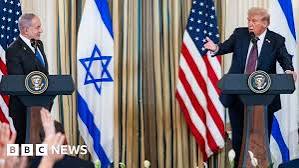
In early 2025, President Donald Trump unveiled a bold new initiative for Gaza, envisioning a U.S.-led redevelopment of the coastline and the relocation of the Palestinian population. Dubbed the ‘Gaza Riviera’ plan, it promised a fresh start for the war-torn enclave. But while the world’s attention is fixed on Gaza, a quieter crisis is brewing in the West Bank—one that could unravel the entire peace effort before it even begins.
Israeli military operations and settlement expansion in the West Bank have reached record levels, drawing sharp condemnation from the international community and Arab states. These actions, many argue, are not just a side issue but a fundamental obstacle to any lasting peace. As the Trump administration seeks Arab partners for its Gaza plan, the escalating violence and annexationist policies in the West Bank threaten to derail the entire initiative.
The Trump Plan: A Vision for Gaza
Trump’s plan, announced in early 2025, is a dramatic departure from traditional peace efforts. It proposes U.S. ownership and redevelopment of Gaza’s coastline, transforming it into a tourist and commercial hub. The plan also calls for the relocation of Gaza’s Palestinian population to other countries, such as Egypt and Jordan, to facilitate reconstruction. While the details remain vague, the administration has framed it as a pragmatic solution to the humanitarian crisis and a way to bring prosperity to the region.
However, the plan has been met with widespread criticism. Arab states, the Palestinian Authority, and much of the international community view it as a violation of Palestinian self-determination and international law. The plan’s success hinges on cooperation from Arab nations, particularly Egypt and Jordan, which are reluctant to accept Palestinian refugees or endorse a scheme that bypasses Palestinian statehood.
The West Bank: A Tinderbox
While Gaza dominates headlines, the West Bank is experiencing its own surge of violence and instability. Since late 2023, Israeli military raids have become near-daily occurrences in cities like Jenin, Nablus, Tulkarm, and Hebron. According to the UN Office for the Coordination of Humanitarian Affairs (OCHA), 2024 was the deadliest year for West Bank Palestinians since records began in 2005, with over 700 killed. The operations are aimed at dismantling Hamas and Palestinian Islamic Jihad cells, but they have also resulted in significant civilian casualties and widespread destruction.
In parallel, settler violence has escalated dramatically. Hundreds of attacks on Palestinian villages have been reported, involving arson, property destruction, and physical assault. Some of these attacks have been labeled “terrorism” by the U.S. and EU. Meanwhile, Israeli authorities have accelerated settlement expansion, approving thousands of new housing units in 2024–2025, despite international condemnation and a 2024 International Court of Justice advisory opinion declaring the occupation and settlement policies illegal.
The Arab States’ Red Line
Arab states, particularly Egypt, Jordan, and Saudi Arabia, have consistently conditioned normalization with Israel on a credible path to a Palestinian state. The West Bank is central to this vision. Settlement expansion and annexationist policies are seen as a direct threat to the viability of a future Palestinian state, making it geographically and politically impossible.
For the Trump plan to succeed, it needs Arab buy-in—both financial and political. But Arab leaders are under immense domestic pressure to stand up for Palestinian rights. They cannot be seen as complicit in a plan that ignores the West Bank’s fate. As one diplomat put it, “You cannot sell a peace plan for Gaza while the West Bank is being set on fire.”
The Palestinian Authority’s Dilemma
The Palestinian Authority (PA), which administers parts of the West Bank, is in a precarious position. It is widely seen as weak and illegitimate, having lost control of several areas to armed factions. Its security coordination with Israel is deeply unpopular among Palestinians, who view it as collaboration with the occupation. The PA’s leadership is caught between Israeli military pressure and popular anger, making it an unreliable partner for any peace initiative.
Moreover, Hamas retains significant influence in the West Bank, despite Israeli operations. The group’s resistance narrative has gained traction, and it opposes the Trump plan entirely. Any peace effort that excludes Hamas or fails to address Palestinian political rights is likely to be rejected by a majority of Palestinians.
The Israeli Government’s Constraints
Israel’s current coalition government includes far-right parties that openly advocate for full annexation of the West Bank and oppose any Palestinian state. These parties hold significant sway, and their leaders have threatened to collapse the government if settlement activity is curtailed or if statehood is discussed. Prime Minister Benjamin Netanyahu, facing corruption charges and political instability, is reliant on these coalition partners to stay in power.
This creates a fundamental tension: the Trump plan requires Israeli concessions on the West Bank to gain Arab support, but the Israeli government is structurally incapable of making those concessions. As a result, the plan may be dead on arrival.
The Spillover Effect
The Gaza war has had a profound spillover effect on the West Bank. Armed Palestinian groups have grown stronger, inspired by Hamas’s resistance narrative. Israeli military operations have intensified, but they have not succeeded in quelling the unrest. Instead, they have fueled further radicalization and violence.
This cycle of violence undermines any peace effort. The West Bank is not just a side issue; it is the core of the Palestinian national struggle. Without a credible plan for the West Bank, any Gaza-focused initiative will be seen as a cynical attempt to bypass the Palestinian people’s right to self-determination.
The International Legal Dimension
The international legal framework is also a significant obstacle. The ICJ’s advisory opinion in July 2024 declared Israel’s occupation and settlement policies illegal. The ICC has pending applications for arrest warrants against Israeli leaders, including Netanyahu, and Hamas leaders for war crimes. These legal pressures make it difficult for the U.S. to sell a plan that appears to legitimize illegal actions.
Moreover, the international community, including the EU and UN, has repeatedly called for a two-state solution based on the 1967 borders. The Trump plan, which ignores these borders and the West Bank, is seen as a violation of international consensus.
Conclusion: A Plan at Risk
In summary, the Trump administration’s Gaza peace plan faces a formidable obstacle in the West Bank. The escalating violence, settlement expansion, and political dynamics on the ground make it nearly impossible to achieve the Arab cooperation the plan requires. Without a credible approach to the West Bank, the plan risks being dismissed as a non-starter, further entrenching the conflict and undermining prospects for peace.
The Trump administration’s Gaza plan is ambitious, but it cannot succeed in a vacuum. The West Bank is not a peripheral issue; it is the heart of the Israeli-Palestinian conflict. Unless the U.S. addresses the escalating violence and settlement expansion there, and offers a credible path to Palestinian statehood, the plan will likely fail to gain the regional support it needs. The window for a two-state solution is closing, and the West Bank may be the key to whether it slams shut for good.
Summary
- Israeli military operations and settlement expansion in the West Bank have escalated to record levels, drawing international condemnation.
- Arab states, crucial to the Trump plan’s success, view West Bank policies as a dealbreaker for normalization with Israel.
- The Palestinian Authority is weak and unpopular, while Hamas retains influence, complicating any peace effort.
- Israel’s far-right coalition partners oppose any concessions on the West Bank, making it politically impossible for Netanyahu to compromise.
- The international legal framework, including ICJ and ICC rulings, further undermines the plan’s legitimacy.
FAQ
Q: What is the Trump plan for Gaza?
A: The plan, announced in early 2025, proposes U.S. ownership and redevelopment of Gaza’s coastline, relocation of the Palestinian population, and a long-term reconstruction program. It has been widely criticized for ignoring Palestinian self-determination.
Q: Why is the West Bank important to the peace plan?
A: The West Bank is central to any viable Palestinian state. Escalating Israeli operations and settlement expansion there undermine Arab support for the plan and make a two-state solution increasingly unfeasible.
Q: How have Arab states reacted to the plan?
A: Arab states, including Egypt, Jordan, and Saudi Arabia, have conditioned normalization with Israel on a credible path to Palestinian statehood. They view West Bank annexation and settlement expansion as a dealbreaker.
Q: What role does the Palestinian Authority play?
A: The PA is weak and widely seen as illegitimate. It is caught between Israeli military control and popular anger, making it an unreliable partner for peace initiatives.
Q: Can the plan succeed without addressing the West Bank?
A: Most analysts believe no. The West Bank is the core of the Palestinian national struggle, and any peace plan that ignores it is likely to be rejected by Palestinians and the international community.