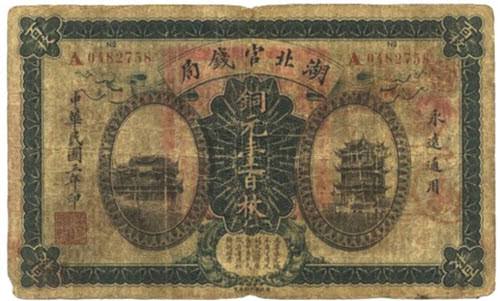
When we picture the Silk Road, we imagine caravans laden with silk, spices, and gems crossing deserts and mountains. But the most revolutionary cargo wasn’t a luxury good—it was an idea: paper money. Invented in China and tested across the Mongol Empire, paper currency didn’t just transform trade; it also delivered an early lesson in inflation that still echoes today.
This is the story of how a lightweight piece of paper replaced heavy coins, unified a vast empire, and eventually collapsed under its own printing press—offering a cautionary tale that would take Europe centuries to learn.
The Problem with Coins: Why China Invented Paper Money
Imagine paying your taxes with a cartload of iron coins. In Sichuan province, during the early Song Dynasty, this was daily reality. The region used heavy iron currency because copper was scarce, and a single transaction could require wheelbarrows of coins. Even in the copper-using heartland, a string of 1,000 coins (guan) weighed up to 10 pounds—making large purchases a logistical nightmare.
China’s economy was booming. Markets expanded, cities grew, and long-distance trade thrived. But the copper mines couldn’t keep pace with demand, and carrying metal over vast distances was inefficient. The solution emerged not from the imperial court but from private merchants, who began issuing paper receipts for deposits of coins. These receipts—light, portable, and trusted—quickly circulated as a medium of exchange.
In 1024, the Song government took control of this experiment, issuing the first official state-backed paper money, known as jiaozi. It started as a regional solution in Sichuan but soon spread, as the government realized that paper currency could be produced at a fraction of the cost of minting metal and was far easier to transport.
The Silk Road: A Network of Ideas, Not Just Goods
The Silk Road was never a single road—it was a sprawling web of overland and maritime routes linking China, Central Asia, India, the Middle East, and Europe for over 1,500 years. While silk and spices were the headline commodities, the most enduring exports were often intangible: religions like Buddhism, technologies like papermaking, and economic concepts like credit.
Paper money itself rarely traveled westward as physical notes. Instead, the idea traveled through the accounts of merchants, missionaries, and travelers. Marco Polo’s 13th-century descriptions of Kublai Khan’s paper currency were met with disbelief—Europeans simply couldn’t conceive of a currency with no intrinsic value.
What did travel were related instruments: the Islamic world had the sakk, a written order for payment that gives us the word “check.” Italian merchants used bills of exchange and promissory notes to move money across Europe without hauling gold. These were not paper money—they represented specific deposits or debts—but they laid the groundwork for Europe’s later adoption of banknotes.
The true breakthrough came with the Mongol Empire. When Genghis Khan’s successors unified much of Eurasia under one rule, they created a political and economic zone that stretched from China to Persia. The Yuan Dynasty, established by Kublai Khan, made paper money (chao) the sole legal tender across this vast territory. This was fiat currency in the modern sense: the notes had value because the state said so, not because they were backed by precious metal.
The Mongol Experiment: A Unified Currency Zone
Under Mongol rule, the Silk Road experienced its golden age. The Pax Mongolica—a “Mongol peace”—reduced banditry, standardized weights and measures, and encouraged trade. Merchants could travel from the Black Sea to Beijing with relative safety. Paper money facilitated this commerce: it was easy to carry, standardized, and accepted across an enormous area.
Marco Polo marveled at this system, noting that the Great Khan could “cause the bark of trees… to be made into something resembling paper” and that his subjects eagerly accepted it. To Polo’s European audience, this seemed like magic—or madness. How could a piece of paper be worth anything?
The Yuan state enforced acceptance of chao by decree: refusing paper money was a crime. Foreign merchants, however, were often required to exchange their gold and silver for paper notes upon entering China, and these notes could only be used within the empire. This created a captive market for the currency—and a temptation for the government.
The Inflation Trap: When Paper Money Goes Wrong
The Yuan Dynasty’s experiment worked for a while, but it contained the seeds of its own destruction. To fund military campaigns, public works, and court extravagance, the government printed ever more notes. As the money supply expanded, the value of each note fell. Prices soared. By the mid-14th century, hyperinflation had taken hold: the currency collapsed, savings were wiped out, and economic chaos contributed to the dynasty’s downfall.
China’s experience was not unique—it was a preview of every paper-money crisis to come. The lesson was simple: when a government prints money without limit, its value evaporates. The Yuan’s fall in 1368 was followed by the Ming Dynasty, which initially continued paper currency but soon abandoned it after similar inflation. By the 15th century, China had reverted to silver bullion—a stable, if heavy, alternative.
The first European experiments with paper money occurred centuries later. Sweden’s Stockholm Banco issued notes in 1661, and the Bank of England followed in 1694. Both initially maintained convertibility to silver, but governments soon discovered the same temptation to overissue. France’s Mississippi Bubble (1719–1720) and Britain’s South Sea Bubble (1720) were spectacular crashes caused by speculative paper assets and excessive money creation. These crises echoed China’s earlier mistakes, but Europeans had to learn the hard way—they had dismissed Polo’s accounts as fables.
Why Paper Money Mattered: The Power of Trust
Paper money succeeded in China because it solved a practical problem, but it flourished only when people trusted the issuer. That trust was the true revolution. Money, as Aristotle argued, was supposed to have intrinsic value—gold and silver were valuable in themselves. Paper money was a fiction, yet it worked because everyone agreed to accept it.
Chinese thinkers like Ma Duanlin, writing in the 13th century, already wrestled with questions of money supply and state credit—centuries before European economists like John Locke or David Hume tackled similar issues. The Silk Road didn’t just move goods; it moved these ideas, though Europe was slow to absorb them.
Ultimately, paper money’s greatest impact on the Silk Road was not as a physical cargo but as a model for economic integration. The Mongol Empire’s unified currency zone was an early prototype of a single monetary system covering a vast region. Its collapse demonstrated the dangers of fiscal irresponsibility—a warning that resonates in today’s world of central banks and quantitative easing.
The Legacy: From Silk Road to Modern Finance
The Silk Road declined in the 15th century, partly because maritime routes became more efficient, but also because monetary instability—including Chinese inflation—disrupted overland trade. Yet the idea of paper money had taken root. By the 19th century, nearly every major economy had adopted some form of paper currency, and today, cash is mostly digital—an even more abstract form of the same concept.
When you hand over a piece of paper money, you’re participating in a system that began in Sichuan a thousand years ago. The Silk Road’s unsung cargo wasn’t a physical item but a financial technology that transformed global trade—and taught us that money is only as valuable as the trust we place in it.
The Inflation Lesson: A Timeless Warning
The story of paper money on the Silk Road is a powerful reminder of the delicate balance between economic growth and fiscal discipline. China’s invention solved a real problem, but it also created a new one: the temptation to print money as a shortcut to wealth. The Yuan Dynasty fell because it succumbed to that temptation, and every subsequent paper-money crisis—from the French Revolution’s assignats to the German Weimar Republic’s hyperinflation—has repeated the pattern.
Understanding this history is not just an academic exercise. It helps us appreciate the foundations of modern finance and the importance of trust in our economic institutions. The next time you use a banknote, consider its journey: from a merchant’s receipt in 11th-century Sichuan to a tool of empire, a lesson in inflation, and a cornerstone of the global economy. That’s a cargo worth remembering.
Paper money didn’t cross the Silk Road in a merchant’s saddlebag; it crossed as an idea, carried by travelers like Marco Polo and tested by empires. Its invention solved China’s coin shortage, enabled the Mongol Empire’s trade boom, and ultimately taught the world a bitter lesson about inflation. Today, we still grapple with the same questions: how much money is too much, and what gives currency its value? The answer, as the Yuan Dynasty discovered, lies not in the paper but in the trust we place in those who issue it.
Summary
- Paper money was invented in China during the Song Dynasty (11th century) as a solution to copper coin shortages and the impracticality of heavy metal currency.
- The Mongol Empire under Kublai Khan made paper money the sole legal tender across much of the Silk Road, creating an early unified currency zone.
- The concept of paper money traveled westward via travelers like Marco Polo, but it was centuries before Europe adopted it, with early experiments like the Bank of England in 1694.
- Hyperinflation in the Yuan Dynasty (14th century) led to the collapse of its paper currency, contributing to the dynasty’s fall and serving as an early warning about excessive money printing.
- The Silk Road facilitated the spread of economic ideas, including credit instruments like bills of exchange, which laid the groundwork for modern banking.
FAQ
**Q: Was paper money used along the Silk Road?
A: Paper money itself wasn’t widely used as a physical medium across the entire Silk Road. The Yuan Dynasty’s paper currency circulated within its empire, but the concept of paper money traveled westward through travelers’ accounts, influencing later European experiments.
**Q: What is “flying cash”?
A: “Flying cash” (feiqian) was a Tang Dynasty instrument used to transfer funds over long distances—essentially a bill of exchange, not a currency. It allowed merchants to deposit funds at one location and withdraw them at another, avoiding the need to carry heavy coins.
**Q: How did Marco Polo describe Chinese paper money?
A: Marco Polo described how the Great Khan issued paper notes made from mulberry bark, and that these notes were accepted as payment throughout his domains. His accounts were so astonishing that many Europeans thought he was exaggerating or inventing stories.
**Q: Why did the Ming Dynasty abandon paper money?
A: The Ming Dynasty initially continued paper money but suffered from inflation due to overissuance. By the mid-15th century, they reverted to silver bullion as the standard, which was more stable and widely accepted in international trade.
**Q: What is the main lesson from the Yuan Dynasty’s inflation?
A: The main lesson is that a government cannot print money without limits—doing so leads to hyperinflation and economic collapse. The Yuan Dynasty’s overprinting of paper notes to fund wars and expenses ultimately destroyed the currency’s value.