Tag: Ottoman cuisine

  • The Croissant’s True Origin: An Ottoman Technique, a Viennese Name, and a French Reinvention

    The Croissant’s True Origin: An Ottoman Technique, a Viennese Name, and a French Reinvention

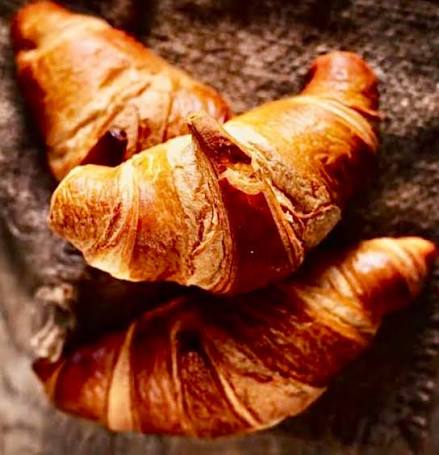
    Every flaky, buttery bite of a croissant carries a story that has been told wrong for over a century. The popular legend claims a heroic Viennese baker invented the crescent-shaped pastry in 1683 to celebrate the defeat of the Ottoman siege supposedly by shaping dough to mock the enemy’s flag. But historians have found no evidence for this tale. The real history is more surprising: the croissant’s signature flaky layers likely came from Ottoman lands, its name is French, and its modern form was perfected in 20th-century Paris. Understanding this journey reveals how food travels across cultures, transforming identities along the way.

    The Myth That Won’t Crumble

    Walk into any bakery and you’ll likely hear the same story: In 1683, during the Ottoman siege of Vienna, a baker working through the night heard the enemy tunneling under the city walls. He raised the alarm, the Ottomans were repelled, and to commemorate the victory, he shaped a pastry in the form of the Ottoman crescent flag—the kipferl, which later evolved into the croissant.

    It’s a charming tale, but it’s almost certainly fiction. No contemporary document from 1683 Vienna mentions a baker-hero or a crescent-shaped celebratory pastry. The story appears to have been embellished in the 19th century, likely by bakers seeking a patriotic origin for their product. In fact, the kipferl (Austrian for ‘little horn’ or ‘crescent’) was already documented in Austria as early as the 13th century—centuries before the siege. The crescent shape itself predates the Ottomans, appearing in ancient Roman cakes called ‘crescentia’ and in medieval European baking, where it may have simply been a convenient way to roll dough.

    The Ottoman Contribution: Not the Shape, but the Flake

    If the crescent shape wasn’t the Ottomans’ gift to pastry, what was? The answer lies in the croissant’s most distinctive feature: its flaky, layered dough. This technique—called lamination—involves folding butter into dough repeatedly to create dozens of thin layers that puff up when baked. The method is believed to have originated in the Balkans and Ottoman territories, where bakers developed similar laminated pastries like baklava and börek. These traditions used thin layers of dough and butter, a technique that would later be refined in Austria and France.

    So while the Ottomans didn’t invent the croissant’s shape, they likely provided the technique that makes it so delicious. This is a far more interesting legacy than a battlefield myth—it’s a story of culinary exchange across empires.

    The Viennese Connection and the Birth of the ‘Croissant’

    In the 19th century, Vienna was renowned for its high-quality baking, and Viennese pastries became fashionable in Paris. In 1837–1839, an Austrian baker named August Zang opened the Boulangerie Viennoise on Rue de Richelieu, introducing Parisians to kipferl and ‘pain viennois’ (Viennese bread). Parisians, seeing the crescent shape, began calling these pastries ‘croissants’—French for ‘crescent.’

    But Zang’s kipferl was not the flaky croissant we know today. It was a simpler, slightly sweet yeast pastry, closer to a dense bread roll. The lamination technique that defines the modern croissant hadn’t yet been applied to the kipferl. That transformation happened later, in the early 20th century, when French bakers began experimenting with laminated dough—a process that combines a yeast dough with the technique of puff pastry, creating layers of butter and dough that separate into airy pockets when baked.

    The French Reinvention: A 20th-Century Icon

    The first French recipe for a ‘croissant’ appeared in the 1906 edition of the Larousse Gastronomique, but it was a simple brioche-like dough, not laminated. The flaky version emerged in the 1920s, when French bakers started using butter or margarine lamination, likely influenced by Austrian ‘plundergebäck’—a laminated sweet dough. This new croissant was richer, lighter, and more indulgent than its Viennese ancestor.

    It wasn’t until after World War II that the croissant became a symbol of French boulangerie. Its rise was fueled by industrialization and the mass production of baked goods, which made the pastry affordable for everyday breakfast. Parisian cafés adopted it as a staple, and its global export cemented its association with France. Today, the croissant is as iconic as the Eiffel Tower, but its identity is a fusion: an Ottoman technique, a Viennese shape, and a French name.

    Why the Myth Persists

    So why do we cling to the 1683 story? It offers a simple, patriotic narrative that assigns a clear origin to a beloved food. But the truth is more complex—and more fascinating. The croissant’s history shows that food is rarely invented by a single person or nation. Instead, it evolves through centuries of cultural exchange, adaptation, and innovation. The croissant is a testament to how culinary traditions cross borders, absorb influences, and emerge as something entirely new.

    Next time you bite into a croissant, remember: you’re tasting not a battlefield victory, but a thousand years of shared history, from Roman ovens to Ottoman palaces, from Viennese bakeries to Parisian patisseries.

    The croissant’s true history is a layered story, much like the pastry itself. It’s not a tale of a single heroic baker, but a narrative of cultural exchange spanning continents and centuries. The next time you enjoy a croissant, savor it not just for its buttery richness, but for the complex journey that brought it to your plate—a journey that continues to evolve as bakers around the world reinterpret this iconic pastry.

    Summary

    • The popular 1683 Viennese baker myth is unsupported by historical evidence and likely apocryphal.
    • The crescent-shaped kipferl predates the Ottoman siege by centuries, documented in Austria from the 13th century.
    • The true Ottoman contribution is the laminated dough technique, which originated in Ottoman-influenced regions.
    • The croissant as we know it—flaky, buttery, and laminated—was a French invention of the early 20th century, not a Viennese or Ottoman one.
    • The croissant’s name is French, derived from its crescent shape, but its technique and shape trace back to Austrian and Ottoman baking traditions.

    FAQ

    Q: Was the croissant really invented in Vienna in 1683?
    A: No, this is a myth. There is no contemporary evidence for a baker-hero or a crescent-shaped celebratory pastry from 1683. The kipferl existed in Austria centuries before the siege.

    Q: What did the Ottomans actually contribute to the croissant?
    A: The technique of laminating dough—folding butter into dough to create flaky layers—likely originated in Ottoman lands or the Balkans. This technique is essential to the modern croissant.

    Q: When did the croissant become laminated?
    A: The flaky, laminated croissant emerged in France in the 1920s, when bakers began using butter lamination techniques influenced by Austrian plundergebäck.

    Q: Why is the croissant considered French if it didn’t originate there?
    A: The croissant was perfected and popularized in France in the 20th century, becoming a national symbol. Its name is French, and its modern form is a French creation.

    Q: Are there any records of the kipferl before the Ottoman wars?
    A: Yes, the kipferl is documented in Austria as early as the 13th century, well before the 1683 siege, suggesting its shape was not a political statement.
  • The Last Ottoman Dessert: How Chicken Breast Became a Sultan’s Pudding

    The Last Ottoman Dessert: How Chicken Breast Became a Sultan’s Pudding

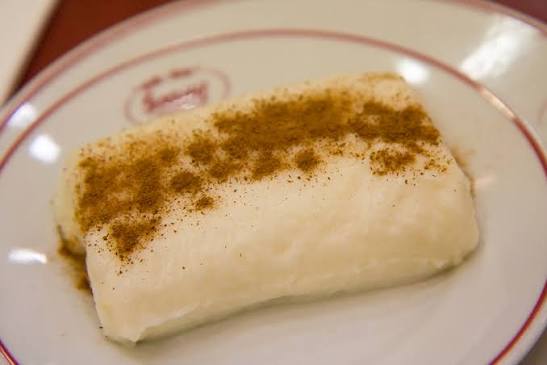
    In the heart of Istanbul, behind the glass counter of a century-old pudding shop, sits a dessert that baffles most first-timers. It looks like a pale, firm custard, dusted with cinnamon. But its secret ingredient is one you’d never guess from tasting it: chicken breast. This is tavuk göğsü, the dessert that survived the fall of the Ottoman Empire and still clings to life in modern Turkey.

    For over 500 years, this unlikely sweet was the pride of the sultans’ kitchens. It was served in Topkapı Palace, where hundreds of cooks labored over elaborate dishes to impress foreign dignitaries and celebrate religious festivals. When the empire collapsed in 1922, the palace chefs scattered, carrying their recipes into the streets of the new republic. Tavuk göğsü should have died with them yet it endures, a delicious ghost of a vanished world.

    A Dessert Born in the Palace Kitchens

    The story begins in the 15th century, during the reign of Mehmed II, the conqueror of Constantinople. The imperial kitchen, known as the Matbah-ı Amire, was a vast operation employing up to 1,000 cooks and assistants. Each had a specialty: soups, kebabs, pilafs, and sweets. The sultan’s table was a stage for imperial power, and desserts were a key part of the performance.

    Tavuk göğsü was one of the stars. The recipe sounds bizarre to modern ears: boil a chicken breast, shred it into a fine paste, then simmer it with milk, sugar, and rice flour until it thickens into a smooth pudding. The chicken adds no savory flavor just a dense, silky texture that sets it apart from any Western custard. The final taste is pure comfort: sweet milk, a hint of vanilla or mastic, and a delicate richness.

    This technique of using meat in sweets didn’t originate with the Ottomans. Medieval Persian and Arab cookbooks feature dishes like iskenj and julab, where meat was boiled with sugar and fruit. The Ottomans inherited this tradition and refined it into a palace delicacy. Chicken breast was the perfect choice: it was expensive, lean, and mild enough to disappear into the pudding’s creamy base.

    The Science of a Strange Sweet

    Why does chicken work in a dessert? It comes down to protein and texture. Chicken breast is almost pure protein, with very little fat. When cooked and pounded, its fibers break down into a fine mesh that traps liquid, creating a thick, stable gel. This is the same principle behind modern molecular gastronomy, but the Ottomans discovered it by trial and error centuries ago.

    The process is painstaking. The chicken must be boiled until tender, then beaten or pressed through a sieve until it becomes a smooth paste. Any lump would ruin the dish’s signature velvety mouthfeel. Then the paste is whisked into milk with sugar and a starch traditionally rice flour and cooked slowly over low heat, stirring constantly. The result is a pudding that’s firm enough to slice, yet soft enough to melt on the tongue.

    A close cousin, kazandibi, is made the same way but with a caramelized bottom. The pudding is poured into a shallow pan and cooked until the underside turns brown and slightly burnt, giving it a bitter-sweet contrast. Both are still served in Istanbul’s historic pudding shops, like Kanaat Lokantası in Üsküdar, which has been scooping them out since 1933.

    The Fall of the Empire, the Dispersal of the Chefs

    When the Ottoman Empire collapsed in 1922 and the Turkish Republic was founded the next year, the palace kitchens were abandoned. The chefs, who had served sultans for centuries, suddenly found themselves unemployed. Some opened small lokantas (eateries) in Istanbul’s bustling streets. Others moved to provincial cities, taking their skills with them.

    The new republic, under Mustafa Kemal Atatürk, promoted a national identity that deliberately distanced itself from Ottoman imperial grandeur. The official cuisine emphasized simple peasant dishes—kebabs, stews, flatbreads—over the elaborate creations of the palace. Tavuk göğsü, with its associations of sultanic excess, could have been erased.

    But it survived because it had already escaped the palace walls. By the 19th century, the dessert was served in the homes of Istanbul’s elite and in some provincial cities. The recipe was simple enough to reproduce without a team of specialized cooks. And it was delicious enough that people wanted to keep making it.

    A Niche Survival in Modern Turkey

    Today, tavuk göğsü is a niche dessert. You won’t find it on most restaurant menus, which favor baklava and künefe. But it persists in traditional pudding shops, where it’s sold alongside muhallebi (a rice-flour pudding) and sütlaç (baked rice pudding). It’s also making a comeback in upscale restaurants that specialize in Ottoman revival cuisine, where chefs plate it with modern flair—a quenelle of chicken pudding, a drizzle of pomegranate molasses, a sprinkling of crushed pistachios.

    UNESCO has recognized Turkish cuisine as part of the country’s intangible cultural heritage, and tavuk göğsü is part of that broader recognition. It’s a living artifact, a recipe that has barely changed in 500 years. But its survival is fragile. Younger generations often balk at the idea of chicken in a dessert, and the dish requires time and skill to prepare properly. It’s not a mass-market product—it’s a labor of love.

    The Last Ottoman Dessert?

    Is tavuk göğsü truly the “last” Ottoman dessert? Other candidates exist: güllaç, a delicate pastry with rosewater and milk, is a Ramadan favorite. Baklava, though not uniquely Ottoman, is the empire’s most famous sweet legacy. But tavuk göğsü is the most surprising, the most misunderstood, and the most directly tied to the palace tradition. It’s the dessert that best captures the Ottoman spirit: a fusion of influences, a display of wealth, and a willingness to defy culinary expectations.

    When you eat tavuk göğsü, you’re not just tasting milk and sugar. You’re tasting a piece of history—a time when sultans ruled three continents, and their chefs turned the humble chicken into a symbol of imperial power. It’s a sweet that survived an empire’s fall, and it’s still here, waiting for adventurous eaters to discover its secret.

    Tavuk göğsü is more than a quirky historical footnote. It’s a testament to how food can outlast political upheaval, carrying the memory of a lost world in every spoonful. The next time you’re in Istanbul, order it at a traditional pudding shop. Take a bite, and you’ll understand why a dessert made of chicken breast once graced the tables of sultans—and why it’s still worth saving today.

    Summary

    • Tavuk göğsü is a milk pudding thickened with shredded chicken breast, dating to the 15th-century Ottoman palace.
    • It survived the empire’s fall because palace chefs dispersed to civilian restaurants and the recipe was already known outside the palace.
    • The dish is a niche survival in modern Turkey, served in historic pudding shops and revived in upscale restaurants.
    • Its texture comes from chicken protein, which creates a dense, silky gel unlike any Western pudding.
    • UNESCO recognizes Turkish cuisine as intangible heritage, and tavuk göğsü is part of that legacy.

    FAQ

    Q: Does tavuk göğsü taste like chicken?
    A: No. The chicken is boiled and pounded to a paste, then simmered with milk and sugar. The final flavor is purely sweet and milky, with a hint of vanilla or mastic. The chicken only contributes texture, not taste.

    Q: How is tavuk göğsü different from regular pudding?
    A: The addition of chicken breast gives it a much denser, firmer texture than typical rice pudding or custard. It’s almost like a thick, smooth cheesecake in consistency, but made entirely from milk and chicken protein.

    Q: Where can I try tavuk göğsü today?
    A: In Istanbul, try historic pudding shops like Kanaat Lokantası in Üsküdar, Özsüt, or Saray Muhallebicisi. Some upscale restaurants that specialize in Ottoman cuisine also serve it with a modern twist.

    Q: Is kazandibi the same as tavuk göğsü?
    A: Kazandibi is essentially tavuk göğsü with a caramelized bottom. The pudding is cooked in a shallow pan so the underside burns slightly, adding a bitter-sweet flavor.

    Q: Why is it called the ‘last’ Ottoman dessert?
    A: It’s a poetic label, not a literal fact. Tavuk göğsü is often called the “last” because it’s one of the most distinctive and least understood Ottoman desserts, and its survival is fragile. It’s a living link to the palace kitchens, but it could disappear if it’s not preserved.