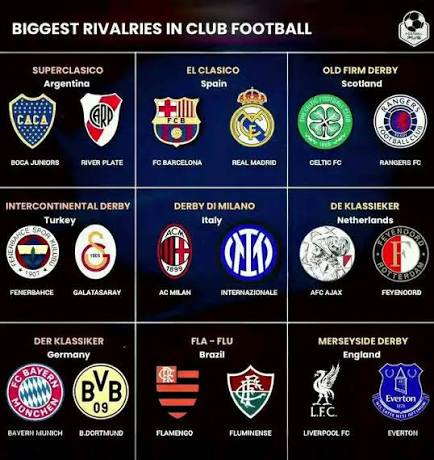
Football is a game of tribalism, and nowhere is that more visceral than in a derby. When two clubs from the same city meet, the match transcends sport—it becomes a referendum on identity, history, and belonging. From the sectarian schism of Glasgow’s Old Firm to the class warfare of Buenos Aires’ Superclásico, these fixtures are not just games; they are living museums of urban culture, where every pass is loaded with a century of meaning.
But what exactly makes a derby? Is it geography, history, or the sheer intensity of the fans? The research shows that derbies are defined by more than just proximity—they are forged in the crucible of social, religious, and political divides that have shaped the cities themselves. This article breaks down the greatest derbies on Earth, examining their origins, their stakes, and why they still matter in an era of globalized, corporate football.
What Makes a Derby?
A derby is a match between two teams from the same city or region, but the term carries weight far beyond a simple zip code. The word’s origin is debated—some trace it to the Epsom Derby horse race, others to a medieval Shrove Tuesday game in Derby, England—but football journalists adopted it in the early 20th century to describe local matches with unusually high stakes. Those stakes are rarely just points; they are about bragging rights, community pride, and, often, deep-seated historical grievances.
Derbies are distinct from national rivalries like El Clásico (Barcelona vs. Real Madrid), which pits two cities and two regional identities against each other. A true derby is tighter, more intimate, and often more explosive because the opponents share the same streets, the same public transport, and the same bars. The proximity breeds contempt—and a level of passion that can make even a mid-table clash feel like a cup final.
The Old Firm: Glasgow’s Sectarian Schism
No derby encapsulates the intersection of football and identity better than the Old Firm. Celtic and Rangers have dominated Scottish football since the late 19th century, and their rivalry is rooted in the religious and political divisions of Glasgow’s immigrant communities. Celtic was founded in 1887 by Irish Catholic immigrants, while Rangers became the standard-bearer for Protestantism and British unionism. This sectarian dimension turned every meeting into a proxy war, with songs, banners, and even violence reflecting centuries of conflict.
On the pitch, the rivalry has been staggeringly lopsided in terms of titles—the two clubs have won the Scottish top-flight every year since 1985, except for Aberdeen’s 1985 triumph. Combined, they boast over 100 league championships. But the stats only tell half the story. The real drama lies in the atmosphere, where 50,000 fans at Celtic Park or Ibrox create a cauldron of noise that can intimidate even the most seasoned internationals. In recent years, financial troubles have rocked Rangers, but the derby remains the defining fixture of Scottish football.
The Merseyside Derby: The Friendly Derby That Turned Fierce
Liverpool vs. Everton is the most-played fixture in English top-flight history, with over 240 meetings. Nicknamed the “friendly derby” for its historical tendency to see families divided between the two clubs, it was once a model of civility. That changed in the 1980s, when the rivalry intensified alongside the city’s economic decline and the rise of hooliganism. Today, it’s a hard-fought battle, but it still retains a unique character—both clubs draw from the same working-class pool, and the shared tragedy of Hillsborough has created a bond that transcends the pitch.
The Merseyside derby has produced some of the Premier League’s most memorable moments, from Divock Origi’s 96th-minute winner in 2018 to the infamous “Rooney celebration” in 2005. But what truly sets it apart is the mutual respect between the fanbases, a rarity in modern football. It’s a derby that feels less like a war and more like a family feud—intense, yes, but underpinned by a shared identity.
The Manchester Derby: From Industrial Roots to Global Powerhouse
The Manchester derby is a tale of two cities within one. Manchester City was founded as St. Mark’s in 1880 in the working-class east, while United (as Newton Heath) emerged from the railway works. For decades, United was the dominant force, especially after the Munich air disaster in 1958 and the rise of the Busby Babes. City, meanwhile, was the underdog, often playing second fiddle in the city’s football hierarchy.
That dynamic flipped in 2008 when City was bought by the Abu Dhabi United Group, injecting billions into the club. The financial shift turned the derby into a clash of old money versus new, tradition versus modernity. United’s iconic status as a global brand now faces the challenge of City’s relentless, data-driven rise. The result is a fixture that encapsulates the corporatization of football, yet still pulses with raw local pride—especially when the likes of Marcus Rashford and Phil Foden, both Manchester lads, light up the game.
The Superclásico: Buenos Aires’ Class War
In Argentina, Boca Juniors vs. River Plate is not just a football match; it’s a social phenomenon. Boca was founded in 1905 in the immigrant, working-class port district of La Boca, while River Plate moved to the affluent northern suburb of Núñez in 1925, earning the nickname “Los Millonarios.” The derby thus encodes class, geography, and national identity, with Boca representing the grit of the docks and River the aspiration of the middle class.
The intensity is off the charts. The 2018 Copa Libertadores final between the two was moved to Madrid after River fans attacked the Boca team bus, and the atmosphere at La Bombonera or El Monumental on derby day is legendary—a wall of noise, flares, and choreographed displays that can make the hair on your neck stand up. It’s regularly cited as the most intense derby in world football, and for good reason: every tackle is a statement, every goal a catharsis.
The Fla-Flu: The Greatest Show on Earth
Across the Atlantic, Rio de Janeiro’s Fla-Flu is a different kind of beast. Flamengo vs. Fluminense is named by Brazilian journalist Mário Filho (who also gave the Maracanã its official name) as “the greatest show on Earth.” It’s the most-attended club fixture in world football history, with the 1963 meeting drawing an estimated 194,000 spectators. The rivalry is less about class or religion and more about style and cultural cachet—Flamengo is often seen as the club of the masses, while Fluminense has a more elite, aristocratic image.
The Fla-Flu is a celebration of Brazilian football’s joyfulness, but it’s no less competitive. The Maracanã, shared by both clubs, becomes a sea of red and black on one side, and grená and white on the other. The derby has produced legends like Zico and Rivellino, and it remains a showcase for the beautiful game—proof that a derby can be fierce without being hateful.
The Derby della Madonnina: Milan’s Shared Cathedral
In Milan, AC Milan and Inter Milan share the San Siro, a stadium that becomes a divided cathedral on derby day. The rivalry dates to 1909, and it was initially about class—Milan was founded by English expatriates and represented the city’s elite, while Inter broke away in 1908 over a dispute about foreign players, embracing a more international identity. Over the years, the derby has been defined by tactical battles, particularly during the era of Arrigo Sacchi and Fabio Capello, when Milan dominated Europe.
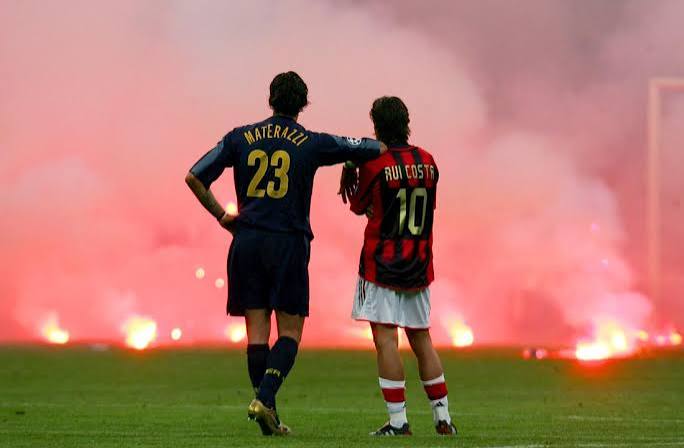
The Derby della Madonnina is known for its elegance and tactical sophistication, but it can also turn ugly, as evidenced by the flares and fireworks that have occasionally marred the occasion. The two clubs have a combined 10 European Cups, making this one of the most decorated derbies in the world. When the red and black of Milan meets the blue and black of Inter, the city stops—and the world watches.
The North London Derby: A Rivalry of Proximity and Pride
Arsenal vs. Tottenham Hotspur is one of the Premier League’s most eagerly anticipated fixtures, and it’s rooted in the simple fact that the two clubs are separated by just a few miles in North London. The rivalry intensified in 1913 when Arsenal moved from Woolwich to Highbury, stepping directly into Tottenham’s territory. Since then, it’s been a battle for local supremacy, with each club’s success often measured against the other’s failures.
The derby has seen its share of drama, from the infamous “Battle of the Old Lane” in 1915 to Harry Kane’s record-breaking goals in the fixture. The two stadiums—the Emirates and the Tottenham Hotspur Stadium—are now state-of-the-art, but the animosity remains gloriously old-school. For fans, a win in the North London derby can make a season; a loss can ruin a week.
The Derby della Capitale: Rome’s Political Divide
Roma vs. Lazio is a derby with deep political overtones. Lazio was founded in 1900 in the Prati district, historically a middle-class area, and has at times been associated with far-right politics. Roma, created in 1927 through a merger of several clubs, has often been seen as the team of the city’s working class and left-leaning communities. The Stadio Olimpico, shared by both clubs, becomes a cauldron of tension, with choreographed displays and a palpable sense of danger.
The derby is not just about football; it’s about which Rome you belong to. The rivalry has produced some of Italy’s most iconic players, from Francesco Totti to Alessandro Nesta, and it remains one of the most passionate fixtures in Serie A. In recent years, the political edge has softened, but the intensity on the pitch is as fierce as ever.
Why Derbies Matter
Derbies are more than just football matches; they are social rituals that bind communities and transmit history from generation to generation. They provide a sense of identity in an increasingly globalized world, where clubs are owned by foreign investors and players move across continents every transfer window. A derby is a reminder that football is still local, still tribal, and still capable of evoking raw, unscripted emotion.
They also define cities. Glasgow is unimaginable without the Old Firm’s sectarian schism; Buenos Aires without the class warfare of the Superclásico; Rio without the carnival of the Fla-Flu. These rivalries are woven into the urban fabric, shaping everything from local politics to cultural output. For the fans, a derby is a matter of pride, honor, and belonging—a chance to assert, for 90 minutes, that their side of the city is the true heart of it.
The greatest football derbies are not merely fixtures on a calendar; they are living histories, played out in real time by teams that carry the hopes and grievances of their communities. From the sectarian battlefields of Glasgow to the class-conscious streets of Buenos Aires, these rivalries remain the purest expression of football’s power to unite and divide. As the sport evolves, the derbies endure, reminding us that no matter how much money flows into the game, the heart of football still beats in the cities where it was born.
Summary
- Derbies are local matches with high stakes, distinct from national rivalries like El Clásico.
- The Old Firm (Celtic vs. Rangers) is rooted in sectarian divides and has seen the two clubs dominate Scottish football since 1985.
- The Merseyside Derby is the most-played fixture in English top-flight history, with a unique mix of intensity and mutual respect.
- The Superclásico (Boca vs. River) is widely considered the most intense derby, reflecting class and national identity.
- Derbies like the Fla-Flu and Derby della Madonnina show that rivalry can be fierce without being hateful, celebrating style and tradition.
FAQ
Q: What is the difference between a derby and a rivalry?
A: A derby is specifically a match between two teams from the same city or region, while a rivalry can be any intense competitive relationship, including national rivalries like Barcelona vs. Real Madrid.
Q: Why is the Old Firm considered so significant?
A: The Old Firm is significant because it reflects deep religious and political divisions in Glasgow, making it one of the most charged fixtures in world sport, with a history of sectarian tension.
Q: What makes the Superclásico so intense?
A: The Superclásico is intense due to the class and geographic divide between Boca Juniors (working-class) and River Plate (middle-class), which taps into Argentine national identity and produces a volatile atmosphere.
Q: Are all derbies hostile?
A: No, some derbies like the Merseyside Derby are known for mutual respect, while others like the Fla-Flu are more celebratory. Hostility varies based on historical and social factors.
Q: Why are derbies important to cities?
A: Derbies define cities by encoding local identities, histories, and social divisions, providing a sense of belonging and community pride that transcends football.