Tag: NYC

  • NYC vs. LA: The Real Difference Is the Vibe, Not Just the Weather

    Los Angeles vs. New York City: What to Know Before Moving

    New York and Los Angeles are the two great American metropolises, but they might as well be on different planets. One is a dense, vertical island of 8.3 million people where you ride the subway and walk everywhere. The other is a sprawling, horizontal basin of 3.8 million people where you drive everywhere and check the air quality index. The stereotypes are familiar: New Yorkers are rude, fast, and ambitious; Angelenos are laid-back, healthy, and superficial. But the real difference is deeper than attitude—it’s a set of physical constraints, economic structures, and historical paths that shape how life feels on each coast.

    Density vs. Sprawl: The Physical Reality

    Start with the numbers. New York City packs 27,000 people into every square mile; Los Angeles manages just 8,300. That density changes everything. In Manhattan, you can walk from a meeting in Midtown to a dinner in SoHo, grab groceries on the way, and never touch a car. The subway—with 472 stations—makes the city an interconnected web. In LA, the city sprawls across 500 square miles, and the county includes 88 incorporated cities. You don’t walk to meet a friend; you drive 30 minutes on the I-405. Car ownership is above 80% of households in LA, compared to 45% in NYC. The geography alone creates two different rhythms: one vertical and compressed, the other horizontal and diffuse.

    Climate Creates Culture

    The weather is not just a talking point—it’s a social architect. New York has four distinct seasons: January averages 39°F, July averages 85°F with humidity. Winters force you indoors, so social life often happens in bars, restaurants, and apartments. The cold makes people more direct—you don’t have time for pleasantries when it’s freezing. LA’s Mediterranean climate—68°F in January, 84°F in July—encourages year-round outdoor living. You can hike Runyon Canyon in February or beach-volleyball in December. That sunshine makes people more relaxed, but it also spreads everything out. The city’s semi-arid climate brings drought, wildfires, and smog, though. It’s not all paradise.

    Economic Engines and Career Vibes

    New York is the financial capital—Wall Street, the NYSE, NASDAQ, and a media and tech sector known as Silicon Alley. Its GDP is $1.8 trillion. The vibe is hustle: networking is aggressive, success is measured by titles and salaries, and the pace is relentless. Los Angeles, with a $1.2 trillion GDP, is powered by entertainment, aerospace, tech (Silicon Beach), and the Port of LA. The vibe is more informal: you meet for coffee or a hike, and success is measured by projects and personal brand. “Who you know” matters in both, but in LA, it’s about visibility; in NYC, it’s about your résumé. If you’re a lawyer or banker, NYC is the grind. If you’re a screenwriter or designer, LA is the place where the industry lives.

    Social Life and Dating: Proximity vs. Distance

    In NYC, social life is dense but transactional. You meet people through work, apps, or mutual friends, and you’re often direct about intentions. Dates are drinks or dinner, and because you’re all crammed together, relationships can escalate quickly. In LA, social life is car-dependent. “Let’s hang out” can mean a 45-minute drive, so plans are often vague. Dating is more casual—coffee or a hike is a common first date, and the wellness culture seeps into everything: yoga, meditation, and clean eating are part of the identity. The distance also means you might only see someone once a week, which slows things down. Neither is better; they’re just different speeds.

    The “vibe” comparison is a cultural shorthand that gained traction in the 20th century—from literature and film to the 1990s hip-hop rivalry. But it’s not just a stereotype. The physical layout, climate, and economy of each city create a distinct social psychology. New York rewards speed and bluntness; LA rewards ease and surface friendliness. If you move from one to the other, you’ll feel it immediately. That’s the real difference—not just the weather, but the way the city makes you move, think, and connect.

    New York and Los Angeles are both world-class cities, but they operate on different principles. One is a dense, intense machine of ambition; the other is a sunny, spread-out collection of industries and lifestyles. The choice between them isn’t about which is better—it’s about which rhythm matches your own. If you value efficiency and directness, NYC will feel like home. If you value space and a relaxed pace, LA might be your vibe. The only way to know is to visit, or better yet, live in one for a year.

    Summary

    • NYC: 8.3M people, 27,000/sq mile, walkable, subway, four seasons, finance/media hustle.
    • LA: 3.8M people, 8,300/sq mile, car-centric, mild climate, entertainment/tech laid-back.
    • Economy: NYC GDP $1.8T (finance), LA GDP $1.2T (entertainment/tech).
    • Social: NYC direct and dense; LA casual and spread out.
    • Weather shapes culture: NYC indoor winters, LA outdoor year-round.

    FAQ

    Q: Is it true that New Yorkers are rude?
    A: Not rude, just direct. The density and pace mean people are efficient with time. They’ll tell you to move if you’re blocking the sidewalk, but they’ll also help you figure out the subway if you ask.

    Q: Is LA really that car-dependent?
    A: Yes. Car ownership is over 80% of households. The city is spread out, and public transit is limited. You’ll likely drive to most places, and parking and traffic are part of daily life.

    Q: Which city has a better food scene?
    A: Both are excellent, but different. NYC has dense, diverse, and fast options—from street carts to Michelin-starred restaurants. LA emphasizes fresh, organic, and health-conscious dining, with a strong taco culture and a focus on “clean” eating.

    Q: How does the cost of living compare?
    A: Both are expensive. NYC has notoriously high rents (median 1BR in Manhattan ~$3,500+), but you might not need a car. LA’s rents are slightly lower (~$2,300+ citywide), but you’ll pay for gas, insurance, and parking, which adds up.

    Q: Which city is better for a career in tech?
    A: NYC has Silicon Alley (finance tech, media tech), while LA has Silicon Beach (entertainment tech, startups). It depends on your niche. NYC is larger in overall tech employment, but LA is growing fast, especially in areas like gaming and digital media.
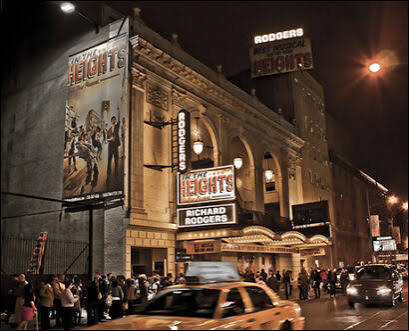
  • The Lost Theaters of Broadway: Forgotten Playhouses and Their Ghosts

    The Lost Theaters of Broadway: Forgotten Playhouses and Their Ghosts

    In the 1920s, Broadway boasted around 80 active theaters. Today, only 41 remain. The rest—more than 50 playhouses—have been demolished, converted, or otherwise lost to time. Their stories are as dramatic as any show they hosted, from elephant-filled spectacles to the sit-ins that tried to save them.

    These vanished theaters aren’t just footnotes. They were architectural marvels, cultural landmarks, and the stages where Broadway’s golden age unfolded. Their loss reshaped the district and sparked a preservation movement that protects what’s left. Let’s step back in time to visit a few of these forgotten playhouses and meet the ghosts that still haunt their memory.

    The Hippodrome: Where Elephants Took Center Stage

    When the Hippodrome Theatre opened in 1905, it was the largest theater in the world, seating 5,300 people. Located on Sixth Avenue between 43rd and 44th Streets, it wasn’t just a theater—it was a spectacle machine. Its massive stage could be flooded for aquatic ballets, and its productions featured elephants, acrobats, and casts of hundreds.

    The Hippodrome was built by showmen Frederic Thompson and Elmer “Skip” Dundy, who had found success with the Luna Park amusement park at Coney Island. They brought that same sense of wonder to Broadway. Shows like A Yankee Circus on Mars and Wizard of Oz thrilled audiences with elaborate special effects and massive scale.

    But the Hippodrome couldn’t survive the changing times. By the 1920s, its spectacles were too expensive to produce, and the theater struggled to compete with movies. It closed in 1939 and was demolished in 1950 to make way for office space. Today, the site is home to a parking garage, but the memory of those elephants and water tanks lingers in Broadway lore.

    The Ziegfeld Theatre: A Follies Palace

    Florenz Ziegfeld Jr. built the Ziegfeld Theatre in 1927 specifically for his famous Follies. Designed by architect Thomas W. Lamb, the theater was a lavish Art Deco masterpiece, with a façade decorated with a mosaic of the sun god Apollo and a lobby that rivaled any European opera house. It was located on Sixth Avenue and 54th Street.

    The Ziegfeld Theatre was as much a star as the shows it housed. The Follies were known for their beautiful chorus girls, extravagant costumes, and elaborate sets. The theater also hosted the premiere of the musical Show Boat in 1927, which many consider the first modern American musical.

    After Ziegfeld’s death in 1932, the theater fell on hard times. It became a movie house in the 1940s, showing films like Gone with the Wind. In 1966, despite protests from preservationists and theater lovers, it was demolished to make way for a 46-story office tower. The current building, known as 1345 Avenue of the Americas, sits on the site, with only a small plaque marking what was once one of Broadway’s most glamorous venues.

    The Empire Theatre: A Record-Breaking House

    The Empire Theatre opened in 1893 on Broadway and 40th Street, with a production of The Girl I Left Behind Me. It was one of the first theaters built in the new Times Square district, and it quickly became one of the most prestigious addresses on Broadway.

    The Empire was known for its elegant Beaux-Arts design and its association with actor John Drew, who starred in many productions there. But its most famous moment came in 1922 with the premiere of Abie’s Irish Rose, a comedy about a Jewish-Irish marriage that was savaged by critics but became a massive hit, running for 2,327 performances—a record at the time.

    The theater continued to host hits through the 1940s, but by the 1950s, the surrounding area was in decline. In 1953, the Empire was demolished to make way for a parking lot, and later an office building. Its loss was mourned by theater historians, who considered it one of the finest examples of 19th-century theater architecture.

    The Morosco and Helen Hayes: The Fight That Changed Broadway

    Perhaps no loss had a greater impact than the demolition of the Morosco and Helen Hayes theaters in 1982. These two historic houses, along with the smaller Bijou and Gaiety theaters, sat on a block between Broadway and Eighth Avenue, 45th and 46th Streets. They were slated for demolition to make way for the Marriott Marquis Hotel.

    The Morosco, which opened in 1917, was designed by Herbert J. Krapp and was home to many important plays, including Tennessee Williams’ The Glass Menagerie (1945) and Cat on a Hot Tin Roof (1955). The Helen Hayes, originally called the Fulton, opened in 1911 and was a favorite of the actress it was later named after.

    The plans to demolish them sparked a major controversy. A group called the “Save the Theatres” campaign organized protests, with actors like Carol Channing and Colleen Dewhurst leading the charge. They staged a 42-day sit-in at the Morosco, hoping to block the demolition. Despite their efforts, the theaters were torn down in 1982.

    The irony is that the Marriott Marquis Hotel, which replaced them, was designed with a theater—the Marquis Theatre—but it’s a modern, multi-purpose space that lacks the charm and history of the lost houses. The loss of the Morosco and Helen Hayes galvanized preservationists, leading to the creation of the Theatre District Landmark District in 1988, which now protects the exteriors of many remaining theaters.

    The New York Theatre: Where TV Made History

    Sometimes a lost theater’s story doesn’t end with its demolition. The New York Theatre, which opened in 1909 at 44th Street and Broadway, was designed by architect George Keister in a striking Beaux-Arts style. It hosted legitimate theater productions for years, but in 1936, it was converted into a CBS television studio.

    This is where The Ed Sullivan Show was broadcast from 1948 to 1971. Some of the most iconic moments in television history happened on that stage, including Elvis Presley’s hip-shaking performances and The Beatles’ American debut in 1964. The theater, now known as Studio 50, was a television landmark.

    In 1987, CBS moved out, and the building was demolished to make way for a parking garage. Today, the site is part of the Times Square redevelopment, but the ghost of Elvis and the Fab Four still seems to linger in the air of that block.

    The Criterion Theatre: A Name That Lives On

    The Criterion Theatre opened in 1900 at 1511 Broadway, designed by architect W. T. P. Dunlap. It was known for its stylish productions and its location in the heart of the theater district. In 1935, it was demolished to make way for the Criterion Center, a complex that included a smaller theater and retail space.

    The name “Criterion” was revived for the modern Criterion Theatre, which opened in 1997 and is now a popular Broadway venue. But the original Criterion is gone, its ornate interior lost to the wrecking ball. Its story is a reminder that even in the theater district, nothing is permanent.

    What We Lost, and What We Gained

    The loss of these theaters had a profound effect on Broadway. For one, it reduced the number of available venues, making it harder for new shows to find a stage. It also destroyed irreplaceable architecture, from the Art Nouveau of the New Amsterdam (which fortunately survives) to the Beaux-Arts of the Empire.

    But the losses also sparked a movement. The fight to save the Morosco and Helen Hayes led to the landmark designation of dozens of theaters in 1988. Today, organizations like the New York Public Library for the Performing Arts and the Theatre Historical Society of America maintain archives with photographs, playbills, and architectural drawings of the lost theaters, ensuring they are not forgotten.

    Broadway has always been a place of reinvention. Theaters come and go, but the spirit of live performance endures. As you walk through Times Square today, surrounded by neon and crowds, it’s worth remembering the ghosts of the theaters that once stood where you’re standing—and the shows that made them legendary.

    The lost theaters of Broadway are more than just a list of demolished buildings. They were homes to some of the most significant productions in American theater history, and their loss reshaped the district we know today. But their memory lives on in the preservation efforts they inspired and in the archives that keep their stories alive. Next time you’re at a Broadway show, take a moment to think about the playhouses that are no longer there—and the ghosts of the performances that still echo through Times Square.

    Summary

    • Over 50 Broadway theaters have been lost since the late 19th century, leaving only 41 of the peak 80.
    • The Hippodrome (1905–1939) was the world’s largest theater, featuring elephants and water tanks.
    • The Ziegfeld Theatre (1927–1966) premiered Show Boat and was demolished for an office tower.
    • The Empire Theatre (1893–1953) hosted the record-breaking Abie’s Irish Rose.
    • The 1982 demolition of the Morosco and Helen Hayes theaters sparked the preservation movement that led to the 1988 landmark designation.

    FAQ

    Q: How many Broadway theaters have been lost?
    A: More than 50 theaters have been lost since the late 19th century, with the peak number of active theaters reaching about 80 in the 1920s. Today, there are 41.

    Q: What was the largest lost theater?
    A: The Hippodrome Theatre, which opened in 1905, was the largest in the world at the time, with 5,300 seats. It was demolished in 1950.

    Q: Why were so many theaters demolished?
    A: The rise of cinema, the Great Depression, and urban renewal projects led to closures and demolitions. The 1982 Marriott Marquis project was a tipping point that sparked preservation efforts.

    Q: What is the Theatre District Landmark District?
    A: Created in 1988, it’s a historic district designated by the New York City Landmarks Preservation Commission that protects the exteriors of many surviving Broadway theaters from demolition.

    Q: Where can I find information about lost theaters?
    A: The New York Public Library for the Performing Arts and the Theatre Historical Society of America have extensive archives, including photographs, playbills, and architectural drawings.