Tag: nuclear weapons

  • The Secret City: Inside the Manhattan Project’s Race to Build the Bomb

    The Secret City: Inside the Manhattan Project’s Race to Build the Bomb

    In the summer of 1945, a handful of scientists gathered on a remote stretch of New Mexico desert. At 5:29 a.m., the first atomic bomb detonated, turning night into day and sand into glass. The Trinity test was the culmination of a three-year, $2 billion gamble that had consumed the lives of 130,000 people most of whom had no idea what they were building.

    This is the story of that gamble: a secret race against Nazi Germany, a convergence of brilliant minds and brute industrial force, and the moment when humanity’s relationship with science changed forever.

    A Letter That Changed History

    The Manhattan Project began with a letter. In August 1939, Albert Einstein and physicist Leo Szilard wrote to President Franklin D. Roosevelt, warning that Nazi Germany might be developing an atomic bomb. The theoretical groundwork was already in place: Einstein’s equation E=mc² had hinted at the energy locked inside matter, and in 1938, German chemists Otto Hahn and Fritz Strassmann had split the uranium atom a discovery explained by Lise Meitner and Otto Frisch as nuclear fission.

    Roosevelt took action. The U.S. Advisory Committee on Uranium was formed, but it moved slowly. It wasn’t until 1942, when the U.S. Army Corps of Engineers took over, that the project gained its name and its urgency. The Manhattan Project was born.

    A City of Secrets

    General Leslie Groves, a no-nonsense military engineer, was put in charge. He chose J. Robert Oppenheimer, a theoretical physicist with a reputation for brilliance and a left-leaning past, to lead the scientific effort. Together, they created a network of secret sites across the country.

    Los Alamos, New Mexico, became the brain a remote laboratory on a mesa where Oppenheimer gathered the greatest minds in physics: Enrico Fermi, Hans Bethe, Richard Feynman, Edward Teller. They worked in an atmosphere of urgency and secrecy, solving problems that had never been attempted.

    At Oak Ridge, Tennessee, workers built the K-25 gaseous diffusion plant the largest building in the world at the time, covering 44 acres to separate the rare uranium-235 isotope from its more common cousin. In Hanford, Washington, nuclear reactors churned out plutonium, an element that barely existed in nature.

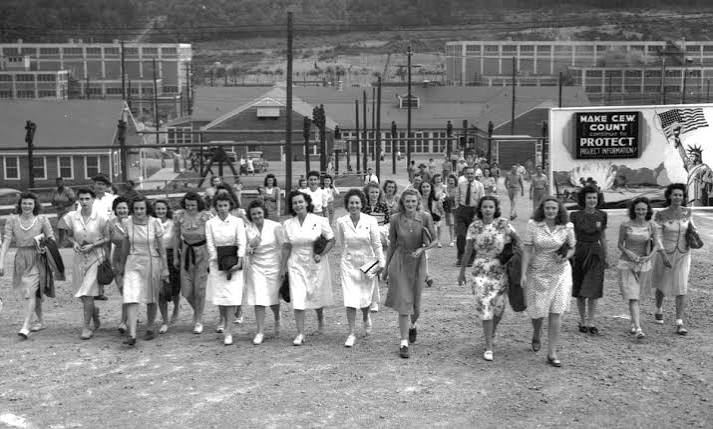
    The scale was staggering. At its peak, the project employed 130,000 people across 30 sites. Most of them the factory workers, the technicians, the clerks had no idea what they were building. They knew only that it was vital to the war effort, and that they must never speak of it.

    The Race Against Germany

    The project was driven by fear. German scientists had discovered fission, and the Nazis had a head start. But the German program, the Uranverein, was underfunded and fragmented. It never came close to a weapon. The Manhattan Project’s scientists didn’t know that. They worked as if every day mattered, because it might.

    There was also a quieter race: the Soviet Union. Even as the United States worked in secret, Soviet spies were inside the project. Klaus Fuchs, a British physicist, passed detailed information to the Soviets. Theodore Hall, a young American scientist, did the same. Their espionage would accelerate the Soviet bomb program by years.

    The First Chain Reaction

    On December 2, 1942, Enrico Fermi stood beneath the stands of a squash court at the University of Chicago. Above him, a pile of graphite and uranium—Chicago Pile-1—was about to become the world’s first controlled nuclear chain reaction. When the neutron count began to rise, and the reaction sustained itself, Fermi smiled. He had proven that a chain reaction was possible. The bomb was now a matter of engineering.

    But engineering was a challenge. The gun-type design, which fired one piece of uranium into another, was relatively straightforward—but it required uranium-235. The implosion design, which squeezed a sphere of plutonium with explosives, was far more complex. At Los Alamos, Oppenheimer’s team wrestled with the physics of implosion, testing and retesting until they got it right.

    Trinity and the End of the War

    On July 16, 1945, the world’s first nuclear explosion lit up the New Mexico sky. The blast was visible 200 miles away. Oppenheimer later recalled a line from the Bhagavad Gita: “Now I am become Death, the destroyer of worlds.”

    Less than a month later, on August 6, a B-29 bomber named Enola Gay dropped “Little Boy” on Hiroshima, Japan. Three days later, “Fat Man” fell on Nagasaki. The bombs killed an estimated 200,000 people, most of them civilians. Japan surrendered on August 15, 1945.

    The war was over. But the questions were just beginning.

    A Moral Reckoning

    Even before the bombs were dropped, scientists had debated their use. The Franck Report, written in June 1945, urged a demonstration explosion rather than an attack on cities. Leo Szilard, who had helped start the project, petitioned against use. But the decision was made by President Harry Truman, who had only learned of the project after Roosevelt’s death. Truman’s stated goal was to end the war and save American lives. An invasion of Japan, he argued, would have cost hundreds of thousands of casualties.

    Oppenheimer, initially supportive, later expressed deep regret. He opposed the development of the hydrogen bomb, a weapon far more powerful than the ones he had helped create. He was called before a security hearing in 1954 and stripped of his security clearance—a punishment for his past associations and his outspokenness.

    The project officially ended with the Atomic Energy Act of 1946, which transferred control to the civilian Atomic Energy Commission. But its legacy was permanent. It had created the template for “big science”—government-funded research on a massive scale—and it had unleashed a nuclear age that would define the Cold War and beyond.

    The workers at Oak Ridge and Hanford, many of whom had labored in ignorance, later learned what they had built. Some faced health problems from radiation exposure. The communities around the sites absorbed the environmental costs. The full human toll is still being measured.

    The Manhattan Project was a triumph of science and a tragedy of war. It was a race that ended with a weapon that could destroy the world—and a question that still haunts us: what do we do with it?

    The Manhattan Project was not just a scientific achievement or a military milestone; it was a profound turning point in human history. It demonstrated that the same knowledge that could power cities could also vaporize them. As we live with the legacy of that secret race—the nuclear arsenals, the national laboratories, the ethical quandaries—we are still, in a sense, inside that desert test site, watching the light and wondering what it means.

    Summary

    • The Manhattan Project was a secret U.S. program (1942-1946) that built the first atomic bombs, employing 130,000 people across 30 sites.
    • Key sites included Los Alamos (design), Oak Ridge (uranium enrichment), and Hanford (plutonium production).
    • The bombs, “Little Boy” and “Fat Man,” were dropped on Hiroshima and Nagasaki in August 1945, leading to Japan’s surrender.
    • The project was motivated by fear of a Nazi bomb, but Soviet espionage (Klaus Fuchs, Theodore Hall) accelerated the Soviet program.
    • It sparked debates over ethics, led to the Atomic Energy Act of 1946, and established the model for large-scale government-funded science.

    FAQ

    Q: Why was it called the Manhattan Project?
    A: It began in the Manhattan Engineer District of the U.S. Army Corps of Engineers, and the name stuck even as the work moved to other sites.

    Q: How much did the project cost?
    A: Roughly $2 billion at the time, equivalent to over $30 billion today.

    Q: Did Germany have an atomic bomb program?
    A: Yes, the Uranverein, but it was underfunded and never came close to building a weapon.

    Q: How did Soviet spies affect the outcome?
    A: Klaus Fuchs and others passed secrets that allowed the Soviet Union to build its own bomb by 1949, accelerating the Cold War arms race.

    Q: Were there protests against using the bomb?
    A: Yes, the Franck Report and Leo Szilard’s petition urged a demonstration instead of use on cities, but the U.S. government decided to drop the bombs to end the war quickly.
  • Saudi Arabia’s Nuclear Ambitions: What History Tells Us About Intentions

    Saudi Arabia’s Nuclear Ambitions: What History Tells Us About Intentions

    For decades, Saudi Arabia has insisted its nuclear program is peaceful, yet its leaders have repeatedly hinted they would seek atomic bombs if Iran did. This ambiguity has fueled global speculation. To understand where Saudi Arabia is headed, we must look back at its past statements, regional dynamics, and the delicate dance of international diplomacy.

    From the 2006 Gulf nuclear wave to the recent normalization talks with Israel, Riyadh’s nuclear path has been shaped by a mix of economic needs and security fears. The kingdom burns nearly a million barrels of oil each summer just to keep air conditioners running—a costly habit it hopes to break with nuclear power. But beneath the civilian veneer lies a strategic hedge: the insistence on enrichment rights that could one day produce weapons-grade material.

    The Treaty and the Reactors

    Saudi Arabia is a signatory to the Treaty on the Non-Proliferation of Nuclear Weapons (NPT) since 1988 and has a Comprehensive Safeguards Agreement with the International Atomic Energy Agency (IAEA). It has no known covert enrichment or reprocessing facilities, and IAEA inspections have found no undeclared nuclear material. Yet, the kingdom has announced plans to build at least 16 civilian nuclear reactors over the next two decades, targeting 17 gigawatts of capacity by 2040. As of 2024, no reactors are under construction, but the program is in early procurement stages.

    The Conditional Statements

    The most telling signs of Saudi intentions come from its leadership. In 2018, Crown Prince Mohammed bin Salman (MBS) said, “If Iran develops a nuclear bomb, we will follow suit as soon as possible.” Similar statements were made in 2009 by Prince Turki al-Faisal and again in 2023. These are not off-the-cuff remarks; they are deliberate signals. They suggest that Saudi Arabia’s nuclear program is not merely about energy but about maintaining a strategic balance with Iran.

    The 2006–2009 Gulf Nuclear Wave

    After Iran’s nuclear program became public in 2002–2003, Gulf states, led by Saudi Arabia, announced a collective interest in civilian nuclear energy in 2006. Analysts widely saw this as a hedge against Iran’s potential breakout. In 2009, Prince Turki al-Faisal warned that if Iran crossed certain thresholds, Saudi Arabia would seek “the same capabilities.” This was a clear message: Riyadh was watching Tehran closely.

    The 2015 Iran Nuclear Deal (JCPOA)

    The Joint Comprehensive Plan of Action (JCPOA) in 2015 constrained Iran’s enrichment program, temporarily easing Saudi concerns. Riyadh publicly supported the deal but privately worried that it legitimized Iran’s enrichment capacity and ignored ballistic missiles and regional proxies. During this period, Saudi nuclear ambitions were relatively quiet, as the perceived Iranian threat was reduced.

    The 2018 Breakout Statements

    When the US withdrew from the JCPOA in 2018 and Iran resumed enrichment, MBS’s “follow suit” comment became a focal point. It was widely interpreted as a threat to trigger a regional arms race if Iran weaponized. This statement underscored the conditional nature of Saudi intentions: they would not seek weapons unless Iran did.

    The 2023–2024 Normalization Talks

    As part of US-brokered Saudi–Israel normalization discussions in 2023–2024, the US reportedly offered a civilian nuclear deal with a “gold standard”—meaning no enrichment rights. Saudi Arabia insisted on enrichment, and talks paused after the October 7, 2023, Hamas attack and subsequent Gaza war. In 2024–2025, discussions resumed, with reports suggesting the US might allow enrichment under strict safeguards—a major policy shift.

    Economic Drivers

    Saudi Arabia burns large amounts of oil domestically for electricity, especially in summer. Nuclear power would free up oil for export, a key economic incentive. The Vision 2030 plan seeks to diversify the economy and reduce oil dependence, and nuclear energy is part of that strategy. These economic drivers are often cited by officials to argue the program is purely civilian.

    The Hedge Perspective

    Many nonproliferation analysts argue Saudi Arabia is pursuing a “latent capability” strategy: building the infrastructure and legal groundwork so it could quickly develop weapons if Iran does. The insistence on enrichment rights is the key indicator. Under this view, Saudi Arabia does not want weapons today but wants the option—a “breakout” capability similar to Japan’s.

    The Sincere Civilian Perspective

    Saudi officials and some Western energy experts argue the program is purely civilian and economically rational. They point to the high cost of solar (nighttime storage issues) and the need for baseload power. They note Saudi Arabia has not built any enrichment facility, unlike Iran. This view holds that Saudi statements about “following Iran” are rhetorical deterrence, not policy.

    The Regional Security Dilemma Perspective

    Realist scholars argue that Saudi Arabia’s nuclear interest is a rational response to Iran’s program and the unreliability of US security guarantees. The 2019 Abqaiq attack, where the US did not retaliate, reinforced this view. From this perspective, Saudi Arabia would want weapons if it believed the US “nuclear umbrella” was no longer credible. This perspective emphasizes that Saudi security is fundamentally about deterrence against Iran, not energy.

    The US Leverage and the 123 Agreement

    US–Saudi negotiations on a civilian nuclear cooperation agreement (a “123 Agreement”) have been ongoing since 2008 but have stalled over Saudi demands for enrichment and reprocessing rights. The US has only granted such rights to a few countries like Japan. Meanwhile, Saudi Arabia has signed cooperation agreements with China, France, South Korea, and Russia, diversifying its options beyond the US. This gives Riyadh leverage: if Washington won’t offer enrichment, others might.

    What History Tells Us

    History suggests that Saudi Arabia’s nuclear program is a strategic hedge, not a fixed commitment to weapons. The kingdom has consistently conditioned its nuclear ambitions on Iran’s behavior. It has not built enrichment facilities, but it has fought for the right to do so. This dual track—civilian infrastructure plus the legal right to enrich—is the hallmark of a latent capability. Whether Saudi Arabia will cross the threshold depends on Iran, US security guarantees, and the success of diplomacy.

    Saudi Arabia’s nuclear future hangs in the balance. It is not a state racing to build a bomb, but it is also not a purely civilian program. The kingdom is building the infrastructure and securing the rights that would allow it to weaponize quickly if needed. History shows that Saudi intentions are conditional, driven by the Iranian threat and the reliability of US protection. The coming years will reveal whether Riyadh’s hedge becomes a bomb or remains a bargaining chip.

    Summary

    • Saudi Arabia is an NPT signatory with no known covert nuclear facilities, but it has announced plans for 16 civilian reactors.
    • Leaders have repeatedly said they would seek nuclear weapons if Iran does, signaling a conditional intent.
    • The program is partly economic—to free up oil for export—but also a strategic hedge against Iran.
    • Saudi Arabia insists on enrichment rights in US negotiations, a key indicator of latent capability.
    • The kingdom has diversified nuclear partnerships with China, Russia, and others, reducing US leverage.

    FAQ

    Q: Does Saudi Arabia currently have nuclear weapons?
    A: No. Saudi Arabia is a signatory to the NPT and has no known nuclear weapons program. IAEA inspections have found no undeclared nuclear material.

    Q: Why does Saudi Arabia want nuclear power?
    A: Primarily to reduce domestic oil consumption for electricity, freeing up more oil for export. It also aligns with the Vision 2030 economic diversification plan.

    Q: What is the ‘gold standard’ in nuclear agreements?
    A: It refers to a 123 Agreement that does not allow enrichment or reprocessing rights. The US has only granted this to a few countries, like Japan.

    Q: Could Saudi Arabia quickly build a bomb if it decided to?
    A: If it acquired enrichment technology and facilities, it could potentially develop a weapon within a few years, but it currently lacks such infrastructure.

    Q: How does Iran’s nuclear program affect Saudi decisions?
    A: Saudi leaders have explicitly linked their nuclear ambitions to Iran’s. If Iran develops a bomb, Saudi Arabia has said it would follow suit.