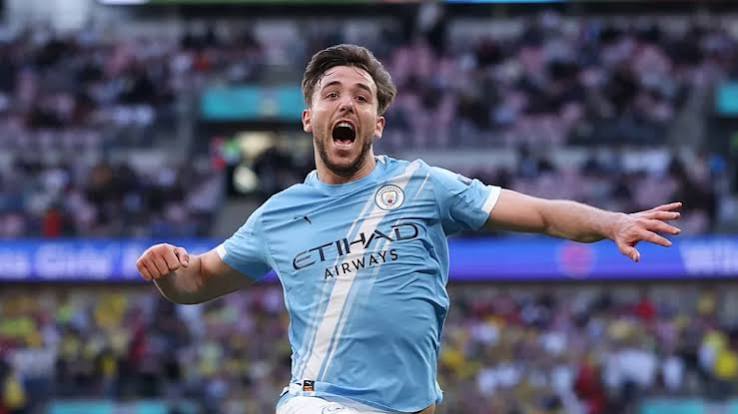
Eighteen months after Manchester City paid €60 million to bring Nico González from Porto as an emergency Rodri replacement, the Spanish midfielder is on the verge of leaving for Newcastle United. The deal, reportedly worth around €50–55 million with add-ons, would see City recoup the majority of their outlay—a rare admission of a misstep in their usually precise recruitment machine.
But this is not a simple tale of a flop. González arrived in January 2025 at a chaotic moment: City were reeling from Rodri’s ACL injury, and the young Spaniard was thrust into a title race with little time to adapt. His limited impact—roughly 20–25 appearances across all competitions—was more a product of circumstance than ability. Now, with Rodri back and competition fierce, González needs a reset. Newcastle, desperate for midfield energy and creativity, appear willing to offer it.
The Context: A Mid-Season Gamble That Didn’t Pay Off
When City signed González from Porto in January 2025, the fee raised eyebrows. €60 million for a player with only 18 months of top-level European football? It was a premium price for a midfielder who had impressed in Portugal but was unproven in the Premier League. The logic was sound: Rodri’s ACL injury had exposed City’s lack of a natural defensive midfield cover, and González’s profile—press-resistant, progressive, and energetic—seemed a perfect fit for Pep Guardiola’s system.
But the reality was more complicated. González arrived mid-season, with no pre-season to learn City’s positional play. He started sporadically, often in cup ties or as a late substitute, and struggled to impose himself. By the time Rodri returned to full fitness in late 2025, González had slipped to fifth choice in midfield, behind Mateo Kovačić, Bernardo Silva, Matheus Nunes, and even teenager Rico Lewis. The player’s own metrics—pass completion, progressive carries, defensive actions—were solid, but never spectacular enough to force Guardiola’s hand.
The Numbers: A Financial Reality Check
City’s original deal with Porto included €60 million guaranteed, plus up to €10 million in add-ons. Those add-ons were tied to appearances, trophies, and Champions League performance—none of which have triggered in significant measure. So the actual cost to City stands at €60 million.
Newcastle’s offer, reported at around €50–55 million, includes performance-related bonuses. The guaranteed upfront fee is likely closer to €45–50 million. That means City will take a loss on the original transfer—but not as large as it might seem. Under football’s amortization rules, City spread the €60 million cost over González’s 4.5-year contract, meaning his book value at the time of sale is significantly lower than €60 million. A sale at €50 million could even result in a small accounting profit, depending on the amortization schedule.
For Newcastle, this is an opportunistic purchase. They get a 23-year-old Spanish midfielder with Champions League experience, Barcelona academy pedigree, and a point to prove—at a discount from his peak value. The fee fits within their PSR constraints, especially if they offload a fringe player or two in the same window.
Why It Didn’t Work at City: Tactical Mismatch, Not Talent Deficiency
It’s tempting to label González a flop. But that would ignore the circumstances. At Porto, he was the fulcrum of a transitional team—receiving the ball in space, driving forward, and linking play. City’s positional play demands something different: patience, constant movement into half-spaces, and an almost robotic understanding of Guardiola’s geometric patterns. González is not that player. He’s more instinctive, more vertical, more comfortable in chaos.
This tactical mismatch was evident in his performances. He often looked lost in City’s slow build-up, unsure whether to push forward or hold his position. His pressing was energetic but undisciplined, leaving gaps that Premier League opponents exploited. Guardiola, known for his exacting standards, never fully trusted him in high-stakes matches. The result: a player who started only a handful of league games and spent most of his time on the bench.
Newcastle’s Gamble: Reclamation Project or System Fit?
Eddie Howe’s Newcastle are a different proposition. They play a more direct, high-energy style—pressing aggressively, transitioning quickly, and giving midfielders license to roam. That suits González’s natural game. He can be the box-to-box presence alongside Bruno Guimarães, or the deep-lying playmaker in a double pivot. His ability to carry the ball forward and break lines would add a new dimension to a midfield that sometimes lacks creativity against low-block defenses.
There’s also the World Cup factor. Spain’s midfield is stacked—Rodri, Pedri, Gavi, Fabián Ruiz, Mikel Merino—and González needs regular minutes to force his way into Luis de la Fuente’s plans for 2026. A move to Newcastle, where he’d be a guaranteed starter, is his best chance. The club is also on an upward trajectory, with Champions League qualification a realistic goal. This isn’t a sideways move; it’s a step up in responsibility and visibility.
The risks are real. González hasn’t proven he can handle the physicality and pace of the Premier League week in, week out. His confidence may be fragile after 18 months on the fringes. And Newcastle’s system, while more accommodating, still demands discipline and tactical awareness. But the upside is equally clear: a young, talented player with a chip on his shoulder, given the platform to rebuild his reputation.
The Market’s Verdict: A Correction, Not a Catastrophe
This transfer is a classic example of the market correcting an overvaluation. City overpaid for a player they didn’t need in the long term, and now they’re cutting their losses. Newcastle, by contrast, are buying low on a player whose value dipped due to circumstance, not ability. The comparison to Kalvin Phillips is apt—another England midfielder who joined City for big money, failed to displace Rodri, and was eventually sold at a discount. The market has a pattern: big clubs overpay for squad depth, and smaller clubs swoop in to pick up the pieces.
But there’s a key difference: Phillips was 27 when he joined City, with a defined skill set. González is 23, still developing, and has already shown he can be a star at a high level. His Porto numbers—progressive passes, dribbles, tackles—were among the best in Liga Portugal. The raw material is there. What he needs is a coach who trusts him and a system that plays to his strengths. Newcastle offers both.
What Happens Next
The deal is reportedly close, with personal terms expected to be agreed quickly. Newcastle will likely structure the payment in installments to manage their PSR position, and City may include a sell-on clause to protect their investment. The transfer window opens in January 2026, and both clubs are keen to finalize early to give González time to settle.
For City, this is a clean exit. They free up wages, a squad spot, and recoup most of their outlay—without the awkwardness of a player who never quite fit. For Newcastle, it’s a statement of intent: they’re not just buying depth; they’re buying a player who could become a cornerstone of their midfield for years. And for González, it’s a second chance—a chance to prove that his €60 million price tag wasn’t a mistake, just a premature one.
Nico González’s move to Newcastle is a reminder that football’s transfer market is rarely linear. A player can be a ‘failure’ at one club and a ‘genius signing’ at another—the difference often comes down to timing, tactics, and trust. For Manchester City, this is a pragmatic correction. For Newcastle, it’s a calculated gamble with high upside. And for González, it’s the most important 18 months of his career. The price tag will follow him to St. James’ Park, but so will the opportunity to rewrite the narrative.
Summary
- Manchester City are set to sell Nico González to Newcastle for €50–55 million, recouping most of the €60 million they paid Porto in January 2025.
- González struggled at City due to tactical mismatch and squad competition, not lack of talent.
- Newcastle’s system under Eddie Howe suits González’s transitional, energetic style.
- The transfer is a financial correction for City and an opportunistic buy for Newcastle.
- For González, regular minutes at Newcastle are crucial for his chances of making Spain’s 2026 World Cup squad.
FAQ
Q: Why is Manchester City selling Nico González at a loss?
A: City are recouping most of their €60 million investment, but the sale is not a profit. Due to amortization, the book value is lower, so the loss is minimal. The main motivation is squad management—González is a fringe player who needs regular football, and City want to free up wages and a squad spot.
Q: Was Nico González a flop at Manchester City?
A: Not in the traditional sense. He didn’t fail due to poor attitude or ability. He was a victim of circumstances: a mid-season arrival, Rodri’s return, and intense competition for places. His playing time was limited, but he showed glimpses of quality. The move simply didn’t fit his playing style or the team’s needs.
Q: What will Nico González bring to Newcastle?
A: González is a 23-year-old Spanish midfielder with a Barcelona academy background. He excels at ball progression, pressing, and breaking lines. At Newcastle, he could play as a box-to-box or deep-lying playmaker, adding energy and creativity to the midfield. He’s also hungry to prove himself, which could make him a motivated asset.
Q: How does this transfer affect Newcastle’s financial fair play?
A: Newcastle’s PSR position is manageable with this deal. The fee is structured in installments, and they may sell a player or two to balance the books. The club’s revenue growth and potential Champions League qualification make a €50m+ signing feasible without breaching regulations.
Q: Could this move affect González’s chances of playing in the 2026 World Cup?
A: Yes, positively. Spain’s midfield is highly competitive, so González needs regular first-team football. At Newcastle, he’ll get consistent minutes, which will improve his chances of being selected for the national team squad.