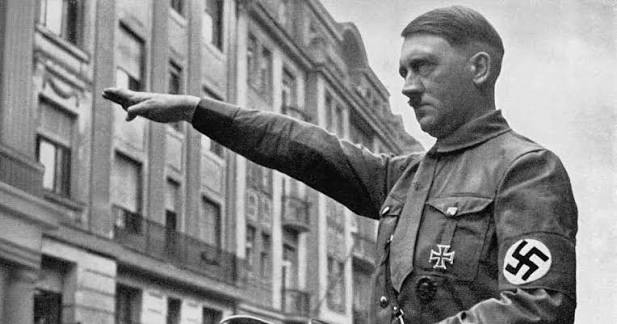
On January 30, 1933, a failed artist and former army corporal was appointed Chancellor of Germany. Within twelve years, that man Adolf Hitler would plunge the world into a war that killed an estimated 70 to 85 million people and orchestrate the genocide of six million Jews. His rise from obscurity to absolute power remains one of history’s most terrifying and instructive stories.
How did a man rejected from art school twice become the most destructive dictator in history? The answer lies in a toxic mix of personal obsession, national humiliation, and the willingness of conservative elites to cut a deal with a radical they thought they could control.
The Early Years: Failure and Resentment
Adolf Hitler was born on April 20, 1889, in Braunau am Inn, a small town on the Austro-Hungarian border. His father, Alois, was a customs official; his mother, Klara, was his third wife. The family moved frequently, and young Adolf had a rocky relationship with his domineering father, who wanted him to follow into civil service. Instead, Hitler dreamed of becoming an artist.
In 1907, he moved to Vienna, the capital of a sprawling, multi-ethnic empire, to apply to the Academy of Fine Arts. He was rejected twice. The second rejection, in 1908, was definitive. For the next five years, Hitler lived a marginal existence in Vienna, selling postcards and painting watercolors to scrape by. He later described these years as formative, though his account is likely embellished. Vienna was a cauldron of political extremism, and it was there that Hitler absorbed the anti-Semitic, pan-German, and social Darwinist ideas that would define his worldview.
In 1913, he moved to Munich, and when World War I broke out in 1914, he volunteered for the German Army. He served as a runner on the Western Front, was wounded, and was decorated with the Iron Cross for bravery. The war gave him a sense of purpose and belonging he had never known. The German defeat in 1918, and the subsequent Treaty of Versailles, which imposed harsh reparations and territorial losses, filled him with bitterness and a belief that the army had been “stabbed in the back” by internal enemies chiefly Jews and socialists.
The Path to Power: From Beer Hall Putsch to Chancellor
After the war, Hitler remained in the army, working as an intelligence agent. In 1919, he was sent to monitor a small nationalist group, the German Workers’ Party. He joined instead, quickly becoming its leader and renaming it the National Socialist German Workers’ Party the Nazi Party. His talents as an orator and propagandist soon made him a local figure.
In 1923, emboldened by the chaos of hyperinflation and political instability, Hitler attempted to seize power in Munich in the Beer Hall Putsch. The coup failed. Hitler was arrested, tried for treason, and sentenced to five years in Landsberg prison. He served only nine months, but during that time he wrote Mein Kampf, a rambling, hate-filled autobiography and political manifesto.
The putsch taught Hitler a valuable lesson: he would not overthrow the state by force; he would use the ballot box instead. After his release, he rebuilt the Nazi Party around a message of national renewal, anti-communism, and revenge for Versailles. For years, the party remained marginal. In the 1928 election, they won just 2.6% of the vote.
The Great Depression changed everything. The economic catastrophe that began in 1929 devastated Germany, creating mass unemployment and widespread desperation. Hitler offered a simple, scapegoating explanation: the failures of democracy, the machinations of Jews and communists. By July 1932, the Nazis were the largest party in the Reichstag with 37.3% of the vote. Yet they never won an absolute majority. Hitler came to power on January 30, 1933, not through a popular mandate, but through backroom deals with conservative politicians who believed they could use him to crush the left and restore order.
Dictatorship and the Road to War
Within months of becoming Chancellor, Hitler dismantled German democracy. The Reichstag Fire in February 1933 gave him a pretext to suspend civil liberties. The Enabling Act, passed in March, allowed him to rule by decree. By the summer, all political parties except the Nazis were banned, and trade unions were crushed. When President Hindenburg died in August 1934, Hitler merged the offices of President and Chancellor, becoming the absolute dictator—the Führer.
His domestic policies were brutal. Political opponents were sent to concentration camps. Jews were systematically stripped of their rights, property, and livelihoods. The Nuremberg Laws of 1935 made anti-Semitism official state policy. At the same time, Hitler launched massive public works programs, including the construction of the Autobahn, and rearmed the country in open defiance of the Treaty of Versailles.
Hitler’s foreign policy was equally aggressive. In 1936, he remilitarized the Rhineland. In 1938, he annexed Austria in the Anschluss and demanded the Sudetenland from Czechoslovakia. The Western powers, desperate to avoid another war, conceded at Munich. Hitler promised it was his last territorial demand. It was a lie. In March 1939, he seized the rest of Czechoslovakia. On September 1, 1939, he invaded Poland. Britain and France, finally drawing a line, declared war. World War II had begun.
The Holocaust and the War’s End
The war provided Hitler with the cover to implement his most radical ideological goal: the extermination of European Jewry. The Holocaust, as it came to be known, was not a single event but a gradual, escalating process. As German armies advanced across Europe, mobile killing squads—the Einsatzgruppen—massacred Jews in the occupied territories. By 1941, Hitler had authorized the systematic deportation of Jews to ghettos and then to extermination camps like Auschwitz, where they were murdered in gas chambers on an industrial scale.
In total, approximately six million Jews were murdered, along with five million others: Roma, disabled people, Soviet prisoners of war, political prisoners, homosexuals, and Jehovah’s Witnesses. The machinery of death was coldly bureaucratic, involving ordinary Germans and collaborators from across Europe.
Hitler’s war in the East was also a war of annihilation. Operation Barbarossa, the invasion of the Soviet Union in June 1941, was intended to conquer living space (Lebensraum) for German settlers and to enslave or kill the Slavic population. The war on the Eastern Front was unimaginably brutal, resulting in the deaths of over 20 million Soviet civilians and soldiers.
The turning point came in 1943, after the German defeat at Stalingrad. From then on, the war swung inexorably against Germany. The Allied bombing campaigns devastated German cities, killing half a million civilians. Hitler, isolated in his bunker in Berlin, refused to surrender, preferring total destruction over capitulation. On April 30, 1945, with Soviet troops closing in, he shot himself. His empire lasted twelve years and left the world in ruins.
The Nature of Hitler’s Power: A “Lazy Dictator”?
Historical debate about Hitler often centers on the question: was he a master planner or an opportunist? The intentionalist school argues that Hitler had a clear, long-term plan for genocide and world conquest, pursued consistently from the 1920s onward. The functionalist school, led by historian Ian Kershaw, offers a more nuanced picture. Kershaw famously described Hitler as a “lazy dictator” who issued broad ideological directives but left the details to his subordinates. Radical officials, eager to “work towards the Führer,” initiated policies that went beyond what Hitler explicitly ordered. The Holocaust, in this view, emerged from a chaotic, competitive Nazi state rather than a single blueprint.
What is clear is that Hitler’s ideology was coherent, if monstrous. He believed in a racial hierarchy with Aryans at the top and Jews as the ultimate enemy. He saw history as a struggle for survival in which the strong must conquer and the weak must perish. This worldview, rooted in 19th-century racial science and social Darwinism, was not a bizarre aberration but a product of its time—an extreme expression of currents that ran through European culture.
Hitler’s Legacy: Lessons for Today
Hitler’s legacy is one of absolute evil, but also of the danger of complacency. His rise was not inevitable. He was brought to power by conservative elites who thought they could control him. He exploited a fragile democracy weakened by economic crisis and social division. He used hate as a political tool, scapegoating minorities for complex national problems. The lesson is stark: democratic institutions must be defended, and hate speech must be taken seriously before it becomes state policy.
The Nazi regime also demonstrates the banality of evil, in Hannah Arendt’s famous phrase. The genocide was carried out by ordinary people—bureaucrats, soldiers, railway workers, and policemen—who were following orders, obeying the law, or simply going along. The Holocaust was not the work of a few monsters, but of a society that allowed itself to be led by one.
Hitler’s life and deeds are a warning from history that we ignore at our peril. The dead of the Holocaust and the 70 million victims of the war he started deserve no less than our remembrance and our vigilance.
Adolf Hitler transformed a personal hatred into a national catastrophe. His life story is a case study in how a charismatic but morally bankrupt individual can exploit political and economic turmoil to seize power and commit unspeakable crimes. Yet it is also a story of human choice: the choices of ordinary Germans to follow, the choices of conservative elites to empower a madman, and the choices of the international community to appease rather than confront. Remembering Hitler is not just about honoring the victims; it is about understanding the mechanisms of tyranny so that we might better resist them.
Summary
- Adolf Hitler (1889-1945) was the dictator of Nazi Germany, responsible for the Holocaust and World War II in Europe.
- He rose from a failed artist to become Chancellor in 1933 through a combination of political maneuvering and exploitation of the Great Depression.
- The Holocaust resulted in the murder of approximately 6 million Jews and 5 million others.
- Hitler’s ideology was rooted in racial hierarchy, anti-Semitism, and the concept of Lebensraum.
- Historians debate whether Hitler had a master plan for genocide or whether it emerged through bureaucratic competition.
- His legacy serves as a warning about the dangers of hate, complacency, and the fragility of democratic institutions.
FAQ
Q: How did Hitler come to power if he never won a majority in free elections?
A: Hitler was appointed Chancellor on January 30, 1933, as part of a backroom deal with conservative politicians who believed they could control him. The Nazi Party had won 37.3% of the vote in July 1932, making it the largest party, but never an outright majority. Within months, Hitler used the Reichstag Fire and the Enabling Act to establish a dictatorship.
Q: What was the Holocaust?
A: The Holocaust was the systematic, state-sponsored persecution and murder of approximately six million Jews by the Nazi regime and its collaborators. It also targeted Roma, disabled people, Soviet prisoners of war, political prisoners, homosexuals, and Jehovah’s Witnesses, bringing the total to about 11 million victims.
Q: Why did Hitler hate Jews?
A: Hitler’s anti-Semitism was rooted in a racial ideology that considered Jews to be an inferior race and the primary enemy of the German people. This belief was influenced by 19th-century racial theories and social Darwinism, and it was a central pillar of his worldview, as expressed in Mein Kampf.
Q: What was Operation Barbarossa?
A: Operation Barbarossa was the codename for the German invasion of the Soviet Union on June 22, 1941. It was a war of annihilation aimed at conquering living space (Lebensraum) and destroying communism. The Eastern Front became the deadliest theater of World War II, with over 20 million Soviet deaths.
Q: How did Hitler die?
A: Hitler committed suicide by gunshot on April 30, 1945, in his Führerbunker in Berlin, as Soviet forces closed in on the city. His wife, Eva Braun, also died by suicide alongside him.