On a cool September evening in 1919, a poet led a ragtag army of 2,500 nationalists into the disputed city of Fiume. Gabriele D’Annunzio, his face scarred by war and his rhetoric aflame, declared the city Italian by right of blood and sacrifice. The Italian government, exhausted by war and paralyzed by political crisis, did nothing to stop him. For 15 months, D’Annunzio’s self-styled ‘Regency of Carnaro’ held the city, defying the Allies and embarrassing Rome.
This bold act was not a spontaneous outburst. It was the culmination of a deep-seated national anger—a fury born from the belief that Italy, though victorious in the Great War, had been robbed of its spoils. This ‘mutilated victory’ (vittoria mutilata) would become a rallying cry, a political weapon, and a path to power for a former socialist journalist named Benito Mussolini. The story of that discontent is not just a footnote to history; it is the crucial link between the trenches of World War I and the balconies of Fascist Italy.
The Promise and the Price
Italy entered World War I in May 1915, not out of loyalty to its allies, but out of calculated ambition. The secret Treaty of London, signed in April 1915, promised Italy substantial territorial gains in exchange for abandoning its neutrality: Trentino, South Tyrol, Istria, and parts of Dalmatia, along with colonial compensation. The deal was a gamble—a dangerous bet that victory would bring Italy its long-desired ‘unredeemed’ lands and elevate it to great power status.
The cost of that gamble was staggering. By the armistice in November 1918, Italy had suffered approximately 650,000 military deaths, with another million wounded. Civilian deaths, from disease and famine, pushed the total to over a million. The economy was in shambles: war debts to Britain and the United States mounted, inflation soared, and unemployment gripped returning soldiers who found a nation that could not absorb them. The social fabric, already strained by regional divisions between the industrial North and agrarian South, began to tear.
Yet, for many Italians, the sacrifice seemed justified—if the promises of the Treaty of London were kept. But at the Paris Peace Conference in 1919, those promises evaporated.
The Humiliation of Paris
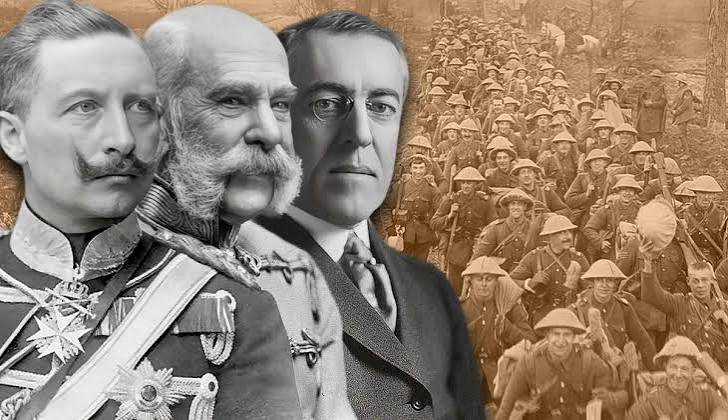
At Versailles, Italy’s leaders—Prime Minister Vittorio Orlando and Foreign Minister Sidney Sonnino—found themselves outmaneuvered. President Woodrow Wilson’s principle of national self-determination clashed directly with the secret Treaty of London. The Allies, led by the triumvirate of Wilson, Lloyd George, and Clemenceau, had little interest in honoring a secret pact that now appeared imperialistic and outdated.
The core dispute centered on two territories:
- Fiume (now Rijeka): The Treaty of London had ambiguously promised the city to Croatia, but Italy demanded it based on its ethnic Italian majority.
- Dalmatia: Italy expected large parts of this Adriatic coast, but the new Kingdom of Serbs, Croats, and Slovenes (Yugoslavia) fiercely opposed this, and Wilson supported them.
Italy’s position was contradictory: it insisted on the full Treaty of London terms and additional claims like Fiume. This “Fiume or nothing” stance weakened its bargaining position. In a theatrical protest, Orlando walked out of the conference in April 1919. The Allies simply continued without Italy. Orlando returned, humiliated, and resigned in June 1919.
The final treaties were a bitter pill. Italy received Trentino, South Tyrol, and Istria—but not Dalmatia, except for the small port of Zara and a few islands. Fiume was not awarded to Italy; instead, it was placed under international control. Colonial compensation in Africa and Anatolia was largely denied.
For many Italians, this was not a peace—it was an insult. The poet Gabriele D’Annunzio, who had coined the term “mutilated victory” in a 1918 article for Mussolini’s newspaper Il Popolo d’Italia, gave voice to this fury. In a famous 1919 speech, he declared that Italy had been “tricked” and “betrayed” at the conference table.
The Occupation of Fiume
D’Annunzio’s seizure of Fiume on September 12, 1919, was a direct challenge to the Allied order. Leading about 2,500 nationalist irregulars—including veterans, arditi (elite assault troops), and futurists—he established the Italian Regency of Carnaro. The occupation was a grand spectacle: speeches from balconies, black-shirted legionnaires, and a constitution that blended anarchist, syndicalist, and nationalist ideas.
For 15 months, D’Annunzio held the city, defying the Italian government and the Allies. His actions were not just a military adventure; they were a political statement that resonated deeply with a disillusioned public. The occupation became a symbol of resistance against the perceived injustices of Versailles.
The Italian government, led by Prime Minister Francesco Saverio Nitti, was paralyzed. It could not support D’Annunzio without alienating the Allies, but it could not crush him without losing face at home. Eventually, with the Treaty of Rapallo in November 1920, Italy and Yugoslavia agreed to make Fiume a Free State. D’Annunzio refused to leave. In December 1920, the Italian army forcibly expelled him in the so-called “Bloody Christmas,” an operation that killed dozens of legionnaires.
Though D’Annunzio’s adventure ended in failure, it left an indelible mark. It demonstrated the weakness of the liberal state, the power of nationalist rhetoric, and the willingness of paramilitary forces to challenge the established order. It also provided a template for Mussolini’s own march on Rome two years later.
The Rise of Fascism
The “mutilated victory” narrative did not die with D’Annunzio’s expulsion. It fed into a broader crisis of the Italian state. The “Two Red Years” (Biennio Rosso) from 1919 to 1920 saw massive labor unrest: factory occupations, strikes, and peasant uprisings. In 1921, the Italian Communist Party was founded, adding to the specter of revolution. Many middle-class Italians, frightened by socialism and humiliated by the peace settlement, looked for a strongman to restore order and national pride.
Mussolini, a former socialist who had turned to nationalism during the war, skillfully exploited this discontent. His Fascist movement, founded in 1919 as the Fasci di Combattimento, initially struggled at the polls. But by 1921, it gained seats in parliament, and Mussolini began to cast himself as the defender of Italy’s honor and the enemy of Bolshevism.
The “mutilated victory” was central to Fascist propaganda. Mussolini promised to rectify the injustice—to claim Italy’s rightful place in the world. The occupation of Fiume, which he had initially supported and later distanced himself from, served as a symbol of what nationalist resolve could achieve.
In October 1922, the March on Rome brought Mussolini to power. King Victor Emmanuel III, fearing civil war, appointed him Prime Minister. Within two years, Mussolini had consolidated power and, in January 1924, he achieved what the liberals could not: the Treaty of Rome annexed Fiume to Italy. The “mutilated victory” was, in a sense, avenged—but at the cost of democracy and the rule of law.
The Legacy
The story of the “mutilated victory” is a cautionary tale about the dangers of nationalist resentment. Italy’s legitimate grievances at Versailles were real, but they were exploited by forces that had no interest in democratic solutions. The failure of the liberal state to address the economic and social crises of the postwar period, coupled with the humiliation of the peace settlement, created a vacuum that fascism filled.
D’Annunzio’s occupation of Fiume was more than a theatrical stunt; it was a rehearsal for the authoritarianism that would engulf Europe in the following decades. The “mutilated victory” did not just shape Italy’s fate; it contributed to the broader instability that led to World War II.
In the end, the victory that was mutilated was not just Italy’s territorial ambitions—it was the possibility of a peaceful, liberal, and unified nation. The wounds of 1919 were never healed; they were instead inflamed by demagogues who promised to restore Italy’s glory, but delivered only tragedy.
The “mutilated victory” was a political myth that tapped into real pain and legitimate grievance, but it was also a tool of manipulation. The territorial losses Italy suffered at Versailles were real, but they did not justify the rise of a dictatorship. The story serves as a stark reminder of how unaddressed anger and national humiliation can be weaponized by those who promise simple solutions to complex problems. Italy’s journey from the trenches of the Isonzo to the balconies of Piazza Venezia is a lesson in the fragility of democratic institutions and the enduring appeal of strongman politics.
Summary
- Italy’s “mutilated victory” referred to the belief that the Allies cheated Italy out of territorial gains promised in the 1915 Treaty of London, fueling nationalist resentment.
- Key grievances included the denial of Fiume, most of Dalmatia, and colonial compensation, despite Italy’s heavy human and economic costs in WWI.
- Gabriele D’Annunzio’s 1919 occupation of Fiume epitomized the nationalist anger and exposed the weakness of the Italian liberal state.
- The economic and social crises of the postwar period, including the Biennio Rosso, eroded faith in democracy and paved the way for Mussolini’s rise.
- Mussolini exploited the “mutilated victory” narrative to gain power, ultimately annexing Fiume in 1924 and fulfilling Fascist promises at the cost of democracy.
FAQ
Q: What was the “mutilated victory”?
A: A term coined by poet Gabriele D’Annunzio to describe Italy’s belief that, despite winning World War I, it was deprived of promised territories (like Fiume and Dalmatia) by the Treaty of Versailles and the Treaty of Rapallo.
Q: Why did Italy feel cheated after WWI?
A: Italy had been promised territorial gains in the secret Treaty of London (1915), but at the Paris Peace Conference, President Wilson’s principle of national self-determination and opposition from Yugoslavia led to a reduced settlement.
Q: What was D’Annunzio’s role in Fiume?
A: In September 1919, D’Annunzio led about 2,500 nationalist irregulars to seize the city of Fiume, establishing a short-lived state (the Italian Regency of Carnaro) that lasted 15 months before being expelled by the Italian army.
Q: How did the “mutilated victory” contribute to the rise of fascism?
A: The narrative of betrayal and national humiliation, combined with economic instability and fear of socialism, created a receptive audience for Mussolini’s promises to restore Italy’s honor. Fascism capitalized on this discontent to gain power in 1922.
Q: Did Italy ever get Fiume?
A: Yes, in 1924, after Mussolini came to power, the Treaty of Rome formally annexed Fiume to Italy, fulfilling a key demand of the “mutilated victory” movement.