Tag: MLS

  • Kevin Kelsy’s Rangers Move: A High-Upside Bet from the MLS Fringe

    Kevin Kelsy’s Rangers Move: A High-Upside Bet from the MLS Fringe

    On the final day of the January transfer window, Rangers FC completed a deal that had been simmering beneath the surface for weeks: the signing of 20-year-old Venezuelan forward Kevin Kelsy from the Portland Timbers. The fee remains undisclosed, but Transfermarkt pegs his value in the €2–4 million range modest outlay for a player who, just months earlier, had been made a permanent signing by Portland after a successful loan. For Rangers, this is a calculated gamble on raw potential. For Portland, it’s a quick turnaround that raises questions about their long-term planning. For Kelsy, it’s the chance to prove he belongs on a bigger stage.

    This move doesn’t scream ‘headline grabber’ in the way a £20 million Premier League signing might. But it’s exactly the kind of transfer that defines the modern football market: clubs buying young, undervalued assets from less-heralded leagues, betting on development and resale value. Rangers have increasingly looked to MLS and South America for exactly this profile—athletic, physical forwards who can adapt to the rigours of Scottish football and European competition. Kelsy fits that mould to a tee.

    But the move also carries risk. Kelsy’s numbers in MLS were promising, not prolific. His adaptation to a new league, a new system, and the weight of expectation at Ibrox will determine whether this is a shrewd piece of business or another cautionary tale. Let’s break down what Rangers are getting, what Portland are giving up, and why this transfer says more about the changing dynamics of the global player market than it does about any single club’s ambition.

    Who is Kevin Kelsy?

    Standing at 6’4″ with surprising pace for his size, Kelsy is the archetype of the modern target man—a physical presence who can hold up play, stretch defenses with runs in behind, and occupy centre-backs. He joined Shakhtar Donetsk as a teenager in 2021, a move that promised a launchpad into European football’s elite. Then Russia invaded Ukraine, and Shakhtar’s world was upended. Kelsy, like many young players in that squad, saw his development disrupted by a war that forced the club to play home matches in exile and scattered its roster.

    A loan to Portland Timbers in the summer of 2024 offered him a reset. In MLS, he found minutes and a platform. His returns—roughly 8 goals in 25+ appearances—were solid for a 19-year-old adapting to a new continent. Portland saw enough to trigger a permanent transfer in early 2025. Barely weeks later, they sold him to Rangers. The speed of that turnaround is striking, and it suggests either a club with a clear sell-on strategy or a change in sporting direction under head coach Phil Neville.

    Why Rangers Need a Striker

    Rangers have spent much of the 2024–25 season wrestling with inconsistency in front of goal. Cyriel Dessers has blown hot and cold, Danilo has struggled with injuries, and the team’s reliance on midfield contributions has masked the absence of a reliable No. 9. Manager Philippe Clement has made no secret of his desire for a mobile, physical forward who can lead the line in the Scottish Premiership and European nights. Kelsy, at 20, is not the finished article—but he offers a profile that Rangers lack: raw athleticism, a willingness to run the channels, and a frame that can handle the physical demands of Scottish defences.

    There’s also a clear financial logic at play. Rangers have increasingly targeted undervalued markets—MLS, South America, parts of Europe—for young players who can be developed and sold on for profit. Kelsy fits that model perfectly. A €3 million signing who performs well in the Scottish Premiership and Europa League could be worth three times that in two years. The club’s recruitment strategy mirrors that of many mid-tier European sides: find the raw material, refine it, and cash in when the time is right.

    Portland’s Quick Turnaround: Smart Business or Misstep?

    For Portland, the decision to sell Kelsy so soon after making his move permanent is double-edged. On one hand, it’s a smart piece of business if they secured a sell-on clause or turned a quick profit on a player whose value had already appreciated. On the other, it leaves a hole in their attack and raises questions about their recruitment philosophy. Why commit to a player permanently if you’re going to flip him months later?

    The likely answer lies in the market. Portland may have received an offer that exceeded their valuation, or Kelsy may have expressed a desire to move to Europe. In MLS, selling young assets is often the most sustainable path to revenue, especially for clubs that don’t have the spending power of the league’s biggest spenders. Fans may feel frustrated, but the front office will see this as a success story: identify talent, develop it, sell it on.

    The Scouting Challenge: Is He Ready?

    Kelsy’s raw attributes are undeniable, but his production in MLS was moderate, not spectacular. He scored goals, yes, but he also went through dry spells and sometimes struggled to impose himself on games. The Scottish Premiership is a step up in intensity and tactical organisation, and European competition is another level entirely. Rangers’ system under Clement demands forwards who can press intelligently, link play, and finish chances—often with limited space. Kelsy’s hold-up play is serviceable, but his decision-making in the final third remains a work in progress.

    There’s also the question of mental resilience. Moving from Portland to Glasgow is a culture shock. The scrutiny at Ibrox is relentless. Young forwards who arrive with promise either embrace that pressure or wilt under it. Kelsy’s performances for Venezuela’s youth teams and his brief senior international experience suggest he has the temperament, but the proof will come in the high-stakes environment of an Old Firm derby or a Europa League knockout tie.

    A Positive Step for Venezuelan Football

    Kelsy’s move is also notable for what it represents off the pitch. Venezuelan football has long been the underdog of South America, but a new generation of players is emerging—and Kelsy is part of that wave. His development at Rangers will be closely watched by a national team that has genuine hopes of qualifying for the 2026 World Cup. A young forward getting regular minutes in a European league is exactly what Venezuela needs to close the gap with the continent’s traditional powers.

    The Bottom Line

    This is a transfer with multiple layers. For Rangers, it’s a low-risk, high-reward bet on a physical specimen who could develop into a key player and a sellable asset. For Portland, it’s a quick profit and a testament to their scouting network—even if it leaves a short-term gap. For Kelsy, it’s the opportunity of a lifetime: a chance to prove that his potential is real, and that he belongs on the European stage.

    Kevin Kelsy’s move to Rangers is a deal that rewards scrutiny. It’s not a marquee signing, but it speaks to a broader trend in football: clubs finding value in overlooked markets and betting on development. Whether Kelsy thrives at Ibrox will depend on his adaptation, his mentality, and the patience of a fanbase that demands results. But for a player who has already navigated the disruption of war and the challenge of a new continent, this is just the next step in a journey that could lead anywhere.

    Summary

    • Rangers signed 20-year-old Venezuelan forward Kevin Kelsy from Portland Timbers on the final day of the January window, with the fee undisclosed and estimated in the €2–4 million range.
    • Kelsy offers a physical profile Rangers lack: 6’4″, pace, and hold-up play, but his MLS numbers were moderate—roughly 8 goals in 25+ appearances—making him a prospect rather than a proven scorer.
    • Portland made Kelsy permanent in early 2025 before selling him weeks later, raising questions about their strategy but potentially securing a quick profit or sell-on clause.
    • Rangers’ recruitment model increasingly targets young, undervalued players from MLS and South America, betting on development and resale value.
    • The move is a positive for Venezuelan football, as Kelsy joins a growing wave of young players pushing for World Cup qualification.

    FAQ

    Q: Why did Rangers sign Kevin Kelsy?
    A: Rangers needed a physical, mobile forward to address inconsistency in front of goal from players like Cyriel Dessers and Danilo. Kelsy’s profile—young, athletic, and internationally experienced—fits both their tactical needs and their financial model of buying undervalued assets to develop and sell on.

    Q: Why did Portland sell Kelsy so soon after making his move permanent?
    A: The quick turnaround suggests Portland either received an offer exceeding their valuation or Kelsy expressed a desire to move to Europe. It’s likely they secured a sell-on clause or turned a quick profit, which is a common strategy for MLS clubs.

    Q: What are Kelsy’s strengths and weaknesses?
    A: His strengths are his physical attributes: 6’4″ frame, pace, and ability to hold up play. His weaknesses include inconsistent finishing and decision-making in the final third, which are typical for a 20-year-old still developing.

    Q: How did Kelsy end up at Portland in the first place?
    A: He signed with Shakhtar Donetsk as a teenager, but the Russian invasion disrupted his development. He was loaned to Portland in 2024, impressed enough to trigger a permanent move in early 2025, and then was sold to Rangers shortly after.

    Q: Is Kelsy ready for the Scottish Premiership?
    A: He has the raw attributes, but his MLS production wasn’t prolific. The Scottish Premiership is more physical and tactically demanding, and European competition adds another layer. His adaptation will be key, but his youth and physicality give him a reasonable chance to succeed.


  • FC Dallas’s 90+7’ Miracle: How a Two-Goal Deficit Turned into a Point in St. Louis

    FC Dallas’s 90+7’ Miracle: How a Two-Goal Deficit Turned into a Point in St. Louis

    In the 97th minute at CityPark, with the home crowd already celebrating a routine victory, Logan Farrington stabbed the ball past the St. Louis City goalkeeper. The traveling FC Dallas fans erupted. The players piled on top of the young forward. A 3-3 draw that felt like a win for the visitors and a gut-punch for the hosts.

    This wasn’t just any comeback. FC Dallas had trailed by two goals on the road, looked disjointed for long stretches, and then flipped the script in the dying moments. For a team fighting for playoff positioning in the Western Conference, this single point could prove pivotal. But for St. Louis City, it was a collapse that raises questions about their ability to close out matches when the pressure mounts.

    The Context: Two Clubs at a Crossroads

    FC Dallas entered this match with a reputation for developing young talent but had been inconsistent all season. Coach Nico Estévez had instilled an attacking, high-press style, yet results often fluctuated between brilliant and baffling. A road trip to St. Louis, where CityPark has become one of the loudest venues in MLS, was always going to be a test of character.

    St. Louis City, the expansion sensation that took the league by storm in 2023, were looking to reassert themselves after a sophomore slump. Their fans expect nothing less than playoff football, and a home match against a fellow Western Conference rival was a chance to make a statement. When they raced to a two-goal lead, the script seemed written.

    The match had playoff implications for both sides. Every point matters in a conference where the gap between sixth and tenth place can be razor-thin. For Dallas, dropping another road game would have been a setback; for St. Louis, letting a lead slip could haunt them in the standings come Decision Day.

    The Tactical Shift: How Dallas Changed the Game

    The first hour of the match went according to St. Louis’s plan. Their high press forced turnovers, and their transitions were clinical. By the time they went up by two, they looked in complete control. But FC Dallas’s substitutions injected fresh energy and a subtle tactical tweak that shifted the momentum.

    Estévez brought on an extra attacker, pushing numbers forward and committing to a more direct style. Instead of playing through the middle, Dallas began to exploit the wide areas, stretching St. Louis’s defense and creating overloads. The equalizer came from a set piece, a scrappy goal that showed a willingness to battle. Then, as the clock ticked into stoppage time, a cross into the box found Farrington, who finished with the composure of a veteran.

    The stats told the story: Dallas finished with a higher expected goals (xG) total, indicating they created better chances overall, even if they needed the late surge to make them count. St. Louis, by contrast, had taken their chances early but then dropped deeper, inviting pressure. Whether it was fatigue or a tactical choice to protect the lead, it backfired.

    Logan Farrington: The Unlikely Hero

    Farrington, a young forward who has been knocking on the door of the first team, had only been on the pitch for a few minutes when he scored. His stoppage-time goal was his first in MLS, and it came in the most dramatic fashion possible. For a player who has spent years in the academy system, this was the kind of moment that defines a career.

    His celebration was pure emotion—a sprint to the corner flag, arms outstretched, engulfed by teammates. In post-match interviews, he spoke about the belief the coaching staff had instilled in him. Moments like these are why FC Dallas invests so heavily in youth development. Farrington’s goal wasn’t just a point; it was a validation of the club’s philosophy.

    For St. Louis, the disappointment was palpable. Their coach, known for his tactical acumen, was left to rue missed opportunities. The two-goal cushion should have been enough, but a combination of poor game management and Dallas’s relentless pressure undid their work. The home crowd, so vocal for 90 minutes, fell silent as the final whistle blew.

    What This Means for Both Teams

    For FC Dallas, this draw could be a turning point. Coming back from two goals down on the road demonstrates resilience, a quality that often separates playoff teams from also-rans. The point keeps them within striking distance of the top seven and gives them a psychological boost heading into a crucial stretch.

    St. Louis City, meanwhile, will be asking tough questions. How did they let a lead slip? Why did they stop playing their natural game? The answers will determine whether this is a one-off lapse or a worrying pattern. With the Western Conference as tight as ever, dropping points at home is a luxury they can’t afford.

    The Bigger Picture

    In the grand scheme of an MLS season, a single draw might seem insignificant. But matches like this can shape narratives. For Dallas, it’s proof that they can compete with the best. For St. Louis, it’s a warning that no lead is safe. The playoff race is a marathon, but moments like Farrington’s goal are the sprints that define it.

    The result also highlights the entertainment value of MLS—a league where the unexpected is routine and where a match can turn on a single moment of brilliance. As the season progresses, both teams will look back on this night in St. Louis as a lesson learned.

    In the end, FC Dallas’s 90+7’ equalizer was more than a goal; it was a statement. It said that this team refuses to quit, that they will fight until the final whistle. For St. Louis City, it was a bitter pill to swallow, but one that might just harden their resolve. In a league where margins are thin, this draw could be the point that propels one team forward and haunts the other. Only time will tell.

    Summary

    • FC Dallas came back from a two-goal deficit to draw 3-3 with St. Louis City at CityPark.
    • Logan Farrington scored in the 7th minute of stoppage time to complete the comeback.
    • The result has significant implications for both teams’ playoff hopes in the Western Conference.
    • FC Dallas’s tactical changes and substitutions sparked the late rally.
    • St. Louis City will rue missed opportunities and defensive lapses in the final minutes.

    FAQ

    Q: What was the final score of the FC Dallas vs. St. Louis City match?
    A: The match ended in a 3-3 draw.

    Q: Who scored the decisive goal for FC Dallas?
    A: Logan Farrington scored in the 7th minute of stoppage time (90+7’).

    Q: Where was the match played?
    A: The match was played at CityPark in St. Louis, which is St. Louis City’s home stadium.

    Q: What does this result mean for FC Dallas’s playoff chances?
    A: The draw gives FC Dallas a valuable road point, helping them stay in contention for a playoff spot in the Western Conference.

    Q: How did St. Louis City let a two-goal lead slip?
    A: St. Louis City appeared to sit back after taking a two-goal lead, allowing FC Dallas to push forward and create chances. A combination of tactical changes and late pressure led to the comeback.

  • Messi’s Four Goal Masterclass Silences Doubters and Reshapes the MLS Narrative

    Messi’s Four Goal Masterclass Silences Doubters and Reshapes the MLS Narrative

    On a balmy Florida evening, Lionel Messi did something he had never done in a Major League Soccer jersey: he scored four goals in a single match, adding an assist for good measure, as Inter Miami routed CF Montréal 5-2 at Chase Stadium. The performance wasn’t just a personal milestone; it was a seismic event for a league often accused of being a retirement home for aging stars.

    Messi’s poker a term borrowed from poker’s four-of-a-kind was his first four-goal haul in any league since a Champions League match for Barcelona in 2010. It also snapped Inter Miami’s five-game winless streak, reigniting their playoff push and sending a message to the rest of MLS: the magician still has plenty of tricks left.

    Context: A Legend Under Scrutiny

    When Messi joined Inter Miami in July 2023, the narrative was predictable: a 36-year-old superstar coming to a fledgling club in a ‘retirement league.’ But Messi quickly rewrote that script, delivering a Leagues Cup title within weeks and a Supporters’ Shield in 2024. Yet, the 2025 season had been rocky. A five-match winless run in MLS play had critics questioning whether age and injuries were finally catching up with the eight-time Ballon d’Or winner.

    This match against CF Montréal was not just about three points; it was about silencing doubters and proving that Messi, at 38, could still produce moments of transcendent brilliance. The fact that he did it in such emphatic fashion—four goals and an assist—makes a statement that echoes far beyond Fort Lauderdale.

    The Goals: A Clinic in Finishing

    Messi’s four goals were a masterclass in variety. The first came from a trademark free kick that curled over the wall and into the top corner, leaving the Montréal goalkeeper rooted to his spot. His second was a poacher’s finish, tapping in from close range after a defensive lapse. The third showcased his dribbling, as he wove through three defenders before slotting the ball home. And the fourth, a clinical left-footed strike from the edge of the box, sealed the rout.

    Each goal was a reminder of what makes Messi unique: his ability to read the game, his precision, and his unerring composure in front of goal. The assist, a perfectly weighted through-ball to Luis Suárez, was the cherry on top, demonstrating that even at his age, Messi remains a creator as much as a finisher.

    Historical Significance: Where Does This Rank?

    Messi’s career has been defined by extraordinary achievements, including a five-goal haul against Bayer Leverkusen in the 2011-12 Champions League. Four-goal games, however, have become rarer as he has aged; his last such performance in a top European league was in 2019, when he scored four against Eibar in La Liga. This MLS match was his first four-goal game in any league since that night.

    The performance also put Messi atop the MLS scoring charts, with his season tally now approaching 20 goals. At this pace, he could challenge Carlos Vela’s single-season record of 35 goals, set in 2019. But more importantly, it injected new life into Inter Miami’s season, which had been faltering.

    Tactical Breakdown: How Inter Miami Unleashed Messi

    Manager Javier Mascherano, himself a former Barcelona teammate of Messi, deployed his star in a free role, allowing him to drift between the lines and find pockets of space. This tactical flexibility made it nearly impossible for Montréal to mark him. Suárez’s intelligent movement created space for Messi, while the midfield trio of Sergio Busquets, Federico Redondo, and Julian Gressel provided the service and defensive cover that allowed Messi to focus on attacking.

    Montréal, on the other hand, had no answer. Their high defensive line was exploited repeatedly, and their midfield failed to close down Messi before he could receive the ball. Head coach Laurent Courtois admitted after the match, “We had a plan, but when Messi plays like that, there is no plan that can stop him.” The defeat exposed Montréal’s fragility on the road, where they have now conceded 15 goals in their last six away matches.

    Broader Implications for MLS

    Messi’s performance will inevitably reignite the debate about the competitive level of MLS. Critics will argue that a 38-year-old scoring four goals against a professional defense proves the league is substandard. But such a view ignores the broader context: Messi is arguably the greatest player of all time, and even in his late 30s, he possesses a first touch and football IQ that are unmatched. Moreover, MLS has evolved significantly in recent years, with clubs investing in younger talents and better coaching.

    What this performance does do is highlight the league’s growing global appeal. Matches featuring Messi consistently break attendance and streaming records, and this one was no different. Chase Stadium was a cauldron of noise, with fans chanting ‘Messi, Messi’ from the first minute. The commercial impact is undeniable: Messi’s presence has elevated MLS’s profile, attracting sponsors and viewers from around the world.

    The Human Side: A Legend’s Resilience

    Beyond the statistics, there is a human story here. Messi has faced criticism throughout his career, from his early struggles with growth hormone deficiency to the weight of international expectations. His move to MLS was seen by some as a step down, but he has treated it with the same professionalism and intensity that defined his time at Barcelona. This performance is a testament to his work ethic and his refusal to accept decline.

    For the fans in Fort Lauderdale, it was a night to remember. One supporter, holding a sign that read ‘We Are Witnessing History,’ summed up the sentiment: “People say he’s past his prime, but he just showed us he’s still the best. We’re lucky to see him in person.”

    What’s Next for Inter Miami?

    This victory moves Inter Miami up the Eastern Conference table, and with Messi in this form, they must be considered serious contenders for the MLS Cup. The win also provides a psychological boost, proving that they can overcome adversity. Key players returning from injury, coupled with Messi’s resurgence, could make them the team to beat in the playoffs.

    Montréal, meanwhile, faces an existential crisis. Conceding four to a single player is demoralizing, and their defensive frailties have been exposed. They will need to regroup quickly if they hope to secure a playoff spot, but matches against lower-ranked teams offer an opportunity to rebuild confidence.

    A Performance for the Ages

    In the annals of MLS history, this match will be remembered as the night Messi announced that he is not done yet. It was a performance that transcended the sport, a reminder of why we watch football. For Inter Miami, it was a turning point; for MLS, it was a marketing goldmine; and for Messi, it was yet another chapter in a storied career that seems to have no end in sight.

    Messi’s four-goal masterpiece against Montréal was more than just a statistical anomaly; it was a statement of intent. At 38, he continues to defy expectations, reminding the world why he is considered the greatest. For MLS, it was a showcase of the league’s growing credibility; for Inter Miami, it was a lifeline. As the season progresses, one thing is certain: Messi is not merely a tourist in American soccer—he is a transformative figure, capable of changing the game with a single touch.

    Summary

    • Lionel Messi scored four goals and added an assist in Inter Miami’s 5-2 rout of CF Montréal, marking his first four-goal game in MLS.
    • The performance snapped Inter Miami’s five-game winless streak and reignited their playoff push.
    • Messi’s four-goal haul was his first since a Champions League match in 2010, showcasing his enduring brilliance at age 38.
    • The match reignited debates about MLS’s competitive level, with Messi’s performance highlighting both the league’s growth and its challenges.
    • Inter Miami’s tactical setup, featuring Messi in a free role, proved unstoppable for Montréal, who struggled defensively throughout.

    FAQ

    Q: Was this Messi’s first four-goal game in his career?
    A: No. Messi has scored four or more goals multiple times, including a five-goal performance against Bayer Leverkusen in 2012. This was his first four-goal game in MLS and his first in any league since 2019.

    Q: How does this performance affect Messi’s MLS scoring record chase?
    A: Messi’s four goals moved him to the top of the MLS scoring charts, with around 20 goals for the season. If he maintains this pace, he could challenge Carlos Vela’s single-season record of 35 goals.

    Q: What was the final score of the match?
    A: Inter Miami won 5-2 against CF Montréal at Chase Stadium.

    Q: How did Inter Miami set up to maximize Messi’s impact?
    A: Messi played in a free role, drifting between the lines and finding space. Luis Suárez’s movement created openings, and the midfield provided service, allowing Messi to focus on attacking.

    Q: What does this mean for CF Montréal’s season?
    A: The loss exposed Montréal’s defensive vulnerabilities, particularly on the road. They will need to address these issues to secure a playoff spot, but the defeat could be a wake-up call for the squad.

  • Seattle Sounders Land Dejan Joveljić in Record Intra-League Trade; Sporting KC Banks $6M Fee

    Seattle Sounders Land Dejan Joveljić in Record Intra-League Trade; Sporting KC Banks $6M Fee

    In a move that reshapes the Western Conference’s attacking landscape, the Seattle Sounders have acquired Serbian striker Dejan Joveljić from Sporting Kansas City in a cash-for-player trade. The $6 million fee marks the second-highest outgoing transfer in SKC history, trailing only Gianluca Busio’s 2021 move to Venezia. For Seattle, it’s a statement of intent; for Sporting KC, it’s a calculated gamble on rebuilding.

    This isn’t a typical international transfer. It’s an intra-league trade, governed by MLS’s unique financial machinery, where the $6 million is likely delivered in General Allocation Money (GAM) rather than cash. That distinction matters: it’s not just a fee, it’s a currency that can be spread across multiple seasons and used to acquire other players or buy down salaries. The deal signals both clubs’ strategic priorities as the 2025 season looms.

    The Player: A Proven MLS Scorer in His Prime

    Joveljić, 25, arrived in MLS in 2022 from Eintracht Frankfurt, carrying a pedigree honed in Serbia’s Red Star Belgrade youth system and a taste of European football. At Sporting KC, he became the focal point of the attack, amassing 20+ league goals in roughly 80 appearances. His 2024 season was particularly strong, with 10+ regular-season goals, showcasing the kind of consistent production that contenders crave.

    His profile is classic center-forward: sharp finishing, clever movement in the box, and the hold-up play to bring teammates into the attack. At his age, he’s entering his prime, making this a rare opportunity to acquire an established scorer without the typical development risk.

    Why Seattle Pounced

    The Sounders have a history of big intra-league moves—Raúl Ruidíaz, Albert Rusnák, and now Joveljić. Their 2024 forward line lacked consistency, and the front office made no secret of their desire to bolster the attack. With an MLS Cup pedigree (2016, 2019) and a Concacaf Champions League title in 2022, Seattle’s ambition is clear: win now. Joveljić fits that timeline perfectly.

    But there’s a cost. Paying $6 million in allocation money for an intra-league player is a premium, and it carries opportunity cost—that GAM could have been used to strengthen other positions. If Joveljić struggles to adapt to Seattle’s system or faces stiff competition for the starting spot, the investment could sour quickly. Yet, the upside is undeniable: a proven scorer in his prime, joining a roster that consistently competes for trophies.

    Sporting KC’s Strategic Sell

    For Sporting KC, selling Joveljić isn’t just about cashing in—it’s about survival in a league where roster flexibility is king. SKC has missed the playoffs in recent seasons, signaling a rebuilding phase. The $6 million fee, even if below his Transfermarkt valuation of €6.5 million, provides critical GAM to spread across multiple roster moves. It frees up salary cap space and allows the club to target multiple younger, cheaper players rather than relying on one high-cost star.

    There’s a financial rationale for the below-market fee. Joveljić’s contract may have been nearing its end, reducing his transfer value. SKC’s desire to move quickly likely suppressed the price. And in MLS, GAM isn’t directly comparable to European transfer fees—it’s a league-specific currency designed to incentivize exactly this kind of trade. The fee is a win for SKC’s front office, but the fan base may see it as a lack of ambition, particularly if replacements don’t materialize.

    The Mechanics: GAM, Not Cash

    Understanding this trade requires decoding MLS’s unique rules. In most leagues, a $6 million transfer fee would be a direct cash payment. In MLS, it’s typically paid in General Allocation Money, which can be used to buy down player salaries, acquire other players, or even be traded. Clubs can spread GAM over multiple seasons, making it a flexible tool for roster building.

    This is why comparing Joveljić’s fee to his Transfermarkt value is misleading. Transfermarkt’s €6.5 million estimate reflects a hypothetical free-market price, not the internal value of GAM. In practice, the fee might be structured with add-ons or performance bonuses, though those details remain unconfirmed. What’s clear is that this trade is a quintessential MLS move: a cash-equivalent transaction that reshapes rosters without crossing borders.

    Competitive Balance: The Double-Edged Sword

    Intra-league trades like this one often spark debates about competitive balance. On one hand, they concentrate top talent at clubs like Seattle, potentially widening the gap between contenders and rebuilders. On the other, they provide struggling clubs like SKC with the resources to rebuild—exactly what GAM is designed to do. The league’s financial architecture encourages this cycle, and Joveljić’s move is a textbook example.

    For Seattle, it’s a win-now move. For SKC, it’s a long-term bet. For Joveljić, it’s a chance to chase trophies with a bigger club. Whether this trade tilts the balance of power in the West remains to be seen, but it’s a clear signal that the Sounders intend to be at the top of the table in 2025.

    The Joveljić trade is a microcosm of MLS’s unique transfer ecosystem: a cash-for-player deal paid in allocation money, a below-market fee justified by league mechanics, and a move that balances ambition against rebuilding. For Seattle, it’s a shot at immediate glory; for Sporting KC, it’s a foundation for the future. Only time will tell which side got the better end of the deal, but one thing is certain: the 2025 Western Conference just got a lot more interesting.

    Summary

    • Seattle Sounders acquire Dejan Joveljić from Sporting KC in an intra-league trade for $6 million, the second-highest outgoing fee in SKC history.
    • Joveljić, 25, scored 20+ goals in ~80 appearances for SKC, with 10+ in 2024, and is entering his prime.
    • The fee is below his Transfermarkt valuation (€6.5M) but is likely paid in General Allocation Money, not cash, highlighting MLS’s unique financial rules.
    • Seattle aims for immediate title contention, while SKC uses the GAM to rebuild with multiple roster moves.
    • The trade reflects MLS’s competitive balance tensions: concentrating talent at the top while providing resources for weaker clubs.

    FAQ

    Q: Is the $6 million fee paid in cash?
    A: No, it’s an intra-league trade, so the fee is typically paid in General Allocation Money (GAM), which can be used for various roster purposes and spread over multiple seasons.

    Q: Why is the fee below his market value?
    A: Transfermarkt’s €6.5M valuation is a free-market estimate, not directly comparable to MLS GAM. Joveljić’s contract length and SKC’s desire to sell quickly likely influenced the price, and add-ons may be included.

    Q: Who holds the record for Sporting KC’s highest outgoing fee?
    A: Gianluca Busio’s 2021 transfer to Venezia is the highest, reportedly around $6.5 million. Joveljić’s fee is second.

    Q: Does this move signal a rebuild for Sporting KC?
    A: Yes, SKC has missed recent playoffs and is in a transition phase. The GAM from this trade will help them acquire multiple players and free up salary cap space.

    Q: What does this mean for Seattle’s 2025 title chances?
    A: Seattle is a perennial contender, and adding a proven scorer like Joveljić signals a win-now approach, boosting their chances for the 2025 MLS Cup.

  • Zavier Gozo to Crystal Palace: A Record-Making Move That Signals a Shift in MLS’s Global Standing

    Zavier Gozo to Crystal Palace: A Record-Making Move That Signals a Shift in MLS’s Global Standing

    Real Salt Lake’s academy has quietly become one of MLS’s most reliable talent factories. Now, its latest product, 19-year-old Zavier Gozo, is on the verge of a move that would break the club’s transfer record and send a 19-year-old midfielder to the Premier League. According to a recent report from The Athletic, Crystal Palace is in advanced talks to sign Gozo, with the fee expected to surpass RSL’s previous record sale—a figure that has yet to be publicly disclosed but is rumored to exceed $8 million.

    This isn’t just another young American heading to Europe. It’s a test of whether MLS clubs can truly command top dollar for their academy products, and whether Crystal Palace’s data-driven recruitment can unearth another gem from the American soccer landscape. For Gozo, it’s a career-defining step; for RSL, it’s a validation of their development model; for MLS, it’s another piece of evidence that the league is no longer just a retirement home for aging stars but a legitimate exporting powerhouse.

    The Record Fee: What It Means for Real Salt Lake

    When Real Salt Lake sells a player, the club’s history suggests it knows what it’s doing. Previous sales—such as Jefferson Savarino’s move to Atlético Mineiro and Aaron Herrera’s to DC United—have generated fees in the $7–8 million range. Gozo’s fee would blow past those numbers, setting a new benchmark for the club and potentially for the league’s smaller-market teams.

    A record fee isn’t just a number; it’s a statement. It tells the world that RSL’s academy can produce players who compete at the highest level. It also gives the club financial muscle to reinvest in their squad or infrastructure. But there’s a catch: if the transfer happens in January, RSL would lose a key player just before their 2025 MLS season kicks off. The club’s fans might feel a mix of pride and anxiety—pride in seeing a homegrown talent succeed, anxiety about how the team will cope without him.

    Crystal Palace’s Recruitment Playbook: Why Gozo?

    Crystal Palace has become the Premier League’s quiet specialists in buying young, high-upside players from less obvious markets. Michael Olise came from Reading, Eberechi Eze from QPR, and more recently, the club has looked to South America and MLS. Gozo fits this profile perfectly: he’s young, technically gifted, and has room to grow—attributes that align with Palace’s data-driven approach under sporting director Dougie Freedman.

    But what’s the immediate plan? If the move goes through, Gozo could be integrated into the first team gradually, or he might be loaned back to RSL to continue his development—a common clause in MLS-to-Europe transfers. Palace’s need is clear: they’re looking to add creativity and energy to their midfield, and Gozo’s dribbling and vision could provide exactly that. Yet, at 19, he’s not a finished product. The Premier League is a physical and tactical step up from MLS, and his adaptation period will be closely watched.

    MLS’s Growing Export Market: The Bigger Picture

    Gozo’s move isn’t just a story about two clubs—it’s a story about MLS’s evolution. The league has long been criticized for its inability to retain its best young talent, but that’s increasingly seen as a feature, not a bug. Players like Miguel Almirón (Atlanta to Newcastle) and Alphonso Davies (Vancouver to Bayern Munich) paved the way, showing that MLS can be a launching pad for world-class careers.

    For the league, a record fee for an RSL player is a win: it boosts the league’s reputation as a credible seller and encourages more investment in youth development. But it also raises questions. Should MLS clubs be doing more to keep their stars? Or is the “sell high” model the smartest long-term strategy? The debate will continue, but the trend is clear—MLS clubs are increasingly willing to cash in on their academy products.

    The Pressure on a 19-Year-Old

    For Gozo, this transfer is the culmination of years of hard work, but it also brings immense pressure. A record fee means expectations from fans and media. He’ll be scrutinized not just as a player, but as a symbol of what MLS can produce. The cultural and linguistic adjustment to England is another hurdle, though many young players have navigated it successfully.

    Gozo’s playing style—his ability to glide past defenders and pick out incisive passes—should translate well to the Premier League, but he’ll need time to adapt to the pace and physicality. If Palace manages his development carefully, they could have a future star on their hands. If not, he risks becoming another cautionary tale of a promising player lost in the shuffle.

    The Deal’s Structure: What’s at Stake

    The exact fee and contract terms are still under wraps, but the structure of the deal matters as much as the headline number. RSL would likely negotiate a sell-on clause—a percentage of any future transfer fee Palace receives—to protect their long-term interests. This is standard practice in MLS-to-Europe transfers and could mean RSL profits again if Gozo eventually moves to a bigger club.

    For Palace, the investment is a calculated risk. If Gozo hits his potential, he could be worth several times the initial fee. If not, the loss is relatively small in Premier League terms. It’s a low-risk, high-reward bet that could pay off handsomely.

    Looking Ahead: What This Means for All Parties

    If the deal completes, it will be a landmark moment for Real Salt Lake, Crystal Palace, and MLS. RSL will have their record fee and proof that their academy works. Palace will have a promising young midfielder who could become a key player. And MLS will have another data point showing that its best young players can compete in the world’s toughest league.

    But the story isn’t over yet. Advanced talks can still fall through. Until the papers are signed, there’s always a chance the deal collapses. For now, fans of both clubs will be watching closely, hoping that Zavier Gozo takes the next step in his career—and that the record fee he commands lives up to the hype.

    Zavier Gozo’s potential move to Crystal Palace is more than a transfer—it’s a statement about the direction of American soccer. It validates RSL’s development model, signals Palace’s continued faith in data-driven recruitment, and underscores MLS’s growing role as a talent exporter. The record fee is a milestone, but the real story lies in the promise of a 19-year-old ready to take on the Premier League. Whether he thrives or struggles, his journey will be watched closely by MLS, Palace, and the entire soccer world.

    Summary

    • Real Salt Lake is set to receive a record transfer fee for Zavier Gozo, surpassing their previous outgoing record of $7–8 million.
    • Crystal Palace is in advanced talks to sign the 19-year-old midfielder, fitting their strategy of buying young, high-upside players from non-top-5 leagues.
    • The transfer highlights MLS’s growing reputation as a talent exporter, with previous examples like Miguel Almirón and Alphonso Davies.
    • The deal’s structure, including potential sell-on clauses, will be key to RSL’s long-term financial benefit.
    • No official confirmation yet, and the transfer could still fall through despite advanced negotiations.

    FAQ

    Q: Who is Zavier Gozo?
    A: Zavier Gozo is a 19-year-old midfielder/attacking prospect from Real Salt Lake’s academy, known for his dribbling and vision. He broke into the first team in recent years and has attracted interest from Premier League club Crystal Palace.

    Q: What is the record fee RSL would receive?
    A: The exact figure hasn’t been disclosed, but it would surpass RSL’s previous outgoing transfer record, which is around $7–8 million.

    Q: Why is Crystal Palace interested in Gozo?
    A: Palace has a strategy of buying young players with high resale value from non-top-5 leagues. Gozo fits this profile, and they likely see him as a long-term investment with immediate potential.

    Q: When could the transfer happen?
    A: The transfer is in advanced talks, but no official confirmation has been made. It could happen in the January or summer transfer window, depending on when both clubs agree.

    Q: What does this mean for MLS?
    A: It reinforces MLS’s reputation as a selling league that develops top talent for Europe, which could encourage more investment in youth academies across the league.

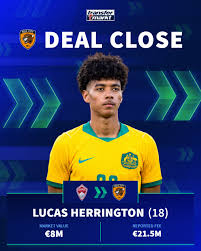
  • Lucas Herrington to Hull City: The Record-Breaking Transfer That Redefines MLS-to-Championship Moves

    Lucas Herrington to Hull City: The Record-Breaking Transfer That Redefines MLS-to-Championship Moves

    In a move that has sent ripples through both sides of the Atlantic, 18-year-old defender Lucas Herrington is on the verge of swapping the Colorado Rapids for Hull City in a deal that promises to break multiple transfer records. For Hull, it’s a statement of intent under ambitious owner Acun Ilıcalı; for the Rapids, it’s the culmination of a development pathway that has long promised to produce elite talent. But beyond the headline numbers lies a complex story of risk, reward, and the evolving dynamics of the global football market.

    This isn’t just another young American heading to England. The reported fee—expected to shatter Hull City’s incoming record and Colorado’s outgoing record—signals a seismic shift in how Championship clubs value MLS academy products. It’s a bet on potential, a gamble on a teenager with limited senior minutes, and a testament to the growing credibility of American soccer development. As the deal nears completion, the football world is watching closely: Is this a savvy investment or a cautionary tale in the making?

    The Record-Breaking Numbers: What’s Actually on the Table?

    When reports emerged of Lucas Herrington’s impending move to Hull City, the first question was simple: How much? While the exact figures remain unconfirmed, the deal is expected to surpass Hull City’s current record incoming fee—believed to be in the £5–10 million range—and potentially become the largest outgoing transfer in Colorado Rapids history. For an 18-year-old with a handful of senior appearances, that’s a staggering premium.

    But here’s the catch: the headline fee likely includes performance-related add-ons. In modern football, reported transfer sums often bundle appearance clauses, sell-on percentages, and other incentives. The guaranteed upfront payment may be significantly lower, a nuance that gets lost in the excitement. Still, even the base fee represents a massive leap from Herrington’s current market valuation, which Transfermarkt and similar sources peg well below the reported figures. This is a pure ‘potential-based’ transfer—a bet that Herrington’s ceiling justifies the outlay.

    For Hull City, this is a departure from their recent strategy of targeting South American and European young talents. It’s a bold move into the North American market, signaling that the club sees untapped value in MLS academies. For Colorado, it’s a financial windfall that validates their youth development model, but it comes at the cost of losing a homegrown star at a critical juncture in their season.

    Hull City’s Gamble: High Ceiling, High Risk

    Hull City’s owner, Acun Ilıcalı, is no stranger to flashy signings. Since taking over, he’s transformed the club’s transfer policy, investing heavily in young, high-potential players from global markets. Herrington fits this mold perfectly: a modern defender—athletic, comfortable in possession, and capable of playing in a high line—traits that are increasingly valued in the Championship and beyond.

    The optimistic view is compelling. If Herrington develops as expected, Hull could see a 3–5x return on their investment within a few seasons, either through a Premier League promotion or a lucrative sale. His profile aligns with the demands of modern English football, where ball-playing defenders are at a premium. At 18, he has time on his side, and the Championship offers a rigorous but manageable stepping stone.

    Yet the skeptics have their reasons. An 18-year-old with limited senior minutes is an unproven commodity. The Championship is notoriously physical, with a grueling schedule that tests even seasoned professionals. The leap from MLS—where the pace is slower and the season structure differs—to the relentless intensity of English football is immense. And then there’s the pressure: a record fee brings expectations, and a teenager could easily buckle under the weight.

    Hull’s coaching staff will need to manage Herrington’s integration carefully. Will he be thrown straight into the first team, or will he be loaned back to Colorado or another club to continue his development? The answer will determine whether this gamble pays off or becomes a cautionary tale.

    Colorado Rapids: A Bittersweet Validation

    For Colorado Rapids, this transfer is a double-edged sword. On one hand, it’s a resounding endorsement of their academy system. Herrington, a product of their youth setup, represents the kind of success story that attracts future prospects. The record fee—likely the largest in club history—provides financial resources that can be reinvested in the squad or infrastructure.

    On the other hand, losing a promising homegrown defender mid-season is a significant blow. The Rapids are competing in the MLS Western Conference, and Herrington’s departure weakens their defensive depth. There’s also a broader concern for MLS as a whole: if top prospects leave too early, teams may struggle to retain talent and compete in CONCACAF competitions. The league’s credibility as a selling league grows, but at what cost to on-field competitiveness?

    Still, the financial windfall cannot be ignored. For a club like Colorado, which has historically developed young talent and sold to European clubs, this deal is a blueprint for sustainability. It proves that investing in youth can yield substantial returns, even if it means saying goodbye to homegrown stars.

    The Player’s Perspective: A Dream with Uncertainties

    For Lucas Herrington, this move is the culmination of years of hard work. Moving to England at 18—the chance to test himself in one of the world’s most competitive leagues—is a dream opportunity. But it’s also a leap into the unknown. Game time is not guaranteed, and the adaptation to a new country, culture, and style of play can be daunting.

    Herrington’s international pedigree—if he has represented the US at youth levels—adds to his profile, but it also raises expectations. American fans will watch his progress closely, hoping he becomes the next big thing in a growing pipeline of US talent abroad. The pressure is real, but so is the potential.

    The key question is his development path. Will Hull integrate him into the first team immediately, or will they loan him out to ensure regular minutes? The answer will shape his trajectory. If handled well, he could emerge as a Premier League defender within a few years. If not, he risks stagnating on the bench, a fate that has befallen many young talents before him.

    The Bigger Picture: MLS, Championship, and the Global Market

    This transfer is more than just a club-to-club deal; it’s a signal of shifting dynamics in the global football market. MLS has long been seen as a selling league, but record fees for young players like Herrington underscore its growing credibility as a talent factory. The league’s investment in academies is paying off, and European clubs are taking notice.

    For the Championship, this deal highlights the league’s appeal as a destination for ambitious young players. It’s a proving ground—a place where raw talent can be honed into Premier League-ready assets. Hull City’s willingness to break records for an MLS product suggests that other Championship clubs may follow suit, further blurring the lines between traditional and emerging football markets.

    But there are risks. The ‘record-breaking’ label can be misleading, as fees often include add-ons that may never materialize. And for every success story, there are countless young players who fail to live up to their price tags. The football world is littered with cautionary tales of overhyped teenagers who couldn’t handle the step up.

    What’s Next: The Final Steps

    As of now, the deal is reportedly on the verge of completion, but it’s not done yet. A medical, work permit, and registration are still pending. For US citizens, obtaining a UK work permit can be a hurdle, though the Governing Body Endorsement (GBE) system often allows for exceptions based on talent and potential. Herrington’s youth international appearances, if any, could strengthen his case.

    Once the paperwork is sorted, the real work begins. Hull City will need to integrate him into their squad, manage his expectations, and provide the right environment for development. Colorado will need to move on, reinvesting the funds to strengthen their squad. And Herrington will need to prove that he’s worth the hype.

    This is a story with many possible endings. It could be the beginning of a stellar career, a testament to the power of youth development and bold investment. Or it could be a cautionary tale about the dangers of overpaying for potential. Only time will tell, but one thing is certain: the football world will be watching.

    Lucas Herrington’s move to Hull City is a landmark transfer that encapsulates the modern football economy—where potential is currency, and records are made to be broken. For Hull, it’s a calculated gamble; for Colorado, a bittersweet triumph; for Herrington, a dream with no guarantees. As the deal edges closer to completion, the real test begins on the pitch. Whether this becomes a masterstroke or a misstep, it’s a story that will shape conversations about MLS, the Championship, and the global transfer market for years to come.

    Summary

    • Lucas Herrington, an 18-year-old defender, is set to join Hull City from Colorado Rapids in a deal expected to break multiple transfer records, including Hull’s incoming fee and Colorado’s outgoing fee.
    • The reported fee is significantly higher than Herrington’s current market value, making it a premium ‘potential-based’ transfer with performance-related add-ons likely included.
    • Hull City’s ambitious owner Acun Ilıcalı sees Herrington as a high-ceiling investment, but skeptics point to the risks of an unproven teenager adapting to the physical Championship.
    • For Colorado Rapids, the deal validates their academy system and provides a financial windfall, but weakens their squad mid-season.
    • The transfer highlights MLS’s growing credibility as a selling league and the Championship’s appeal as a development destination, though work permit and integration challenges remain.

    FAQ

    Q: What records will this transfer break?
    A: The deal is expected to become Hull City’s highest incoming transfer fee, Colorado Rapids’ largest outgoing fee, and potentially a record for an MLS academy product moving to an EFL Championship club. It could also rank among the highest fees ever paid for an 18-year-old defender globally.

    Q: How much is the transfer fee?
    A: Exact figures are unconfirmed, but reports suggest it will exceed Hull City’s current record incoming fee (around £5–10 million). The headline number likely includes performance-related add-ons, so the guaranteed upfront payment may be lower.

    Q: Why would Hull City pay so much for an 18-year-old with limited senior experience?
    A: Hull is betting on Herrington’s high potential. He fits the modern profile of a ball-playing defender, and if he develops, he could be sold for a significant profit or help the club achieve promotion to the Premier League.

    Q: What are the risks for Herrington?
    A: The Championship is physically demanding, and adapting from MLS to English football is a major step up. There’s also pressure from the record fee, and game time is not guaranteed. His development path—whether he’s loaned out or integrated into the first team—will be crucial.

    Q: Is the deal final?
    A: No, as of the latest reports, the deal is reportedly on the verge of completion but not yet official. A medical, work permit, and registration are still pending. As a US citizen, Herrington will need a UK work permit, which could be a hurdle.